

Pray for the Peace of Jerusalem! – An End to this Present Conflict!

Intertestamental Literature Explored



The wisdom of Solomon : in the Revised version – wisdomofsolomon00greg.pdf
[Please refer to this Text and Commentary on the Wisdom of Solomon] ––
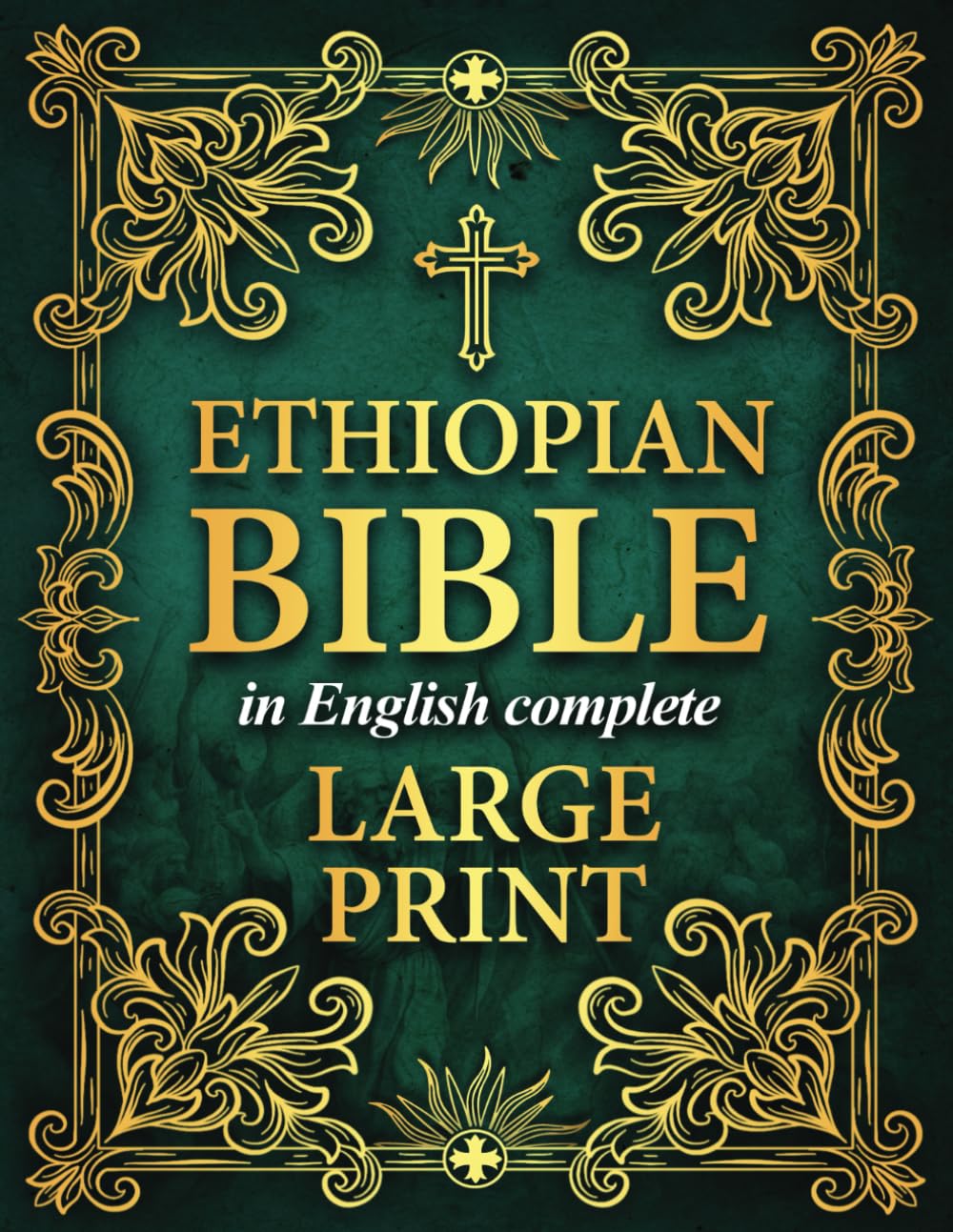
When we study Intertestamental literature—often called the Apocrypha or Pseudepigrapha—we quickly notice a striking difference between biblical canons. The Ethiopian Bible contains far more books (81 or 88, depending on classification) than the Protestant Bible’s 66. This raises an obvious question: why such a large discrepancy?
The answer is that the Bible was not canonized in a single moment. Rather, the canon developed gradually over several centuries. The New Testament reached broad agreement by the late fourth century, when Athanasius of Alexandria listed the 27 books now universally recognized. This list was affirmed by Western church councils at Rome, Hippo, and Carthage. The Hebrew Bible likewise reached consensus among Jewish communities by the second century CE, though its formation was also long and complex.
Later developments further shaped the differences we see today. The Roman Catholic canon was formally defined at the Council of Trent in response to the Reformation, while Protestant churches finalized their canon in the seventeenth century, limiting the Old Testament to the books preserved in Hebrew by rabbinic Judaism. This resulted in the familiar Protestant Bible of 39 Old Testament books and 27 New Testament books.
By contrast, the Ethiopian Christian tradition followed a very different historical path. Christianity reached Ethiopia by the fourth century, and the church developed largely outside later European theological debates. Rather than revising its Scriptures in response to post–Second Temple Jewish decisions or Reformation controversies, Ethiopia preserved the texts it had received early on. These writings were transmitted in Ge’ez, the sacred liturgical language, with remarkable continuity.
This distinct inheritance is tied closely to the theology of the Ethiopian Orthodox Tewahedo Church. Central to its faith is Tewahedo, meaning “made one,” a deep emphasis on the unity of Christ’s divinity and humanity. This instinct toward unity rather than analytical division shaped not only Ethiopian Christology but also its approach to Scripture. The Ethiopian canon retains books that disappeared from most other Christian Bibles, including 1 Enoch and Jubilees—texts widely read in Second Temple Judaism and echoed in the New Testament itself. Modern discoveries such as the Dead Sea Scrolls confirm that these works were once part of a broader Jewish scriptural world.
The difference between Ethiopian, Catholic, and Protestant Bibles, therefore, is not a matter of one tradition being careless or another adding texts late. It reflects different historical journeys. Protestant Christianity aligned its Old Testament with the later, standardized Jewish canon. Ethiopian Christianity preserved an earlier and wider collection of sacred writings rooted in ancient Jewish and early Christian usage. What initially appears strange is actually a window into the diverse ways Scripture was received and transmitted.
Within this landscape, The Wisdom of Solomon occupies a distinctive place. Written in Greek by a Hellenistic Jewish author in Alexandria during the late Second Temple period, it expresses Jewish faith through Greek philosophical categories. It strongly influenced early Christian thought and is fully accepted in Catholic and Eastern Orthodox traditions. However, it never entered the Hebrew canon and was therefore excluded from Protestant Bibles. Interestingly, despite preserving other ancient Jewish texts, the Ethiopian canon does not include Wisdom of Solomon, likely because it was never transmitted within the Ge’ez scriptural tradition.
This leads to enduring questions: How do we define canon and orthodoxy? Who sets those boundaries? How should believers today respond to different biblical traditions? For Messianic Jewish believers in particular, the challenge is to honour the Hebrew Scriptures, recognize the significance of the Reformation, remain open to Eastern and ancient Christian traditions, and thoughtfully engage intertestamental literature without confusing historical value with canonical authority.
Seen this way, the question of canon is not merely about counting books. It is about inheritance, history, theology, and faithfulness—and about learning to navigate difference with clarity, humility, and discernment.
Significant influences
The author of Wisdom appears to be a euhemerist, treating mythology as disguised history in which gods represent notable human figures. It He is also deeply Platonist, viewing the beauty of the world as pointing to a supreme First Cause, and drawing on Plato’s ideas of pre-existing matter (xi.17), the soul’s pre-existence (viii.19), and the body as an obstacle to spiritual knowledge (ix.15).
At the same time, it he reflects Stoic thought in his portrayal of Wisdom’s penetrating power (vii.24), her quick understanding (vii.22), the doctrine of Providence (xiv.3), and the four cardinal virtues (viii.7). Set against the biblical affirmation that God created all things from tohu va-vohu (Gen. 1:2–5), these philosophical strands point strongly to Alexandrian Egypt as the author’s milieu. He was a Jew firmly loyal to Israel’s faith yet fully engaged with Greek learning—something Alexandria uniquely enabled.
A Question to ponder
In our consideration and deliberations, it is important to contemplate how in many ways, the book of Wisdom itself embodies the very tension of the intertestamental age: Israel’s ancient faith speaking fluently in the language of the surrounding world, standing on the threshold between the Hebrew Scriptures and the New Testament vision that would soon emerge. It is helpful to discuss some of the questions that arise from a book like The Wisdom of Solomon.
“What may we deduce, and learn from its place between the two testaments, and what impact if any does it have on post-Second Temple Judaism, and the emerging Christian Church?”
The Psalms of Solomon
The Psalms (or Psalter) of Solomon are not part of the Ethiopic (Ethiopian Orthodox) biblical canon. This most definitely must not be confused with The Wisdom of Solomon.
Here’s the fuller, careful picture:
The Psalms of Solomon are a Jewish work from the 1st century BCE, probably written in response to the Roman conquest of Jerusalem. They are extremely important historically and theologically, especially because they contain some of the clearest pre-Christian Jewish expectations of a Davidic Messiah.
However, despite their value:
- They are not included in the Ethiopian Orthodox Tewahedo Church’s canon (neither the narrower 88-book canon nor the broader liturgical collections).
- They were never translated into Ge’ez as part of Ethiopia’s received scriptural tradition.
- They survive primarily in Greek manuscripts, with later Syriac versions—not in Ethiopic transmission.
This is an important distinction, because people often assume that any Second Temple Jewish text survived in Ethiopia. That isn’t the case. Ethiopia preserved some texts that vanished elsewhere (like 1 Enoch and Jubilees), but not all of them.
Why were the Psalms of Solomon excluded while Enoch and Jubilees were retained?
The most likely reason is usage, not theology. Enoch and Jubilees were deeply embedded in certain Jewish-Christian communities very early and became part of Ethiopia’s inherited liturgical and instructional life. The Psalms of Solomon, while respected, seem to have remained more sectarian and limited in circulation, never achieving the same canonical status in any major Christian tradition.
So, interestingly:
- Quoted in the New Testament? No.
- Found among the Dead Sea Scrolls? No (unlike Jubilees).
- Canonical anywhere in Christianity? No.
- Massively important for Messianic expectations? Absolutely yes.
In other words, the Psalms of Solomon sit in a fascinating middle space: hugely illuminating for understanding Jewish messianism at the time of Jesus, but never formally canonized—even in Ethiopia.
Conclusion
We are on an exciting, and dare I say it, an epic journey that with careful thought and deliberation can only but enrich our spiritual walk. “Tread carefully, and not in haste!” We must keep in focus that our purpose is to enhance our Messianic faith, and upbuild a credible Messianic Jewish theological understanding.

Buy your own copy of my book from Amazon:
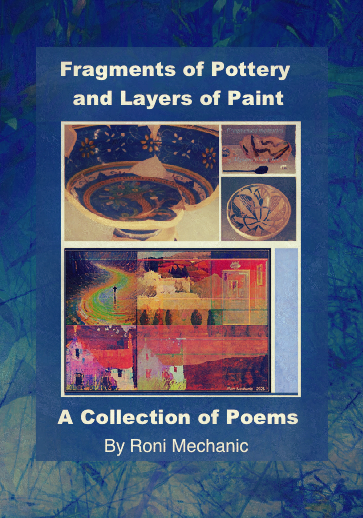
Fragments of Pottery, and Layers of Paint: A Collection of Poems
by Roni Mechanic | 3 Jan 2026 (Published)
Hardcover: Price, product page £15.00 Add to basket
Kindle Edition Available instantly Read Now Price, product page £5.00
Paperback Price, product page £10.00
Enjoy these unique poems and buy your own copy!
MAKE A CHARITABLE DONATION TOWARDS THE BLOG’S RUNNING COSTS:
https://paypal.me/hotrodronisblogcom




Discover more from Shalom Radio UK
Subscribe to get the latest posts sent to your email.
