I meet so many people on social media such as Facebook who claim to want to follow G_D, and yet are busy tearing down the ‘house’ of the faith community world-wide. The big bogy-man is usually the Pope who as head of the Catholic Church, that represents at least half of Christendom –with about a billion Christians followers of the approximately two billion believers in the world today.
These folk say, “Oh, didn’t you know the Pope (and not just this present Pope) is the Anti-Christ? He is to blame for the corruption of a biblically based faith.”
These instructive teachers – did I say ‘instructive teachers?’ – it is much more correct to call them out for who and what they are – destructive teachers, who know better than all of us, are busy exposing the corrupt Catholic, Protestant, and for that matter, Eastern Orthodox Churches. Some even have a go at Messianic, Yeshua-believing Jewish believers, saying that we are not real Jews at all, but Kazar Turks. Yes, this kind of stuff is all out there on the world-wide web.
The blessing and curse of the web – blessing, most definitely, as it is through the web that we have connectivity on a scale like never before and we are able to use this to boot God’s Kingdom world-wide.
Is that not a reason to rejoice? Yes, most certainly!
Notwithstanding, alas due to human depravity, multitudes use the web for destructive purposes – and this includes those demolition agents who get their strokes negatively by causing controversy, discord and are contentious. It is one thing to contend for the ‘truth,’ while it is quite another to cause discord and consternation within the body of Messiah.
What is the significance behind those who want to cancel Christmas? The are a number of reasons that some folk don’t celebrate Christmas, or Xmas, or now as in a secularised society it is called Winter feast. We must carefully consider their reasons, as they are not all negative of motivated by ‘kill-joys.’
Let’s list them and consider each one in turn and I also want us to consider their arguments that are put forward:
First, Jesus wasn’t born on the 25th of December! Well that is perfectly true, as he was probably born in late September, or early October – So what! Does it matter what the correct date is? Blame the Pope if you want to – What utter futile nonsense – Let’s be quite clear the Roman Pontiff does not deny the incarnation and birth of Jesus – belief in the incarnate Son of God is a central tent of the Catholic faith – okay, so you aren’t in amid with all the cultural trappings – it does not matter. I have a confession to make, neither am I that taken up with a lot of the Christmas trimmings, particularly coming from a Jewish heritage. There is also a big plus, I get to celebrate Hanukkah / Feast of dedication as well, which is not totally disconnected to the story of the incarnation of the Son of God – if there had been no Jewish context with a restored Jewish presence in Israel, there would have been no context for Yeshua to be born into.
Don’t throw the baby out with the bath water!
Oops – didn’t mean to do that! Help!
No baby, no nativity, no incarnation, no divine Son of God, and consequently no gift of eternal salvation!
“Don’t throw the baby out with the bathwater” is an idiomatic expression for an avoidable error in which something good or of value is eliminated when trying to get rid of something unwanted. It is a loan translation from the German phrase das Kind mit dem Bade ausschütten, literally to empty out the child with the bath, first recorded in 1512.
A slightly different explanation suggests this flexible catchphrase has to do with discarding the essential while retaining the superfluous because of excessive zeal. These two definitions get to the heart of the matter, and therein lies the problem. I observe that those who reject the Christmas concept are generally also those who are weak on emphasising the incarnation of the Son of God – Jesus/ Yeshua!
There is a rather sad song that goes like this…”A mother was bathing her baby…bring back oh, bring back, oh bring back may baby to me, to me!”
New Year has pagan origins – so don’t celebrate it either – real New Year should be in April, or how about the celebration of the Jewish New Year in the seventh month of the year. Israel has three New Years, the secular one on the 1st January; the New Year of Trees and Fruit; and the religious one as explained. If one rejects events like acknowledging the New Year, while it may not have a profound religious impact upon one’s life, it does help to make you into an odd-ball! Get over it, and get on with your life addressing the really important matters of how you best be serving God in the here and now.
New Year if not exactly cancelled – it is postponed as the sign below says.
Easter is also pagan and has been highjacked!
Yes, all that pagan stuff about Asteratae, Easter bunnies, and Easter eggs are unbiblical – very true, but don’t let it block out the most significant Messianic doctrine about the Redemption wrought through the Sacrificial death of Yeshua on the cursed tree/cross/stake!
Don’t forget that Yeshua’s betrayal, trial and death by crucifixion took place at Pesach/ Passover! I am not concerned about all the cultural trappings attached to this time of the year, and while the name
Easter may not be the correct biblical name, yet it is also known as Passion Tide, which recalls the death and then the glorious resurrection of Yeshua – He is alive forever more – Hallelujah!
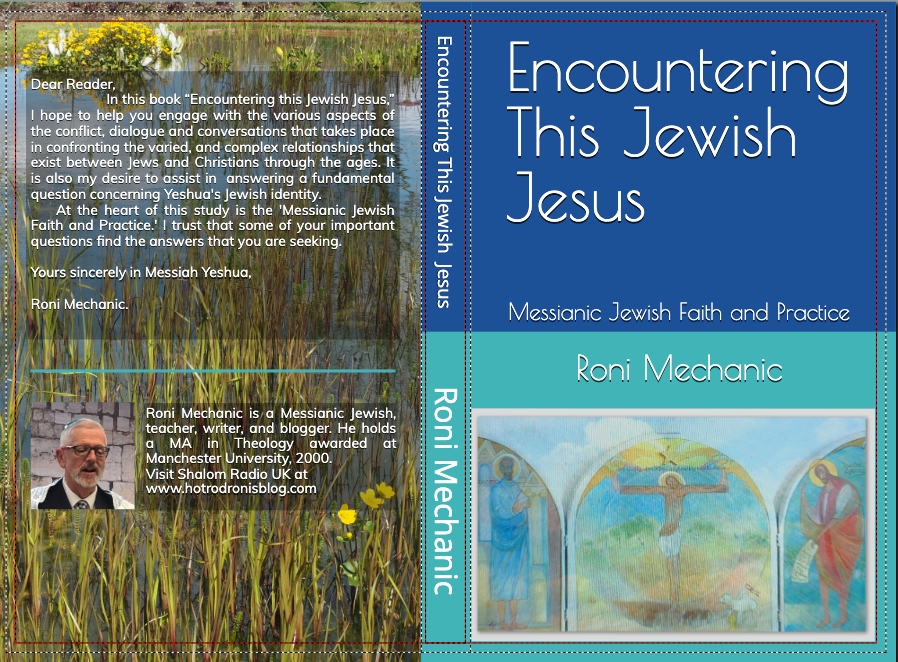
Encountering This Jewish Jesus: Messianic Jewish Faithand Practiceby Roni Mechanic | 27 Aug 2023
Available from Amazon Worldwide:
Roni’s Books Available From Amazon:
English Edition
Please make a Charitable Donation to Help with the Running Costs of this Blog:
So, what does 2024 hold for all of us as humankind? There are two ways that folk respond to life’s challenges, with some having a positive worldview, while others are negative in the way that things happens.
Is the glass half-full, or is it half-empty? While there is very evidently difficult things taking place at present, that will spill over into next year, what new events await us?
Next Year
Click on the Link below to Listen:
At times when we say, “Next year,” it seems a long way off, yet within the next ten days 1st of January, 2024 Big Ben will toll at midnight. Bob Dylan’s song The Times They Are A Changing has something to tell us not only of time moving on, but the cultural revolution of the sixties through the nineteen eighties.
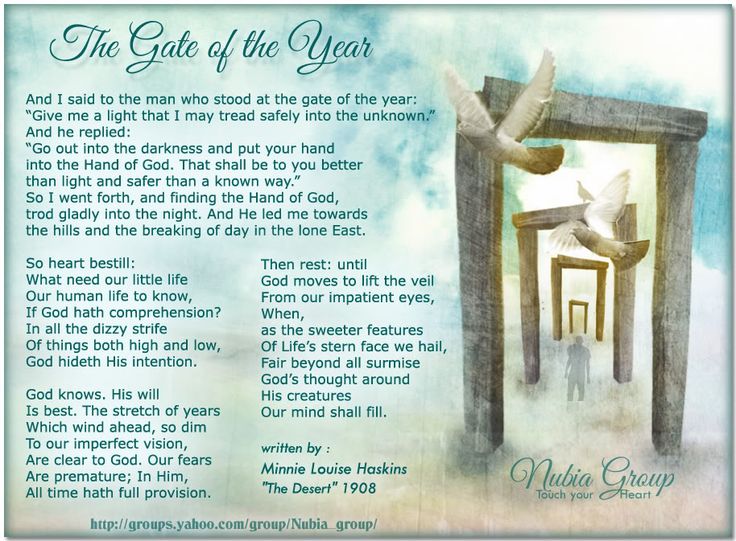
So, the Gate of the Year offers a multitude of opportunities to seek and serve God, in and through our trusting in Yeshua – Jesus Our Lord!
Lies and Truth contrasted – with God’s help I will fix it!
Click on the Link now to Listen:
How in this contemperory world are we to be able to distinguish between truth and error? Lies and falsehood are the order of the day. Just because someone says something to you does not mean that they are being truthful. They could be spilling a pack of lies. Fake news abounds – During the current Israel – Gaza war each time Hamas says something you can be certain they are engaging in deception.
When we fudge the margins between truth and falsehood, the consequence is that trust between people is undermined, and we then lack any certainty as to where we stand. In everyday layperson’s speech someone said to me the other day:
“By telling the truth it feels good! And consequently, by saying how it is, it has a way of clearing the air between people.”
And the converse is also true:
“If you lie to me, then you act like an enemy, and alas as an outcome because of your lies, you become my enemy!”
I bear witness to the certitude of both of these options, when on several occasions that I have experienced a misunderstanding or disagreement with someone, when I have spoken truthfully to them about what had transpired, clarify what happened, and having apologised, the positive outcome has been immediate. Peace, harmony, and concord is always effectively restored between those concerned.
Conspiratorial theories
Conspiratorial theories abound with large sectors of modern western society happily embracing what is all too often a concoction of nonsensical notions put forward as the truth. Some of these theories would be laughable in their ridiculousness if folk weren’t believing them. An example that we have only recently lived through is the global Corona virus – with its COVID variants has caused a global pandemic. Conspiratorial theorists having enjoyed a field day, and in many quarters are still being held as being the truth. The ‘no-jab’ campaigners saying that if you received the jab, you were micro chipped at the same time.
The micro chip allows the sinister ‘one world government leaders’ to track your every movement and action, making you into one of their zombies–robots that they can control at a whim. Some saying that this is the anti-Christ Mark of the Beast – 666: ‘You have been warned!’
Another equally disturbing issue at hand is the Russia – Ukraine war. On the Microsoft Edge news updates, the apparent misinformation, propaganda campaign being waged is equally misleading and confusing:
“Putin has been dead for over a year, and it’s a body double that has replaced him.”
“Russia’s war against the Ukraine is being pursued for the sole purpose of its ‘de-Nazification,’ despite the fact that Ukraine’s President Zelensky is a Jews.”
These types of nonsensical behavior are symptomatic of a much deeper problem taking place in today’s world, where truth is all too often in reduced measure.
A religious perspective
Equally from a religious perspective the end-time prophetic proponents are having a field day. It is important that I elaborate what is involved in any attempt to explain the prophetic.
Firstly, the Hebrew Scriptures (OT) is divided into three categories. The Pentateuch, also known as the Torah, or Five Books of Moses; Prophets or Nevi’im; the Writings or Ketuvim. In terms of the prophetic, the demarcation line is not clear cut, and it is wrong to assume that the Torah and the Ketvuvim don’t contain any prophetic acclimations or predictions. Notwithstanding, the major prophetic scriptures are found in the Prophets. In the New Covenant Scriptures, specifically the Book of Revelation is its major prophetic New Testament source. But similarly, the other books of these scriptures, particularly the Gospels also contain prophetic passages.
Prophecy into two categories, namely, ‘forth telling,’ and ‘foretelling.’ ‘Forth telling’ means to exhort or challenge individuals, and specific groups of people for them to take note, and to prepare to act when required. It is the ‘fore telling’ dimension of the prophetic that is our particular concern, and it is to this aspect of the prophetic that we now focus.
Two theological terms occur in the prophetic, namely, Apocalyptic, and Eschatological, or also referred to as eschatology. Firstly, apocalyptic may best be described as coming judgement and end of the world which culminates with the Battle of Armageddon as described in the Book of Revelation. It is popularized in cinema with films intitled ‘Apocalypse,’ ‘Apocalypse Now!’ According to Letterboxd[1]the 10 Best Apocalyptic Movies of all time are,
‘Interstellar’ (2014)
‘28 Days Later’ (2002)
‘The Cabin in the Woods’ (2011)
‘Terminator 2: Judgment Day’ (1991)
‘Melancholia’ (2011)
‘Shaun of the Dead’ (2004)
‘This is the end’ (2013)
‘Children of Men’ (2006)
The Book of Eli (2009)
‘I am Mother’ (2019):
I Am Mother: Ending Explained:
I Am Mother is a science-fiction film post-apocalyptic thriller directed by Grant Sputore. The cast includes Hilary Swank, Rose Byrne (the actors from the X-Men and Insidious series), and Clara Rugaard. The plot is set in a dystopian future where an unexplained global extinction event took place that killed most human life on the planet. An android raises a human girl, apparently all alone, claiming to help to repopulate Earth. ‘I Am Mother’ is in the genre of other films like Moon, Ex Machina, 10 Cloverfield Lane, and I Robot. The plot summary and the I Am Mother ending is inconclusive and needs explaining.[2] Currently there over 100 titles of films in this apocalyptic genre. So why this fascination and obsession with coming judgement? There are several plausible explanations for this rising tide of ‘doomsday,’ scenarios being acted out and portrayed in film, music, works of art, and popular books too.
Additionally, the Israel – Gaza war, started of 7 October 2023, in which Israel has come face to face with an existential threat that has raise fears not experienced since WWII, when the Nazi genocide attempted to wipe out the Jews of Europe. This type of threat plays right into a doom and dread that has an apocalyptic sense. Many are asking, is this this the fulfilment of Ezekiel chapter 36 and 37, where the prophet speaks of coming judgment.
Most people take the apocalypse as an article of faith, but what exactly the apocalypse entails are in the eye of their beholder. Questions asked include:
Will the universe dissolve and all matter cease to exist, or will the pillaging be more localized? Perhaps the sun will explode. Or, more specifically (and likely), the oceans might rise and drown large swaths of humanity. generated virtual reality simulation, with our robot overlords overseeing out inert sleeping bodies. But in reality, none of us know how it all will end. AI – Artificial Intelligence will take control of our world, becoming our over–lords, enslaving humanity to do its bidding in a dystopian world.
“A Hard Rains A-Gonna Fall” is at-times terrifying in its depiction of the dire aftermath of the Cuban missile crisis, but it also left room for the emergence of a visionary poet who would serve as a sort of bohemian Moses to lead his people out of the wilderness. The track Doomsday provided great grist for the mill when Dylan was a fire-and-brimstone preached in the late-70s and early 80s. This style of music followed Dylan’s profession of faith in Jesus as his Messiah and Lord, and he came under the influence of evangelical, hardcore gospel proclaiming Vineyard Ministry. Part of their message emphasised the Second-Coming of Christ, and the cataclysmic Apocalypse that will precede Jesus Second Advent.
Apocalypse
Firstly, this anticipation of an apocalypse is not a new phenomenon, by any means. And as described in Dylan’s Doomsday music, there numerous possible scenarios that will take place attending the Apocalypse. Since ancient times humanity has been fascinated, fearful, and apprehensive concerning human destiny. This is particularly when there are huge national or international disasters, such as wars, plagues, now called pandemics, cataclysmic earthquakes, volcanic eruptions drought and famine, to mention some of the most familiar tragedies that take place.
Secondly, it is of particular significance that at the turn of the century there is an increase in apocalyptic fervor which is often stimulated by a sense of uncertainty at the end of an epoch. It is as if people’s appreciation about what lies ahead is heightened by an impending feeling of doom. This fear is all too often irrational and may have no specific reason, nevertheless this often has driven individuals to speculate that some impending cataclysm is about to take place.
Thirdly, humanity is progressively sinking to such a low level of moral depravity, particularly in the western world, as the world leaders. It has become largely a-religious, with its having rejected its Judaic-Christian heritage, with ‘truth’ being in critically short supply. Few leaders can be fully trusted, and most are only concerned in their own self-interests. What transpires at the top, alas filters down into the farthest reaches of society, affecting everyone’s life. The biblical imperative, “Love your neighbor as you love yourself,” has largely been ignored, and rejected as being an outdated ideal. Nonetheless, the biblical concept of accountability, and judgement is so deeply imbedded into human psyche that an apocalypse is the inevitable outcome for our aberrant godless behavior. Thing cannot continue as they are, with humanity being hellbent with its own destruction. Who, or what, or how the end is triggered is in the realm of pure conjecture with the imagination running wild. Those who take a clear stand for the truth are labeled as being bigoted, fanatical and are viewed as swimming against the tide.
Apocalyptic art
The artist has the unique ability to portray ‘a window of the sole,’ offering an opportunity to give expression to the deep longing of humankind in a visual way. Visual illustrations, paintings, sculptures, glass window art, mosaics, etchings, and wood block printing, photography, and film, are just some of the artistic mediums often is used to represent apocalyptic imagery. Some of the great works of art stand as representations of our fears, our sense of foreboding, and our hopes, and dreams, that have been given expression through diverse media.
We have creation of Albert Durer’s Woodcut of the Four Horsemen of the Apocalypse of St John, 1497-1498:
‘The Four Horsemen’
The Four Horsemen of the Apocalypse. These are described in the Book of Revelation 6:1–8 NIV,
The Four Horsemen of the Apocalypse – by Albert Durer of Germany
The Seals
61I watched as the Lamb opened the first of the seven seals. Then I heard one of the four living creatures say in a voice like thunder, “Come!” 2 I looked, and there before me was a white horse! Its rider held a bow, and he was given a crown, and he rode out as a conqueror bent on conquest. 3 When the Lamb opened the second seal, I heard the second living creature say, “Come!” 4 Then another horse came out, a fiery red one. Its rider was given power to take peace from the earth and to make people kill each other. To him was given a large sword. 5 When the Lamb opened the third seal, I heard the third living creature say, “Come!” I looked, and there before me was a black horse! Its rider was holding a pair of scales in his hand. 6 Then I heard what sounded like a voice among the four living creatures, saying, “Two pounds[a] of wheat for a day’s wages,[b] and six pounds[c] of barley for a day’s wages,[d] and do not damage the oil and the wine!” 7 When the Lamb opened the fourth seal, I heard the voice of the fourth living creature say, “Come!” 8 I looked, and there before me was a pale horse! Its rider was named Death, and Hades was following close behind him. They were given power over a fourth of the earth to kill by sword, famine, and plague, and by the wild beasts of the earth.
It appears in the Revelation 6:1-8 we are presented with the opening of the first four of the seven seals that bring forth the cataclysmic climax and catastrophe of the long anticipated apocalypse.
The first horseman, depicts a conqueror with a bow and crown, and he rides a white horse.’ Scholars occasionally interpret this to represent Christ or the Antichrist.
The second horseman reeking judgement upon humanity is given a great sword and rides a red horse, symbolizing war and bloodshed.
The third horseman is depicted carrying a balance scale, and he rides a black horse, that symbolizes famine upon the earth.
And the fourth and final horseman rides a pale horse and is identified with Death.
We must be aware that apocalyptic predictions are open to interpretation, and this alas has led to, and at times this subject continues to result in weird, fanciful, and very dubious interpretations. And has even spored suicide cults such as The Jones Town mass suicide of over 900 people in British Giana, and Branch Davidian massacre in Waco, Texas.
The outcome has had some dire consequences for the three Abrahamic faiths, that each in turn having development of a number of sub-Jewish, sub-Christian, and sub-Moslem sects. I have not included in this discussion other major faith groups such as Hindu, Buddhist, etc.
For just as Jews and Christians, so too Moslems have used their Sacred Texts in an attempt to interpret possible end-time apocalyptic scenarios. Some Islamic suicide bombers are a case in point, with those involved in perpetrating these destructive acts as fulfilling the will of Allah. For the non-Moslem it is vital to our understanding the rising cult of the suicide bomber, is not sanctioned by main-stream Islam.
Islamic apocalypticism[5] is a powerful force. According to a half of Muslims, and particularly in Muslim-majority countries, there is a growing conviction that the coming of the Mahdi is “imminent,” and could happen in our lifetime. The Islamic State, Islamic Jihad, El Shabab, and Al Kida just goes further by claiming that it is bringing the prophecies to life. This mentality is particularly one of the most influential factors driving the Islamic Revolution in Iran, and equally other centres such as Afghanistan where Sharia law in enforced. Even aside from jihadist violence, Islamic apocalypticism often continues to have negative consequences. When recent history and current events are seen as best explained by prophecies, it becomes difficult to analyse them. Take, for example, the main quandary of the Muslim world for the past two centuries:
“Why have we moved so far backward compared with the West? The apocalyptic narrative, revived since the 1980s by popular Islamic writers such as the Egyptian Said Ayyub and many of his followers, states that this happened because of the forces of “Dajjal” — Islam’s version of the Antichrist. This type of thinking is used by the more extremist elements within Islam to justify the use of jihad in preparation for the end-of-days and to vanquish the forces of the ‘Dajjal.”
Christian fundamentalist attitudes have had equally damaging consequences when coupled together with political power. Religious wars all too often have been carried out in an attempt to fulfil some perceived divine imperative. Christian Crusaders were encouraged by Emperor Constantine the Great to conquer with their
Eschatology
The terms eschaton and eschatology pertain to ‘things to come.’ It is an inherent characteristic in humankind that we desire to know what shape will coming events take. When will Messiah/Christ return? What will be some of the attendant circumstance surround that event? How should we prepare ourselves? What will be the ‘sign of the times?’ And several other important questions concerning his return. We must not discount a genuine concern about biblical truth connected with eschatology and consign it as belonging only to the lunatic fringe of faith. It is important that we are well informed, and also prepared for the return of Messiah, without getting swept along in some kind of prophetic hysteria. I have included a quotation from my recent book, Encountering This Jewish Jesus[6] :
“This brings us to the consideration of end-time things, severally know as Eschatology, Apocalyptic and the Parousia, which relates directly to the return of Yeshua at the end of time to this earth. The Scriptures have many texts that deal with this subject. In this area of Christian teaching there are many different interpretations about the end of time.
Premillennial, a-millennial, and post-millennial interpretations of the Scriptures have produced whole schools of prophetic interpretation. One thing that is abundantly clear to me is that Yeshua is coming again, as the long-awaited Messiah and the Scripture says in
Revelation 1:7 CJB,
7 Look! He is coming with the clouds![a] Every eye will see him, including those who pierced him; and all the tribes of the Land will mourn him. Certainly, my heart’s cry is,
“Even so, come Lord Yeshua, come!”
This is a sin-sick world, that needs redemption, yet no one knows the hour of his return, not even Yeshua during his earthly life knew. We are encouraged to be watchful and alert, looking forward to his return but making the fullest use of being his faithful followers each day and telling others the good news of our Messiah and Lord.”
May our response be threefold, alertness, preparedness, and a keen anticipation expecting the return of Yeshua/Jesus as Messiah and Lord. We are promised in Holy Scripture that his return he will set up his kingdom, and it will be a kingdom characterised by righteousness, justice, and truth. No longer will humankind wage war anymore because universal peace will prevail.
Revelation 1:7 NIV,
7 “Look, he is coming with the clouds,”[a] and “every eye will see him, even those who pierced him”; and all peoples on earth “will mourn because of him.”[b] So shall it be! Amen.
[6] Encountering This Jewish Jesus, Roni Mechanic, 2023, p 307-308
Please consider making a charitable donation towards this blog’s running cost – Shalom Radio UK–It cost me at least £120 a year to keep it on the Worldwide Web. Thank You! and make a clicking on the Donate Button:
Why is hatred towards the Jews so easily stirred? It is shocking to think that since the Isreal – Gaza war started, anti–Jewish’s hatred has increased by 500% in Great Britain. What motivates this negative destructive mentality?
There are several issues that triggers this among sections of the British population. The Far-Right; Far-Left; religious bigotry; Moslem antisemitism; a ayatollah coupled with anti-Israel nascent mentality; pro–Palestinian support; negative Christian Theology; ignorance; fake news; hatred of the God of Israel; and the God and Father of Yeshua the Messiah, plus, plus…
Far Right politics has been around a long time and saw its rise in the 1930’s coupled with the rise of Nazi antisemitic hatred in German. It spread like a cancer, crossing the channel into the UK under the leadership of Oswald Mosley and his Union of British Fascists. The Cable Street Fascist march though the East End of London, a densely populated Jewish part of London.
Far Left political antisemitism dates back to the 1920’s with the rise of communism, that falsely blamed Jews for economic woes and difficulties in the post WW1 era. Communism’s atheistic attitude included in its teaching a hatred of God.
Religious bigotry has been around for a long time. A definition of bigotry – an obstinate or unreasonable attachment to a belief, opinion, or faction, in particular prejudice against a person or people on the basis of their membership of a particular group. Therefore when related to Jewish people each of these factors play an important contribution towards this type of anti–Jewish thinking.
The position of Islam as a global religion has far reaching influence upon people’s thinking. Moslem believers, similar to Judaism and Christianity there many different expressions of faith. Some are more tolerant, right through to the extremist side of Islam. The current conflict is driven by Hamas that is a radical form of Islam that is designated as a terrorist organisation that stands for the destruction of the Jewish State, the murder of Jews, and the ultimate establishment of a world-wide Moslem Caliphate. Their ideological centre originates from Iran and its ayatollahs who stand for the destruction of Israel, and the death of all Jews.
What happened on 7.10.2023 began beginning in Sterot in Southern Israel and the surrounding kibbutzim, plus the wonton murder of over 200 people at a music festival. 1,400 were murdered in the most deliberate and brutal way, plus 240 hostages were taken into Gaza. Wonton disregard for human life, not only killing their victims, but violating anything to do with the sanctity of the living and the dead. These types of acts have not been seen since the Nazis, during the Holocaust.
Palestinian support – this is a very complex issue that is multi-layered.
There are those who support the concept of the two-state solution to the Israel – Palestinian conflict, which was agreed in the Oslo Accords. Some have agued that this is all, but dead.
Then there are those who advocate the total annihilation of the State of Israel (75 years old), and replace it with a Palestinian state that will be ‘Juden-rein,’ – ‘Jew free.’
So, what are the options? Either, or – the first offers a possible option, while the second is totally unacceptable! “From the river to the sea!” In other words, Israel can’t exist. This deeply offensive, and antisemitic.
British Jews feel very troubled and insecure with the exponential rise of antisemitism in this country, and around the world.
Some are saying, just forgive…
“Victims must just forgive!”
It is nothing new to resort to blaming the victims for the terror inflicted upon them – “They had it coming to them!” In other words, they deserve what has happened to them. Arguments like, “Jews deserve what happens to them, I mean look…” This type of argument is so vile and morally unacceptable. It says much about those who level this kind of accusation.
“Where was God during the Holocaust? Jacob Jocz replied, “It is not about where God was when the six million died, rather it was the question, where was humankind when the six million died?”
The way forward?
So, what is the way forward? Do Israeli’s have the right to defend to defend themselves and peace loving Israeli Arabs, Beduins, Druze, and other non-Jewish citizens, and expatriate others? In the film, ‘The Light We Cannot See,’ There is a quotation – “The most important light of all is the light you cannot see!” There is an inner illumination that supersedes any physical light that may shine.
Matthew 5:13-16 NIV
Salt and Light
13 “You are the salt of the earth. But if the salt loses its saltiness, how can it be made salty again? It is no longer good for anything, except to be thrown out and trampled underfoot.
14 “You are the light of the world. A town built on a hill cannot be hidden. 15 Neither do people light a lamp and put it under a bowl. Instead they put it on its stand, and it gives light to everyone in the house. 16 In the same way, let your light shine before others, that they may see your good deeds and glorify your Father in heaven.
A Marginal Jew, a marginal Moslem Not every Jew, nor every Moslem can be tarred with the same brush –– We are so quick to tar everyone from a particular ethnic or religious group with the same brush. Generalisations always prove to be unhelpful when dealing with outlooks of perceived attitudes. Winston Churchill said, “Men, never give up!”
Never Give UP
The great man, Winston Churchill arose to speak: ‘Young men; never give up, never give up, never give up.’ The entire speech lasted only a few seconds. Then he sat down.
“Never Give In” “This is the lesson: never give in, never give in, never, never, never, never—in nothing, great or small, large or petty—never give in except to convictions of honour and good sense.
I say, “Jews never give in!”
I say, “Jews never give up!”
“We cannot either give in; nor can we ever give up!” We must not, nor can we contemplate giving in to those who hate us, despitefully use us, want to marginalise us, and ultimately kill us.
“If Hitler’s lot have their way, soon you (a rabbi) won’t have anyone to preach to!” (A rabbi to Karl Wiseman, Detective in the film Bodies)
“If Hamas lot have their way, soon there will be no more Jewish people left to pursue and kill, for they will all be dead!” (Roni in Why this Great Hatred?)
Am Yisrael Chai –– The People of Israel live! There may be a time to forgive, but now is the time to stand firm, and resolutely fight for our dignity, respect, and very existence in the face of those who want to kill us and blot our names off the face of the earth.
Stand firm and fight for our survival!
Psalm 25:16-22 NRSV
16 Turn to me and be gracious to me, for I am lonely and afflicted. 17 Relieve the troubles of my heart, and bring me[a] out of my distress. 18 Consider my affliction and my trouble, and forgive all my sins.
19 Consider how many are my foes and with what violent hatred they hate me. 20 O guard my life and deliver me; do not let me be put to shame, for I take refuge in you. 21 May integrity and uprightness preserve me, for I wait for you.
As producer – I Roni Mechanicof Shalom Radio UK – dedicate this special programme to the Joseph Project
Israel is facing once again a struggle for survival and the Joseph Project is helping to relieve suffering through its relief work
Roni Mechanic’s Podcast of Joel Chernoff speaking about the Joseph Project
Do consider making a Donation to the Joseph Project:
Help Us Making a monthly or one-time financial contribution to Joseph Project.
Ways to Give
Generous donors like you allow us to continue our humanitarian work in Israel. “He who has pity on the poor lends to the Lord, and He will pay back what he has given”. Proverbs 19:17
Click on this Link Below to Listen to this Programme: Please make a Charitable Donation to Help with the Running Costs of this Blog: https://paypal.me/hotrodronisblogcom Roni’s Books Available From Amazon: Shalom Radio UK –– MTMI –– Messianic Teaching Ministry International … Continue reading →
When we speak about Jews, we mean those people that are descended from ancient Israel. While Gentiles simply means ‘the nations. The Hebrew/Yiddish word ‘Goyim or Goy,’ the people of the nations.
The reason firstly why the two people were separated from each other was because God desired to create a ‘holy/separate people,’ who were called to be holy and walk in his ways. In contrast, the nations/goyim worship pagan gods, idols made of wood and stone. Israel was forbidden by the Lord to follow these strange pagan deities, due to the corrupting influence that they had upon their followers – God not only wanted a holy nation, but he also desired that his ‘chosen people,’ would serve him and be a light to the Gentiles, so that they too could become the children of God.
Max and Roni take some what differing approaches when it comes to the question of the outworking of redemption and reconciliation that Yeshua made when he came and made peace between Jews and Gentiles through his saving power.
Max gives a very articulate explanation of his interpretation to answering the question at hand of how Gentile believers may approach living according to the Torah in the light of their New Covenant faith.
Max, please explain to the listeners your stand on what Yeshua particularly accomplished at his first advent, and how this effects Gentile believer in particular?
Roni, would you kindly give your response to what I have just said, and explain how your interpretation differs from that mine?
“Let us agree to disagree!” On the essentials for us to work together there needs to be considerable accord, i.e., The divinity of Yeshua; his atoning sacrifice; the nature and person of God; the nature of humankind and our fallenness; and the universal need for redemption, through the once only atoning sacrifice of Yeshua on the cursed tree; that there is salvation only through Yeshua; etc.
What can be done to create greater harmony and accord? What aids that? What hinders that?
And let it unfold as we do it!
Roni found this article published by Jews for Jesus that expresses an approach to understanding the dynamic of Jewish and Gentile approaches to faith and practice.He substantially concurs with Stephanie Hamman’s interpretation of this weighty subject.
Should Gentile Christians Keep Torah?
When Gentiles started following Jesus, his earliest followers had a big question to discern.
by Stephanie Hamman | September 14, 2020
The God of All Peoples
When God created human beings, the original language tells us He made them as His image, male and female. Adam and Eve were the parents of all humanity—Jewish and Gentile. The book of Genesis tells us that God maintained an intimate relationship with them, but our first ancestors severed that connection by their sin. It was then that God promised He would send a Messiah through one of their descendants who would defeat the enemy and reconcile humanity with their Creator (Genesis 3:15; Numbers 24:7; Isaiah 11:10).
The first step in reconciling the nations to Himself was setting apart a people for His name—the Jewish nation. This was accomplished when He selected Abraham and gave him a special blessing, saying, “In you all the families of the earth shall be blessed” (Genesis 12:3). Out of this lineage, the Messiah was promised to come into the world. We believe and know that Yeshua (Jesus) is that Messiah.
The Jewish Messiah is for all people, and those who follow Him are united in one faith in the God of Israel.
The teachings of Jesus were so compelling that they quickly spread throughout the world. It didn’t take long before there were far more Gentile followers of Jesus than Jewish ones. This should have been anticipated, as the Hebrew Scriptures teach that when the Messiah comes, the Gentiles will seek Him, too.
The Jewish Messiah is for all people, and those who follow Him are united in one faith in the God of Israel. Today, there continue to be more Gentile followers of Jesus than there are Jewish followers, which makes sense since the global Jewish population is only about 0.19% of the human race.1 But because of Jesus, people in remote corners of the world, as well as those in the highest halls of learning, know something about the Jewish people and our Scriptures.
Does the Bible Teach That All Christians Should Keep the Law of Moses?
Many Christians find value in understanding the Jewish context of their faith, and rightly so. The deeper they study, the more aware they become of how much Christianity has evolved. In an effort to reconcile this, many begin to wonder if they should be keeping the Torah (law of Moses). This is not just a recent issue; it’s one that came up even in the book of Acts.
Although the destiny for the inclusion of all nations in the worship of the God of Israel is written in the Hebrew Scriptures, it still took the Jewish believers like Peter, James, and Paul by surprise when so many Gentiles accepted Yeshua’s message. After all, “Christianity” at that time was fully Jewish. Within the first 20 years after Yeshua’s resurrection, they met together to discuss the phenomenon they were witnessing and to decide whether or not Gentile followers of the Jewish Messiah needed to become Jewish themselves.
The issue was that some Jewish believers were telling Gentile believers that they needed to convert to Judaism (i.e., get circumcised and keep the Torah) in order to truly be saved. Paul and Barnabas brought the issue to the elders and apostles in Jerusalem. After even more discussion, Peter spoke up. He, of course, had been the first to witness a Gentile coming to faith in the city of Yafo when he met Cornelius. During that encounter, God had taught him not to regard any other human being as “unclean” (Acts 10:28).
After Peter related his experience, James made the final call. He clearly delineated that the Torah was given to the Jewish people, and as of yet, no one had been able to follow it perfectly. Therefore, he decided they should not place the same burden on the Gentiles, but call them to the standard of morality laid out in the Torah (Acts 15:19–21). Subsequently, four main requirements were sent in a letter to Gentile believers across the known world: to abstain from (1) anything connected to idolatry, (2) sexual immorality, (3) eating an animal that had been strangled, and (4) blood (Acts 15:29). All ties to paganism were severed. If Gentile believers truly followed these rules, they could not participate in any pagan temple cults or rituals of that time. Such behavior would definitively set them apart.
The Jerusalem Council was concerned that Gentile Christians would observe God’s standard of morality.
Although this decision by the apostles was documented in the New Testament writings, some Gentiles still believe they must take on Jewish ritual obligations to follow Jesus. Others believe all of it is rendered obsolete and even Jewish people should abandon their holy calling. The apostles did not support either of these stances.
The New Testament clearly teaches that Gentile Christians are under no obligation to observe Jewish ritual law.
The Jerusalem Council was primarily concerned that Gentile Christians would observe God’s standards of morality; the only restrictions placed on Gentile Christians were likely intended to facilitate fellowship between Jewish and Gentile followers of Jesus in meal settings. Gentiles should not try to take on the role or identity of Jewish people, and vice versa. Jews and Gentiles remain distinct (1 Corinthians 7:18–20; Acts 15; Acts 21:25), but both peoples come into equal standing before God as we use our distinct roles to bring others into relationship with Him (2 Corinthians 5:18–20).
The Gentile Role
Even so, Paul encouraged the Gentile believers in Ephesus to take their connection to the Jewish people seriously.
Therefore remember that at one time you Gentiles in the flesh, called “the uncircumcision” by what is called the circumcision, which is made in the flesh by hands—remember that you were at that time separated from Messiah, alienated from the commonwealth of Israel and strangers to the covenants of promise, having no hope and without God in the world. But now in Messiah Jesus you who once were far off have been brought near by the blood of Messiah. (Ephesians 2:11–13) (bolding is author’s)
When you accept Jesus as your Saviour, you’re brought into the commonwealth of Israel, and it is through this inclusion that the nations have hope. God doesn’t require you to become Jewish to follow Him, and we cannot support any efforts by Gentile believers to convert to any type of Judaism. However, completely ignoring the Torah or not learning about the appointed times that God gave to Israel would be like relocating to another country, yet never taking the time to learn the language or the culture. If Christians want to voluntarily celebrate Jewish holidays and make room for Shabbat in their lives, there is much value to be found in that—in the world to come, all the nations will worship the God of Israel in Jerusalem and observe His feasts (Zechariah 14:16-19).
Jewish Gentile Couples
If a Gentile is married to a Jewish person, whether they follow Jesus or not, their calling as an individual may be different than their calling as a part of a Jewish family. Take Ruth for instance: although not Jewish herself, she was married to a Jewish man. Even after he died, she still recognized that her calling as part of his Jewish family was to support her mother-in-law. Ruth was always called a “Moabite,” but she has a very special place in Jewish history as the great-grandmother of King David.
Why the World Needs Gentiles
Your calling as a Gentile is every bit as vital and needed as the calling of a Jewish person. Paul writes that there is a special purpose in extending salvation to the Gentiles: “Through their trespass salvation has come to the Gentiles, so as to make Israel jealous. Now if their trespass means riches for the world, and if their failure means riches for the Gentiles, how much more will their full inclusion mean!” (Romans 11:11–12).
Your calling as a Gentile is every bit as vital and needed as the calling of a Jewish person.
This is demonstrated so well when Jeremy Gimpel, a Jewish educator and podcaster, expressed his feelings over watching a Christian minister recite the Shema (the creed of the Jewish faith taken from Deuteronomy 6) at President Obama’s inauguration.
I am not usually jealous of anyone or anything, but this was too much. Israel as a country models itself after America in almost every way possible, every way except for one. Israel would never start off a national ceremony in prayer. That would be too Jewish. And now a Christian Pastor named Rick Warren is calling out to the world, “Hear O Israel….” The man was calling out to the Jewish people and I don’t think he even knew it.2
There are some people who discover their Jewish heritage later in life, and may feel that they need to reconsider how they should live out their identity in Messiah in light of that. If you know for certain that you have Jewish heritage, how you choose to embrace and practice that is between you and God. But, if you identify as a Jew when you are not, the role you’re called to as a Gentile is ineffective. Only when we come together in our distinct roles does the true miracle take place (Galatians 3:28–29). What was once separated has been linked in a beautiful unity, and our shared purpose is to reconcile the rest of humanity with our Creator.



















 Help Us