Please make a charitable donation to help me cover the high cost or the renewal of this blog – I sent a payment of $216.00 USD to WordPress.com – This is to enable me to continue to host this programme on the web.
PayPal’s conversion rate: 1 GBP = 1.14367 USDConverted from: £188.87 GBP Converted to: $216.00 USD [This rate includes a currency conversion fee. E-money issued in GBP and then converted to USD]
Everywhere there appears to be a state of confusion. Truth mixed with falsehood appears as the new normal. Nothing appears as it is –– who can we believe and trust?
The Moral Maze…
The decade of the 1960s witnessed profound change in the established world order. The post-WWII global configuration was essentially bi-polar, with the United States-led West aligned against the Soviet-dominated East. In the 1960s, this split along ideological and economic lines divided the world into five centers of power: the Soviet Union and its satellites; Communist China and Southeast Asia; Europe and the United States; Africa; and Latin America. This article will look briefly at each of these regions and the general United States foreign policy strategy for each. The emphasis will be on Latin America, in particular Bolivia, and events such as Cuban-instigated insurgencies, affecting U.S. engagement in the southern hemisphere. In Latin America, Cuban-sponsored revolutionary fervor was a major factor in determining the U.S. strategy.
The Allied powers determined at the end of World War II the Security Council’s permanent membership in the newly formed United Nations (Chiang K’ai Shek’s Nationalist China, not Communist China, held a permanent seat). The power blocs of the Fifties began to erode in the Sixties. It was the Soviet Union that faced off against the West in the Cold War, and instigated such provocations as the erection of the Berlin Wall.1
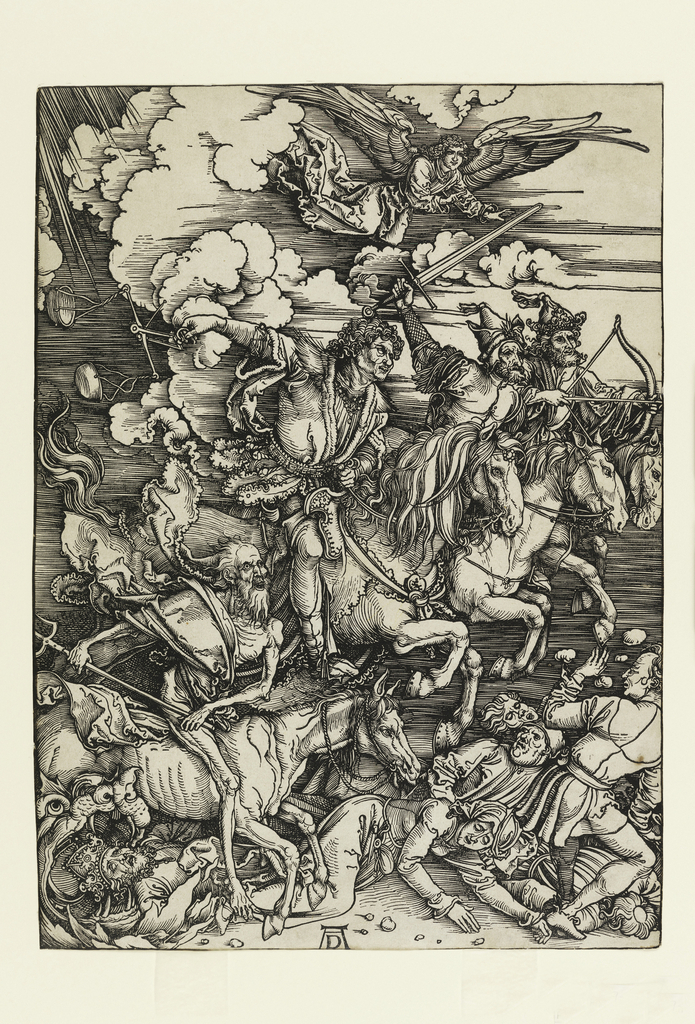
Durer’s Four Horsemen of the Apocalypse
So, who can we trust?
It is a lot like being trapped in a maze –– how do we find the centre and once we have found it –– how do we get out? We all feel overwhelmed and trapped!
When we speak about the ‘moral maze,’ we mean our attempting to discover the correct way to navigate our way through life and its multitude of perplexities.
At the heart of the matter is the question of our moral and ethical response to life and the multitude of decisions that we face daily.
From the perspective of having a living faith, where are we to look to for help to determine how we should choose to respond to any given situation that presents itself to us? Let us remind ourselves that the Scriptures teach us that our battle is not against flesh and blood, but against the ‘world, the flesh, and the devil.’ There are powers and principalities of darkness seeking to control and influence our every decision.
Arm yourself! With a knife, gun, or bomb? NO! While I am not a pacifist, I do believe that it is important to defend ourselves, our families, communities, and and countries, notwithstanding, our weapons of warfare are not these things, but spiritual, the mighty pulling down of strongholds! In the power and mighty name of Yeshua our Messiah and Lord we can be victorious!
But we ask –– how does this apply and work out in the here and know? Not pie-in-the-sky-when-you die! Heaven on earth now!
Let’s be real and not find ourselves being delusional, with our living in the Moral Maze!
Let our yes, be YES, and our no, be a definitive NO! In Afrikaans there is an expression that says,
"Jy kan nie op twee stoele gelyk sit nie!"
‘You can’t sit on two stools at the same time.’
For in attempting to do so you will find yourself falling between the two and landing on your rear end on the floor.
Ouch!…
Similarly, as a believer, we can’t falter between two options – make up your mind? Whose side are you on? God or humankinds? Let’s face up to reality now!
So what’s at the heart of the matter? We discover that there are many different facets to the moral maze.
1/ For starters, God is no longer on the throne –– ‘God is dead, and humankind is alive,’ or at least they think so!
“God is dead” (German: Gott ist tot; also known as the death of God) is a statement made by the German philosopher Friedrich Nietzsche. Nietzsche’s first use of this statement is his 1882 The Gay Science, where it appears three times. The phrase also appears in Nietzsche’s Thus Spoke Zarathustra.
The meaning of this statement is that since, as Nietzsche says, “the belief in the Christian God has become unbelievable”, everything that was “built upon this faith, propped up by it, grown into it”, including “the whole […] Europeanmorality“, is bound to “collapse”.[1]
Other philosophers had previously discussed the concept, including Philipp Mainländer and Georg Wilhelm Friedrich Hegel. Proponents of the strongest form of the Death of God theology have used the phrase in a literal sense, meaning that the Christian God who had existed at one point has ceased to exist.
Death of God theology
Although theologians since Nietzsche had occasionally used the phrase “God is dead” to reflect increasing unbelief in God, the concept rose to prominence in the late 1950s and 1960s, subsiding in the early 1970s.[23] The German-born theologian Paul Tillich, for instance, was influenced by the writings of Nietzsche, especially his phrase “God is dead.”[24]
For the most part Altizer prefers mystical to ethical language in solving the problem of the death of God, or, as he puts it, in mapping out the way from the profane to the sacred. This combination of Kierkegaard and Eliade makes a rather rough reading, but his position at the end is a relatively simple one. Here is an important summary statement of his views: If theology must now accept a dialectical vocation, it must learn the full meaning of Yes-saying and No-saying; it must sense the possibility of a Yes which can become a No, and of a No which can become a Yes; in short, it must look forward to a dialecticalcoincidentia oppositorum [i.e., a unity of the opposites]. Let theology rejoice that faith is once again a “scandal,” and not simply a moral scandal, an offense to man’s pride and righteousness, but, far more deeply, an ontological scandal; for eschatological faith is directed against the deepest reality of what we know as history and the cosmos. Through Nietzsche’s vision of Eternal Recurrence we can sense the ecstatic liberation that can be occasioned by the collapse of the transcendence of Being, by the death of God […] and, from Nietzsche’s portrait of Jesus, theology must learn of the power of an eschatological faith that can liberate the believer from what to the contemporary sensibility is the inescapable reality of history. But liberation must finally be effected by affirmation.[25]
It is not enough that God is dead, for the vast majority of humankind in the West, he does not exist at all!
This has serious consequences, because the moral and ethical choices that we make are therefore rather arbitrary, with no moral absolutes. You can do what you please, whenever you want, and it really doesn’t matter how you behave.
To illustrate this, I must relate a recent brief and very unpleasant encounter that I had with someone, when I asked them not to park across an access gate – A tirade of abuse was hurled at me.
Did I deserve it? Was the response proportionate to the request I had made? I was direct in my request, but not impolite.
So, you tell me, is this normal behaviour that you would expect from someone who was a stranger?
Perhaps this woman was having a bad day, or maybe this is her normal default setting when things don’t go her way?
It is not surprising that relationships breakdown, that wars happen between people and different nations.
2/ Situational Ethics What is true for you does not therefore need to be true for me! Truth is relative, because there are no longer any moral absolutes! Believe whatever you like! Stealing is OK, what you must look out for is that you don’t get caught. Lying is also OK, just don’t get found out. And down the slippery slope we go…
Oops!
How does this modern world impact upon religion in general, and Messianic –– Yeshua/Jesus believing faith in particular? This is an important question to attempt to answer to help us find our way through the moral maze.
1/ Folk on the whole are confronted with a feeling of alienation and hopelessness as they are confronted with the present pressing realities and growing sense of foreboding. People used to like to sing, ‘Jesus is the answer for the world today!’ But the sceptic and disillusioned say, ‘really, where is the answers that he promised to make this world a better place?’ We are confronted with huge pressing problems, Covid, avian flue, the economic down turn, the Russian –– Ukraine war, the spiralling cost of energy, food, plus now food shortages –– Unpredictable weather caused through flooding, coupled with drought. And the list goes on…
Albert Durer’s Four Horsemen of the Apocalypse
Is there any good news?
2/ However, when optimism and hope are in short supply, that is when true faith can be born in our lives!
Humankind’s extremity is God’s opportunity!
In our attempt to navigate our way through the moral maze we are confronted with having to make choices, particularly moral and ethical ones can bedifficult for us to make.
Sometimes the distinctions between them are unclear. Society constantly presents us with choices between what the world chooses and what we know as Messianic believers to be right. As follower of Yeshua in a secular world, we often worry about making unpopular choices. I think it’s a case of not wanting to be seen as different to others. But there will be occasions when we have to make a stand, maybe on ethical issues, yet when we do, we are sometimes ignored or even classed as even being fanatical. In all of this though we have a choice. Our choices can be God’s choices for us. We can choose not to participate in activities that we know to be detrimental to society. If we were to choose good over evil in each situation, how would our world change? And so that brings us to Jesus and the by three very human temptations. “You must be hungry,” Satan said to him. “Use your power to turn these stones into bread. Throw yourself down from this temple. You will not be harmed. Fall down and worship me and everything you see shall be yours.” Yeshua is confronted by three temptations that come to all of us. Food, religion and politics. What could be the harm of any of them? They are all ways for Yeshua to become an influence, to become known to the people. Wouldn’t that be a good thing?
The problem with such temptations is that they all have a powerful meaning in our lives, so they can all be abused. With his strong connection to humankind, Yeshua resists the temptations. He lives by that great commandment, “Love God and your neighbour”. Times of temptation will occur in our lives. We may have a deep sense of loss because of the death of a loved one. We may lose our job or go through the pain of a broken relationship. We may suffer through sickness, or depression. We may be tempted by power or by wealth at the cost of integrity. How we allow such times in our lives to bring us into a relationship with God and with others is the measure of the temptation. Each of us has the power through our choices to shape and give meaning to life. Living as a follower of Yeshua is a response to a deliberate choice. It calls for a decision to place our faith in Messiah Yeshua. It is a call to commitment. When we go through a wilderness time, it is a time of commitment to spiritual growth. It provides an opportunity to reflect on the meaning and consequences of our choices. Our life is a series of choices. What has shaped your lives? What shape would we like it to take? How can the choice to follow Yeshua afford us an opportunity for us to reform our lives, to allow God’s Ruach HaKodesh/ Holy Spirit to re-shape us so that our whole community is re-created. I have heard it said that forty days is the optimal time in which to re-shape some aspect of one’s life. So, let us use every opportunity as a time to bring ourselves into a closer and more open relationship with our creator. May we experience a renewal of life in and through allowing God to guide us through the moral maze. Amen.” [With acknowledgement to the Revd Stephen Smith of St Paul’s, Newbridge, South Wales, for letting me use a section of recently preached sermon that I have adapted].
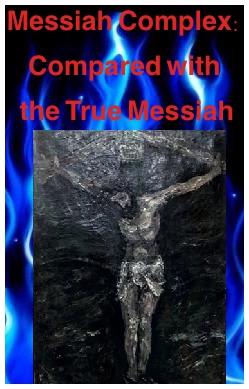
Don’t Eat That Hat: Messiah ComplexCompared with the True Messiah – Yeshua/Jesus
Click on the Link to Listen to the Programme:
Part 1 – Messiah Complex
A messiah complex (Christ complex or saviour complex) is a state of mind in which an individual holds a belief that they are destined to become a saviour in the past (historic claimants), today or in the near future.
The term can also refer to a state of mind in which an individual believes that they are responsible for saving or assisting others. This desire, in an of itself does not necessarily mean that the individual is mentally ill.
Notwithstanding, such desires need to be considered carefully, before being too quick to condemn such a person as being a crank or someone who is deluded. We are all to ready to put labels on others, due to our own scepticism.
While this desire to save others is virtuous if the individual who has this desire is deluded, the consequence of their actions can have devastating outcomes. During this programme on Shalom Radio UK, we will focus on some of the examples of those who have made such claims.
Within both Judaism, and Christianity, there are some significant examples of certain individuals who have either personally claimed to be the messiah, or their followers have most certainly done so. These claims have at times been made after the death of the messianic luminary, but also these claims have been made while they were still alive.
Matthew 24:23 NIV At that time if anyone says to you, ‘Look, here is the Messiah!’ or, ‘There he is!’ do not believe it.
Religious delusion
The term “messiah complex” is not addressed in the Diagnostic and Statistical Manual of Mental Disorders (DSM), as it is not a clinical term nor diagnosable disorder. However, the symptoms as a proposed disorder closely resemble those found in individuals with delusions of grandeur or that they have grandiose self-images that veer towards the delusional.[4]
An account specifically identified it as a category of religious delusion, which pertains to strong fixed beliefs that cause distress or disability. It is the type of religious delusion that is classified as grandiose while the other two categories are: persecutory and belittlement. According to philosopher Antony Flew, an example of this type of delusion was the case of Paul, who declared that God spoke to him, telling him that he would serve as a conduit for people to change.[The Kent–Flew thesis argued that his experience entailed auditory and visual hallucinations.
However, we must remember that Professor Flew moved from being an atheistic philosopher to someone who towards the end of his life acknowledge that there is a God. He wrote a book called –– The is No a God. And in the end of his book he asked the Christian theologian NT Wright to write and ‘Afterword.’
Examples
Examples of Sabbatia Ziv’s Jewish Apocalyptic cult, the early Adventists and the Millerites, Jehovah Witnesses, Mormons, Jones Town suicide cult, Charles Manson and his deluded followers, Moonies, the Lubavitcher Rebbe, Rabbi Menachem Mendel Schneersonand the Waco sect Branch Davidian of David Koresh, are just a few groups that have led to the personal disaster of those caught up with them. Each of these movements and those who have led them, all believed that they had a new revelation from God to follow their chosen path to enlightenment and salvation through what had been shown to them.
In the case of some of these movements either the founder and luminary either believed that they had a special revelation from God that they were the messiah or in some of their founders and leaders substantially reinterpreted the biblical revelation of who the true Messiah, God’s Anointed One is. The consequences in each of these situations resulted in the development of a movement that led to untold unhappiness, desolation, and at time in the death of those who got caught up in these cults, or sub-Christian sects. Judaism has also produced a number of messianic pretenders.
Sabbatia Ziv Claims to being the expected Jewish Messiah
Along with general messianic beliefs, there was another computation, based on a passage in the Zohar (a famous Jewish mystical text), that Israel would be redeemed by the long-awaited Jewish Messiah in 1648.[9]
In 1648, Sabbatai announced to his followers in Smyrna that he was the anticipated messianic redeemer. To prove this, he started to pronounce the Tetragrammaton, an act which Judaism prohibited to all but the high priest in the Temple in Jerusalem on the Day of Atonement. For scholars acquainted with rabbinical and Kabbalistic literature, this act was therefore highly symbolic. Sabbatai also claimed that he could fly, but told his followers that he couldn’t do so in public because they were ‘not worthy enough’ to witness such a sight. He also claimed to have visions of God.[14] Sabbatai revealed his claim to being the Messiah early on to Isaac Silveyra and Moses Pinheiro, the latter a brother-in-law of the Italian rabbi and KabbalistJoseph Ergas.[9]
However, at a mere twenty-two, Sabbatai was still too young to be thought of as an established rabbinic authority; his influence on the local community was limited. Even though he had led the pious life of a mystic in Smyrna for several years, the older, more established rabbinic leadership was suspicious of his activities and the local college of rabbis. Headed by his teacher, Joseph Escapa, they kept a watchful eye on him. When his messianic pretensions became too bold, he and his followers were subjected to an edict of cherem, a type of excommunication in Judaism.[9]
In about 1651 (according to others, 1654), the rabbis banished Sabbatai and his disciples from Smyrna. It is uncertain where he went from there, but by 1658, he surfaced in Constantinople. There, he met a preacher, Abraham Yachini (a disciple of the Talmudic scholar Joseph di Trani), who confirmed his messianic mission. Yachini is said to have forged a manuscript in archaic characters which bore testimony to Sabbatai’s claim to being the Messiah.[9] It was entitled The Great Wisdom of Solomon, and began:
“I, Abraham, was confined in a cave for forty years, and I wondered greatly that the time of miracles did not arrive. Then was heard a voice proclaiming, ‘A son will be born in the Hebrew year 5386 [the year 1626 CE] to Mordecai Zevi; and he will be called Shabbethai. He will humble the great dragon; … he, the true Messiah, will sit upon My throne.”[9]
Joseph Smith and the Mormans
Beginning in 1820 at Palmyra, New York, Joseph Smith saw God the Father and Jesus Christ in vision. Through revelation, he translated and published the Book of Mormon, organized The Church of Jesus Christ of Latter-day Saints on April 6, 1830, and received revelations to guide the Church.
Joseph Smith certainly fits the criteria of someone who sees himself as having a divine mission.
In terms of the attitude wherein an individual sees themselves as having to save another or a group of poor people, there is the notion that the action inflates their own sense of importance and discounts the skills and abilities of the people they are helping to improve their own lives.[7]
◄ Mark 3:21 ►NIV When his family heard about this, they went to take charge of him, for they said, “He is out of his mind.” Just because we don’t understand someone’s words and actions, we should not jump to too hasty conclusions that the are crazy – ‘out of they minds!’
Helping and Saving Others Wanting to help save others in and of itself is not a sign of mental illness, or of being delusional, However, when this true virtue goes wrong then the real motivation and reasoning that has motivated the individual will become clear.
Luke 19:28-40 Jesus proceeded on his journey up to Jerusalem. As he drew near to Bethphage and Bethany at the place called the Mount of Olives, he sent two of his disciples. He said, “Go into the village opposite you, and as you enter it you will find a colt tethered on which no one has ever sat. Untie it and bring it here. And if anyone should ask you, ‘Why are you untying it?’ you will answer, ‘The Master has need of it.’” So those who had been sent went off and found everything just as he had told them. And as they were untying the colt, its owners said to them, “Why are you untying this colt?” They answered, “The Master has need of it.” So they brought it to Jesus, threw their cloaks over the colt, and helped Jesus to mount. As he rode along, the people were spreading their cloaks on the road; and now as he was approaching the slope of the Mount of Olives, the whole multitude of his disciples began to praise God aloud with joy for all the mighty deeds they had seen. They proclaimed: “Blessed is the king who comes in the name of the Lord. Peace in heaven and glory in the highest.” Some of the Pharisees in the crowd said to him, “Teacher, rebuke your disciples.” He said in reply, “I tell you, if they keep silent, the stones will cry out!”
Introductory Prayer: Lord Jesus, I wish to accompany you closely on the road to Calvary. If I were to contemplate you more often as you hang scourged and bloody upon the cross, I’m certain I would be able to rest in your love and base my actions on that one truth. I know that you have loved me with an eternal love: You have proven it there on the wood of the cross. So, I long to respond with gratitude, peace and the firm determination to spread your love to everyone. Petition: Lord, Jesus, grant me the grace to proclaim you as Messiah and Savior. 1. A Different Kind of Messiah: Up until now, Jesus has never publicly accepted the title of Messiah. He had confirmed privately to his Apostles that he is the Messiah, but he had commanded them to tell no one. When people had called him the Messiah, he had never accepted the title and most often tried to get away from them as quickly as possible. He had reasoned that the Jews don’t understand what the Messiah is really about. Knowing the Messiah is to be a great descendent of King David, they expect the Messiah to appear, raise an army and lead an uprising against the Romans that will drive them from the country and re-establish David’s kingdom. Several times we read of Jesus having to slip away because the people intend to make him king. He is not going to be what they expect, and he cannot let their expectations get in the way of his mission. 2. A Suffering, Not a Political, Messiah: His entry into Jerusalem is exactly what the prophet predicted for the Messiah. He enters riding a donkey, for the Hebrews the traditional mount of royalty. Another thing that was supposed to happen when the Messiah entered Jerusalem, was that boys were supposed to be the first to begin to shout, “Hosanna, son of David.” This is exactly what happens. People were supposed to throw down branches and cloaks to pave his way into Jerusalem, and this happens, too. The Pharisees see all this and complain to him because they see that it is a fulfillment of the prophecy. They want him to tell people he is not the Messiah. Jesus refuses to do so. He will be the Messiah that was prophesied—the Suffering Servant of Yahweh. God can fulfill our deepest desires and needs in a way we least expect. Can I read the events in my life as his answer to my prayers? 3. The Messiah Rejected by the Experts: The Pharisees are angry. They have already decided they don’t want to accept Jesus as the Messiah. Why do they wish to reject him? Is it because he doesn’t show the signs that the Messiah should show? No, he has fulfilled all the prophecies. Instead, they see that Jesus as Messiah will threaten their social and political positions. Jesus will be more important than they. They don’t want that to happen. They don’t want to lose power. In the end they allow themselves to be convinced that he cannot be the Messiah. Rather than consider all the evidence in his favor, they reject him because they don’t want a Messiah like that. Is there any way in which I, in my own life, reject something that God wishes of me or permits me to suffer because I don’t want God acting in that way in my life? Conversation with Christ:Jesus, fill my heart with a love that knows no limits, the love that drew you from heaven to die on the cross for me. Fill also the hearts of all those who feel threatened by the modern Pharisees who reject you and want to erase your name from the world, so that they will witness bravely to you and to your sacrifice for us. Resolution: Today, with the courage of my conviction that Jesus is the savior of the world, I will proclaim in some way that he is my Lord and God, especially through charity towards everyone I meet.
Shalom Radio UK
Please make a Charitable Donation to Help with the Running Costs of this Blog:
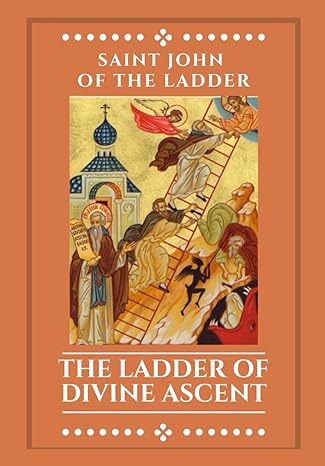
St. John Climacus is honored by the Church as a great ascetic and as the author of a remarkable work entitled, The Ladder of Divine Ascent, and therefore he has been named “Climacus,” or “of the Ladder.” In THE LADDER Saint John describes the ascent toward spiritual perfection, which is essential for anyone who wishes to save his soul. It is a written account of his thoughts, based on the collected wisdom of many wise ascetics, and on his own spiritual experience. The book is a great help on the path to truth and virtue. The steps of THE LADDER proceed gradually from strength to strength on the path of perfection. The summit is not reached suddenly, but gradually, as the Savior says: “The Kingdom of Heaven suffers violence, and the violent take it by force” (Mt.11:12).
Please make a Charitable Donation to Help with the Running Costs of this Blog:


















 )
)