I recall that during the late 1990’s my wife Elisheva, children and I were traveling by train across Germany on the way to Hamburg on route to Denmark. We were waiting for a connecting train at Osnabruck. It was a sleepy countryside station – we were sitting in the station café on the platform. We awaited our ‘transport’ to arrive. Our son was three years old, and our two daughters were in their teens. A German lady also sitting there showed an interest in our family group and we got chatting.
In my imagination a very different scenario was being played out – we were not waiting for our connection to Hamburg, but rather “transport” to one of the death camps in the east: Bregen-Belsen or Ravensbruck. You may think, “what a shocking and even vile thought?” But nonetheless it is was a horrible possibility if it were some 50 years earlier, from we had enough Jewish ancestry in our heritage to have included my family and I in Hitler’s Final Solution. Anyone up to one quarter Jewish was designated libel to extermination. None of the pleasant conversation with our fellow German traveller, but only Nazi SS guards, herding those waiting like cattle being sent to the abattoir for slaughter.
Martin Niemöller
First, they came for the socialists, and I did not speak out
— Because I was not a socialist.
Then they came for the trade unionists, and I did not speak out
— Because I was not a trade unionist.
Then they came for the Jews, and I did not speak out
— Because I was not a Jew.
Then they came for me
and there was no one left to speak for me.
Niemöller’s earliest speeches, written in 1946, lists the Communists, incurable patients, Jews and Jehovah’s Witnesses, and civilians in countries occupied by Nazi Germany. In all versions, the impact is carefully built up, by going from the “smallest, most distant” group to the largest, Jewish, group, and then finally to himself as a by then outspoken critic of Nazism. Niemöller made the cardinal “who cares about them” clear in his speech for the Confessing Church in Frankfurt on 6 January 1946, of which this is a partial translation.
Jewish suffering and persecution go back millennia, but reached its horrific climax in the Holocaust, when over six million Jewish people perished under Nazi Germany’s Final Solutionto the Jewish question/ problem. Hitler and his cohorts and numerous collaborators did not either perceive of or design the Holocaust upon a sudden whim, but it was the culmination of systematic hatred of the Jewish people in Europe. Though no one else can be blamed for Hitler’s heinous crimes, other than those who participate in it, yet centuries of bad Christian theology about the Jewish people did contribute to the final outcome. Accusations of Decide – “Christ killers,” was only finally revoked at Vatican II in the 1960’s. Negative attitudes, alas result in negative and destructive outcomes. Martin Luther’s tract On the Jews and Their Lies* is a pernicious piece of filth penned by an aged Luther. He may have been the great reformer of the Church, but this blight upon his record, remains a reality. Luther was by no means alone in his anti-Judaism and the denigration of the Jewish people and the Jewish religion.
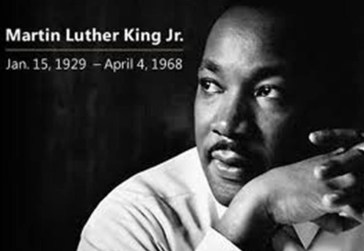
My objective is not to induce a deep sense of guilt, but to give a stark warning to all of us that the progression from anti-Judaism, quickly develops into anti-Semitism and this is all too often followed by anti-Zionism. This is sometimes referred to as the new face of anti-Semitism. With the desire for justice for the Palestinians, it must equally be coupled with an equal desire for justice for the Jews, not only in Israel, but throughout the world.Martin Luther King gives expression to this desire in his speech “I HAVE A DREAM,” AUGUST 28 1963:
However, together with Dr Martin Luther King Jr., I too have a dream: “When we allow freedom to ring, when we let it ring from every village and every hamlet, from every state and every city, we will be able to speed up that day when all of God’s children, black men and white men, Jews and Gentiles, Protestants and Catholics,will be able to join hands and sing in the words of the old Negro spiritual:
“Free at last! Free at last! thank God Almighty, we are free at last!” (Martin Luther King, Jr.). In its original context Dr King was expressing his dream to witness the end of racial segregation in the United States of America and particularly for its black citizens – nonetheless, he equally acknowledges that freedom from racial oppression for one, is freedom for all. In this he included Jewish people.
Why do strangers kill strangers?
You may ask: “Why do strangers kill strangers?” Equally, “Why do neighbours kill neighbours? Think of the Greeks and Turks; Rwanda; Kosovo and Bosnia-Herzegovina, when Serbian, Croatian and Moslem turned on each other. Where communities and families that had lived together for centuries suddenly go insane, murdering each other? While we commemorate the victims of genocides, we need to ask, but do we do so with understanding? These questions are asked by Timothy Snyder in his book Black Earth.
In Simon Reeves documentary series on the Tropic of Capricorn he interviewed a Herero historian on a visit to Namibia. She said, that the Germans have practiced [genocide] on the Herero people before they did that to the Jewish people. Between 65000 and 80000 Hereros were destroyed by the Germans around 1908. Then there was the Armenian genocide by the Turks from 1910 -1918 when a million and a half died.Though the most heinous Jewish and Gypsy genocide under the Nazis, from 1939 – 1945 has become part of the history of the mid-twentieth century, yet still other acts of genocides have followed. The Soviet and Chinese mass murder of its own citizens under Stalin and Mao, plus, Biafra, Cambodia, Zimbabwe, Rwanda, Kosovo, Bosnia and Herzegovina,Syria, Darfur, Democratic Republic of the Congo, North Korea, and Rohingya Moslems, and so the list goes on.
Should we be confident that a holocaust is behind us? Just because some of these killings are not officially recorded as ‘genocide,’ that does not diminish the reality of state sponsored mass killing that took place. Take for example the nearly 1000 infant mortality caused by the Apartheid forced removal of the black population of Grahamstown, Easter Cape, South Africa to Dimbaza a wasteland that is 40 miles away from Grahamstown – though this was not a deliberate act of genocide, nonetheless, this does not diminish the seriousness of the Apartheid government policy that resulted in the death of these children, partly due to no access to medical care.
There is no place for complacency
There is no room for complacency, because this world in which we live is a dangerous place. It is changing and reviving fears that were familiar in Hitler’s time and to which Hitler responded in the way that he did. He exploited the defeat and humiliation of the German nation after WWI. The Treaty of Versailles, brought German to its knees with not only its military defeat, but crippling economic retribution that was exacted upon it by the Allies. The history of the Holocaust is not over, for its precedent/ significance is eternal, and alas, its lessons have not yet been learned.
A history of the Holocaust must be contemporary, says Timothy Snyder, due to the fact that humankind is prone to forget. Equally, memory can be very selective, as we choose to recall and remember only those things that fit in with our world-view. The Holocaust is not only about history, it is equally a warning, says Snyder. It is not enough to say, “Never again!” – particularly when we live in such a dangerous age. There are ominous storm clouds building in the East and West. Xi’s China, Putin’s Russian and Trump’s America. Not forgetting the Middle-East theatre of engagement were proxy wars are being played out: Russia, America, NATO, UN, Turkey, Saudi Arabia, Iran, Syria, and Israel. PYPM – the Push Me Pull Yougame is being enacted by the major global players.
Our Guilty Silence
Dare we sit silently and not speak out against all forms of racial hatred and xenophobia? Wherever it raises its ugly head, we need to expose it and speak up and speak out against it. I grew up in Apartheid South Africa and as a privileged white person, I know that I could have done more than I did. Equally today, while we think of the death of the 6 million Jewish people, let us not forget the other genocides that have taken place in the last 100 years –a million and a half Gypsies, the physically and mentally disabled, homosexuals, and a multitude of Poles and Slavs also perished during WWII. Then there is the Armenian genocide at the hands of the Turks that has never been acknowledged. Even while we sit here in peace and security, there are other acts of cruelty being carried out in various parts of the world. A new partnership is being forged: The Campaign Against Anti-Semitism is a growing alliance of people all over the world speaking up, and standing against anti-Semitic hatred and acts of violence. I encourage everyone who loves God, to equally love his people the Jews and stand with them in this hour of opportunity and equally face the challenges that lay ahead. https://antisemitism.uk/introduction/
The Race Is Not to the Swift nor the Battle to the Strong
Let us draw some comfort from the Scripture that indicates to us “that the race is not to the swift, nor the battle to the strong.” (Eccl. 9:11.) Time and again the Scriptures indicate that those who endures to the end, they shall be delivered. The race of life is not a sprint, it is not the 100-meter dash, nor is it really a middle-distance run. It’s a marathon run. It’s a long-distance run. In the race of life, at times it is hard. It begins early. I was confronted by my first experience of anti-Semitism at the age of 9 when a fellow pupil in my class in Johannesburg, South Africa abused me for being a Jew. Even 61 years later people I can recall that difficult experience at primary school. We remember what it felt like, perhaps, that the race was hard because you were too short or too skinny or you had to wear glasses or braces, or because you are from a different ethnic background or religion?
All of those things can either have negative or positive outcomes. Don’t let them define you or torment your soul. As you went and go through difficult times remember that the God of Israel is there and he neither slumbers or sleeps – He is the Shepherd of Israel. In these tests of life, none of us are promised that it will be an easy race. However, from the Book of Hebrews, the writer says, as you run the race of life: “And let us run with patience the race that is set before us” …So if the race sometimes seems difficult, this is what helps to build character. It puts steel into your soul. Don’t let it crush you, but “we shall overcome, some day.” Wherever you are currently, this is God’s appointed time for each one of us to run the race of life this day. The race is not too difficult; nor are the obstacles too hard to surmount. Remember, the God of Jacob is with us and Jacobs beloved son Joseph the patriarch did come forth from prison to sit up the thorn on high. From a Christian perspective, so too, Jesus of Nazareth, did arise as the redeemer and Lord of all. Some may say, if Jesus is redeemer, then where is the universal peace that is meant to be part of the messianic reign? Isaiah the prophet of Israel does testify of the Servant of the Lord, who will suffer for humanity and be their sin bearer.
Dr Sam Wells from St Martins-in-the Field, London, UK gave an excellent talk in 2016 at a conference in Co Durham which he based upon the book and Film entitled the Boy in the Striped Pyjamas and he renamed it, God in Stiped Pajamas – This is due to the fact that God is always with us when we suffer as he identifies with human suffering in and through the Suffering Servant of the LORD.
Dr Wells gave Roni permission to use his talk as he saw fit. This is beautifully read by Elisheva Mechanic on this occasion of Holocaust Remembrance on 27th January, 2019.
Charitable Donation to Support Shalom Radio UK’s Running Costs
This is to enable you the listener to express your thanks and help me expand the work of Shalom Radio UK by making a donation CLICK ON LINK TO DONATE:https://paypal.me/hotrodronisblogcom
Shalom Radio UK, Sponsored by MTMI – Messianic Teaching Ministry International
This Programme contains some very distressing descriptions of the systematic murder of Jewish People in the death camps!
Click on Link Below to Listen:
DUE TO THE LENGTH OF PART 2 A – PART 2 B IS A SEPARATE PODCAST THAT FOLLOWS THIS MONTH
In 2008 a friend Dave Traher and I visited Cracow:
We went there and came back, unlike so many people of Jewish descent
Day One: Visit to the Jewish Old Town in Cracow
Lunch at the Ariel Restaurant
A Jewish style restaurant like so many of the other aspects of Jewish life in Cracow was like a shadow and ghost of the past. Though the food was authentic Polish Jewish cooking, with many of the traditional dishes just like my mother cooked, none of the staff or owner is Jewish.
*
Day Two: Visit to the Death Camps
Auschwitz-Birkenau Memorial and Museum Tours
The Auschwitz-Birkenau Memorial and Museum is the resting place for some 1.5 million people, as the site once served as a concentration camp and extermination site of the European Jewish community during World War II. Today, Auschwitz-Birkenau is an important historical area, allowing visitors to reflect on the monumental horrors that occurred during the genocide.
The Basics
Auschwitz-Birkenau tours take visitors through some of the 13 surviving prison blocks that now feature museum exhibitions, many dedicated to victims and displaying documentary photographs and historical artifacts. In addition the main camp, a much larger camp called Birkenau (or Auschwitz II) sits about 1.25 miles (2 kilometers) to the west. This site has been left almost exactly as it was when the Nazis abandoned it at the end of the war, complete with gas chamber ruins, and is also considered a part of the UNESCO-listed Auschwitz-Birkenau Memorial and Museum. An official visitor’s center can be found at the entrance to Auschwitz I.
The two sites are often visited together on group or private tours from Krakow Old Town, available in a number of languages and generally including transport between the memorial areas, plus hotel pickup and drop-off or airport transfers. It’s recommended that travelers allot about 90 minutes for each of the sites. A visit is also sometimes combined with a trip to the nearby Wieliczka Salt Mine.
How to Get There
Auschwitz-Birkenau is in Oswiecim, about 40 miles (65 kilometers) west of Krakow, from where most tours depart. A few tours are offered from Warsaw 196 miles (315 kilometers) away, although transport takes four hours. Both memorial sites have paid parking lots, and shuttles run between the two. Zakopane is located 80 miles (130 kilometers) south.
SPONSORED BY MTMI – MESSIANIC TEACHING MINISTRY INTERNATIONAL
Charitable Donation to Support Shalom Radio UK’s Running Costs
This is to enable you the listener to express your thanks and help me expand the work of Shalom Radio UK by making a donation CLICK ON LINK TO DONATE:https://paypal.me/hotrodronisblogcom
Poland, Czech Republic, Germany and Croatia are four European countries that I have visited in the past ten years and each has a story to tell of the tragic destruction of their Jewish communities. They were betrayed and destroyed by both the Nazis and their collaborators.In my own personal background I have one Polish Jewish gradmother who was my mother’s mother. Mini Levitson moved to England as a young girl together with her family that included her grandmother. So as far as I know none of my direct close relatives from her family perished in the Holocaust. That of course does not mean that members of my extended Polish family did not die under the Nazis and their Polish collaborators.
Annie’s Grandmother
My Mom – Annie Mechanic nee Abrahms
Please Note that the recorded programme differs substantially from the written record on this blog
*
Charitable Donation to Support Shalom Radio UK’s Running Costs
This is to enable you the listener to express your thanks and help me expand the work of Shalom Radio UK by making a donation
CLICK ON LINK TO DONATE:
https://paypal.me/hotrodronisblogcom
£10.00
Prior to WWII, one in ten Poles were Jewish, which made 10% of the polish population Jewish. The Pale of Settlement included Poland:
The Pale of Settlement (Russian: Черта́ осёдлости, chertá osyódlosti, Yiddish: דער תּחום-המושבֿ, der tkhum-ha-moyshəv, Hebrew: תְּחוּם הַמּוֹשָב, tẖum hammosháv) was a western region of Imperial Russia with varying borders that existed from 1791 to 1917, in which permanent residency by Jews was allowed and beyond which Jewish residency, permanent or temporary,[1] was mostly forbidden. Most Jews were still excluded from residency in a number of cities within the Pale as well. A limited number of Jews were allowed to live outside the area, including those with university education, the ennobled, members of the most affluent of the merchant guilds and particular artisans, some military personnel and some services associated with them, including their families, and sometimes the servants of these.
The Russian Empire in the period of the existence of the Pale was predominantly Orthodox Christian. The area included in the Pale, with its large Jewish, Uniate and Catholic populations, was acquired through a series of military conquests and diplomatic manoeuvres, between 1654 and 1815.
The end of the enforcement and formal demarcation of the Pale coincided with the beginning of the First World War, and ultimately with the February and October Revolutions of 1917, i.e., the fall of the Russian Empire.
Though Jewish life in Poland was at times turbulent and difficult for its Jewish population prior to WWII, there was never an attempt to systematically annihilate its Jewish population as the was promulgated by the Nazis. What is tragic is the many Polish citizens collaborated with the Nazis, as was the case with Ustasha in Croatia. However, far fewer devout Catholics were willing to participate in the Nazi genocide and a much higher percentage actively protected and hid Jewish people during those dark days. This included, priests, nuns and Catholic lay folk.
Public execution of Polish priests and civilians in Bydgoszcz’s Old Market Square on 9 September 1939.
The Catholic Church in Poland was brutally suppressed by the Nazis during the German Occupation of Poland (1939-1945). Repression of the Church was at its most severe in Polish areas annexed by Nazi Germany, where churches were systematically closed and most priests were either killed, imprisoned, or deported. From across Poland, thousands of priests died in prisons and concentration camps; thousands of churches and monasteries were confiscated, closed or destroyed; and priceless works of religious art and sacred objects were lost forever. Church leaders were targeted as part of an overall effort to destroy Polish culture. At least 1811 Polish clergy died in Nazi concentration camps. An estimated 3000 clergy were killed in all. Hitler’s plans for the Germanization of the East saw no place for the Christian Churches.[1]
The massive crimes inflicted against Polish Catholicism took place in the wider context of the Nazi crimes against Poles under Generalplan Ost, as the German regime implanted a general policy of eventually eliminating Poland’s existence. Adolf Hitler himself remarked in August 1939 that he wanted his Death’s Head forces “to kill without pity or mercy all men, women, and children of Polish descent or language.”[2]
Catholicism had a presence in Poland stretching back almost 1,000 years.[3] The historian Richard J. Evans wrote that the Catholic Church was the institution that, “more than any other had sustained Polish national identity over the centuries”.[4] By 1939, around 65% of Poles professed to be Catholic.[3] The invasion of predominantly Catholic Poland by Nazi Germany in 1939 ignited the Second World War. Britain and France declared war on Germany as a result of the invasion, while the Soviet Union invaded the Eastern half of Poland in accordance with an agreement reached with Hitler. The Catholic Church in Poland was about to face decades of repression, both at Nazi and Communist hands.[5]
The Pact created a Nazi-Soviet alliance and sealed the fate of Poland.
Nazi Germany invaded Poland from the West on 1 September 1939 and a period of brutal occupation commenced. Racist Nazi ideology targeted the Jews of Poland for extermination and categorized ethnic Poles (mostly Catholics) as an inferior race. Jews were rounded up into Ghettos or sent to extermination camps. The ethnic Polish intelligentsia were also targeted for elimination, with priests and politicians alike murdered in a campaign of terror. Forced labour was also extensively used. The Red Army invaded Poland from the East on 17 September 1939.[6]The Soviets were also responsible for repression of Polish Catholics and clergy, with an emphasis on “class enemies”. Operation Barbarossa, the German attack on the Soviet Union was launched in June 1941, shattering the Nazi-Soviet non-aggression pact, and bringing Eastern Poland under Nazi domination.[7]Norman Davies wrote:[8]
Jews and Poles faced a common enemy through the Nazi onslaught
The Nazi plan for Poland entailed the destruction of the Polish nation. This necessarily required attacking the Polish Church, particularly in those areas annexed to Germany.[9] According to Hitler biographer Ian Kershaw, in his scheme for the Germanization of Eastern Europe, Hitler made clear that there would be “no place in this utopia for the Christian Churches”.[1] Historically, the Catholic Church had been a leading force in Polish nationalism against foreign domination, thus the Nazis targeted clergy, monks and nuns in their terror campaigns to eliminate Polish culture. Nazi ideology was hostile to Christianity and Hitler held the teachings of the Catholic Church in contempt. Hitler’s chosen deputy and private secretary, Martin Bormann, was firmly anti-Christian as was the official Nazi philosopher, Alfred Rosenberg. In his “Myth of the Twentieth Century“, published in 1930 Rosenberg wrote that the main enemies of the Germans were the “Russian Tartars” and “Semites”—with “Semites” including Christians, especially the Catholic Church:
________
In Search of a Lost People – Part 2 B
Due to the length of Part 2 A – Part 2 B is a separate Podcast that will follow next month
In 2008 a friend Dave Traher and I visited Cracow:
*
Day One: Visit to the Jewish Old Town in Cracow
Lunch at the Ariel Restaurant
A Jewish style restaurant like so many of the other aspects of Jewish life in Cracow was like a shadow and ghost of the past. Though the food was authentic Polish Jewish cooking, with many of the traditional dishes just like my mother cooked, none of the staff or owner is Jewish.
*
Day Two: Visit to the Death Camps
Auschwitz-Birkenau Memorial and Museum Tours
The Auschwitz-Birkenau Memorial and Museum is the resting place for some 1.5 million people, as the site once served as a concentration camp and extermination site of the European Jewish community during World War II. Today, Auschwitz-Birkenau is an important historical area, allowing visitors to reflect on the monumental horrors that occurred during the genocide.
The Basics
Auschwitz-Birkenau tours take visitors through some of the 13 surviving prison blocks that now feature museum exhibitions, many dedicated to victims and displaying documentary photographs and historical artifacts. In addition the main camp, a much larger camp called Birkenau (or Auschwitz II) sits about 1.25 miles (2 kilometers) to the west. This site has been left almost exactly as it was when the Nazis abandoned it at the end of the war, complete with gas chamber ruins, and is also considered a part of the UNESCO-listed Auschwitz-Birkenau Memorial and Museum. An official visitor’s center can be found at the entrance to Auschwitz I.
The two sites are often visited together on group or private tours from Krakow Old Town, available in a number of languages and generally including transport between the memorial areas, plus hotel pickup and drop-off or airport transfers. It’s recommended that travelers allot about 90 minutes for each of the sites. A visit is also sometimes combined with a trip to the nearby Wieliczka Salt Mine.
How to Get There
Auschwitz-Birkenau is in Oswiecim, about 40 miles (65 kilometers) west of Krakow, from where most tours depart. A few tours are offered from Warsaw 196 miles (315 kilometers) away, although transport takes four hours. Both memorial sites have paid parking lots, and shuttles run between the two. Zakopane is located 80 miles (130 kilometers) south.
SPONSORED BY MTMI – MESSIANIC TEACHING MINISTRY INTERNATIONAL
Charitable Donation to Support Shalom Radio UK’s Running Costs
This is to enable you the listener to express your thanks and help me expand the work of Shalom Radio UK by making a donation
CLICK ON LINK TO DONATE:
https://paypal.me/hotrodronisblogcom
At lunch time we went to the Ariel Jewish restaurant and I ordered a traditional Polish Jewish meal as did Dave. I asked the waiter if he was Jewish and he replied that he was not. I then enquired as to whether the owner was Jewish and he again said that he was not a Jew and nor was the chef – Yes a Jewish style restaurant, but no Jews were involved. This was symptomatic of the reality of Polands lost Jews. Shadows and memories of Polands tragic history.
On the Tuesday morning bright and early our tour coordinator picked us up at the hotel where Dave and I where we were staying. Together with four other British visitors we traveled the 40 miles to Auschwitz and joined a lager group of English speaking visitors.
Our tour guide for the morning at the main camp gave us each headsets so that we could listen to her commentary as we progressed through the concentration camp.
At the entrance be first encountered the sign over the entrance that declares Abrbeit Macht Frei – Work/ Labour Makes Free – the only freedom that most of those who entered would be the freedom from the sufferings of this mortal life that results from death.
A first impression that the undiscerning visitor may get is that this place is a boarding school or college campus and not a place of torture and death on a level of the deepest level of human depravity.
Please note that this written account is not identical to the audio recording
Charitable Donation to Support Shalom Radio UK’s Running Costs
This is to enable you the listener to express your thanks and help me expand the work of Shalom Radio UK by making a donation
CLICK ON LINK TO DONATE:
https://paypal.me/hotrodronisblogcom
£10.00
Poland, Czech Republic, Germany and Croatia are four European countries that I have visited in the past ten years and each has a story to tell of the tragic destruction of their Jewish communities. They were betrayed and destroyed by both the Nazis and their collaborators.
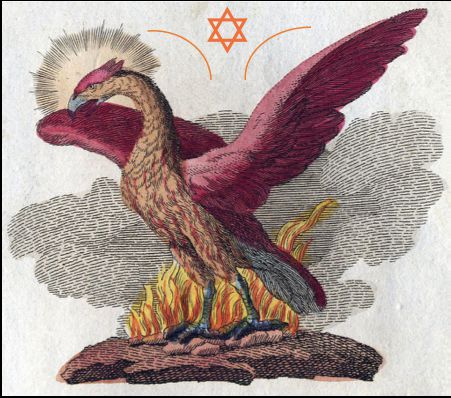
My intention is to explore the twin themes of hope and peace in the face of loss. Doom and gloom is never my objective, for like the Phoenix that rises out of the ashes, as with that legendary bird Jewish hope will arise and be reborn!
The Star of David like the Phoenix has arisen out of the ashes of the Shoah
Am Yisrael Chai – The People of Isreal live! Is not only a Jewish declaration of national survival, but also the acclamation that despite all those who have sought to destroy us we live and reserve the right to self-determination, both in Israel and the diaspora.
The Jews of Dubrovnik, Croatia
EPSON scanner image
EPSON scanner image
In this programme I focus upon the Jewish community of Dubrovnik, past and present.
EPSON scanner image
EPSON scanner image
Death Camps
Stand with me in Auschwitz or Auschwitz Birkenau extermination camps and cast your mind back to the absolute horror of the Nazi killing machine that took place in the Holocaust during WWII.
I have stood in a gas chamber and walked through a crematorium – though I had a momentary sense of what those who died there must have experienced in their last moments in the land of the living, it is impossible to truly know what they went through.
Dubrovnik, Croatia
In terms of the chronology of my visits, I begin with my last visit. It was some reservations that Elisheva and I decided to visit Croatia due to its history of Nazi sympathies leading up to and during WWII. However, on further reflection it occurred to me that this current generation can’t be held responsible for the sins of their fathers.
To my delight I discovered the synagogue in the Old City of Dubrovnik. On duty was a young woman who I will call Star (I have changed her name to protect her identity)
I asked Star how many Jews were killed in Croatia?
According to what was recorded:
Slavko Goldstein estimates that approximately 30,000 Jews were killed from the Independent State of Croatia, with approximately 12,790 of those killed in Croatia.
Star explained that there are only 47 Jewish people living in Dubrovnik currently and prior to WWII there were about 90 Jewish people in that city which is a comparatively small population in this predominantly Catholic country.
I enquired as to what happened to the Jews of not only Dubrovnik, but Croatia as a whole?
Star explained that there were different groups in Croatia – those who collaborated with the Nazis and those partisans who defended the Jewish people and resisted fascism.
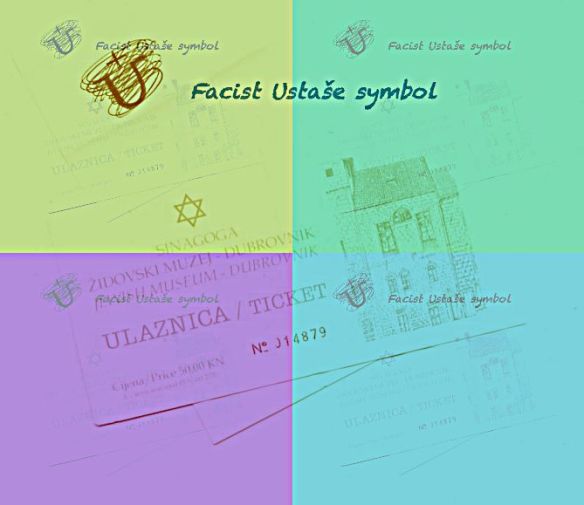
She then drew the Facist Ustaše symbol on a piece of paper and she explained that this symbol of hate still occasionally appears on subways walls and aother places and then she quickly scribbled it over.
Symbol of Hate
History of the Jews in Croatia
The Jewish community of Croatia dates back to at least the 3rd century, although little is known of the community until the 10th and 15th centuries. By the outbreak of World War II, the community numbered about 20,000[4] members, most of whom were killed during the Holocaust that took place on the territory of the Nazi puppet state called Independent State of Croatia. After World War II, half of the survivors chose to settle in Israel, while an estimated 2,500 members continued to live in Croatia.[2] According to the 2011 census, there were 509 Jews living in Croatia, but that number is believed to exclude those born of mixed marriages or those married to non-Jews. More than 80 percent of the Zagreb Jewish Community were thought to fall in those two categories.
World War II.
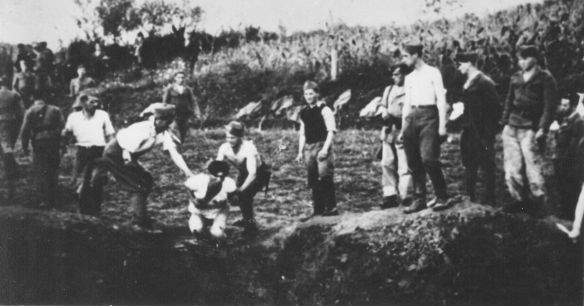
The Holocaust in the Independent State of Croatia refers primarily to the genocide of Jews, but sometimes also include that of Serbs (the “Serbian Genocide“) and Romani (Porajmos), during World War II within the Independent State of Croatia, a fascist puppet state ruled by the Ustashe regime, that included most of the territory of modern-day Croatia, the whole of modern-day Bosnia and Herzegovina and the eastern part of Syrmia (Serbia). 90% of Croatian Jews were exterminated in Ustashe-run concentration camps like Jasenovac and others, while a considerable number of Jews were rounded up and turned over by the Ustashe for extermination in Nazi Germany.
How many Jews were killed in Croatia?
Slavko Goldstein estimates that approximately 30,000 Jews were killed from the Independent State of Croatia, with approximately 12,790 of those killed in Croatia.
The Jewish community of Croatia dates back to at least the 3rd century, although little is known of the community until the 10th and 15th centuries[when?]. By the outbreak of World War II, the community numbered approximately 20,000[4] members, most of whom were killed during the Holocaust that took place on the territory of the Nazi puppet state called Independent State of Croatia. After World War II, half of the survivors chose to settle in Israel, while an estimated 2,500 members continued to live in Croatia.[2] According to the 2011 census, there were 509 Jews living in Croatia, but that number is believed to exclude those born of mixed marriages or those married to non-Jews. More than 80 percent of the Zagreb Jewish Community were thought to fall in those two categories.
World War II.
The Holocaust in the Independent State of Croatia refers primarily to the genocide of Jews, but sometimes also include that of Serbs (the “Serbian Genocide“) and Romani (Porajmos), during World War II within the Independent State of Croatia, a fascist puppet state ruled by the Ustashe regime, that included most of the territory of modern-day Croatia, the whole of modern-day Bosnia and Herzegovina and the eastern part of Syrmia (Serbia). 90% of Croatian Jews were exterminated in Ustashe-run concentration camps like Jasenovac and others, while a considerable number of Jews were rounded up and turned over by the Ustashe for extermination in Nazi Germany.
Shoah
The fate of the Jews of Dubrovnik (Ragusan) during WWII deteriorated in April 1941 with the capitulation of the Kingdom of Yugoslavia when it became part of the ‘First Italian Zone,’ with the military forces under the Italians and the civil administration under Ustase a Facist ultranationalistic regime that in acted anti-Jewish measures.
We should note how the Facist Ustaše began to enact the Nazi dehumanising policy of isolating and restricting the Jewish population of not only Dubrovnik, but the whole of Croatia. They willing complied with the Nuremberg anti-Jewish laws, marking out Jewish enterprises.
Jews were-forbidden entry into restaurants and beaches and the were forced to display signs on their business firms and shops: ‘Jewish firms;’ and ‘Jewish shops.’
These measures grew in hostility and severity with Jews having to surrender their personal possessions – cars, lorries, motorcycles, radio sets, cameras, typewriters and general tools of their trade.
Curfews were imposed upon them that stipulated that they were not allowed to be outdoors beyond 8.00 p.m. This was followed by the first transport to concentration camps. Among the first victims were prominent Jews of Dubrovnik that included Joseph Berber a photographer, Joseph Fuch a shopkeeper, and merchant Klein. Of these three men only Fuchs survived. Jasenovac concentration camp was their destination.
Jewish families of Dubrovnik prior to 1941
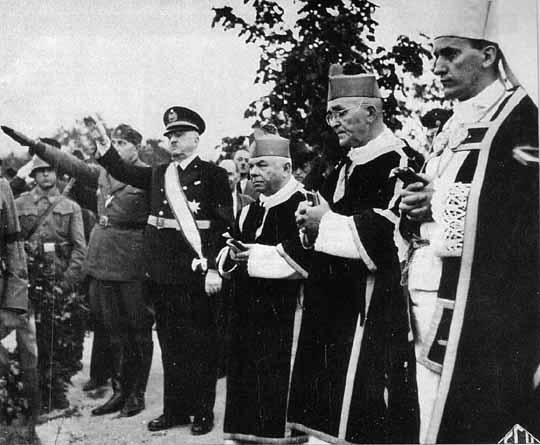
Church Collaberated with Facists and Nazis
Catholic clergy involvement with the Ustaše covers the role of the Croatian Catholic Church in the Independent State of Croatia (NDH), a Nazi puppet statecreated on the territory of Axis–occupied Yugoslavia in 1941. The NDH was controlled by the Ustaše movement, which was not recognized by the Holy See, although the Holy See, more specifically Pope Pius XII, was criticized for not condemning the movement more timely and forcefully.
Mark Biondich notes that “[T]he younger generation of radical Catholics, particularly those of the crusader organisation, supported the Ustaša with considerable enthusiasm, while the older generation of Croat Populists [HSS] was more reserved and in some cases overtly hostile”.[9] This generational gap between conservative and radical Catholic priests was further reflected by region (urban vs rural), the geographical location of churches and bishoprics, and an individual priest’s relative place within the Church hierarchy. More senior clerics generally disassociated themselves from the NDH.[9] They were also divided by religious order. The Fransciscans, who had resisted for over fifty years Vatican efforts to turn over parishes to secular clergy,[10] were far more prominently associated with the Ustaša than were the Salesians.[9]Mass murder occurred through the summer and autumn of 1941. The first Croatian concentration camp was opened at the end of April 1941, and in June a law was passed to establish a network across the country, in order to exterminate ethnic and religious minorities.[11] According to writer Richard Evans, atrocities at the notorious Jasenovac concentration camp were “egged on by some Franciscan friars”.[11]Phayer wrote that it is well known that many Catholic clerics participated directly or indirectly in Ustaša campaigns of violence, as is attested in the work of Corrado Zoli (Italian) and Evelyn Waugh (British), both Catholics themselves.[12]A particularly notorious example was the Franciscan friar Tomislav Filipović, also known as Miroslav Filipović-Majstorović, known as “Fra Sotona” (“Friar Satan”), “the devil of Jasenovac”, for running the Jasenovac concentration camp, where estimates of the number killed range between 49,600 and 600,000.[13][14][15] According to Evans, Filipović led murder squads at Jasenovac. According to the Jasenovac Memorial Site, “Because of his participation in the mass murders in February 1942 the church authorities excommunicated him from the Franciscan order, which was confirmed by the Holy See in July 1942.”[16]He was also required to relinquish the right to his religious name, Tomislav. When he was hanged for war crimes, however, he wore his clerical garb.[17]Ivan Šarić, the Roman Catholic Archbishop of Vrhbosna in Sarajevo, supported the Ustaša, in particular the forcible conversion of Orthodox Serbs to Roman Catholicism. His diocesan newspaper wrote: “[T]here is a limit to love. The movement of liberation of the world from the Jews is a movement for the renewal of human dignity. Omniscient and omnipotent God stands behind this movement.”[18] Šarić appropriated Jewish property for his own use, but was never legally charged. Some priests served in the personal bodyguard of Pavelić, including Ivan Guberina, a leader of the Croatian Catholic movement, a form of Catholic Action. Another priest, Bozidas Bralo, served as chief of the security police in Sarajevo, who initiated many anti-Semitic actions.[13]To consolidate Ustaša party power, much of the party work in Bosnia and Herzegovina was put in the hands of Catholic priests by Jure Francetić, an Ustaše Commissioner of this province.[19] One priest, Mate Mugos, wrote that clergy should put down the prayer book and take up the revolver. Another, Dionysius Juričev, wrote in the Novi list that to kill children at least seven years of age was not a sin.[13] Phayer argues that “establishing the fact of genocide in Croatia prior to the Holocaust carries great historical weight for our study because Catholics were the perpetrators and not, as in Poland, the victims.”[20]
Execution of prisoners at the Jasenovac concentration camp, which was briefly run by a Franciscan military chaplain, Miroslav Filipović, who was stripped of his status by the church but was hanged for his war crimes wearing his clerical garb.[1]Pavelić told Nazi Foreign Minister von Ribbentrop that while the lower clergy supported the Ustaše, the bishops, and particularly Archbishop Stepinac, were opposed to the movement because of “Vatican international policy”.[6]Along with Archbishop Stepinac, bishops Mišić and Rožman objected to the Ustaša violence.[18] Hebblethwaite wrote that to oppose the violence of the new Ustaše state, the “Vatican’s policy was to strengthen the hand of [Archbishop Stepinac] in his rejection of forcible conversions and brutalities.”[6]Phayer wrote that Stepinac came to be considered as jeudenfreundlich (Jew friendly) by the Nazi-linked Ustaše authorities. He suspended a number of priest collaborators in his diocese.[21] Thirty-one priests were arrested following Stepinac’s July and October 1943 explicit condemnations of race murders being read from pulpits across Croatia.[22] Historian Martin Gilbert wrote that Stepinac, “who in 1941 had welcomed Croat independence, subsequently condemned Croat atrocities against both Serbs and Jews, and himself saved a group of Jews”.[23]Aloysius Mišić, Bishop of Mostar, was a prominent resister.[18]Gregorij Rožman, the bishop of Ljubljana in Slovenia allowed some Jews who had converted to Catholicism and fled from Croatia into his diocese to remain there, with assistance from the Jesuit Pietro Tacchi Venturi in obtaining the permission of the Italian civil authorities.[24]In Italian-occupied Croatia, Nazi envoy Siegfried Kasche advised Berlin that Italian forces were not willing to hand over Jews and had “apparently been influenced” by Vatican opposition to German anti-Semitism. The intervention of Giuseppe Marcone, Pius XII’s Apostolic Visitor to Zagreb, saved a thousand Croatian Jews married to non-Jews.[4] The Apostolic delegate to Turkey, Angelo Roncalli, saved a number of Croatian Jews by assisting their migration to Palestine. Roncalli succeeded Pius XII as Pope, and always said that he had been acting on the orders of Pius XII in his actions to rescue Jews.[21]Yad Vashem has recognised 109 Croatians as Righteous among the Nations for rescuing Jews from the Holocaust, including Catholic nuns, Jožica Jurin (Sister Cecilija), Marija Pirović (Sister Karitas), and Sister Amadeja Pavlović, and a priest, Father Dragutin Jesih, who was murdered.[25][26][27]Archbishop Stepinac denounced the atrocities against the Serbs.[4] Phayer wrote that in July 1941, Stepinac wrote to Pavelić objecting to the condition of deportation of Jews and Serbs and then, realizing that conversion could save Serbs he instructed clergy to baptise people upon demand without the normal waiting time for instruction.[13] As Pavelić’s government cracked down on Serbs, along with the Jewish, Muslim, and Protestant Germanic minorities, the Catholic clergy took steps to encourage Orthodox Serbs to convert to Roman Catholicism.[28]
Archbishop Aloysius Stepinac of Zagreb was, at the time of his appointment in 1934 at the age of 39, the youngest Catholic bishop in the world. He initially received very little guidance from the Vatican and was given great leeway in how to deal with the rise of the Ustaše. His control over the lower bishops and clergy was not uniform.[13] Historian of the Holocaust Martin Gilbert wrote that, “Stepinac, who in 1941 had welcomed Croat independence, subsequently condemned Croat atrocities against both Serbs and Jews, and himself saved a group of Jews in an old age home”.[4]Stepinac shared the hope for a Catholic Croatia and viewed the Yugoslav state as “the jail of the Croatian nation”. The Vatican was not as enthusiastic as Stepinac and did not formally recognize the Ustaša, instead sending Giuseppe Ramiro Marcone as an apostolic visitor. Stepinac, who arranged the meeting between Pius XII and Pavelić, was satisfied with this step, viewing it as de facto recognition and Marcone as a nuncio in all but name.[5] Stepinac began attempting to publicly distance himself from the Ustaša in May 1941.[18]As the Ustaše murders “increased exponentially” in the summer and fall of 1941, Stepinac fell under “heavy criticism” for the church’s collaboration, but he was not yet prepared to break completely with the Ustaše. Phayer wrote that Stepinac gave the Ustaše the “benefit of the doubt …[and] decided on a limited response”.[34]Stepinac called a synod of Croatian bishops in November 1941. The synod appealed to Pavelić to treat Jews “as humanely as possible, considering that there were German troops in the country”.[34] The Vatican replied with praise to Marcone for what the synod had done for “citizens of Jewish origin”, although Israeli historian Menachem Shelah states that the synod concerned itself only with converted Jews.[34] Pius XII personally praised the synod for “courage and decisiveness”.[35] Shelach has written that:
Rychlak writes that the “Associated Press reported that ‘by 1942 Stepinac had become a harsh critic’ of the Nazi puppet regime, condemning its ‘genocidal policies, which killed tens of thousands of Serbs, Jews, Gypsies, and Croats.’ He thereby earned the enmity of the Croatian dictator, Ante Pavelić … [When] Pavelić traveled to Rome, he was greatly angered because he was denied the diplomatic audience he had wanted”, although he enjoyed at least two “devotional” audiences with the pontiff, under whom the Vatican granted Pavelić “de facto recognition” as a “bastion against communism”. Phayer wrote that Stepinac came to be known as jeudenfreundlich (Jew friendly) to the Nazis and the Ustaše regime. He suspended a number of priest collaborators in his diocese.[21]Stepinac declared publicly in mid-1942 that it was “forbidden to exterminate Gypsies and Jews because they are said to belong to an inferior race”. When Himmler visited Zagreb a year later, indicating the impending roundup of remaining Jews, Stepinac wrote Pavelić that if this occurred, he would protest for “the Catholic Church is not afraid of any secular power, whatever it may be, when it has to protect basic human values”. When the deportations began, Stepinac and papal envoy Giuseppe Marcone protested to Andrija Artuković. According to Phayer, the Vatican ordered Stepinac to save as many Jews as possible during the upcoming roundup.[21] Although Stepinac reportedly personally saved many potential victims, his protests had little effect on Pavelić.[37]
A Dilema
The role of the church in the face of oppressive regeims is a very crucial and often not as staight forward as it first appears. Nationalism of itself is not a bad thing, but it depends on how that develops and what are its attitude towards diversity and particularly other groups of people living within the nation-state.
Brexit in the UK or Trump’s America both show how there are those who use nationalism to give expression to their own racist xenophobic attitudes. This is also true of Labour’s attitude to Israel and Jewish people in the UK under Jeremy Corbyn’s leadership.
There are some who use Brexit to futher their racist agenda, just as in America under Trump, White Supremisits have been given licence to give expression to their hatred of African-Amerians and Hispanics in particular. Corbyn’s hatred of Israel equally has openned the door for those of the hard-left to not only express their opposition to Israeli policy towards the Palestinians, but also target Jews in Britain and Corbyn while claiming not to be an anti-Semite is hopelessly failing to protect Jewish people against all kinds of anti-Semitic attacks and this includes Jewish MPs in Labour and anyone who actively supports Israel or speaks out against his attitue towards Israel and Jews in general.
Both Archbishop Justin Welby of the Church of England and former Chief Rabbi Lord Jonathan Sacks have spoken out against Jeremy Corbyn’s failure to both condemn anti-Semitism in the Labour party and also distance himself from those who use the cloak of anti-Zionism as a guise to continue to attack British Jews and even question the loyalty of those who support Israel.
Theresa May has said she has been “sickened” by the fact that Jewish people are “fearful of the future” and warned that “you cannot claim to be tackling racism, if you are not tackling anti-Semitism.”
You’re not tackling racism if you’re not tackling anti-Semitism, Theresa May warns Jeremy Corbyn
Mrs May told the United Jewish Israel Appeal dinner in London last night that “in the face of any kind of hatred against the Jewish people … I say with that same defiance: ‘Je suis juif’.”
Mrs May said she will stand “with our Jewish community by rooting out the scourge of antisemitism here in our own country…
In our present study, this dilema is clearly seen in the way that there were those in the Catholic church who collaborated with Ustaše and those who stood against the atrocities committed by the facist regime.
In a news update on the web the other day I noticed that the Russian Orthodox Archbishops have broken ties with the Ukrainian Orthodox leadership, this is due to the worsening of the political relationship between Russia and the Ukraine. Once more we witness the fact that the Church has lost its prophetic voice and has bowed the knee to the political order of the day. The German Christians in Nazi Germany is the classic case where the Church became part of the Nazi regime giving it a theological justification for its devilish ideology in creating an Aryan Jesus who hated the Jews and became their enemy. Only the Confessing Church resited and stood against Nazism and its murder of the Jews.
Apartheid South Africa equally saw many Christian denominations develop a theology that supported Apartheid. Thankfully, this was not universal and particularly the Anglican Church (CPAS) and Roman Catholic Church spoke out against the racist ideology. There were also dissenting voices among Afrikaans Reform Churches as well as Methodist and Presbyterians who also spoke out against Apartheid. There were individual clergy who took a bold stand at great personal cost, these included Archbishops Joost de Blank and Desmond Tutu, Beyers Naudé, Ds. Ben Marais, Dr John W. de Gruchy, and Rev David Russell to mention some of the more pominant anti-Apartheid clegry. People like Dietrich Bonhoeffer were an inspiration in the struggle against apartheid.
Dietrich Bonhoeffer (4 February 1906 – 9 April 1945) was a German pastor, theologian, anti-Nazi dissident, and key founding member of the Confessing Church. His writings on Christianity’s role in the secular world have become widely influential, and his book The Cost of Discipleship has become a modern classic.[1]
Apart from his theological writings, Bonhoeffer was known for his staunch resistance to Nazi dictatorship, including vocal opposition to Hitler’s euthanasiaprogram and genocidal persecution of the Jews.[2] He was arrested in April 1943 by the Gestapo and imprisoned at Tegel prison for one and a half years. Later, he was transferred to a Nazi concentration camp. After being accused of being associated with the plot to assassinate Adolf Hitler, he was quickly tried, along with other accused plotters, including former members of the Abwehr (the German Military Intelligence Office), and then executed by hanging on 9 April 1945 as the Nazi regime was collapsing.
Righteous Among the Nations of Dubrovnik
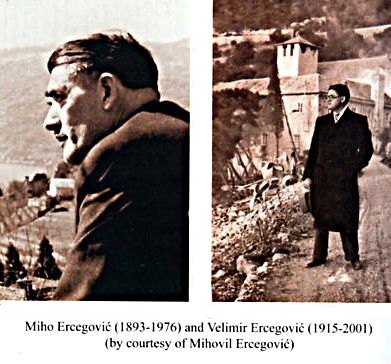
In addition to people like Archbishop Aloysius Stepinac there were a number of outstanding people who went to great lengths to save the Jews of Dubrovnik and this includes Miho Ercegovic and his son Velimar, who worked in their photographic business – this included Elvira Kohn, Paula Rosenberger and her sister Eugenia. When they were exposed as Jews, the Ustase soldiers forced their way into the bookshop Jardan and photographic business and despite Miho brave effort, he was unable to prevent their arrest.
While being taken away Miho handed Elvira a Leica camera, and she enquired, “How shall I give it back to you?” Moho replied, “May the camera share your fate!” (p 106).
Leica camera
Evira was at first taken to the camp Kupari, and then to Rab. She managed to hide the camera and take photographs. When she escaped from the camp to the free territory and began to work as the first war photographer and reporter for the Vjesnikdaily news paper. Her photos proved a most valuable record (died 2003).
The concentration camps in the Independent State of Croatia are marked 1 through 40 on this map of concentration camps in Yugoslavia in World War II. The two camps in annexed territories are marked 54 and 55.
He, together with all members of his family showed real selfless care for the imperiled Jewish people that they knew. Here is a record of what his son wrote reflecting on those years:
“My father was called ‘Jewish Mentor’ because he employed Jews. This is the truth, because there were Elvira Cohen, Janka Neumann and Harry Fischer who worked in the bookshop…, it was known as the bookshop ‘Jardan.’ It was shelter for all those who needed help to reach the island of Korcula in order to save their lives. The home of Ercergovic family became a refuge for the persecuted” (p 107).
“During the year 1943 I personally brought from Zagreb to Dubrovnik Sarika and Helga Weiss. We also his the mother and aunt of…(list various others)” (p 1070.
Miho Ercergovic and Velimir Ercergovic were honoured with the title “Righteous Among the Nations” in 1997. This is part of the effort of Vah V’Shem Holocaust Centre in Jerusalem, Israel
Elisheva and I were invited by a Dutch friend to attend a special ceremony at Yad V’shem, Jerusalem to honour Elizabet’s father Mr Vis (Fish) who was a Dutchman. When he was town clark during WWII in a small village in Holland he removed the names from the Town Hall records of the two hundred Jews who lived there and as a result the Nazis were not able to detect them and they eascaped the death camps. They placed a small memorial brick in a special wall at the Yad V’shem site, with Mr Vis’ name and dates.
Righteous Among the Nations
Families like that of Miho Ercergovic and Velimir Ercergovic stood out as a beacon of light and hope in a very dark chapter in the Jewish history of the community in Dubrovnik. They were not alone, as there were others who also endeavoured to save Jews from Facist Ustaše and the Nazis.
Blessed be their memory, for they are truly Righteous Among the Nation of Dubrovnik, Croatia.
The Jewish Community 1946. – 2018
The Dubrovnik Jewish community numbered 36 members who had survived the Holocaust. In 1986 that number fell to as few as 15 people and this followed a devastating short was when a coalition of the Yugoslav National Army, joined by a Montenegrin and Serbian paramilitary troops.
The first shell followed by a salvo of missiles hit Dubrovnik and the surrounding areas, as if to wipe out the memory and identity from living memory. The Dubrovnik synagogue took a hit as well during this vicious assault. As if the fragility of this small Jewish community was not already a further body blow?
However, returning to our theme of hope and peace and thinking of the image of the Star of David arising out of the ashes like the Phoenix, the Jewish presence has been reasserted.
“Yet nothing of the planned destruction of the cultural heritage and the erasure of the memory. After the war, bit by bit, the city was restored. Donators organised the restoration of the synagogue and provided the necessary support” (p 121).
Today the Jewish community is active and vital. In 2003 it opened a museum, in which visitors travel through time – from ancient times to the recent past. Up to 70,000 visitors a year visit the museum and synagogue.
Star explained that there are 47 active Jewish members of the Jewish community in Dubrovnik in 2018, and though they do not have a resident rabbi, they do meet together to celebrate their Jewish heritage, both religious and cultural significance.
They maintain a cadelstick of witness in Dubrovnik to Jewish life that continues to bear witness to the enduring love of the G_D of Israel.
The subject of Apostasy can mean a number of different things in the context of varied religious groups.
For Jewish people becoming a follower of Yeshua is still considered by many as an act of apostasy and those who have become believers are referred to as meshumad – meshumadim (pl.)
In Judaism, apostasy refers to the rejection of Judaism and possible defection to another religion by a Jew. The term apostasy is derived from Ancient Greek: ἀποστάτης, meaning “rebellious” (Hebrew: מרד) Equivalent expressions for apostate in Hebrew that are used by rabbinical scholars include mumar (מומר, literally “the one that was changed”), poshea Yisrael (פושעישראל, literally, “transgressor of Israel”), and kofer (כופר, literally “denier”). Similar terms are meshumad (משומד, lit. “destroyed one”), from tashmud – to destroy or one who has abandoned his faith, and min (מין) or epikoros (אפיקורוס), which denote the negation of God and Judaism, implying atheism.
Woman holding scale of balance – Weigh it in the balance to see if the JWs faith is OK?
On Monday 23rd July, 2018 Roni saw the film Apostasy by Daniel Kokotajlo a former member of the Jehovah Witnesses
Reliable witness … Molly Wright as Alex in Apostasy.
Here is an utterly absorbing and accomplished debut feature from writer-director Daniel Kokotajlo, known before this for his well-regarded short films Myra and The Mess Hall of an Online Warrior. Apostasy * combines subtlety and sensitivity with real emotional power. It also packs a sledgehammer narrative punch two-thirds in, after which life in the film carries on with eerie quietness as usual, while we, the audience, have no choice but to go into a state of shock. It shows that Kokotajlo can really do something so many new British film-makers can’t or won’t: tell a story.
* (Link to Film Web Site)
The film is set among a community of Jehovah’s Witnesses in Oldham in north-west England. Kokotajlo grew up in a Jehovah’s Witness family before leaving the faith while at college, and his writing – detached but calmly observant and sympathetic – is evidently based on a real knowledge of this culture, invisible to outsiders. He has apparently used the JW meeting hall in Oldham for the film: the building’s exterior, at any rate. I have to say that Apostasy exposes the slightly preposterous drama of Richard Eyre’s new film The Children Act, with a similar plotline about Jehovah’s Witnesses, based on the Ian McEwan novel. Apostasy is more knowledgeable, less excitable.
Siobhan Finneran plays Ivanna, a middle-aged woman firmly in the Jehovah’s Witness faith: a world in which failure to believe, or to avoid unbelievers, can get you shunned or “disfellowshipped”. She has two teenage daughters: the older Luisa (Sacha Parkinson) is at college and the younger Alex (Molly Wright) is still in school. Both live at home, of course. As to the girls’ father, Kokotajlo leaves that as the great unmentioned subject: whether alive or dead, his past behaviour and current absence is a potent, silent countercurrent to the drama.
Ivanna is concerned about the bad influences Luisa will encounter at college: people of no faith or, even worse, the wrong faith. (She dismisses Catholicism as “wishy-washy”.) Her fears are well founded. Luisa has an unbelieving boyfriend by whom she has got pregnant and her excommunication (to borrow the wishy-washy term) is inevitable. Meanwhile, delicate, shy, clever Alex is very flattered when a young man, an up-and-coming elder in the JW faith, introduces himself to her and her mother at the weekly meeting and asks them both to supper: this is Steven, played by Robert Emms. Alex sees perfectly well how the match is being made by her mother, in concert with the church, so that she will not go down the same route as her sister, and, concerned as she is for Luisa, this responsibility cements her already deeply committed attachment to the orthodoxy. Family tensions become unbearable.
The performances of Finneran, Wright and Parkinson are tremendous and all the more moving for their restraint. Kokotajlo’s direction is lucid and direct. With cinematographer Adam Scarth (who also shot the recent Daphne), he conjures an undramatic world of cloudy days and dull workplaces, kitchens, front rooms. The women’s faces are captured mostly in intimate closeup. Parkinson’s simmering anger as Luisa is almost unwatchably painful, because her rebellion is always tempered by a need not to upset her mother; Wright’s gentleness and tenderness in the role of Alex is heartbreaking.
Finneran’s Ivanna is the most mysterious of all. She is a world away from, say, Geraldine McEwan’s religious matriarch in the BBC TV adaptation of Jeanette Winterson’s Oranges Are Not the Only Fruit in 1989. There is no righteous hysteria, no rage, just an utterly serene contentment with the worldview she has grown up with, and the inevitability of the “new system” that will come into being after this current world has come to an end. But Ivanna’s faith is severely tested, and there is a brilliant scene in which Kokotajlo comes in for another key closeup on Ivanna undergoing a silent dark moment of the soul in the midst of a prayer meeting. With the tiniest flinches and winces, Finneran conveys Ivanna’s suppressed turmoil, before she stumbles out to the lavatory to find the elder’s voice has been piped in there too, via the PA system. The word of God is omnipresent. Apostasy is a supremely intelligent and gripping drama.
You may wonder why on a blog concerning Messianic Jewish Perspectives has featured a film about Jehovah Witnesses (JW/ JWs) and someone who has left their faith?
The answer is due to the fact that there are a number of Jewish people who have embraced the JW movement as well and this is also true in Israel today. While living in Cape Town Roni had to do with a young Jewish woman who had become a Witness and she had been referred to him for spiritual advice.
Haifa, Isreal
Then, while living in Haifa during the late 1990s Roni had an encounter with an Israeli named Alexander who was one of the leading members of the JWs in Western Galilee. For a period of three months they regularly met at the Haifa railway station precint for discussions. They both brought English language Bibles with them and note books. Though Alexander’s preferred translation was the New World Translation (NWT – JW), out of deference for Roni he used the American Standard translation, due to the use of Jehovah for the Tetragramaton – YHWH.
The Rules of Engagement
Only Bibles were permitted due to Alexander’s request that Roni did not give him any literature that was critical of the JWs. However, Roni in contrast was happy to receive their Watch Tower publications that aided their discussions.
Jehovah’s Witnesses Jehovah’s fast facts and introduction
Adherents
6.5 million
Beliefs
One God: Jehovah. No Trinity. Christ is the first creation of God; the Holy Spirit is a force.
Practices
No blood transfusions, no celebration of holidays, no use of crosses or religious images. Baptism, Sunday service at Kingdom Hall, strong emphasis on evangelism. No taking up arms – conscientious objectors.
Main Holidays
Memorial of Christ’s death, celebrated annually. All Christian or other religious-based holidays are rejected as unbiblical and pagan.
Texts
New World Translation of the Scriptures. Plus Numerous Watchtower Publications.
Watch Out: You Are in Danger – Be hind the Smiles are Deceptive Teachings Designed to Ensnare You!
What JWs Believe
Jehovah’s Witnesses and Salvation
(From Wikipedia, the free encyclopedia)
Jehovah’s Witnesses believe salvation is a gift from God attained by being part of “God’s organization” and putting faith in Jesus’ ransom sacrifice. They do not believe in predestination or eternal security. They believe in different forms of resurrection for two groups of Christians. One group, the anointed, go to heaven while the other group, “the other sheep” or “the great crowd” will live forever on earth.
Jehovah’s Witnesses teach that salvation is possible only through Christ’s ransom sacrifice and that individuals cannot be saved until they repent of their sins and call on the name of Jehovah. Salvation is described as a free gift from God, but is said to be unattainable without good works that are prompted by faith. The works prove faith is genuine. Preaching is said to be one of the works necessary for salvation, both of themselves and those to whom they preach.They believe that baptism as a member of Jehovah’s Witnesses is “a vital step toward gaining salvation”, and that people can be “saved” by identifying God’s organization. They also believe that conforming to the moral requirements set out in the Bible is essential for salvation.
The Witnesses reject the doctrine of universal salvation, as well as that of predestination or fate. They believe that all intelligent creatures are endowed with free will. They regard salvation to be a result of a person’s own decisions, not of fate. They also reject the concept of “once saved, always saved” (or “eternal security“), instead believing that one must remain faithful until the end to be saved.
Regarding whether non-Witnesses will be “saved”, they believe that Jesus has the responsibility of judging such ones, and that no human can judge for themselves who will be saved. Based on their interpretation of Acts 24:15, they believe there will be a resurrection of righteous and unrighteous people. They believe that non-Witnesses alive now may attain salvation if they “begin to serve God”.
The ‘anointed’
Based on their understanding of scriptures such as Revelation 14:1-4, Jehovah’s Witnesses believe that exactly 144,000 faithful Christians go to heaven to rule with Christ in the kingdom of God. They, with Jesus, will also perform priestly duties that will bring faithful mankind to perfect health and ‘everlasting life’. They believe that most of those are already in heaven, and that the “remnant” at Revelation 12:17 (KJV) refers to those remaining alive on earth who will be immediately resurrected to heaven when they die. The Witnesses understand Jesus’ words at John 3:3—”except a man be born again, he cannot see the kingdom of God”—to apply to the 144,000 who are “born again” as “anointed” sons of God in heaven. They teach that the New Testament, which they refer to as the Christian Greek Scriptures, is primarily directed to the 144,000, and by extension, to those associated with them. They believe that the terms “Israel of God” (Galatians 6:16), “little flock” (Luke 12:32), “New Jerusalem,” and “the bride, the Lamb’s wife” (Revelation 21:2,9) in the New Testament also refer to the same group of “anointed” Christians.
Jehovah’s Witnesses believe that being ‘anointed’ involves a personal revelation by God’s spirit which “gives positive assurance of adoption” to the individual alone. Members who claim to be anointed are not given special treatment by other congregation members. However, only those in the anointed class partake of the unleavened bread and wine at the yearly commemoration of Christ’s death, or Memorial.
The ‘other sheep’ and the ‘great crowd’
Watch Tower Society literature states that Jesus’ use of the term “other sheep” in John 10:16 was intended to indicate that the majority of his followers were not part of the 144,000 and would have an earthly, rather than heavenly, hope. In the resurrection, those who died faithful to God are included in the ‘other sheep’ and will receive the “resurrection of the righteous” (“just” KJV) mentioned in Acts 24:15. Those who died without faithfully serving God will receive the “resurrection of the … unrighteous” (“unjust” KJV). They will be given an opportunity to gain God’s favor and join Jesus’ ‘other sheep’ and live forever in an earthly paradise. Individuals unfavorably judged by God are not resurrected, and are said to be in Gehenna, which they consider to be a metaphor for eternal destruction. Those of the ‘other sheep’ who are alive today, some of whom survive through Armageddon without needing a resurrection, are referred to as the ‘great crowd’.
Personal Insights and Comments
Roni’s personal refections are not based solely upon the three month study that he undertook with Alexander, for while living in Johannesburg, South Africa, he also together with a chap called Peter had debated with JWs in Edenvale, Jo’burg.
On a new housing estate there were two groups of women who were actively seeking to recruit new members for their women’s groups – the one was an Evangelical church and the other was a Kingdom Hall of Jehovah Witnesses. Peter had been asked if he could come and speak to the combined group in a community hall and bring a friend with him (Roni), because there were four women who were struggeling to decide which group to join – either the JWs or the Evangelicals.
Roni clearly recall the afternoon meeting
The leading JW lady gave a presentation about their beliefs and hoping that the undecided women should choose their group. Much like the list of some of their principle doctrines listed above she clearly articulated them. Roni then responded and gave a short Gosple presentation in which he outlined the Kerygma (from the ancient Greek word κήρυγμαkérugma) is a Greek word used in the New Testament for “preaching” (see Luke 4:18-19, Romans 10:14, Matthew 3:1). It is related to the Greek verb κηρύσσωkērússō, literally meaning “to cry or proclaim as a herald” and being used in the sense of “to proclaim, announce, preach”. Merriam-Webster defines it as “the apostolic proclamation of salvation through Jesus Christ“. Amongst biblical scholars, the term has come to mean the core of the early church’s oral tradition about Jesus.
Peter who was conversant with New Testament Greek (Koine Greek 300 BC – 300 AD Byzantine official use until 1453), and he spoke about the problems with the New World Translation of the New Testament that has a theological bias seeking to prove cardinal JW doctrines.
When Peter had concluded speaking Roni asked for some of those present to give their personal stories from both groups as to how they had come to faith in Jehovah and joined the JWs and also from some of those from the Evangelical church who had made a profession of faith in Jesus as Messiah and Lord.
On Refelction
The outcome of the meeting that took place was as follows:
The JWs who spoke said how that through their joining the Witnesses they had found peace of mind and hope for the future in which a ‘new day would dawn’ and after Armageddon had happened. While those who had embraced Jesus as saviour, spoke of finding a living faith through trusting in God.
Roni subsequently heard from Peter that of those four women who were undecided, two became committed believers in Jesus and joined the Evangelical church, one had joined the JWs and one stopped associating with either group.
Alexander and Roni
There were areas of agreement and also some profound issues that they could not agree upon. Roni elaborates:
They both have a Jewish heritage
Their respect for Scripture as God’s Word – though for Roni, not the NWT of the JWs
A love for God and his concern for humanity and their plight in a godless age
God does have a plan for the redemption of humanity
The uniqueness of Yeshua – though they differed on the question of his divinity
God wants to establish his kingdom rule in the earth – though they differed substantially as to what that means
Personal responsibility for one’s own life, i.e. one cannot blame others for one’s own choices and failures
Universal peace and overcoming conflict and war – reconciliation and harmony among all God’s people
However, it became clear that neither of them was willing to embrace the other’s beliefs on the things that kept them apart:
The Person and Work of Yeshua – for Roni, he is the divine Son of God, Saviour and Lord. He is not a created being and his purpose for coming into this world was much more than just paying the ransom price as a ransom sacrifice as held by the JWs. Though the doctrine of the Tri-Unity/ Trinity is not explicit in the Scripture, it is implicit and there are many passages that testify to that reality (The trinitarian formula at the end of Matthews gospel may well be a later addition – Therefore go and make disciples of all nations, baptizing them in the name of the Father and of the Son and of the Holy Spirit,…” – ( Matthew 2819 )
The Holy Spirit is not a force but a Person and one of the God-head
The New World Translation is an unrelaible edition of the Bible that seeks to prove the JWs theologically biased doctrines and is linguistically unsound
Salvation is by grace through faith alone and not by joining some society/ organisation such as the Watch Tower Society and becoming a member of a Jehova Witnesses Kingdom Hall
The JWs doctrine of salvation is deficient as they speak only of Jesus paying the ransom price/ sacrifice
Their Millennial teaching is confused and biblically unsound – the issue of the 144,000 who are those alone elected to go to heaven does not square with sound teaching about rewards and who is eligble for heaven
It is irrelavant as to what was the shape of the instrument of troture and execution upon which Jesus died – stake Stauros (σταυρός) is a Greek word and can equally mean cross. It could have been a T – shaped cross – tau upon which Jesus died
Or as the Hebrew Scripture call the place of execution as The Cursed Tree
What is important is that Jesus/Yehua died to take away sin and to make full atonement for all humankind There are many different expressions of the Messianic faith/ Christian faith and one group such as the JWs does not have the menopolly
It has been wisely said that when someone takes a Scriptural text out of context and creates a pretext for a doctrine that does violence to sound hermeneutical principles (sound biblical interpretation)
It is not suprising that when this approach is used to establishing doctrine that one will land up with many un-biblical doctrines that cannot be substantiated by Scripture
Such groups however sincere that they may be must be avoided at all costs
By mutual agreement Roni and Alexander decided to not continue to meet – Shalom
The 11 Beliefs You Should Know about Jehovah’s Witnesses When They Knock at the Door
The following is a brief overview of what Jehovah’s Witnesses believe, along with what the Bible really teaches, printed among the many articles and resources in the back of the ESV Study Bible (posted by permission).
1. The divine name.
Jehovah’s Witnesses believe that God’s one true name—the name by which he must be identified—is Jehovah.
Biblically, however, God is identified by many names, including:
In NT times, Jesus referred to God as “Father” (Gk. Patēr; Matt. 6:9), as did the apostles (1 Cor. 1:3).
Jehovah’s Witnesses believe that the Trinity is unbiblical because the word is not in the Bible and because the Bible emphasizes that there is one God.
The Bible indicates that there is three-in-oneness in the godhead (Matt. 28:19; cf. 2 Cor. 13:14).
Thus doctrinal support for the Trinity is compellingly strong.
3. Jesus Christ.
Jehovah’s Witnesses believe that Jesus was created by Jehovah as the archangel Michael before the physical world existed, and is a lesser, though mighty, god.
Jehovah’s Witnesses believe that Jesus was resurrected spiritually from the dead, but not physically.
Biblically, however, the resurrected Jesus asserted that he was not merely a spirit but had a flesh-and-bone body (Luke 24:39; cf. John 2:19-21).
He ate food on several occasions, thereby proving that he had a genuine physical body after the resurrection (Luke 24:30, 42-43; John 21:12-13).
This was confirmed by his followers who physically touched him (Matt. 28:9; John 20:17).
6. The second coming.
Jehovah’s Witnesses believe that the second coming was an invisible, spiritual event that occurred in the year 1914.
Biblically, however, the yet-future second coming will be physical, visible (Acts 1:9-11; cf. Titus 2:13), and will be accompanied by visible cosmic disturbances (Matt. 24:29-30). Every eye will see him (Rev. 1:7).
7. The Holy Spirit.
Jehovah’s Witnesses believe that the Holy Spirit is an impersonal force of God and not a distinct person.
Biblically, however, the Holy Spirit has the three primary attributes of personality:
The Holy Spirit is the third person of the Trinity (Matt. 28:19).
8. Salvation.
Jehovah’s Witnesses believe that salvation requires faith in Christ, association with God’s organization (i.e., their religion), and obedience to its rules.
Biblically, however, viewing obedience to rules as a requirement for salvation nullifies the gospel (Gal. 2:16-21; Col. 2:20-23). Salvation is based wholly on God’s unmerited favor (grace), not on the believer’s performance.
Good works are the fruit or result, not the basis, of salvation (Eph. 2:8-10; Titus 3:4-8).
9. Two redeemed peoples.
Jehovah’s Witnesses believe there are two peoples of God: (1) the Anointed Class (144,000) will live in heaven and rule with Christ; and (2) the “other sheep” (all other believers) will live forever on a paradise earth.
Jehovah’s Witnesses do not believe that humans have an immaterial nature. The “soul” is simply the life-force within a person. At death, that life-force leaves the body.
Jehovah’s Witnesses believe hell is not a place of eternal suffering but is rather the common grave of humankind. The wicked are annihilated—snuffed out of conscious existence forever.
“It’s your fault!” – “No! It’s yours…” And so the stupid game goes on and there are no winners, but all are losers and the things that divide and keep people apart have the result of driving them even further apart.
Israel and the Palestinians have been involved in blaming each other for a long time and its seems that they are no closer to solving the impasse that keeps them apart and prevents them from solving their problems. Equally there are many folk who medle in the situation and instead of helping them to solve the problems only serve to make things worse and more difficult to find a lasting and meaningful peace where there are no losers and all are the winners.
Roni and Mike in this programme consider some of the complex issues and a special focus upon the recent visit of Mandla Mandela, Nelson Mandela’s grandson to Israel and the Palestinian authority. Though Mandla undertook this visit, he failed to speak to Israeli politicians and only focused upon the Plaletinian narrative.
It may be unfair to expect more from Mandla Mandela, for there are few people of his grandfather Nelson Mandela’s calibre. While I fully respect Mandla as a person, I heartily disagree with his one-sided approach to the Israeli – Palestinian conflict and feel that his approach is short-sighted and ultimately unhelpful.
Peace makers or trouble makers?
Mandla equates the Plaestinian situation to South Africa under Apartheid.
What is the truth about the real situation?
Nelson Mandela and the Israel-Palestinian Conflict
In 1990, Nelson Mandela was invited to come to the United States to receive the hero’s welcome he so richly deserved. There was a planned a ticker tape parade in New York City, congratulatory rallies, meetings with important political figures and extensive media coverage. However, because of his warm relationships with Gaddafi and Arafat and statements he made about Israel as an occupier of the Palestinian homeland, there was concern among some leaders in the Black community, that his visit to New York City would not get the whole hearted participation from the Jewish Community it warranted.
At a minimum, they wanted to avoid large-scale protest demonstrations by Jewish activists that could mar the excitement of his visit. Through an approach to Henry Siegman, Executive Director of the American Jewish Congress, African American activists Harry Belafonte, Roger Wilkins and Randall Robinson, together with Lindiwe Mabuzza, the African National Congress’ chief representative in Washington, helped arrange a meeting between Mandela and Jewish representatives led by AJCongress, in Geneva, Switzerland. The aim was to discuss the Israel-Palestinian conflict to see whether there was a way of framing an approach that would allow the celebration to go on without incident.
I felt strongly that it was important to avoid demonstrations by Jewish organizations. First, because Mandela fully deserved the applause and recognition he would receive here for his courage, his broad perspective and his leadership without any actions that would detract from his appreciation. Second, I was concerned that demonstrations by members of the Jewish community would not only harm Black-Jewish relations, but would also create a negative view of American Jews in the general population.
The meeting with Mandela was held in a small, nondescript hotel in the Geneva countryside. Mr. Mandela was accompanied by some of his key colleagues, including Thabo Mbeki, then ANC Foreign Minister. Despite the pressures on Mandela and concerns about his health, the meeting lasted two and a half hours.
We were dealing with a sensitive issue. It was clear from the outset that Mandela was unhappy with the meeting and did not want to be seen as backing away from positions he had taken. In this he had strong support from his colleagues. On our part, out of the great respect we had for Mandela and all that he stood for, we did not want him to be thought of as having changed his positions just to satisfy those who disagreed with him. But, at the same time, we wanted to be able to develop a statement from him and honestly report a dialogue that would take the sting out of his earlier statements.
Mr. Mandela lived up to everything I had read about him and more. I wrote in my Occasional Letter #17 following the meeting, that he was “the genuine article.” Courtly and polite at all times, with an old-world charm, he had the nice quality of focusing his entire attention on the person speaking to him. He was very articulate with a straight-forward unembroidered way of conveying his thoughts. He spoke with warmth and sincerity and reached out for understanding and reconciliation. Yet, it was clear that when his core positions were in issue, he was steel encased in velvet. “He is a man of great integrity, with the courage of his convictions,” I wrote.
He made abundantly clear his deep and abiding gratitude to the many South African Jews who helped him over the years, starting with his first job as an apprentice as an attorney to a Jewish law firm that waived the usual 500 pound fee for his apprenticeship. He went on to name leading Jews, who, as his associates in the ANC and outside, supported him in his struggle against apartheid and in his fight with the South African government. He told us that Gaddafi originally conditioned his financial help to the ANC on the ANC’s willingness to disassociate itself from South African Jews but recognized that Mandela would not succumb to such pressure. He also told us that he had learned much from the way David Ben Gurion fought the British and won a homeland for Jews and from Menachem Begin, whom he admired for his toughness in leading the Irgun. He was grateful, too, to Golda Meir for her early denunciation of apartheid.
With respect to Israel and the Palestinians, he noted that he unequivocally recognized Israel, not only as a de facto entity but its de jure right to exist as a state behind secure borders. But those borders, he stated, were the borders before the 1967 war. He saw Israel as an occupier and analogized Israel’s occupation to South Africa’s treatment of its black population, both in taking over their lands and in the use of force to repress any counter efforts. Repeatedly, he said that the only path to peace in the Middle East lay in direct negotiations between Israel and the Palestinians. He was grateful to Arafat and Gaddafi for their friendship and support for the ANC when it was all but abandoned by others.
For our part we were able to express to Mandela and his aides the meaning of Zionism as the national liberation of the Jewish people through the founding and continued existence of a homeland. Had that homeland existed in the Nazi era, there would have been no Holocaust. This is why identifying Zionism as Racism, as then existed in UN Resolution 3379 (later expunged) is so odious to all Jews.
The meeting ended with good will on all sides and we were able to publicly explain Mandela’s support for Israel and its security while seeking an equitable solution for the Palestinians. The result was a highly successful visit by Mandela to the United States with no significant Jewish activist efforts to damage the event.
The foregoing is an edited excerpt from Mr. Lifton’s memoirs “An Entrepreneur’s Journey: Stories From A Life In Business And Personal Diplomacy”
Choose the Way of Making True Peace
A Biblical perspective is desperately needed.
Listen to this interesting exchange of views and may you discover the path to true peace, reconciliation and hope:
This programme comes to you from Nahariayah Israel and is a converstaion between Roni and Fareed. They discuss overcoming personal and inter-personal conflict and the way to find lasting peace through faith in the Messiah Yeshua – Jesus who is called Emmnuel – God with us.
Leonard Cohen’s song Halleluya is sang having been translated into Arabic.
Free at Last…
HALELUYAH (Eurovision)
HALELUYA LA’OLAM
Haleluya la’olam,
haleluya yashiru kulam
bemila achat bodeda
halev male behamon toda
veholem gam hu – eze olam nifla.
Haleluya im hashir,
haleluya al yom sheme’ir ,
Haleluya al ma shehayah,
umah she’od lo hayah – haleluya
The conversation between Roni and Maroon is in English with some Arabic translation included.
An Arab Christian who lives in the Middle East in the Bible Lands shares his faith in Jesus the Messiah.
Due to the sensative nature of the content of this programme, the name of the person has been changed and not a specific location is given. However, all that is said is based on his true personal experience of being a Christian in a very challenging and potentially dangerous world in which he lives.
Do pray for those who seek to share the Good News with all who live in the Middle-East, as their testimony is shared with Moslems, Christians, Jews and unbelievers alike.
We are all sons and daughters of Abraham our father and the call goes out for all to become sons and daughters of the Living God, through his Son Jesus of Nazareth.
Galatians 3:15-18(NRSV)
The Promise to Abraham
15 Brothers and sisters,[a] I give an example from daily life: once a person’s will[b] has been ratified, no one adds to it or annuls it. 16 Now the promises were made to Abraham and to his offspring;[c] it does not say, “And to offsprings,”[d] as of many; but it says, “And to your offspring,”[e] that is, to one person, who is Christ [Messiah]. 17 My point is this: the law, which came four hundred thirty years later, does not annul a covenant previously ratified by God, so as to nullify the promise. 18 For if the inheritance comes from the law, it no longer comes from the promise; but God granted it to Abraham through the promise.
You are invited to share your thoughts and comments below in the comments box.


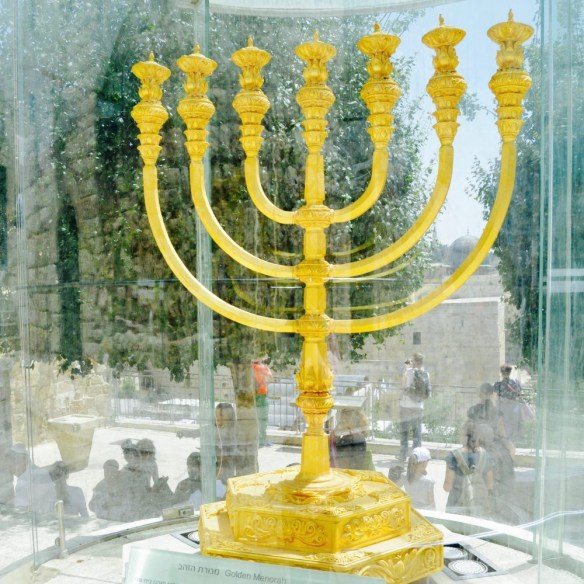


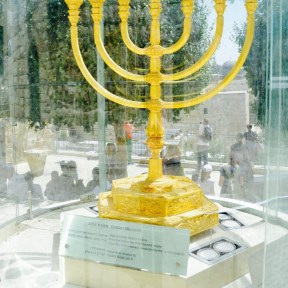



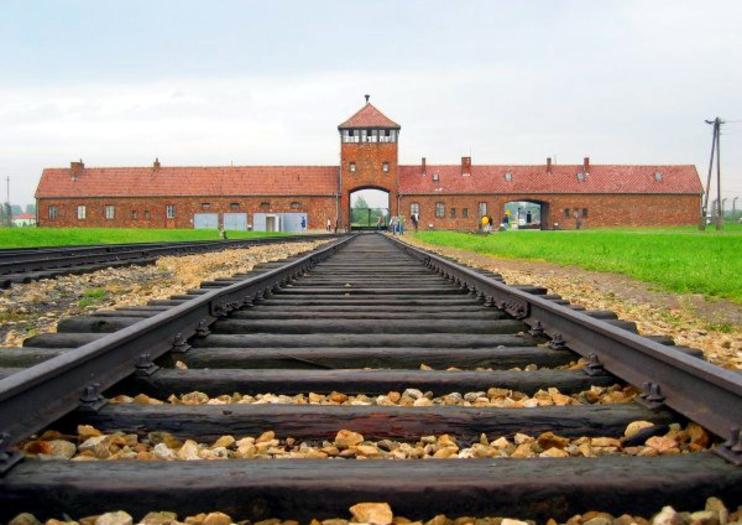




 In my own personal background I have one Polish Jewish gradmother who was my mother’s mother. Mini Levitson moved to England as a young girl together with her family that included her grandmother. So as far as I know none of my direct close relatives from her family perished in the Holocaust. That of course does not mean that members of my extended Polish family did not die under the Nazis and their Polish collaborators.