Unknown's avatar

About ronimechanic

Academic, Theological Commentator, Writer, Poet, Educator, Blogger, Artist, and Photographer

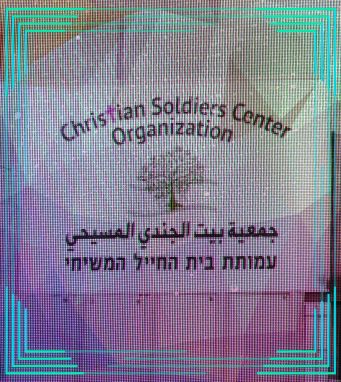
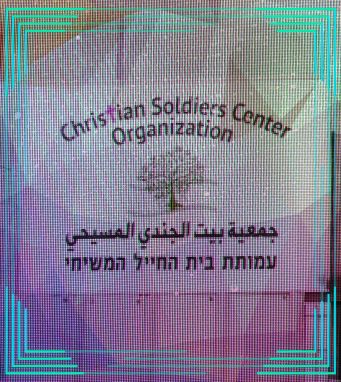
Christian Arab Soldier’s Centre Organisation

shalom-3-md5a

israel-defense-forces-shirt

2017-04-26 12.40.33

IMG_1939

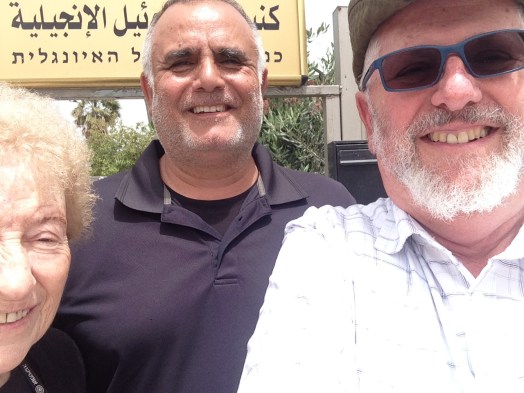
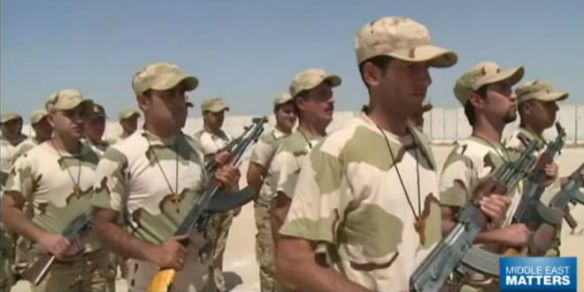
On a recent visit to Haifa, Israel, Roni interviewed Najeeb, a Christian Arab from Haifa who established the Christian Arab Soldier’s Recruitment Centre that to date has signed up 80 young Arab Christian Men to serve in the Israeli Defence Force.

Roni was assisted by Ruth Nessim who translated the conversation between Roni and Najeeb.  In a Middle-East that is in deep conflict and with many of Israel’s enemies accusing her of being an Apartheid State, it is refreshing to hear from an Israeli Arab, his perspective on life in Israel and why he wholeheartedly loves Israel and actively recruits young Arab Christian men to serve in the Israeli Defence Force.

Not only is Najeeb an enthusiastic supporter of Israel, but he also unashamedly gives witness to his faith in Yeshua the Messiah, who he believes is the Promised One of Israel’s hope, but is equally the Saviour of both Jews and Gentiles. Najeeb asserts that it is in and through this Yeshua that humankind’s salvation is dependant.

We hope you enjoy listening to this months programme produced by Shalom Radio UK.

babylon

← Back

Thank you for your response. ✨

gi.php

Shalom Radio UK is an independent internet based radio network

Sponsored by Messianic Teaching Ministry International

MTMI

http://www.hotrodronisblog.com

Part 3: Joseph Rabinowitz – What Became of the Messianic Jewish Movement of South-Western Russia?

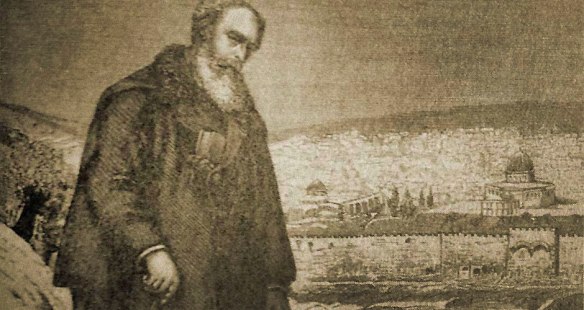
Rabinowitz-on-Mount-of-Olivesshalom-3-md5a

Shalom Radio UK

chagall-green-fidler

Marc Chagall’s Green Fidler

Life is like “a fiddler on the roof…” – full of joy and sorrow – here today and gone tomorrow! Therefore enjoy life and length of days.

Shalom Radio UK

Part 3: Joseph Rabinowitz – What Become of The Messianic Jewish Movement of South-Western Russia?

In modernity we all love a story that ends with the words, “and they all lived happily ever after…” However, that is all too often the stuff of fairy tales, because in real life things do not always work out that way. Post-modernity is often more honest, stripping away romanticism and laying bare the real facts of what happened, and this is also true of what became of the Messianic Jewish Movement of South-Western Russia.

None of us feel comfortable with deconstructionism and watching things fall apart, but it would appear that that is what happened to Rabinowitz’s work after his death. His life was cut short and he died in his late sixties of malaria in 1899. Unlike today, besides quinine there was little else to treat this big killer and it still remains one of the tools in the hands of the grim reaper in the majority world (so called third world), whose population often do not have access to modern drugs. According to the World Health Organization malaria is still the highest killer of human beings.

Having analysed the nature of the work in Kishinev a number of issues come to light that one may be able to view as both its strengths and also great weaknesses. There is no doubt as to the stature of the man – Joseph Rabinowitz was a titan and giant who towered above his fellows. This was due to a number of factors.

Rabinowitz Himself

His personality and charisma enabled him to venture into virgin territory and pioneer an unique expression of faith in Yeshua HaMashiach (Jesus the Messiah) in a Jewish context. Though he faced restrictions, limitations and at times severe opposition, he also had many great advantages. To some of these issues we will now turn:

Turning to his strengths, as has been discussed in Part 1 and Part 2, as we reflect upon the man let us seek to elaborate. He was a Jew raised in the Chassidic tradition thoroughly versed in the rich Biblical and Talmudic literature. He was conversant in the Russian, Hebrew and Yiddish languages and was able to write and speak these fluently and was a regular contributor to Hamalitz an Enlightenment Jewish publication. He was well respected and admired in both Jewish and Gentile circles and became actively involved in local social and political affairs and was the first Jew to be elected to local government as a counsellor. He was a regular worshiper in the local synagogue in Kishinev and he took an active part in organised worship.

He admired Czar Alexander II who was well disposed towards the Jews of the realm. Rabinowitz was concerned for the well being of his people and was particularly exercised about the Jewish Question in what could quickly become hostile to Jews as was witnessed following the death of Czar Alexander in 1882 and followed a two year period of anti-Semitic persecution (1882-1883). He travelled to Palestine with the support of the local Jewish community’s interest to consider the possible emigration of Jews to Eretz Israel.

He came under the influence of Jewish Enlightenment/ Haskalah thinking which had the effect of broadening his outlook and began to explore life beyond the strict confines of his Chassidic world. This enlightenment approach led him to pursue enterprise in trade and commerce and also agriculture and even considered the establishment of Jewish agricultural settlements to aid the welfare of poor Jews. He became a merchant and then a successful lawyer.

Following his initial spiritual encounter that he experienced on the Mount of Olives (1882), Jerusalem during his trip to the Holy Land he grew in conviction that the Jewish Questions answer lay in the hands of our brother Jesus.

This conviction grew and led to his establishment of the congregation of Jewish Christians in Kishinev that became known as the Israelites of the New Covenant. Though he never joined a Christian denomination he did receive support and help from the Lutheran missionaries led by Faltin and his colleagues. In addition various Scandinavian Israel Missions took an interest in his work, Danish, Swedish and Norwegian missions.

Interest and support was also shown by the London Society and the Mildmay Mission from the UK. In addition Professor Delitizsch of Leipzig University took a keen interest in the work of Rabinowitz and the professor was not only a great biblical scholar, Hebraist but more importantly a champion of the Jews and his regular intervention on their behalf often helped to stem the tide of European anti-Semitism, particularly when organized by the Church. He spoke out and wrote many words to say that any true Christian could never be party to hatred or persecution of the Jews.

While Faltin’s initial support was strong he later became very critical of Rabinowitz and accused him of heresy and actively criticised the movement and not only spoke out against Rabinowitz by also influenced others to distance themselves from him.

It would appear that Faltin was wedded to his Lutheran theology and wanted the meetings that Rabinowitz led to conform to a Lutheran pattern of worship. An example of this was in the season leading up to Christmas the meeting house where the Messianic meetings were held was decorated just like a Lutheran Christmas gathering. Flatin was also very critical that the Israelites of the New Covenant never joined a recognized Christian denomination and he accused Rabinowitz of being an isolationist.

Why Faltin took this negative approach to Rabinowitz can only be surmised, but it can be conjectured that he was jealous of what Rabinowitz was achieving and also found it difficult for him to think outside the Lutheran box that he was a part of.

This kind of problem that Joseph Rabinowitz encountered was not unique and alas, pioneer work often faces these same kind of problems, with those who initially helped to foster the work, becoming among it biggest critics. John and Charles Wesley, though both Anglican ministers, were ultimately rejected by the very church of which they were apart and this saw the birth of Methodism which became a separate denomination.

From the Jewish side Rabinowitz equally came in for severe criticism and rejection. Like Rabbi Isaac Lichtenstein before him, Rabinowitz from being an esteemed member of the Jewish community was confronted with accusations of insanity and deception once he openly professed faith in Yeshua, receiving similar treatment to Lichtenstein before him.

A very positive aspect of Joseph Rabinowitz approach to sharing his faith in Yeshua with his Jewish people was the way he sought to contextualize his message and expression of faith. The use of the languages of the Jews, Hebrew and Yiddish were invaluable, plus his deep understanding of Jewish belief and liturgy also aided both his instruction and worship. He was an eloquent speaker that made his preaching accessible and he made a very direct appeal to his listeners to put their trust in Yeshua for full salvation, that was to be found in him alone who was both Messiah and Lord. To facilitate the work Rabinowitz ran a printing press and this enabled him to produce his own literature, such as a suitable Passover Haggadah for their use.

His love for God’s Word was ceaseless and felt that the Gospels held the key to understanding the work of Messiah. His distribution of the Hebrew New Testament and also the Yiddish New Testament was a consuming passion. Thousands and thousands of copies were distributed to Jews. He also disseminated Russian New Testaments to Gentiles freely, as he desired that all come to a knowledge of the truth.

So why did the work fail?

It would appear that Rabinowitz was at some level an autonomous leader (someone who tightly holds the reigns of power close to his or her chest), the fact is that no apparent successor was mentored or raised up by him. Even though he knew about the critical nature of his illness, it appears that he seemed powerless to organise his succession to another.

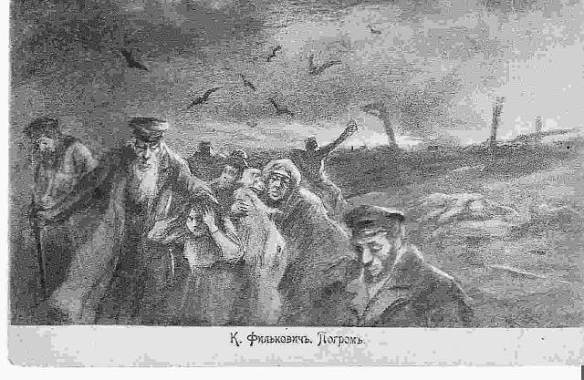
He also faced major restrictions from the Russian authorities, and while his meetings were licensed, because he was not an ordained minister, pastor, priest or rabbi, he was never allowed to minister any sacraments. With the social upheavals and constant threats of pogroms, Jewish lives in South-Western Russia, added to the uncertainty of the future of the Jews in that region of Bessarabia Province, this was a an underlying erosive factor that impeded the Messianic work.

A Good Idea – The Palestine Project

Three years before his death, Rabinowitz floated the idea of moving his work from Kishinev to Jerusalem. His plan was to set up a school or centre for young men in Jerusalem, and to establish this as a place of training for those “who through my preaching, became convinced of the Divinity of Christ and his glorious appearing” (p 196). He never shared these ideas with members in Kishinev.

These ideas he shared with his Scottish friends – it was a desperate bid to see the continuation of his work after his death. For just as Moses had handed his leadership to Joshua before he died, so Rabinowitz realized that he must take steps regarding the future. As early as 1892 he had shared similar thoughts with his friends in London, to go to Palestine and make Jerusalem the centre of his activity.

The aim of the school was to equip Messianic Jews so that they could bring the Jews as a nation to faith in Yeshua. The school was not to be under the influence of any church or denomination, the best place being Palestine, even though it was under the Turks.

The intention was to enable the students to be free from the influence of any Church dogma, and learn about Israel’s ancient history and also the glorious future that HaShem intended for the Jewish Nation. After the completion of their studies these Hebrew Christians would be sent throughout the world to Jews wherever they had been scattered, proclaiming Messiah and his glorious return.

It would appear that these ideas that Rabinowitz shared received little enthusiastic response in both Britain and the United States. Alas the project was shelved. One might say, “what a lost opportunity, not only for Rabinowitz, but also for all those who may have been equipped to fulfil his vision in those days.”

However, the seeds that he sowed back in the late 19th century have found fertile soil particularly in modern Israel and the United States. There was such turbulence and instability in Russia and the winds of change were blowing over Europe and the Ottoman Empire, which included Palestine. The First World War and rise of Communism both had the effect of changing the world forever and European Jews were equally caught up in the unfolding of these two powerful forces.

So, did Rabinowitz’s proposed Messianic Training Centre for Messianic Jewish young men in Palestine put forward at the wrong time for starting such a bold project in Jerusalem? And with Joseph Rabinowitz’s health in decline and is impending death in 1899 even if he were able to have made the move from Kishinev to Jerusalem, would there have been others to have seen it through to fruition?

The Work in Kishinev

Following Rabinowitz’s death in 1899 of which he had no foreknowledge, the ministry faltered and almost ceased, while Mr S. H. Wilkinson of the Mildmay Mission from London came forward as Rabinowitz and the work’s main supporter during that period, there was no immediate relief with an appointment of a worker to replace him, though the Averbuchs Mildmay Mission workers, did visit from Odessa and some while later spent up to 10 months in Kishinev. They had come to faith directly under Rabinowitz’s influence. During the intervening year following Rabinowitz’s death, there were a number of attempts to revive the work, but to none avail. This was not only due to the war, the difficultly to find a suitable worker to replace him, but also the increased severity of the governing authorities. The pogrom of 1903 led to severe social upheavals which were inflicted upon the Jews of Kishinev as well.

The Somerville Meeting House that adjoined the Rabinowitz’s residence was used sporadically. This had been purchased with funds raised in Britain particularly, under    S. H. Wilkinson’s leadership. A Russian Baptist group did use the venue for worship services with a few Jews attending their meetings. During WWI a Greek military church used the meeting place. The Jewish ministry virtually collapsed. This was all the more tragic with a Jewish population of around 80,000 Jewish people living in the area of Kishinev.

On special occasions meetings were arranged for visiting Hebrew Christians who testified and preached in Kishinev at the Somerville Meeting House and as many as 300 Jewish people attended. The collapse of the work does not appear to be the lack of interest on the part of Jewish people, but rather the fact of not having anyone suitable to reach out to them and lead them to faith in Yeshua and then to disciple them as Rabinowitz had so faithfully done while still alive.

What May We Learn and Conclude?

Treading lightly and in no way wanting to be disparaging or be disrespectful to Rabinowitz’s memory and those who laboured with him in the work of witness in Kishinev and Bessarabia Province, it is apparent that there were some glaring problems that arose and ultimately led to the collapse and end of the Messianic Jewish Movement of South-Western Russia:

While Rabinowitz was an amazing person, his failure to raise up the next generation of leaders become apparent. Too little, to late! His idea of a Messianic Jewish Training Centre in Jerusalem, was a brilliant idea, however, what a pity that it did not receive the support from those powerful people in the Britain and the United States, who could have helped him realize his dream.

The opposition of Faltin and others to the emergent Messianic Jewish expression, most certainly must have impeded the new movement’s growth and while acknowledging that the Lutherans under Faltin’s leadership did a lot to aid the young ministry, the later resistance proved to be most unhelpful.

Doing It Better and Learning from History

May it not be said that the only thing that we learn from history, is that we learn nothing from history! Those of us that do have the influence and position to encourage fresh expressions of faith, should give whatever support that we are able to, and not put stumbling blocks in the way of the things that God may be wanting to see established.

Finally, Messianic Jewish expression has to do with Jewish believers asserting their self-identity and is a desire to be able to give expression to ones faith and practice in an authentically Jewish way. Foundational is a belief in the Sovereignty of God and his covenant relationship with his original chosen people. However, least one gives the impression that one is again erecting the middle wall of partition (dividing wall of hostility) that Messiah broke it down. Messianic Jews as Joseph Rabinowitz affirmed in his Articles of Faith, believe in the unity of the faith in which there is neither Jew nor Gentile for they are all one in Messiah Yeshua, and equally as he called upon the members of the Israelites of the New Covenant to affirm their belief in the one catholic and apostolic church.

This does not nullify a desire on the part of Jews who have come to faith to want to live as Jews, and Messianic Judaism in its many different forms is a form of Jewish auto-emancipation, in which they are no longer bound by the shackles of either the Christian church or Jewish synagogue, but it is uniquely its own expression of personhood.

This we assert was the greatest legacy that Joseph Rabinowitz fought for and has given to the Modern Messianic Jewish movement.

You have been listening to Shalom Radio, UK – an independent internet based radio station that proclaims Good News. This three part series features the Life and Work of Joseph Rabinowitz, pioneer of the Messianic Jewish Movement of South-Western Russia. We hope you enjoyed listening!

Shalom!


Shalom Radio UK is an independent internet based radio programme produced by

Roni* Mechanic & Mike Petty

 https://en.wikipedia.org/wiki/Joseph_Rabinowitz#Biography – click on Roni* to access the Article on Joseph Rabinowitz


Sponsored by MTMI

(Messianic Teaching Ministry International)


The words of the instrumental piece of music in Hebrew Transliteration & English:

ADON OLAM MASTER OF THE UNIVERSE
Adon olam, asher malach,
b’terem kol y’tzir nivra.
L’et na’asah v’cheftzo kol,
azai melech sh’mo nikra.V’acharey kichlot hakol,
l’vado yimloch nora.
V’hu haya, v’hu hoveh,
v’hu yih’yeh b’tifara.V’hu echad, v’eyn sheni
l’hamshil lo, l’hachbira.
B’li reishit, b’li tachlit,
v’lo ha’oz v’hamisrah.V’hu Eli, v’chai go’ali,
v’tzur chevli b’et tzarah.
V’hu nisi umanos li,
m’nat kosi b’yom ekra.B’yado afkid ruchi
b’et ishan v’a’irah.
V’im ruchi g’viyati,
Adonai li v’lo ira.
The Lord of the Universe who reigned
before anything was created.
When all was made by his will
He was acknowledged as King.And when all shall end
He still all alone shall reign.
He was, He is,
and He shall be in glory.And He is one, and there’s no other,
to compare or join Him.
Without beginning, without end
and to Him belongs dominion and power.And He is my G-d, my living G-d.
to Him I flee in time of grief,
and He is my miracle and my refuge,
who answers the day I shall call.

To Him I commit my spirit,
in the time of sleep and awakening,
even if my spirit leaves,
G-d is with me, I shall not fear.

Adon Olam In The Original Hebrew

אֲדוֹן עוֹלָם אֲשֶׁר מָלַךְ, בְּטֶרֶם כָּל יְצִיר נִבְרָא.

לְעֵת נַעֲשָׂה בְחֶפְצוֹ כֹּל, אֲזַי מֶלֶךְ שְׁמוֹ נִקְרָא.

וְאַחֲרֵי כִּכְלוֹת הַכֹּל, לְבַדּוֹ יִמְלוֹךְ נוֹרָא.

וְהוּא הָיָה, וְהוּא הֹוֶה, וְהוּא יִהְיֶה, בְּתִפְאָרָה.

וְהוּא אֶחָד וְאֵין שֵׁנִי, לְהַמְשִׁיל לוֹ לְהַחְבִּירָה.

בְּלִי רֵאשִׁית בְּלִי תַכְלִית, וְלוֹ הָעֹז וְהַמִּשְׂרָה.

וְהוּא אֵלִי וְחַי גֹּאֲלִי, וְצוּר חֶבְלִי בְּעֵת צָרָה.

וְהוּא נִסִּי וּמָנוֹס לִי, מְנָת כּוֹסִי בְּיוֹם אֶקְרָא.

בְּיָדוֹ אַפְקִיד רוּחִי, בְּעֵת אִישַׁן וְאָעִירָה.

וְעִם רוּחִי גְּוִיָּתִי, יְיָ לִי וְלֹא אִירָא.

Part 2: Joseph Rabinowitz Pioneer of the Messianic Jewish Movement

or

mixcloud.com/…/part-2-joseph-rabinowitz-pioneer-of-the-messianic-jewish-movement

Rabinowitz-on-Mount-of-OlivesJoseph Rabinowitz on the Mount of Olives, Jerusalem 1882


Shalom Radio UK

shalom-3-md5a

417pK8aq4JL._SX328_BO1,204,203,200_

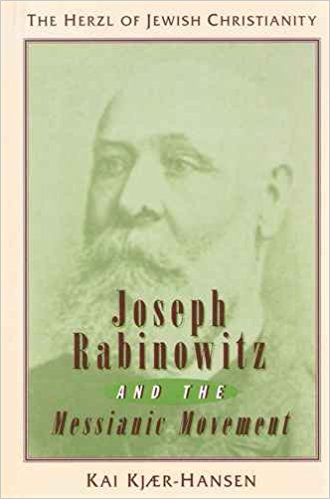
(The Herzel Of Jewish Christianity -Joseph Rabinowitz And The Messianic Movement,     Kai Kjæ –Hansen, The Harvest Press, Edinburgh, UK, 1995).

410yRsYGdLL._SX331_BO1,204,203,200_

Dr Max Rosvally’s Testimony

yeshua by B.R. Burton

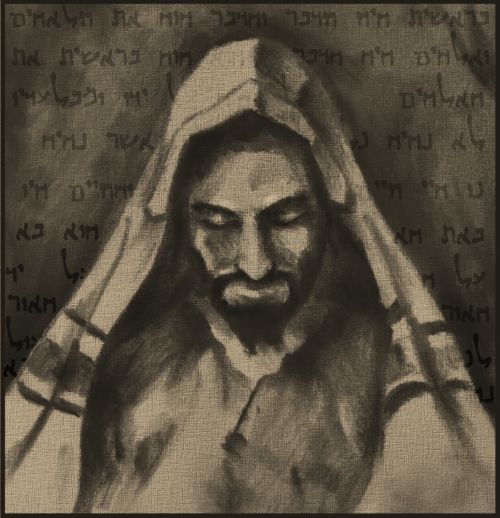
Orthodox Jewish man praying

russiapogromfilkovich

Russian Jews fleeing persecution in South-Western, Russia (1882-1883)screen-shot-2015-09-23-at-11-52-46

A selection of publication produced by Joseph Rabinowitz:

rabinowitz-haggadah-3dscreen-shot-2015-09-23-at-11-48-051

PART 2

Joseph Rabinowitz Pioneer of the Messianic Jewish Movement

Joseph Rabinowitz was not only willing to explore and pursue answers to questions vexing him personally, but he actively sought answers to the continuing challenge facing the Jewish Question in Russia.

The Jewish Question: What do we mean by the Jewish Question?

Jewish being and existence is a philosophic question and has an impact on many different aspects of Jewish life that at times is hard, perplexing, insecure and challenging. It has something to do choosiness – “the chosen people” motif tells us that they were chosen by God to be his prototype people to display to the world God’s purpose not only for them, but all humanity. For it was to Abraham and his descendants through Isaac and Jacob (not Ishmael and Esau – though they each in turn did receive a promise and blessing from G-D), that the Jews were raised up to be God’s covenant people and through them to display God’s grace and mercy to all humankind. God said to Abraham, that those who bless you (his offspring through Isaac), they will be blessed and those who curse you, they will be cursed.

Returning to Rabinowitz’s story, he had moved from a strict narrow Chassidic world to and Enlightenment outlook and made a big leap of faith by embracing “our brother Jesus.”

Because of his deep compassion and empathy for his fellow Jews, he felt impelled to share what he had found with them. This led to the development of a new approach to how Jews may embrace faith in Jesus as Messiah and Lord, while remaining Jewish.

We need to explore how the occurrences and his quest to answer these questions developed and the profound impact that this had on the Jews of South-Western Russia and further afield.

An important question that we wish to seek the answer to is:

What may we learn from the movement of “Israelites of the New Covenant” and how may we apply some of these principles to our 21st Century expression of faith?

As part of his spiritual development Rabinowitz grappled with the question as how to give expression to his new found faith in the context of being Jewish.

After his return to his native Russia he embarked on an intense reading and study of the New Testament. As a result of him grappling with the many questions that he faced in his desire to give expression to them, he formulated his 13 Theses:

1 The present moral and material condition of the Jew in Russia is very bad.

2   For us to sit idle and inactive at such a time is tantamount to consenting to the total ruin of our Jewish brethren in Russia.

3 An improvement of the condition cannot come about through the money of the rich, or the teaching of the rabbis, or the enlightenment of the learned. Such people do not think of the welfare of Israel, but only worsen the condition.

4 It is of no help to leave our native Russia and emigrate to Eretz Israel, and of just as little help to become assimilated with the Gentile population of Russia.

5 Salvation and help can only be obtained here in Russia by our own efforts and with the aid of the Lord who is mighty to save.

6 The material state of the Jews cannot be improved until they are healed of their moral depravity.

7 To put right the moral state there must be a deep spiritual renewal. Our idols, love of money, must be cast out, and instead our hearts must have love of the truth and fear of evil.

8 For this renewal a leader of firm character is needed.

9 This leader must be of the of Jacob’s linage, love Israel, and have given his life for God’s holy name’s sake and for the sake of the law and the prophets. He must be a man known by all the inhabitants of the earth. On the one hand he must understanding of his brethren who boast of the promises given to Abraham, Isaac and Jacob, and who pride themselves on the knowledge they have received through the law of Sinai. On the other hand they must be acquainted, with their tendency, in good times, to forsake their heavenly Father, the living God and chose new gods for themselves: love of money and power over impoverished brethren through knowledge and mammon.

 After through searching in the historical books of our people, we have found the man who this solely in the man Jesus of Nazareth, who was killed in Jerusalem before the destruction of the last temple.

11 The wise men of Israel could not understand the good counsel he gave to his brethren the to keep the law in matters concerning the intellect and heart, and not to lay stress on outward acts which may alter according to locality and the political situation of the Jews. We Jews live in the year 5644 can positively see that Jesus is the man. Only he sought the true welfare of his brethren and spoke peace to their kindred.

12 We feel bound for our great love for our brethren to keep holy and to honour the name of our brother Jesus and to study the holy words which have been recorded in the renowned writings, the Gospels. These should be inculcated into our children at school; whenever we are with people, we should speak about them, and the Gospel writings should be gathered as a treasure in our homes along with all the holy scriptures which have been handed down to us a treasure by our wise men in all generations.

13 We hope that the words of our brother Jesus, which were spoken in righteousness, love, and gentleness to our brethren, will take root in our hearts. The fruit of righteousness and salvation, will be love of truth and goodness. Then the governments and nations will change their attitude and will permit us existence and establishment among the other living nations, overshadowed by the European laws, which derive from our brother’s spirit, who gave his life so that the world might thrive and to keep wickedness from the earth (p 47-49).

While some of the content of the first 8 Theses may seem harsh and very critical of Jews and Jewish life, we must remember that the Russian Jews of the late 19th century were aware of self-criticism if anyone was. This criticism does not place Rabinowitz outside the Jewish community, nor can he be accused of being anti-Jewish or anti-Semitic. Up to that point any Jew of the Enlightenment/ Haskala persuasion would have nodded in agreement with his criticism of the spiritual and physical condition of many fellow Jews and Jewish life of that era.

From the 9th Thesis, onwards the tone changes and he begins to address the issue of the one who was spoken of in the Holy Scriptures, foretold in the law and the prophets, who would be a descendant of Jacob. When we get to the 10th Thesis, Rabinowitz declares that the long expected one is Jesus of Nazareth, our brother Jesus.

While the Thirteen Theses does not yet place Jesus as central, this was work in progress and if we consider that a thesis is not yet a proven hypothesis – the later 12 Articles of Faith that was later formulated for the emergent Messianic Jewish movement of Israelites of the New Covenant, is a much clearer declaration of their faith. Rabinowitz and his fellow believers took to heart the need for greater clarity in giving expression to what they believed.

The strongest reactions to Joseph Rabinowitz’s 13 Theses came from the Lutheran Missionaries leader Faltin and some of his colleagues that questioned his orthodoxy who had followed the emergence of his movement with active support. In addition Professor Delitzsch (German Theologian of Leipzig and long time supporter of the Jews), had taking a keen and active involvement in fostering this new movement.

Rabinowitz was even accused of heresy and even apostasy (1883-1884), however, in 1885 he said this about his own development:

“I first honoured Jesus as a great human being with the compassionate heart, later as the one who desired the welfare of my people, and finally as the one who bore my sins” (p 52).

From the perspective of reading the New Testament, it would be a bit like viewing the Sermon on the Mount/Plain (Matthew 5-7; Luke 6-7) and taking that to be the complete teaching of Jesus. This view would give one a false impression that that was the complete theology of Jesus the Nazarene. The Sermon when analysed on its own gives a restatement of the Law’s teaching with an even stricter interpretation. The message and mission of Jesus moved way beyond a restatement of the law, as Jesus expounds and demonstrates grace and mercy in the face of God’s divine judgment when viewed in the light of the whole gospel’s teaching.

So too, with those who were quick to condemn Rabinowitz, a hasty judgement based only upon his 13 Theses, certainly does not give the whole compass of the man’s theology and neither does it give any place for his further theological development.

Joseph Rabinowitz responded to the challenges to his 13 Theses and subsequently produced 12 Articles of Faith followed by 10 Articles of Faith, 7 Articles of Faith (this was a brief summary) and finally 24 Articles of Faith.

For the purpose of this talk, we will consider the 7 Articles of Faith:

1 I believe, with a perfect faith, that our heavenly Father, is the living, and true, and eternal God, who created heaven and earth and everything visible and invisible through His Word and His Holy Spirit. All things are from Him, all things in Him, all things to Him (cf. S 12 of The 12 Articles).

2 I believe, with a perfect faith, that our heavenly Father has according to His promise to our forefathers, to our prophets, to our King David, the son of Jesse, raised unto Israel a Redeemer, Jesus, who was born of the Virgin Mary, in Bethlehem the City of David, was crucified, dead, and buried for our salvation, rose again from the dead, and sitteth at the right hand of our heavenly Father, from thence He shall come to judge the world, the living and the dead. He is the appointed King over the house of Jacob for ever, and of His dominion there shall be no end.

3 I believe, with a perfect faith, that by the counsel of God and His foreknowledge, our fathers have been smitten with hardness of heart for sin an for rebellion against our Messiah, the Lord Jesus, in order to provoke the other nations of the earth unto jealousy, and to reconcile all through faith in Christ, by the word of his Evangelist, in order that knowledge of Jehovah (YHWH/ LORD/HaShem) should cover the earth, and HaShem be King over the whole world.

4 I believe, with a perfect faith, that through faith in Jesus, the Messiah alone, without the works of the law a man may be justified; that there is but one God, who justifies the circumcised Jews by faith, and the uncircumcised through faith; and there is no difference between Jew and Greek, between bond and free, between male and female. They are all one in Christ.

5 I believe, with a perfect faith, in a Holy Catholic and Apostolic Church.

6 I confess one baptism for the remission of sins.

7 I wait for the resurrection and the renewed life of the dead, and the life of the world to come. Amen.

This creed was included in the liturgy at the close of worship, coming after the sermon and before the saying of the Aaronic Benediction. The influence of Maimonides 13 Articles of the Jewish Faith and the Christian creeds is evident.

What may we conclude from these 7 Articles of Faith?

When compared with his 12 Articles of Faith, there is no mention of Sabbath observance or observing the Passover, neither is there a strong Trinitarian affirmation, in Article 1 of the 7 Articles, Father, His Word and Holy Spirit are declared as being part of the Eternal God, though the unity of God’s person is evident.

This is much more that could be said, but it is sufficient to observe that Rabinowitz was clearly within the framework of orthodoxy. Furthermore the strong nationalistic emphasis of his 13 Theses are no longer a part of his affirmation of faith.

It is very clear that although the Israelites of the New Covenant were organised in a separate congregation and worshiped and lived a Jewish lifestyle, they also shared much in common with Protestant beliefs concerning the person and work of Messiah Yeshua (Jesus), though their approach to worship and lifestyle was much more in keeping with their Jewish heritage.

While initially, Rabinowitz’s spiritual encounter and conversion on the Mount of Olives in Jerusalem was clouded in mystery – “what exactly took place there?” This could no longer be said of him, for his progressive articulation of his belief became apparent.

Not all Jews who came to faith find the path the way Rabinowitz did. For example the testimony of Dr Max Rosvally, a Jewish Medical Doctor who came to faith in America around 1876 describes in his book A Short Sketch of the Life and Conversion of a Jew, published in that year. Rosvally outlines his journey to faith. While Rabinowitz strove to remain within a Jewish context and live out his faith among his fellow Jews in South-Western Russia, Rosvally had no such inclination or opportunity to give expression to his faith in a Jewish way.

His testimony clearly outlines a “conversion” experience, but unlike Rabinowitz, Rosvally all but repudiated his former faith as a Jew, fully embracing his new-found Christian faith, which found expression in 19th century American revivalist style. His main arena of engagement was to rescue alcoholics of which he himself had been prior to his conversion after which he was not only freed from the bondage of drink, but assisted many others to find freedom in Christ and salvation.

Rosvally however, did not totally abandon his Jewish heritage and people, as he did seek to organise local Hebrew Christians, holding meeting occasionally for other Jewish converts like himself.

Unlike Rabinowitz, Rosvally had no perception or apparent desire to live as a Jew, nor did he encourage other Jews to do so, except holding an annual Passover Seder for fellow Hebrew Christians.

On the other hand, Joseph Rabinowitz only a few years later in 1882 and in another part of the world, South-Western Russia pioneered one of the earliest Messianic Jewish movement.

What were the motivating factors that brought this approach about that Rabinowitz spearheaded?

As we recall the circumstances that Rabinowitz faced in Bessarabia were turbulent and increasingly so after the death of Czar Alexander II (1882-1883), the life of the Jews of that part of the world was under constant threat and danger. While emigration to Ottoman occupied Palestine did not offer an attractive option, Rabinowitz grew in conviction that help for the Jews lay in the hands of our brother Jesus.

There were also others who played an important part in encouraging the development of a fresh expression of faith relevant and attractive to Jews. While Rabinowitz and his associates did not always see eye-to-eye, there was a healthy dialogue. He also displayed a sharp intellect and a strong determination, even in the face of both Jewish and Christian opposition to develop a new way of approaching faith in Jesus in a Jewish context and culturally appropriate and attractive. He was willing to challenge the status quo and while some took offence, others gladly hailed his pioneer work as a valid way for Jews to remain Jews, while at the same time embracing Jesus as more than just “our brother Jesus,” but Messiah and Lord. He particularly stressed Jewish male circumcision and the keeping of the Sabbath for the Jewish believers who joined his movement.

So what may we learn from the movement of “Israelites of the New Covenant” and how may we apply some of these principles to our 21st Century expression of faith?

Firstly, we discover that it is possible to be Jewish, believe in Yeshua and live a Jewish lifestyle as Rabinowitz did and subsequently he encouraged others to do so.

In belief our faith should be biblically rooted and just as Rabinowitz formulated his Articles of Faith as given in the summary of the 7 Articles of Faith, but also seek to continue to live as a Jew.

While the pressure to assimilate and take on the majority Gentile culture of the Christian church is strong, a Jewish believer can choose to swim against the tide and give expression to their faith in a Jewish way.

Unlike, Dr Rosvally and many of his fellow Hebrew Christians, there was little if any choice in1876, but in 2017 there are many alternatives now available and a Jewish believer may choose to live his or her life in a Messianic Jewish way.

Conclusion:

Not just a whim or flutter, Joseph Rabinowitz and his Messianic Jewish movement of Israelites of the New Covenant, began with him discovering “our brother Jesus” – and in his own words:

“I first honoured Jesus as a great human being with the compassionate heart, later as the one who desired the welfare of my people, and finally as the one who bore my sins” (p 52).

His tenacity and determination to share this great discovery with both Jews and Gentiles demonstrates that Joseph Rabinowitz stands as one of the spiritual giants of his age.

What started as a small stream, has become a great river like the mighty Mississippi River, that rises in northern Minnesota in the Allegheny Mountains in the east to the Rocky’s in the west, with a length of 2350 miles. Not only is it the fourth largest river system in the world, but it sustains life for countless species from the plant and animal kingdom (Mississippi River Facts).

We should take encouragement from Rabinowitz’s example and not despise the day of small beginnings. And as a good friend of mine says: “onward and upwards…” and I add, “looking unto Yeshua, the author (originator/ pioneer) and finisher of our faith.”

Shalom.

Shalom Radio UK

It is sponsored by MTMI

(Messianic Teaching Ministry International)

It is an independent internet based broadcast


12-2014-Vayigash-Rembrandt_Harmensz

https://en.wikipedia.org/wiki/Joseph_Rabinowitz#Joseph_Rabinowitz_and_the_Messianic_Jewish_Movement

Joseph Rabinowitz & The Messianic Jewish Movement

Shalom Radio UK presents:

The Herzel of Jewish Christianity –

Joseph Rabinowitz and the Messianic Jewish Movement

417pK8aq4JL._SX328_BO1,204,203,200_                 Joseph-Rabinowitz

Movers and Shakers: Pioneers of Messianic Judaism

The story of a pioneer of the Messianic Movement in South-Western Russia:

Material based on the above book by Kai Kjaer-Hansen

A Wikipedia article with a major contributor – Roni Mechanic:

en.wikipedia.org/wiki/Joseph_Rabinowitz


Shalom Radio UK is an independent internet based radio programme produced by
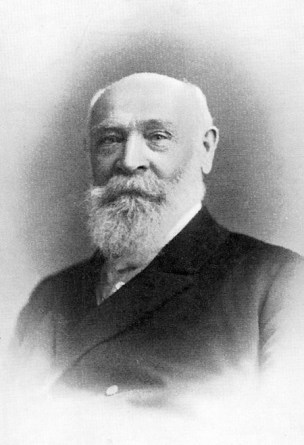
Roni Mechanic & Mike Petty


Sponsored by MTMI

(Messianic Teaching Ministry International)

or


How Jesus Changes Lives

How Jesus/Yeshua Changes Lives

ronimechanic's avatarShalom Radio UK
Shalom Radio UK:

http://www.hotrodronisblog.com

shalom-3-md5a

Presents:

How Jesus Changed a Rabbi’s Life and How He can Change Your Life too!

Lich72d.JPG (47548 bytes)

Why I Believe that
Yeshua is the
Jewish Messiah:
The Story of Rabbi
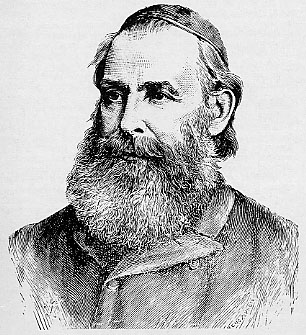
Isaac Lichtenstein


From an account written
over 90 years ago

HE was not yet 20 when he became a Rabbi, and after officiating for several years in different communities in northern Hungary, Isaac Lichtenstein finally settled as District Rabbi in Tapio Szele, where he remained for nearly 40 years, labouring ceaselessly and unselfishly for the good of his people.

Early in his career a Jewish teacher in the communal school of his district casually showed him a German Bible. Turning the leaves, his eye fell on the name “Jesu Christi.” He became furiously angry and sharply reproved the teacher for having such a thing in his possession. Taking the book, he flung it across the room in a…

View original post 2,422 more words

How Jesus Changes Lives

http://www.hotrodronisblog.com

or

listen on Mixcloud:

https://www.mixcloud.com/upload/ronimechanic/how-jesusyeshua-changes-lives/complete/

shalom-3-md5a

Presents:

How Jesus Changed a Rabbi’s Life and How He can Change Your Life too!

Lich72d.JPG (47548 bytes)

Why I Believe that
Yeshua is the
Jewish Messiah:
The Story of Rabbi
Isaac Lichtenstein


From an account written
over 90 years ago

HE was not yet 20 when he became a Rabbi, and after officiating for several years in different communities in northern Hungary, Isaac Lichtenstein finally settled as District Rabbi in Tapio Szele, where he remained for nearly 40 years, labouring ceaselessly and unselfishly for the good of his people.

Early in his career a Jewish teacher in the communal school of his district casually showed him a German Bible. Turning the leaves, his eye fell on the name “Jesu Christi.” He became furiously angry and sharply reproved the teacher for having such a thing in his possession. Taking the book, he flung it across the room in a rage; it fell behind others on a shelf where, dusty and forgotten, it lay some thirty-odd years.

About that time a fierce wave of anti-Semitism broke out in Hungary, culminating in the now historic “Tisza Eslar affair”. In that picturesque little Hungarian town, situated on the Theiss, 12 Jews and a Jewess were thrown into prison, accused of having killed a Christian girl in order to use her blood for ritual purposes — the most tragic part of the case being that a little Jewish boy, who had been kept some time from his parents by the police commissary, was prevailed on by threats and cruelties to appear as the chief witness against his own father (the synagogue sexton) and recite a concocted, false tale of the supposed murdered girl.

As in every other case in which this diabolical charge was ever brought against the Jews, the blood accusation in Tisza Eslar was ultimately demonstrated to be false and baseless. It remains to the glory of true religion that a number of prominent men who were believers in Jesus, notably Dr. Franz Delitzsch, a Biblical scholar and Professor at Leipzig University, rose to the occasion not only to defend the Jews, but also to tear the mask from all who by their acts scandalised Messiah in the eyes of Jewry.

The mental state of Rabbi Lichtenstein at this time is best revealed in his Judenspiegel (Jewish Mirror):

” ‘Often have they oppressed me from my youth, may Israel say’ (Psalm 129). No long explanation is needed to show that in these few words the Psalmist sums up the bitter experiences and sorrows which we, at least of the older generation, have suffered from our youth up at the hands of the Christian populations surrounding us.

“Mockery, scorn, blows, and all manner of humiliation, have been our portion even at the hands of Christian children. I remember still the stones which were thrown at us as we left the synagogue, and how, when bathing in the river, and powerless to prevent, we saw them cast our clothing, with laughter and insult, into the water.

“Once with sorrow and weeping, I saw my father felled to the ground without the least hesitation by a nobleman, so-called, because he had not quickly enough made room for him on a narrow path. But these sad experiences are known well enough to need no dwelling on; and would to God that such persecution of the Jews by the Christians were altogether a thing of the forgotten past!

“As impressions of early life take a deep hold, and as in my riper years I still had no cause to modify these impressions, it is no wonder that I came to think that Jesus Himself was the plague and curse of the Jews — the origin and promoter of our sorrows and persecutions.

“In this conviction I grew to years of manhood, and still cherishing it I became old. I knew no difference between true and merely nominal Christianity; of the fountainhead of Christianity itself I knew nothing. Strangely enough it was the horrible Tisza Eslar blood accusation which first drew me to read the New Testament. This trail brought from their lurking-places all our enemies, and once again, as in olden times, the cry re-echoed, ‘Death to the Jew!’ The frenzy was excessive, and among the ringleaders were many who misused the name of Christ and His doctrine as a cloak to cover their abominable doings.

“These wicked practices of men wearing the name of Jesus only to further their evil designs aroused the indignation of some true Christians, who, with pen on fire and warning voices, denounced the lying rage of the anti-Semites. In articles written by the latter in defence of the Jews, I often met with passages where Jesus was spoken of as He Who brings joy to man, the Prince of peace, and the Redeemer; and His Gospel was extolled as a message of love and life to all people. I was surprised and scarcely trusted my eyes when I espied in a hidden corner the New Testament  which some 30 years before I had in vexation taken from a Jewish teacher, and I began to turn over its leaves and read. How can I express the impression which I then received? “Not the half had been told me of the greatness, power and glory of this Book, formerly a sealed book to me. All seemed so new, arid yet it did me good, like the sight of an old friend who has laid aside his dusty, travel-worn garments, and appears in in festive attire, like a bridegroom in wedding robes, or a bride adorned with her jewels.” For two or three years Rabbi Lichtenstein kept these convictions locked in his own breast. He began, however, in his synagogue to preach strange and new doctrines which both interested and astonished his hearers. At last he could contain himself no longer. Preaching one Sabbath from Jesus’s parable of the whited sepulcher, he openly avowed that his subject was taken from the New Testament and spoke of Jesus as the true Messiah, the Redeemer of Israel. Ultimately he embodied his ideas in three publications appearing in rapid succession which created a tremendous sensation among the Jews, not only in Hungary, but throughout the continent of Europe. And no wonder; for here was an old and respected Rabbi, still in office, calling upon his people in burning words to align themselves under the banner of the long- despised Jesus of Nazareth, and to hail Him as their true Messiah and King.

As was inevitable, no sooner did official Jewry realize the significance of Rabbi Lichtenstein’s position and writings than a storm of persecution broke loose upon him. From the Jewish pulpit and in the Press anathemas were hurled at his head, and he who but a few weeks before was classed among the noblest leaders and teachers was now described as a disgrace and reproach to his nation — all because he dared pronounce the hated name of Jesus.

The falsehood was spread that he had sold himself to the missionaries. Some even asserted that he had never written the pamphlets himself, but had only been bribed to affix his   name to them. He was cited to appear before the assembled rabbinate in Budapest. On entering the hall he was greeted with the cry, “Retract! Retract!”

“Gentlemen,” said the Rabbi, “I shall most willingly retract if you convince me I am wrong.”

Chief Rabbi Kohn proposed a compromise. Rabbi Lichtenstein might believe whatever he liked in his heart, if he would only refrain from preaching about Jesus. As to those dreadful pamphlets which he had already written, the mischief could be undone by a very simple process. The Synod of Rabbis would draw up a document to the effect that the Rabbi wrote what he did in a fit of temporary insanity and all that would be required of him would be to add his name to this statement. Rabbi Lichtenstein answered calmly but indignantly that this was a strange proposal to make to him seeing that he had only just come into his right mind. Then they demanded that he should resign his position and be formally baptised to indicate that he was leaving the Jewish people, but he replied that he had no intention of joining the state approved church. He had found in the New Testament the true Judaism, and would remain as before with his congregation, and preach it in the synagogue.

He did so, and this in spite of many persecutions and reproaches which were heaped upon him. From his official place as District Rabbi he continued to teach and to preach from the New Testament. This was a touching testimony to the strong attachment of his own community, which alone had the power to make request for his dismissal, Judaism being a state religion in Hungary. As a matter of fact much pressure was brought to bear upon them, and some members of the congregation and the relatives of his wife were completely ruined by loss of trade; but still they clung to him.

By this time Rabbi Lichtenstein and his writings had become widely known, and different church and missionary organisations sought his services. The Papacy soon learned of the existence and significance of the man, and a special emissary from the Pope visited Tapio Szele with tempting offers if he would but enter the service of Rome. To all he had but one reply: “I will remain among my own nation, I love Messiah, I believe in the New Testament; but I am not drawn to join Christendom. Just as the prophet Jeremiah, after the destruction of Jerusalem, in spite of the generous offers of Nebuchadnezzar and the captain of his host, chose rather to remain and lament among the ruins of the holy city, and with the despised remnant of his brethren, so will I remain among my own brethren, as a watchman from within and to plead with them to behold in Jesus the true glory of Israel.”

At last, however, after losing his all in the endeavour to save some of the members of his congregation from ruin, and with his health much impaired by the many trials and sorrows which fell to his lot in consequence of his bold stand for the truth, he voluntarily resigned his office as District Rabbi. He settled in Budapest, where he found ample scope for his talents, but the opposition to him was relentless. He was shadowed and even physically attacked on the street. His barber was bribed to disfigure his beautiful beard. His landlord kept a close watch on everyone who visited him ‘and reported to the rabbinical authorities. But as a stream stemmed in its course forces for itself new channels, so he was continually interviewed and drawn into discussion by Jews from every walk of life.

“Wisdom cries without and causes her voice to be heard in the street,” he wrote to his friend, David Baron, a Messianic Jewish Scholar. “Doctors, professors and officials, as also educated ladies, come to my house. Many families of position also visit us who condemn the harsh conduct of the rabbinate here in relation to me. Many foreigners also visit me. I have often very grave, important discussions with Talmudists and Rabbis from a long distance, who wish to bring me to a compromise; and it is worthy to note that many who had formerly no knowledge of the New Testament, and stared blankly and incredulously at me when I quoted its sublime doctrines, have afterwards begged to possess one.”

In a letter to his son, a doctor, Rabbi Lichtenstein wrote “From every line in the New Testament, from every word, the Jewish spirit streamed forth light, life, power, endurance, faith, hope, love, charity, limitless and indestructible faith in God.”

For over twenty years it was given to Rabbi Lichtenstein to witness in many parts of Europe to the truth as he saw it in Messiah. At last the storms of controversy, of misunderstanding and antagonism, began to tell on him. His spirit, however, remained undaunted. About this time he wrote: “Dear Jewish brethren, I have been young, and now am old. I have attained the age of 80 years, which the Psalmist speaks of as the utmost period of human life on earth. When others of my age are reaping with joy the fruit of their labours, I am alone, almost forsaken, because I have lifted up my voice in warning, ‘0 Israel, turn to the Lord thy God, for thou hast fallen by thine iniquity. Take these words and turn thee to the Lord thy God.’ ‘Kiss the Son, lest He be angry, and ye perish from the way.’

“I, an honoured Rabbi for the space of 40 years, am now, in my old age, treated by my friends as one possessed by an evil spirit, and by my enemies as an outcast. I am become a butt of mockers who point the finger at me. But while I live I will stand on my watchtower, though I may stand there all alone. I will listen to the words of God, and look for the time when He will return to Zion in mercy, and Israel shall fill the world with his joyous cry, ‘Hosanna to the Son of David. Blessed is He that cometh in the name of the Lord! Hosanna in the highest””

Quite unexpectedly he was taken ill and lingered only a short while. As he realised that his end was approaching, in the presence of his wife and the nurse, he said:
“Give my warmest thanks and greetings, to my brethren and friends; goodnight, my children; goodnight, my enemies, you can injure me no more. We have one God and one Father of all who are called children in heaven and on earth, and one Messiah who gave up His life on the cursed tree for the salvation of men. Into Thy hands I commend my spirit.”

On the morning of Friday, October 16, 1909, at the age of 85, Rabbi Lichtenstein entered into the presence of his Lord.

There are over 200,000 Jewish believers in Messiah Yeshua in the USA alone,with thousands more in Israel and other countries. We love and cherish our beautiful Jewwish culture and heritage, and part of that heritage is God’s promise to us of a Messiah, a promise fulfilled in Yeshua.

   (From the website:   www.MessianicAssociation.org)
 
Album:
Bo Yeshua (Come Yeshua) by Joshua Aaron

_____________________

A Helpful Prayer:

Tanakh:

“I believed;

Therefore have I spoken.

O HASHEM, save my nefesh.

I admit I have sinned, not only in what I have done,

But in what I am, I abhor myself and my idols with

G-DLY SORROW for my sin, turning in TESHUVAH to my

MELITZ YOSHER in HEAVEN, MOSHIACH ADONEINU;

YOUR BANNER, over me, HOLY MOSHIACH, is Love;

YOU carried my sin away on the tree as the SA’IR L’AZAZEL

YOM KIPPUR SCAPEGOAT KAPPORAH to Satisfy the TORAH.

YOU removed my filthy robes and seated me at YOUR banqueting table.

I trust YOU as HASHEM’S PESACH KORBAN for my redemption.

I open the latch and invite YOU to come through the door of my heart as my GO’EL and

MOSHI’A and KOHEN and KAPPORAH Forever.

IN THE NAME OF HA’AV, HABEN, and HARUACH HAKODESH.

OMEIN.”

From The Orthodox Jewish Bible by Phil Goble:

http://www.afii.org

_______________________________________________________

Shalom Radio UK

is an independent internet based radio programme sponsored by

MTMI

(Messianic Teaching Ministry International).

http://www.hotrodronisblog.com

Shalom Radio UK

 shalom-radio

January 2017 Shalom Broadcast offers you the opportunity to listen to some of the previous programmes put out by Shalom

These are some of the programmes that Roni Mechanic and Mike Petty produced while Shalom was part of Breakout Radio [https://beta.mixcloud.com/Breakout_Radio/]

and it is with grateful thanks to that radio station that we can share these broadcasts with you.

January 2016  – July 2016


who-do-you-say-i-am_std_t_nv


Programmes include music to uplift the soul, personal stories of folk on the journey of discovery, and how faith and prayer have given hope to many. The programmes are not only meant for Jewish listeners, but all who want to gain a fresh insight into how you may find peace/shalom in this troubled world.

AT THE HEART OF SHALOM IS THE CONVICTION THAT YESHUA/JESUS IS

THE MESSIAH OF ISRAEL AND SAVIOUR OF THE WORLD.


A Messianic Jewish Perspectives

on Faith and Practice


AN INDEPENDENT INTERNET BASED RADIO PROGRAMME SPONSORED BY

MESSIANIC TEACHING MINISTRY INTERNATIONAL – MTMI

Shalom Radio UK
secondcomingofchrist

Marc Chagall’s Exodus / Second Coming of Messiah as King

or listen on Mixcloud:

https://beta.mixcloud.com/ronimechanic/messianic-jewish-perspective-who-is-this-jesus/

Programmes include music to uplift the soul, personal stories of folk on the journey of discovery, and how faith and prayer have given hope to many. The programmes are not only meant for Jewish listeners, but all who want to gain a fresh insight into how you may find peace/shalom in this troubled world.

AT THE HEART OF SHALOM IS THE CONVICTION THAT YESHUA/JESUS IS

THE MESSIAH OF ISRAEL AND SAVIOUR OF THE WORLD.


A Messianic Jewish Perspectives

on Faith and Practice

December 2016 Shalom’s Programme:

“So, Who is this Jesus?”

In the light of the fact that a major part of  the Jewish people rejected Jesus, we consider some of the issues raised in David Klinghoffer’s book “Why the Jews Rejected Jesus” (2005) and seek to answer some of the reasons that he puts forward. He wrote his book shortly after Mel Gibson’s film The Passion of the Christ (2004) in which the graphic suffering of Jesus is portrayed at the hands of the Temple leadership and Romans.

Discover the major reason for Jewish rejection of Jesus and subsequent Jewish responses to the question of

“So, Who is this Jesus/Yeshua?”

                         klinghoffer


Why The Jews Rejected Jesus, David Kilinghoffer

ISBN-10: 0385510225 & ISBN-13: 978-0385510226

Lord Rabbi Jonathan Sack’s Speech to the European Parliament:

For the link to access:

http://www.israelvideonetwork.com/rabbi-sacks-brilliant-speech-on-antisemitism-silenced-the-eu/

An independent internet based radio programme sponsored by

Messianic Teaching Ministry International – MTMI


A Helpful Prayer:

Tanakh:

“I believed;

Therefore have I spoken.

O HASHEM, save my nefesh.

I admit I have sinned, not only in what I have done,

But in what I am, I abhor myself and my idols with

G-DLY SORROW for my sin, turning in TESHUVAH to my

MELITZ YOSHER in HEAVEN, MOSHIACH ADONEINU;

YOUR BANNER, over me, HOLY MOSHIACH, is Love;

YOU carried my sin away on the tree as the SA’IR L’AZAZEL

YOM KIPPUR SCAPEGOAT KAPPORAH to Satisfy the TORAH.

YOU removed my filthy robes and seated me at YOUR banqueting table.

I trust YOU as HASHEM’S PESACH KORBAN for my redemption.

I open the latch and invite YOU to come through the door of my heart as my GO’EL and

MOSHI’A and KOHEN and KAPPORAH Forever.

IN THE NAME OF HA’AV, HABEN, and HARUACH HAKODESH.

OMEIN.”

From The Orthodox Jewish Bible by Phil Goble:

http://www.afii.org

exodus_marc_chagall

Remembrance 2016

Shalom Radio: Shalom Radio

(Please go to previous post for Shalom Radio – November’s Programme or just click on the link above)

shalom-3-md5a


article-poppies-1

Talk by Elisheva Mechanic, Sunday 13 November, 2016, Etherly, County Durham, United Kingdom

Remembrance Sunday brings people together in a unique way. We are longing to make sense of war and of the loss of lives which seems to be at the same time heroic and also tragically cut short.

We gather together to remember and reflect. We each bring our own thoughts of those we knew, who have fought in world wars, and those we lost in war, perhaps only having a photograph or war medals left. Perhaps some of us carry the memory of a loved one who made the ultimate sacrifice.

Today we pray that all countries will find ways of resolving their differences and that peace may come to this earth.

Perhaps some of the poems written about war come to mind.

In Flanders fields the poppies blow

Between the crosses, row on row

That mark our place; and in the sky

The larks, still bravely singing, fly

Scarce heard amid the guns below.

I am sure that we have all watched films where soldiers march through the village with drums and trumpets playing a rousing march. Look a little further to the trenches among the rats and lice, with bodies shattered beyond recognition. Or to the prison camp where people were tortured, beaten and starved, or led away as the smoke rose above the ovens and carts trundled from the gas chambers.

I have had no personal experience of armed conflict but my father and his eldest sister served in World War 2. He was in the navy in an anti-submarine ship. His Father was a marine engineer in the Merchant Navy in World War 1. He only survived because he got a boil on his neck and was put ashore to go to hospital. His ship continued and was blown to bits. Someone had thoughtfully sent him a parcel with his toothbrush and a note, on its last call into port.

My Father was very young when he was called up. He had just started work and was in his first year of university studying accounting. His life, like many others was totally disrupted for five years. When the war ended he returned to work and picked up the threads of his studies. He very seldom talked to us about his war experiences. He had a few photographs of himself with other sailors taken when they went ashore. Perhaps for him silence was the only way he could do justice to his feelings. Perhaps he wanted to save us, his family, from ever having to go through what he did.

Roni’s father was also a soldier in the war, mainly in Brittany and France and also an anti-aircraft gunner on the Kent coast. Towards the end of the war he joined the Black Watch which is a Scottish regiment and did guard duty. Roni’s paternal grandfather served in the Devonshire regiment in the First World War and his maternal grandfather also fought in IWW in Egypt for the British Armed Forces as an infantry man.

We too have a time of silence on Remembrance Sunday. Perhaps this is the only real way to do justice to the enormous cost of war. We do not need to tell another story, but rather to be silent together. We have time to think and time to breathe the same air together. Perhaps we can think of those on active service breathing in the hot and sandy air with hardly a chance to compose themselves before the next round of bullets or bombs.

All this makes us all the more committed to make for peace and to pray for peace. We need to strive for that peace which passes all understanding. We also need to build a future that is inspired by hope.

When we break the bread we remember the sacrifice of Jesus and at that last Supper, Passover meal (Seder) his friends at supper. He held the bread and broke it, saying ‘this is my body.’ He held aloft the cup of wine and said ‘this is my blood’. He knew the power of sacrifice and remembrance for us. This is our hope for the Kingdom of God. This is our longing that we may have a future of justice and peace and mercy. That we may find forgiveness for our sins and the cleansing of our hearts and souls from all our faults and failures. We know that this gift of God is not only for us, but for all the world, if only they would stop and open their hearts to God’s Son, who is the Messiah and Saviour of Humankind.

Amen.

holocaust-memorial-day-665x385

Other Acts of Remembrance

Friday, 27 January, 2017

How can life go on? is the theme for Holocaust Memorial Day 2017 also called Yom HaShoah – 

There are a number of Holocaust Memorial Days; though not all on the same day.

Yom Hazikaron laShoah ve-laG’vurah (יום הזיכרון לשואה ולגבורה; “Holocaust and Heroism Remembrance Day”), known colloquially in Israel and abroad as Yom HaShoah (יום השואה) and in English as Holocaust Remembrance Day, or Holocaust Day, is observed as Israel’s day of commemoration for the approximately six million Jews who perished in the Holocaust as a result of the actions carried out by Nazi Germany and its accessories, and for the Jewish resistance in that period. In Israel, it is a national memorial day. It was inaugurated in 1953, anchored by a law signed by the Prime Minister of Israel David Ben-Gurion and the President of Israel Yitzhak Ben-Zvi. It is held on the 27th of Nisan (April/May), unless the 27th would be adjacent to the Jewish Sabbath, in which case the date is shifted by a day.[1]

Some other countries have different commemorative days for the same event—see Holocaust Memorial Day (https://en.wikipedia.org/wiki/Yom_HaShoah).

 The aftermath of the Holocaust and of subsequent genocides continues to raise challenging questions for individuals, communities and nations. HMD 2017 asks audiences to think about what happens after genocide and of our own responsibilities in the wake of such a crime. This year’s theme is broad and open ended, there are few known answers.

 Author and survivor of the Holocaust Elie Wiesel has said:

For the survivor death is not the problem. Death was an everyday occurrence. We learned to live with Death. The problem is to adjust to life, to living. You must teach us about living.’

How can life go on? is the theme for Holocaust Memorial Day 2017. The aftermath of the Holocaust and of subsequent genocides continues to raise challenging questions for individuals,…

Read more

There are other people of other nationalities who have perished as a result of acts of genocide

– See more at: http://hmd.org.uk/#sthash.wIbkUP0x.dpuf

 Download a copy of the full Theme Vision here.

Download the Further Resources document here.

 Scope of the theme:

  • Trauma and coming to terms with the past: The theme will ask audiences to consider how individuals and nations who have survived the horrors of genocide can begin to come to terms with the trauma and their past.
  • Displacement and refugees: Times of genocide are always times of acute social upheaval; tens of thousands, sometimes millions, of people are forced from or flee their homes. The question of how life can go on is bound up with where it goes on.
  • Justice: Some claim there is no such thing as justice after genocide. The theme will encourage thinking about what the concept of justice means and who gets to decide what form it takes.
  • Rebuilding communities: Genocide destroys and divides communities. The theme will challenge people to think about how communities can rebuild when whole sections are missing or when survivors and perpetrators live side-by-side
  • Reconciliation and forgiveness: Is true reconciliation and forgiveness possible or even desirable? The theme will explore attitudes towards forgiveness.
  • Remembering: The theme asks the questions: Why is remembering important to helping life go on? How do we remember when there is nobody left to tell the story?  
  • Facing hate – denial and trivialisation: Denial is the final stage of genocide. The theme will call on everybody to fight denial and ask the question of how life can go on after the Holocaust and genocide whilst denial and trivialisation exist.
  • Facing hate – today: Antisemitism and other forms of hate continue today. The theme will help people to consider individual, organisational, community and governmental responsibilities for protecting the rights of marginalised communities.
  • Teach us about living: Everyone will be asked the question: ‘what can you do to help those who have survived genocide, as well as all those from persecuted groups ensure that life goes on?’

 – See more at: http://hmd.org.uk/resources/theme-papers/hmd-2017-how-can-life-go#sthash.YzdmGFgI.dpuf