Unknown's avatar

About ronimechanic

Academic, Theological Commentator, Writer, Poet, Educator, Blogger, Artist, and Photographer

How Jesus Changes Lives

http://www.hotrodronisblog.com

or

listen on Mixcloud:

https://www.mixcloud.com/upload/ronimechanic/how-jesusyeshua-changes-lives/complete/

shalom-3-md5a

Presents:

How Jesus Changed a Rabbi’s Life and How He can Change Your Life too!

Lich72d.JPG (47548 bytes)

Why I Believe that
Yeshua is the
Jewish Messiah:
The Story of Rabbi
Isaac Lichtenstein


From an account written
over 90 years ago

HE was not yet 20 when he became a Rabbi, and after officiating for several years in different communities in northern Hungary, Isaac Lichtenstein finally settled as District Rabbi in Tapio Szele, where he remained for nearly 40 years, labouring ceaselessly and unselfishly for the good of his people.

Early in his career a Jewish teacher in the communal school of his district casually showed him a German Bible. Turning the leaves, his eye fell on the name “Jesu Christi.” He became furiously angry and sharply reproved the teacher for having such a thing in his possession. Taking the book, he flung it across the room in a rage; it fell behind others on a shelf where, dusty and forgotten, it lay some thirty-odd years.

About that time a fierce wave of anti-Semitism broke out in Hungary, culminating in the now historic “Tisza Eslar affair”. In that picturesque little Hungarian town, situated on the Theiss, 12 Jews and a Jewess were thrown into prison, accused of having killed a Christian girl in order to use her blood for ritual purposes — the most tragic part of the case being that a little Jewish boy, who had been kept some time from his parents by the police commissary, was prevailed on by threats and cruelties to appear as the chief witness against his own father (the synagogue sexton) and recite a concocted, false tale of the supposed murdered girl.

As in every other case in which this diabolical charge was ever brought against the Jews, the blood accusation in Tisza Eslar was ultimately demonstrated to be false and baseless. It remains to the glory of true religion that a number of prominent men who were believers in Jesus, notably Dr. Franz Delitzsch, a Biblical scholar and Professor at Leipzig University, rose to the occasion not only to defend the Jews, but also to tear the mask from all who by their acts scandalised Messiah in the eyes of Jewry.

The mental state of Rabbi Lichtenstein at this time is best revealed in his Judenspiegel (Jewish Mirror):

” ‘Often have they oppressed me from my youth, may Israel say’ (Psalm 129). No long explanation is needed to show that in these few words the Psalmist sums up the bitter experiences and sorrows which we, at least of the older generation, have suffered from our youth up at the hands of the Christian populations surrounding us.

“Mockery, scorn, blows, and all manner of humiliation, have been our portion even at the hands of Christian children. I remember still the stones which were thrown at us as we left the synagogue, and how, when bathing in the river, and powerless to prevent, we saw them cast our clothing, with laughter and insult, into the water.

“Once with sorrow and weeping, I saw my father felled to the ground without the least hesitation by a nobleman, so-called, because he had not quickly enough made room for him on a narrow path. But these sad experiences are known well enough to need no dwelling on; and would to God that such persecution of the Jews by the Christians were altogether a thing of the forgotten past!

“As impressions of early life take a deep hold, and as in my riper years I still had no cause to modify these impressions, it is no wonder that I came to think that Jesus Himself was the plague and curse of the Jews — the origin and promoter of our sorrows and persecutions.

“In this conviction I grew to years of manhood, and still cherishing it I became old. I knew no difference between true and merely nominal Christianity; of the fountainhead of Christianity itself I knew nothing. Strangely enough it was the horrible Tisza Eslar blood accusation which first drew me to read the New Testament. This trail brought from their lurking-places all our enemies, and once again, as in olden times, the cry re-echoed, ‘Death to the Jew!’ The frenzy was excessive, and among the ringleaders were many who misused the name of Christ and His doctrine as a cloak to cover their abominable doings.

“These wicked practices of men wearing the name of Jesus only to further their evil designs aroused the indignation of some true Christians, who, with pen on fire and warning voices, denounced the lying rage of the anti-Semites. In articles written by the latter in defence of the Jews, I often met with passages where Jesus was spoken of as He Who brings joy to man, the Prince of peace, and the Redeemer; and His Gospel was extolled as a message of love and life to all people. I was surprised and scarcely trusted my eyes when I espied in a hidden corner the New Testament  which some 30 years before I had in vexation taken from a Jewish teacher, and I began to turn over its leaves and read. How can I express the impression which I then received? “Not the half had been told me of the greatness, power and glory of this Book, formerly a sealed book to me. All seemed so new, arid yet it did me good, like the sight of an old friend who has laid aside his dusty, travel-worn garments, and appears in in festive attire, like a bridegroom in wedding robes, or a bride adorned with her jewels.” For two or three years Rabbi Lichtenstein kept these convictions locked in his own breast. He began, however, in his synagogue to preach strange and new doctrines which both interested and astonished his hearers. At last he could contain himself no longer. Preaching one Sabbath from Jesus’s parable of the whited sepulcher, he openly avowed that his subject was taken from the New Testament and spoke of Jesus as the true Messiah, the Redeemer of Israel. Ultimately he embodied his ideas in three publications appearing in rapid succession which created a tremendous sensation among the Jews, not only in Hungary, but throughout the continent of Europe. And no wonder; for here was an old and respected Rabbi, still in office, calling upon his people in burning words to align themselves under the banner of the long- despised Jesus of Nazareth, and to hail Him as their true Messiah and King.

As was inevitable, no sooner did official Jewry realize the significance of Rabbi Lichtenstein’s position and writings than a storm of persecution broke loose upon him. From the Jewish pulpit and in the Press anathemas were hurled at his head, and he who but a few weeks before was classed among the noblest leaders and teachers was now described as a disgrace and reproach to his nation — all because he dared pronounce the hated name of Jesus.

The falsehood was spread that he had sold himself to the missionaries. Some even asserted that he had never written the pamphlets himself, but had only been bribed to affix his   name to them. He was cited to appear before the assembled rabbinate in Budapest. On entering the hall he was greeted with the cry, “Retract! Retract!”

“Gentlemen,” said the Rabbi, “I shall most willingly retract if you convince me I am wrong.”

Chief Rabbi Kohn proposed a compromise. Rabbi Lichtenstein might believe whatever he liked in his heart, if he would only refrain from preaching about Jesus. As to those dreadful pamphlets which he had already written, the mischief could be undone by a very simple process. The Synod of Rabbis would draw up a document to the effect that the Rabbi wrote what he did in a fit of temporary insanity and all that would be required of him would be to add his name to this statement. Rabbi Lichtenstein answered calmly but indignantly that this was a strange proposal to make to him seeing that he had only just come into his right mind. Then they demanded that he should resign his position and be formally baptised to indicate that he was leaving the Jewish people, but he replied that he had no intention of joining the state approved church. He had found in the New Testament the true Judaism, and would remain as before with his congregation, and preach it in the synagogue.

He did so, and this in spite of many persecutions and reproaches which were heaped upon him. From his official place as District Rabbi he continued to teach and to preach from the New Testament. This was a touching testimony to the strong attachment of his own community, which alone had the power to make request for his dismissal, Judaism being a state religion in Hungary. As a matter of fact much pressure was brought to bear upon them, and some members of the congregation and the relatives of his wife were completely ruined by loss of trade; but still they clung to him.

By this time Rabbi Lichtenstein and his writings had become widely known, and different church and missionary organisations sought his services. The Papacy soon learned of the existence and significance of the man, and a special emissary from the Pope visited Tapio Szele with tempting offers if he would but enter the service of Rome. To all he had but one reply: “I will remain among my own nation, I love Messiah, I believe in the New Testament; but I am not drawn to join Christendom. Just as the prophet Jeremiah, after the destruction of Jerusalem, in spite of the generous offers of Nebuchadnezzar and the captain of his host, chose rather to remain and lament among the ruins of the holy city, and with the despised remnant of his brethren, so will I remain among my own brethren, as a watchman from within and to plead with them to behold in Jesus the true glory of Israel.”

At last, however, after losing his all in the endeavour to save some of the members of his congregation from ruin, and with his health much impaired by the many trials and sorrows which fell to his lot in consequence of his bold stand for the truth, he voluntarily resigned his office as District Rabbi. He settled in Budapest, where he found ample scope for his talents, but the opposition to him was relentless. He was shadowed and even physically attacked on the street. His barber was bribed to disfigure his beautiful beard. His landlord kept a close watch on everyone who visited him ‘and reported to the rabbinical authorities. But as a stream stemmed in its course forces for itself new channels, so he was continually interviewed and drawn into discussion by Jews from every walk of life.

“Wisdom cries without and causes her voice to be heard in the street,” he wrote to his friend, David Baron, a Messianic Jewish Scholar. “Doctors, professors and officials, as also educated ladies, come to my house. Many families of position also visit us who condemn the harsh conduct of the rabbinate here in relation to me. Many foreigners also visit me. I have often very grave, important discussions with Talmudists and Rabbis from a long distance, who wish to bring me to a compromise; and it is worthy to note that many who had formerly no knowledge of the New Testament, and stared blankly and incredulously at me when I quoted its sublime doctrines, have afterwards begged to possess one.”

In a letter to his son, a doctor, Rabbi Lichtenstein wrote “From every line in the New Testament, from every word, the Jewish spirit streamed forth light, life, power, endurance, faith, hope, love, charity, limitless and indestructible faith in God.”

For over twenty years it was given to Rabbi Lichtenstein to witness in many parts of Europe to the truth as he saw it in Messiah. At last the storms of controversy, of misunderstanding and antagonism, began to tell on him. His spirit, however, remained undaunted. About this time he wrote: “Dear Jewish brethren, I have been young, and now am old. I have attained the age of 80 years, which the Psalmist speaks of as the utmost period of human life on earth. When others of my age are reaping with joy the fruit of their labours, I am alone, almost forsaken, because I have lifted up my voice in warning, ‘0 Israel, turn to the Lord thy God, for thou hast fallen by thine iniquity. Take these words and turn thee to the Lord thy God.’ ‘Kiss the Son, lest He be angry, and ye perish from the way.’

“I, an honoured Rabbi for the space of 40 years, am now, in my old age, treated by my friends as one possessed by an evil spirit, and by my enemies as an outcast. I am become a butt of mockers who point the finger at me. But while I live I will stand on my watchtower, though I may stand there all alone. I will listen to the words of God, and look for the time when He will return to Zion in mercy, and Israel shall fill the world with his joyous cry, ‘Hosanna to the Son of David. Blessed is He that cometh in the name of the Lord! Hosanna in the highest””

Quite unexpectedly he was taken ill and lingered only a short while. As he realised that his end was approaching, in the presence of his wife and the nurse, he said:
“Give my warmest thanks and greetings, to my brethren and friends; goodnight, my children; goodnight, my enemies, you can injure me no more. We have one God and one Father of all who are called children in heaven and on earth, and one Messiah who gave up His life on the cursed tree for the salvation of men. Into Thy hands I commend my spirit.”

On the morning of Friday, October 16, 1909, at the age of 85, Rabbi Lichtenstein entered into the presence of his Lord.

There are over 200,000 Jewish believers in Messiah Yeshua in the USA alone,with thousands more in Israel and other countries. We love and cherish our beautiful Jewwish culture and heritage, and part of that heritage is God’s promise to us of a Messiah, a promise fulfilled in Yeshua.

   (From the website:   www.MessianicAssociation.org)
 
Album:
Bo Yeshua (Come Yeshua) by Joshua Aaron

_____________________

A Helpful Prayer:

Tanakh:

“I believed;

Therefore have I spoken.

O HASHEM, save my nefesh.

I admit I have sinned, not only in what I have done,

But in what I am, I abhor myself and my idols with

G-DLY SORROW for my sin, turning in TESHUVAH to my

MELITZ YOSHER in HEAVEN, MOSHIACH ADONEINU;

YOUR BANNER, over me, HOLY MOSHIACH, is Love;

YOU carried my sin away on the tree as the SA’IR L’AZAZEL

YOM KIPPUR SCAPEGOAT KAPPORAH to Satisfy the TORAH.

YOU removed my filthy robes and seated me at YOUR banqueting table.

I trust YOU as HASHEM’S PESACH KORBAN for my redemption.

I open the latch and invite YOU to come through the door of my heart as my GO’EL and

MOSHI’A and KOHEN and KAPPORAH Forever.

IN THE NAME OF HA’AV, HABEN, and HARUACH HAKODESH.

OMEIN.”

From The Orthodox Jewish Bible by Phil Goble:

http://www.afii.org

_______________________________________________________

Shalom Radio UK

is an independent internet based radio programme sponsored by

MTMI

(Messianic Teaching Ministry International).

http://www.hotrodronisblog.com

Shalom Radio UK

 shalom-radio

January 2017 Shalom Broadcast offers you the opportunity to listen to some of the previous programmes put out by Shalom

These are some of the programmes that Roni Mechanic and Mike Petty produced while Shalom was part of Breakout Radio [https://beta.mixcloud.com/Breakout_Radio/]

and it is with grateful thanks to that radio station that we can share these broadcasts with you.

January 2016  – July 2016


who-do-you-say-i-am_std_t_nv


Programmes include music to uplift the soul, personal stories of folk on the journey of discovery, and how faith and prayer have given hope to many. The programmes are not only meant for Jewish listeners, but all who want to gain a fresh insight into how you may find peace/shalom in this troubled world.

AT THE HEART OF SHALOM IS THE CONVICTION THAT YESHUA/JESUS IS

THE MESSIAH OF ISRAEL AND SAVIOUR OF THE WORLD.


A Messianic Jewish Perspectives

on Faith and Practice


AN INDEPENDENT INTERNET BASED RADIO PROGRAMME SPONSORED BY

MESSIANIC TEACHING MINISTRY INTERNATIONAL – MTMI

Shalom Radio UK

secondcomingofchrist

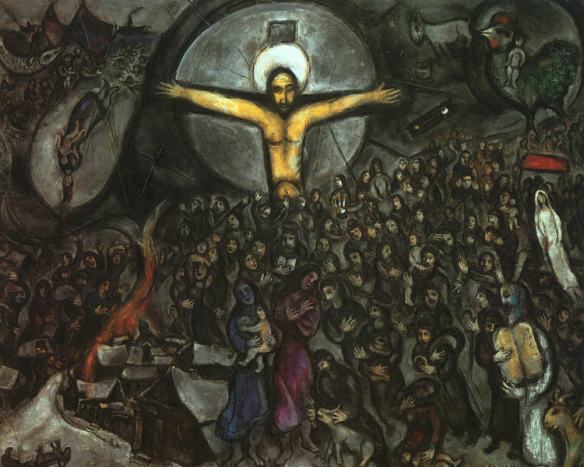
Marc Chagall’s Exodus / Second Coming of Messiah as King

or listen on Mixcloud:

https://beta.mixcloud.com/ronimechanic/messianic-jewish-perspective-who-is-this-jesus/

Programmes include music to uplift the soul, personal stories of folk on the journey of discovery, and how faith and prayer have given hope to many. The programmes are not only meant for Jewish listeners, but all who want to gain a fresh insight into how you may find peace/shalom in this troubled world.

AT THE HEART OF SHALOM IS THE CONVICTION THAT YESHUA/JESUS IS

THE MESSIAH OF ISRAEL AND SAVIOUR OF THE WORLD.


A Messianic Jewish Perspectives

on Faith and Practice

December 2016 Shalom’s Programme:

“So, Who is this Jesus?”

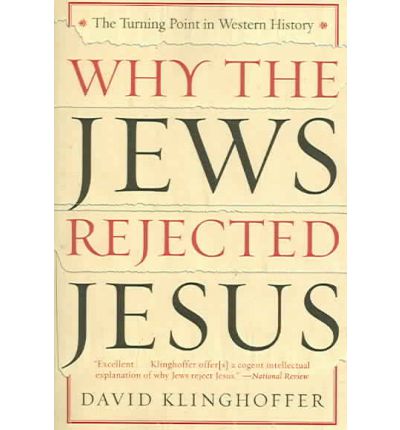
In the light of the fact that a major part of  the Jewish people rejected Jesus, we consider some of the issues raised in David Klinghoffer’s book “Why the Jews Rejected Jesus” (2005) and seek to answer some of the reasons that he puts forward. He wrote his book shortly after Mel Gibson’s film The Passion of the Christ (2004) in which the graphic suffering of Jesus is portrayed at the hands of the Temple leadership and Romans.

Discover the major reason for Jewish rejection of Jesus and subsequent Jewish responses to the question of

“So, Who is this Jesus/Yeshua?”

                         klinghoffer


Why The Jews Rejected Jesus, David Kilinghoffer

ISBN-10: 0385510225 & ISBN-13: 978-0385510226

Lord Rabbi Jonathan Sack’s Speech to the European Parliament:

For the link to access:

http://www.israelvideonetwork.com/rabbi-sacks-brilliant-speech-on-antisemitism-silenced-the-eu/

An independent internet based radio programme sponsored by

Messianic Teaching Ministry International – MTMI


A Helpful Prayer:

Tanakh:

“I believed;

Therefore have I spoken.

O HASHEM, save my nefesh.

I admit I have sinned, not only in what I have done,

But in what I am, I abhor myself and my idols with

G-DLY SORROW for my sin, turning in TESHUVAH to my

MELITZ YOSHER in HEAVEN, MOSHIACH ADONEINU;

YOUR BANNER, over me, HOLY MOSHIACH, is Love;

YOU carried my sin away on the tree as the SA’IR L’AZAZEL

YOM KIPPUR SCAPEGOAT KAPPORAH to Satisfy the TORAH.

YOU removed my filthy robes and seated me at YOUR banqueting table.

I trust YOU as HASHEM’S PESACH KORBAN for my redemption.

I open the latch and invite YOU to come through the door of my heart as my GO’EL and

MOSHI’A and KOHEN and KAPPORAH Forever.

IN THE NAME OF HA’AV, HABEN, and HARUACH HAKODESH.

OMEIN.”

From The Orthodox Jewish Bible by Phil Goble:

http://www.afii.org

exodus_marc_chagall

Remembrance 2016

Shalom Radio: Shalom Radio

(Please go to previous post for Shalom Radio – November’s Programme or just click on the link above)

shalom-3-md5a


article-poppies-1

Talk by Elisheva Mechanic, Sunday 13 November, 2016, Etherly, County Durham, United Kingdom

Remembrance Sunday brings people together in a unique way. We are longing to make sense of war and of the loss of lives which seems to be at the same time heroic and also tragically cut short.

We gather together to remember and reflect. We each bring our own thoughts of those we knew, who have fought in world wars, and those we lost in war, perhaps only having a photograph or war medals left. Perhaps some of us carry the memory of a loved one who made the ultimate sacrifice.

Today we pray that all countries will find ways of resolving their differences and that peace may come to this earth.

Perhaps some of the poems written about war come to mind.

In Flanders fields the poppies blow

Between the crosses, row on row

That mark our place; and in the sky

The larks, still bravely singing, fly

Scarce heard amid the guns below.

I am sure that we have all watched films where soldiers march through the village with drums and trumpets playing a rousing march. Look a little further to the trenches among the rats and lice, with bodies shattered beyond recognition. Or to the prison camp where people were tortured, beaten and starved, or led away as the smoke rose above the ovens and carts trundled from the gas chambers.

I have had no personal experience of armed conflict but my father and his eldest sister served in World War 2. He was in the navy in an anti-submarine ship. His Father was a marine engineer in the Merchant Navy in World War 1. He only survived because he got a boil on his neck and was put ashore to go to hospital. His ship continued and was blown to bits. Someone had thoughtfully sent him a parcel with his toothbrush and a note, on its last call into port.

My Father was very young when he was called up. He had just started work and was in his first year of university studying accounting. His life, like many others was totally disrupted for five years. When the war ended he returned to work and picked up the threads of his studies. He very seldom talked to us about his war experiences. He had a few photographs of himself with other sailors taken when they went ashore. Perhaps for him silence was the only way he could do justice to his feelings. Perhaps he wanted to save us, his family, from ever having to go through what he did.

Roni’s father was also a soldier in the war, mainly in Brittany and France and also an anti-aircraft gunner on the Kent coast. Towards the end of the war he joined the Black Watch which is a Scottish regiment and did guard duty. Roni’s paternal grandfather served in the Devonshire regiment in the First World War and his maternal grandfather also fought in IWW in Egypt for the British Armed Forces as an infantry man.

We too have a time of silence on Remembrance Sunday. Perhaps this is the only real way to do justice to the enormous cost of war. We do not need to tell another story, but rather to be silent together. We have time to think and time to breathe the same air together. Perhaps we can think of those on active service breathing in the hot and sandy air with hardly a chance to compose themselves before the next round of bullets or bombs.

All this makes us all the more committed to make for peace and to pray for peace. We need to strive for that peace which passes all understanding. We also need to build a future that is inspired by hope.

When we break the bread we remember the sacrifice of Jesus and at that last Supper, Passover meal (Seder) his friends at supper. He held the bread and broke it, saying ‘this is my body.’ He held aloft the cup of wine and said ‘this is my blood’. He knew the power of sacrifice and remembrance for us. This is our hope for the Kingdom of God. This is our longing that we may have a future of justice and peace and mercy. That we may find forgiveness for our sins and the cleansing of our hearts and souls from all our faults and failures. We know that this gift of God is not only for us, but for all the world, if only they would stop and open their hearts to God’s Son, who is the Messiah and Saviour of Humankind.

Amen.

holocaust-memorial-day-665x385

Other Acts of Remembrance

Friday, 27 January, 2017

How can life go on? is the theme for Holocaust Memorial Day 2017 also called Yom HaShoah – 

There are a number of Holocaust Memorial Days; though not all on the same day.

Yom Hazikaron laShoah ve-laG’vurah (יום הזיכרון לשואה ולגבורה; “Holocaust and Heroism Remembrance Day”), known colloquially in Israel and abroad as Yom HaShoah (יום השואה) and in English as Holocaust Remembrance Day, or Holocaust Day, is observed as Israel’s day of commemoration for the approximately six million Jews who perished in the Holocaust as a result of the actions carried out by Nazi Germany and its accessories, and for the Jewish resistance in that period. In Israel, it is a national memorial day. It was inaugurated in 1953, anchored by a law signed by the Prime Minister of Israel David Ben-Gurion and the President of Israel Yitzhak Ben-Zvi. It is held on the 27th of Nisan (April/May), unless the 27th would be adjacent to the Jewish Sabbath, in which case the date is shifted by a day.[1]

Some other countries have different commemorative days for the same event—see Holocaust Memorial Day (https://en.wikipedia.org/wiki/Yom_HaShoah).

 The aftermath of the Holocaust and of subsequent genocides continues to raise challenging questions for individuals, communities and nations. HMD 2017 asks audiences to think about what happens after genocide and of our own responsibilities in the wake of such a crime. This year’s theme is broad and open ended, there are few known answers.

 Author and survivor of the Holocaust Elie Wiesel has said:

For the survivor death is not the problem. Death was an everyday occurrence. We learned to live with Death. The problem is to adjust to life, to living. You must teach us about living.’

How can life go on? is the theme for Holocaust Memorial Day 2017. The aftermath of the Holocaust and of subsequent genocides continues to raise challenging questions for individuals,…

Read more

There are other people of other nationalities who have perished as a result of acts of genocide

– See more at: http://hmd.org.uk/#sthash.wIbkUP0x.dpuf

 Download a copy of the full Theme Vision here.

Download the Further Resources document here.

 Scope of the theme:

  • Trauma and coming to terms with the past: The theme will ask audiences to consider how individuals and nations who have survived the horrors of genocide can begin to come to terms with the trauma and their past.
  • Displacement and refugees: Times of genocide are always times of acute social upheaval; tens of thousands, sometimes millions, of people are forced from or flee their homes. The question of how life can go on is bound up with where it goes on.
  • Justice: Some claim there is no such thing as justice after genocide. The theme will encourage thinking about what the concept of justice means and who gets to decide what form it takes.
  • Rebuilding communities: Genocide destroys and divides communities. The theme will challenge people to think about how communities can rebuild when whole sections are missing or when survivors and perpetrators live side-by-side
  • Reconciliation and forgiveness: Is true reconciliation and forgiveness possible or even desirable? The theme will explore attitudes towards forgiveness.
  • Remembering: The theme asks the questions: Why is remembering important to helping life go on? How do we remember when there is nobody left to tell the story?  
  • Facing hate – denial and trivialisation: Denial is the final stage of genocide. The theme will call on everybody to fight denial and ask the question of how life can go on after the Holocaust and genocide whilst denial and trivialisation exist.
  • Facing hate – today: Antisemitism and other forms of hate continue today. The theme will help people to consider individual, organisational, community and governmental responsibilities for protecting the rights of marginalised communities.
  • Teach us about living: Everyone will be asked the question: ‘what can you do to help those who have survived genocide, as well as all those from persecuted groups ensure that life goes on?’

 – See more at: http://hmd.org.uk/resources/theme-papers/hmd-2017-how-can-life-go#sthash.YzdmGFgI.dpuf

Link

image1

Shalom Radio UK is 

dedicated to sharing good news

Your radio host is Roni Mechanic 

Twitter: @roni_mechanic

Shalom shares Messianic Jewish perspectives – We cover topics concerning Jewish people, Israel, and the Middle-East, current affairs, social and political issues and how these impact upon Jewish life not only in Israel but the UK as well.

Programmes include music to uplift the soul, personal stories of folk on the journey of discovery, and how faith and prayer have given hope to many. The programmes are not only meant for Jewish listeners but all who want to gain a fresh insight into how you may find peace/shalom in this troubled world.

At the heart of Shalom is the conviction that Yeshua/Jesus is

the Messiah of Israel and Saviour of the World.

*

Charitable Donation to Support Shalom Radio UK’s Running Costs

This is to enable you the listener to express your thanks and help me expand the work of Shalom Radio UK by making a donation CLICK ON LINK TO DONATE: https://paypal.me/hotrodronisblogcom

£10.00

This Podcast is Reblogged:

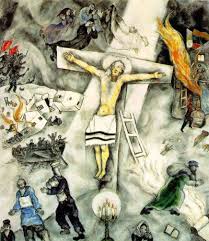
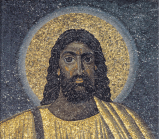
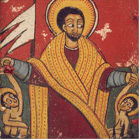
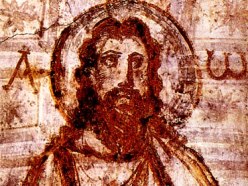
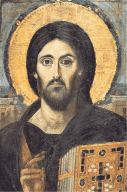
The different faces of Jesus are explored and some of the images of how he is portrayed are included in this programme as seen below:

  b_black_jesus black-jesus-2 ethiopic-jesus-3 

Black Jesus         –        Dark skinned –  Jesus    –     Ethiopian icon     –

 b_catacomb alpha_omega

Alpha & Omega    –   3rd Century image


  jesus-0131   Turin Shroud 

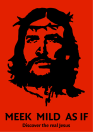
 holywood-jesus-4          guru-jesus-5     rasta-jesus-9    che-jesus-7 

Hollywood image  –  Indian Guru  –    Rastafarian   –  South American Revolutionary

                                jwish-jesus-6   1st Century Jewish man’s head

  Russian Jesus 10.png   Russian Icon                   

 crucifixion-11   Chagall’s White Crucifixion 

 asher-1-5in   Potok’s Brooklyn Crucifixion    

 chagall-marc-apocalypse-en-lilas-capriccio-600-1    Chagall’s Crucifixion in Lilac                                                                       chagall-green-fidler   Chagall’s Green Fidler  

  picasso-ldda   Picasso’s Les Demoiselles d’Avignon

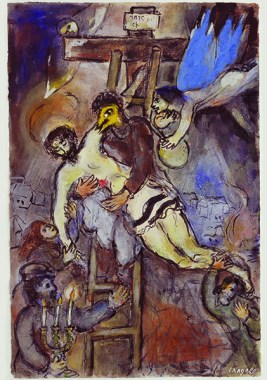
RNS-CHAGALL-PAINT a   Chagall’s Descent from the Cross

An independent internet based radio programme sponsored by

Messianic Teaching Ministry International – MTMI

Belief and Unbelief -Mark 7.24-37

belief 

                                Verse

unbelief2

(This short message is based on  Rev. Harold J. Staiti, First Baptist Church, Fairport, NY  sermon and adapted by Rev. Roni Mechanic for use in an English context).

TITLE: Belief and Unbelief

TEXT: Mark 7.24-37

Sunday 6 September 2015 

14th Sunday after Trinity

Proper 18

Love your neighbour as yourself

Today’s Readings are from The Common Lectionary

Psalm 125, James 2:1-10, Mark 7:24-end

Mark 7:24-37New Revised Standard Version, Anglicised (NRSVA)

The Syrophoenician Woman’s Faith

24 From there he set out and went away to the region of Tyre.[a] He entered a house and did not want anyone to know he was there. Yet he could not escape notice, 25 but a woman whose little daughter had an unclean spirit immediately heard about him, and she came and bowed down at his feet. 26 Now the woman was a Gentile, of Syrophoenician origin. She begged him to cast the demon out of her daughter. 27 He said to her, ‘Let the children be fed first, for it is not fair to take the children’s food and throw it to the dogs.’28 But she answered him, ‘Sir,[b] even the dogs under the table eat the children’s crumbs.’29 Then he said to her, ‘For saying that, you may go—the demon has left your daughter.’30 So she went home, found the child lying on the bed, and the demon gone.

Jesus Cures a Deaf Man

31 Then he returned from the region of Tyre, and went by way of Sidon towards the Sea of Galilee, in the region of the Decapolis. 32 They brought to him a deaf man who had an impediment in his speech; and they begged him to lay his hand on him. 33 He took him aside in private, away from the crowd, and put his fingers into his ears, and he spat and touched his tongue. 34 Then looking up to heaven, he sighed and said to him, ‘Ephphatha’, that is, ‘Be opened.’ 35 And immediately his ears were opened, his tongue was released, and he spoke plainly. 36 Then Jesus[c] ordered them to tell no one; but the more he ordered them, the more zealously they proclaimed it. 37 They were astounded beyond measure, saying, ‘He has done everything well; he even makes the deaf to hear and the mute to speak.’

Footnotes:

  1. Mark 7:24 Other ancient authorities add and Sidon
  2. Mark 7:28 Or Lord; other ancient authorities prefix Yes
  3. Mark 7:36 Gk he

TITLE: Belief and Unbelief

Mark 7.24-37

INTRODUCTION

Orientation

It is one of the great ironies of our faith that the message of a Jewish rabbi to Jewish people became the faith of Jews and Gentiles and became known as “Christianity.”

[Irony is a state of affairs or an event that seems deliberately contrary to what one expects and is often wryly amusing as a result].

         What is more ironic than when an English teacher gets a parking ticket in Durham town centre just having the previous day looked at the Road Code with her 6th form class. The parking warden hotly asked her, “Can’t you read?”

         It is more ironic when a bank clerk leaves his debit card in an ATM after having just come from work and had just attended a card security meeting.

         What’s more ironic than a man who held up a jewellery shop and used his work vehicle as the get away car with the sign that read:

Mike’s Roofing Repair

Phone: 01388 -762 293

for prompt attention?

         What is more ironic than a primary school pupil having spent the afternoon at his aunts house and is fetched by his father who on the way home stopped at the corner shop. He told his dad that he had lost his school bag – retracing their steps to his aunt’s house his father sees the missing bag on his son’s back where it had been all that afternoon – the boy was me!

Today’s passage heavily relies on irony to teach a larger story about belief and unbelief.

         In Mark’s time, the Lord was doing great things among the people, however not all were receiving his ministry happily.

         For Mark, it is ironic, that some in Israel, who should have believed, were refusing to believe the message from Jesus, and Gentiles who were outsiders were the ones who were readily coming to faith?

Proposition

While the synagogue leaders excluded people based on ritual purity laws, the Jesus movement maintained that faith is what makes a person clean. We need to become more embracing and welcoming of all.

How are we to respond to families with children that come to our services? Are we going to welcome them, or give them the cold shoulder because they may upset our sense of order and possible disruption that the children may cause? We say that we want the church to grow, but when growth potential presents itself through baptisms or those who may want to get married in our church, what is our response? It is a big challenge and test to how we will respond to these opportunities! Let is not hold back, but rise to the situation as it presents itself to us in a positive way.

The Inclusive Church ‘statement of belief’

“We believe in inclusive Church – church which does not discriminate, on any level, on grounds of economic power, gender, mental health, physical ability, race or sexuality. We believe in Church which welcomes and serves all people in the name of Jesus Christ; which is scripturally faithful; which seeks to proclaim the Gospel afresh for each generation; and which, in the power of the Holy Spirit, allows all people to grasp how wide and long and high and deep is the love of Jesus Christ.”

This is a very brave and challenging move and many may at first find this a hard thing to accept, but it is surely something that each of us need to come to terms with. How good are we at welcoming strangers, families with young children? We say that we want to grow, but are we willing to embrace all?

Preview

We see this teaching juxtaposed in two stories: One, the faith of a Gentile woman (Mark 7.24-30). The other is the unbelief of Israel’s leaders – Judeans (Mark 7.31-37).

Transition

Let’s look first at…

THE IRONIC EXAMPLE – GENTILE ARE ALSO COMING TO FAITH: MARK 7.24-30

Observation

We see here that the Gentiles have heard of the many miraculous things Jesus had done among the Jewish people. The word had even reached into the areas outside the Jewish regions:

         The place – The Gentile region of Tyre (7.24).

         The person – A Gentile woman born in Syrian-Phoenicia (Syrophoenician) – (7.26a).

         The plea – Request for the exorcism of a demon from her daughter (7.26b).

It is ironic that God honours faith in Christ from anyone who humbly comes to experience his grace and mercy – Jew and Gentile alike.

This is why God’s power was present in the ancient Church.  Even though it was largely Jewish, the church was faithfully honouring Christ, and many Gentiles were becoming believers too and glorified God as a result!

Even after Jesus used insulting language about not giving the children’s food to the dogs (household pets) – when he saw the woman’s persistence, that he granted her wish and delivered her child from the demons and praised her faith!

Illustration

In our modern, pluralistic society, we are used to coexisting among people of different cultures and religions.  I am uncertain if we can get our minds around how difficult this was for believers in the ancient world. At first, even the ancient Jewish Christians found it difficult to believe God was doing something new among the Gentiles. (i.e. Peter at Cornelius’ house – Acts 10.24-48). But when Peter and the Apostles recognized that God had given the Gentiles the same privilege of turning from sin and receiving the same eternal life and empowerment of the Spirit, they praised God  (Acts 11.17-18)!

Application

Appearing religious doesn’t mean being religious, but God will honour anyone’s faith in Jesus Christ.

Like this woman, the place you come from may not be particularly religious. You may not initially come to God with his word on your heart. But if you humble yourself before God, you will experience his grace and mercy.

This can be everyone’s story of faith.

Transition

But ironically, some remain deaf to the Gospel, reject faith as a cleansing act, and oppose the message of Christ based on religious conviction.  We see this in many congregations by folk who call themselves Christians, but their life-style tells a different story. Our talk and walk must be in harmony.

THE IRONIC EXAMPLE –  UNBELIEF in ISRAEL: Mark 7.31-37

Explanation

We see here that the Jewish people in the region knew of the many miraculous things Jesus had done. The word had reached to all the ten cities around the Sea of Galilee:

         The place – The Jewish region of the Ten Cities (7.31)

         The people – A Jewish crowd from the area (7.32a)

         The plea – Healing for a deaf and mute man (7.32b)

It is ironic in the story that the religious leaders refused to hear Jesus’ message, yet he opens the ears of strangers and they give him praise.

Realize this is a story about the belief and unbelief. Mark’s day were as astonished at the unbelief in their day as those Jesus encountered in the Decapolis (v.37).

Illustration

There was a time when I was “deaf” to the word of God and I had a tongue that was “mute” to speak of his greatness. I could not understand the message of scripture and I did not lead a life that gave glory to God.

But when I came to God through Jesus Christ, when I humbled myself and in faith cried out for him to make me whole, I experienced his grace and mercy. I experienced the truth of Isaiah 35.5-6. When God redeems his people, their spiritual eyes are no longer blinded, their spiritual ears will be unstopped, and their tongue will be loosed to proclaim the joy of the Lord’s redemption!

Light shone into the darkness that had been in my life and I was delivered [saved] by grace alone!

Application

Like the people of old, it may be more difficult for some to come to faith in Jesus Christ if they come from a religious background. That may be you today.

You may think that knowing God means being religious or very “spiritual,” but whenever we substitute ritual and form for authentic faith, we are deaf to the message and silent to give God praise.

Not only is the challenge for us personally, but it also means that we will be open to whosoever God sends to us!

Close

Let us embrace rather than exclude. The Jesus movement maintained that faith is what makes a person clean and includes them in the circle of God’s love. Let us embrace each other rather than exclude, as we now approach the communion table of Our Lord…

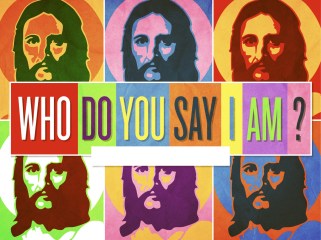
Who Do People Say That That I Am? Mark 8.22-38

Sermon Roni

PETER’S PARTIAL SIGHT

The healing of a blind man (Mk. 8.22-26) is followed by Peter’s confession that Jesus is the Messiah (Mk. 8:27-30), but Peter’s rebuke of Jesus in Mk. 8:32 indicates that he is “seeing” only partially.

Par-blind; short sighted; myopic; or partial sight afflict many of us physically, however, when applied to spiritual sight/insight this form of myopia leads to many different spiritual problems. This is abundantly apparent from Peter’s failure to understand that Jesus must suffer and face death.

Who is this Jesus?

whoisJesus-1

(Mk. 8:27-30) – Peter gives the correct answer to the question as to who do folk say that Jesus is.

What happens next indicates that Peter did not understand who Jesus is! (Mk. 8:31-33), consequently this led to a wrong understanding as to what Jesus came to do!

The result is that we who want to follow him often do not know what we are meant to do! 

Peter cannot think of a Messiah who suffers and dies. According to Jewish understanding Messiah was to come as a conquer and in their context that meant throwing off the Roman yoke. Because of Peter’s limited spiritual insight he was like the blind man whose sight was at first only partially restored and was about the same as seeing trees walking — it just doesn’t make any sense to him that Jesus must suffer and die.

A suffering Messiah was not something that Peter understood.

THE SETTING

The questioning about Jesus identity took place in the villages of Caesarea Philippi. This was a place that was known in antiquity as a shrine of the Greek and Roman nature god, Pan and was called Panion. However, Philip, Herod’s son renamed it Philippi in honour of the Emperor and himself. It had also been a place of worship dedicated to various Semitic deities such as Baal-gad or Baal-hermon (Josh 11:17 ff; Judg. 3:3; 1 Chr. 5:23).”

The questions about Jesus’ identity began at Caesarea Philippai.The question as to who folk thought Jesus is was asked in a place dedicated to a pagan god, with a name honouring the human Caesar (who was often presented as divine). This was at the spring and one of the headwaters of the river Jordan and Dan was also a place of a sacred shrine at the base of Mount Hermon. It was known severly as Panion/Panias or Banias.

Where does our real confession take place?

Certainly our confessions and statements about our faith that we say in our liturgy are sincere, but it goes to a deeper level when we proclaim our faith in Jesus against all the other things that compete for our allegiance. It is easy to say “I believe,” when involved in worship with other believers around us and who are all saying the same words of confession.

However, many of us may feel like the blind man, “Help my unbelief” when we are out and about busy with our daily lives, surrounded by other beliefs.

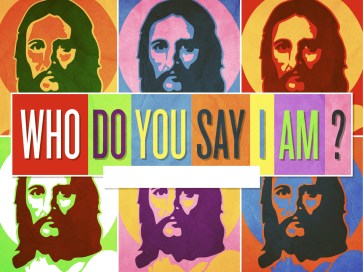
who-do-you-say-i-am_std_t_nv

WHO IS JESUS?

“Who do people say that I am?” 28 And they answered him, “John the Baptist; and others, Elijah; and still others, one of the prophets.” 29 He asked them, “But who do you say that I am?” Peter answered him, “You are the Messiah.” 30 And he sternly ordered them not to tell anyone about him. (In Mark we meet the Messianic Secret in which Jesus discouraged folk to openly declare who he is and what he came to do).

Some were saying he is “John the baptizer [that] has been raised from the dead; and for this reason these powers are at work in him.” But others said, “It is Elijah.” And others said, “It is a prophet, like one of the prophets of old.” But when Herod heard of it, he said, “John, whom I beheaded, has been raised” (6:14b-16).

Common ideas of who the Messiah is during the period of Second Temple Judaism is that he will be an eschatological king. Through the Messiah God would reestablish the Kingdom of David over all the earth. The Messiah would be the perfect king chosen by God, through whom he would first deliver Israel from its enemies and then cause Israel to live in peace and harmony.

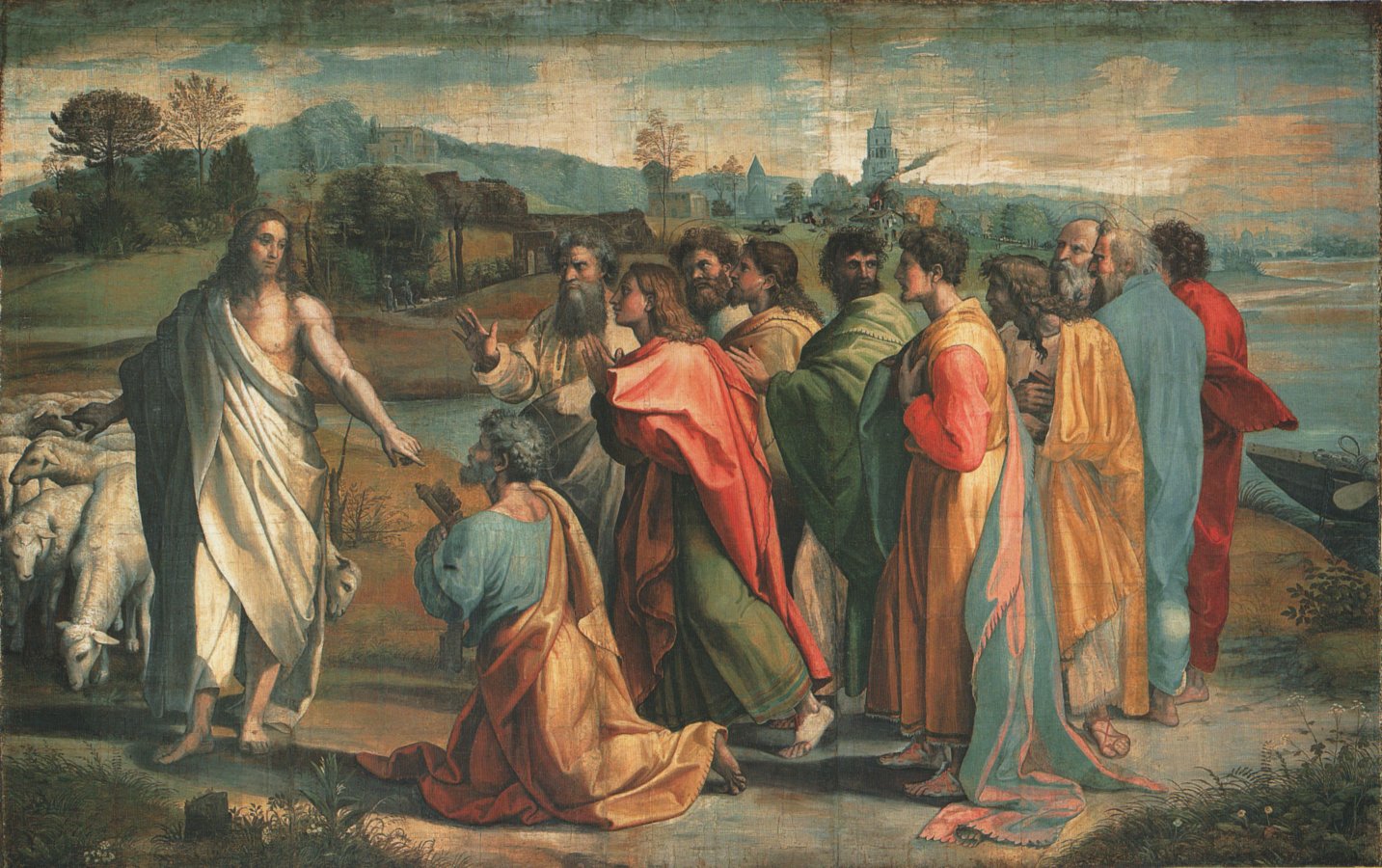
RaphaelThouArtPeter

Though one may have witnessed Jesus’ miracles and have heard his teaching and still come to the wrong conclusion about who he is and the source of his power.

In verse 31, Jesus begins to teach them with a strong emphasis on his suffering and death. Jesus’ teaching also functions as a renewed call to his disciples to follow him:

There are four parts to what Jesus must do:

  1. Suffer many things
  2. Be rejected (after testing) by the religious leaders
  3. Be killed
  4. After three days rise
  5. This verb is used most often of Jesus commanding evil forces:

This verb is used most often of Jesus commanding evil forces:

  1. evil spirits (1:25, 3:12; 9:25)
  2. and the wind (4:39).
  3. Jesus “orders” his disciples not to tell
  4. anyone about him (8:30)
  5. and he “rebukes” Peter (8:33).

(The phrase, “seeing his disciples — note the plural – “he rebuked” is found only in Mark. Neither Matthew nor Luke have Jesus “rebuking” Peter — and by extension the other disciples? Only Jesus gets the business of “rebukes,” correct, everyone else seems to get it wrong. Peter rebukes Jesus (8:32). The disciples rebuke those who were bringing little children to Jesus (10:13). The crowd rebukes the noisy blind man (10:48). This verb seems to carry an idea of exerting power over others — something Jesus can do with evil forces and what he tries to do with his disciples. It is not something anyone else should do with Jesus or with the beggars or children).

Why does Jesus say to Peter that he has become Satan?

Peter has not “set his mind” (phroneo) on the things of God, but on human things. This verb has an emphasis on the underlying disposition or attitude.

Jesus’ harsh critique of Peter involves more than just the few words spoken on this occasion. Even after the clear words from Jesus, Peter still hasn’t got the proper picture. He needs an “attitude change”. He is seeing with “human eyes” rather than through the will and eyes of God. He wrongly tells Jesus what is and what is not going to happen. Peter wants to be a leader, not a follower. Are we ever guilty of having wrong attitudes about Jesus and God’s purposes?

That is promised by the word at the empty tomb, “Go, tell his disciples and Peter that he is going ahead of you to Galilee; there you will see him, just as he told you”      We should not be to harsh with Peter. Jesus loved Peter, though he got things wrong. He was willing to speak out and step out even if he said the wrong thing or got himself into difficulties.

 who-do-u-say-i-am

WHAT ARE WE TO DO?

These words are addressed to a crowd along with the disciples. “It is not only Jesus’ destiny that they must begin to see in a new light, but their own” (R. T. France The Gospel of Mark, p. 333):

“If anyone wishes/wants (thelo) [follow Jesus]. . .” (vv. 34, 35) indicates that it is a matter of the will — perhaps related to the “inner disposition or attitude” indicated in v. 33 by phreneo.

 There are three parts to wishing to follow behind Jesus:

  1. deny oneself
  2. take up one’s cross
  3. follow Jesus

These are followed by five other sayings:

  1. Saving one’s life (8:35)
  2. What’s the benefit (8:36)
  3. Life’s Price (8:37)
  4. If we are ashamed of the Son of Man he will be ashamed of us (8:38)
  5. Some standing here will not see death (9:1)