



Shalom Radio UK is an independent radio blog sponsored by MTMI – Messianic Teaching Ministry International. We are non-aligned and non-sectarian. We present a Messianic Jewish Perspective.
This month, it is our pleasure to welcome:
Asaph which is co-sponsored by CMJ UK – The Church’s Ministry Among Jewish People

Asaph is an online gathering of Jesus-believing-Jews and those from a Jewish heritage that meets monthly:
Contact us through CMJ UK’s office at: office@cmj.org.uk
When you mail us, ask for more information about the Asaph meetings. We will put you in contact with one of the team members.

Who is Asaph?
When we ask, “Who is Asaph?”, we discover a fascinating figure from the biblical tradition. The name Asaph is commonly understood to mean “gatherer,” and he is remembered as a collector and composer connected with the Psalms.
The Psalms of Asaph — found in Psalm 50 and Psalms 73–83 — form a collection of twelve deeply reflective and often sombre songs. Asaph was a Levite musician, worship leader, and prophetic voice appointed during the reign of King David, serving before the Ark of the Covenant.
These Psalms are not merely songs of praise; they are honest conversations with God. They wrestle with some of life’s most difficult questions:
Why do the wicked appear to prosper?
Why do the faithful suffer?
Where is God when His people experience pain and crisis?
One of the central themes in Asaph’s writings is the prosperity of the wicked. In Psalm 73, Asaph openly admits his struggle as he looks at the arrogant and successful, wondering why those who reject God seem to flourish. Yet, through his encounter with God, his perspective changes. He comes to recognise that earthly success is temporary, while God’s justice and faithfulness endure forever.
Another important theme is true worship versus empty ritual. In Psalm 50, God reminds His people that He is not seeking religious activity without genuine devotion. God desires gratitude, obedience, and a heart that is truly committed to Him rather than outward acts performed without sincerity.
The Psalms of Asaph also express national grief and crisis. Psalms such as 74 and 79 give voice to the sorrow of a people experiencing devastation, including the destruction of the Temple. These prayers reveal the pain of asking why God seems silent during times of suffering.
Yet, throughout these Psalms, there is a powerful message of hope. Although Asaph begins with confusion, sorrow, and uncertainty, he repeatedly returns to the truth that God remains sovereign. Human circumstances may change, but God’s presence, justice, and faithfulness remain constant.
These Psalms were written not only for worship but also for instruction. They remind future generations to remember God’s mighty works, remain faithful during hardship, and trust Him even when the path ahead appears uncertain.
One of the most beautiful expressions of renewed faith is found in Psalm 73:
“Yet I am continually with You;
You hold me by my right hand.
You guide me with Your counsel,
and afterward receive me to glory.”
— Psalm 73:23–24
The journey of Asaph teaches us that faith does not mean the absence of questions. Rather, it means bringing our deepest struggles before God and discovering that, even in the darkest moments, He remains present, guiding, and holding us by His hand.
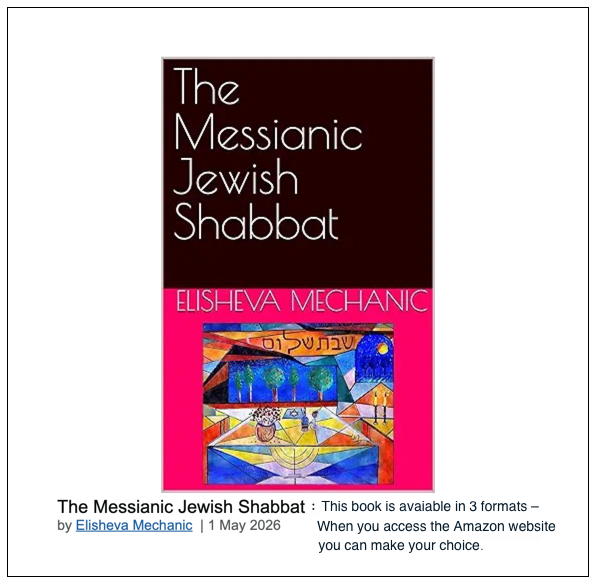
A Messianic Jewish Shabbat – Celebrating the Sabbath – With Elisheva Mechanic who is the author of The Messianic Jewish Shabbat.
https://paypal.me/hotroronisblogcom


Sof ––End
