Shalom Radio UK is an independent radio blog sponsored by MTMI – Messianic Teaching Ministry International. We are non-aligned and non-sectarian. We present a Messianic Jewish Perspective.
This month, it is our pleasure to welcome:
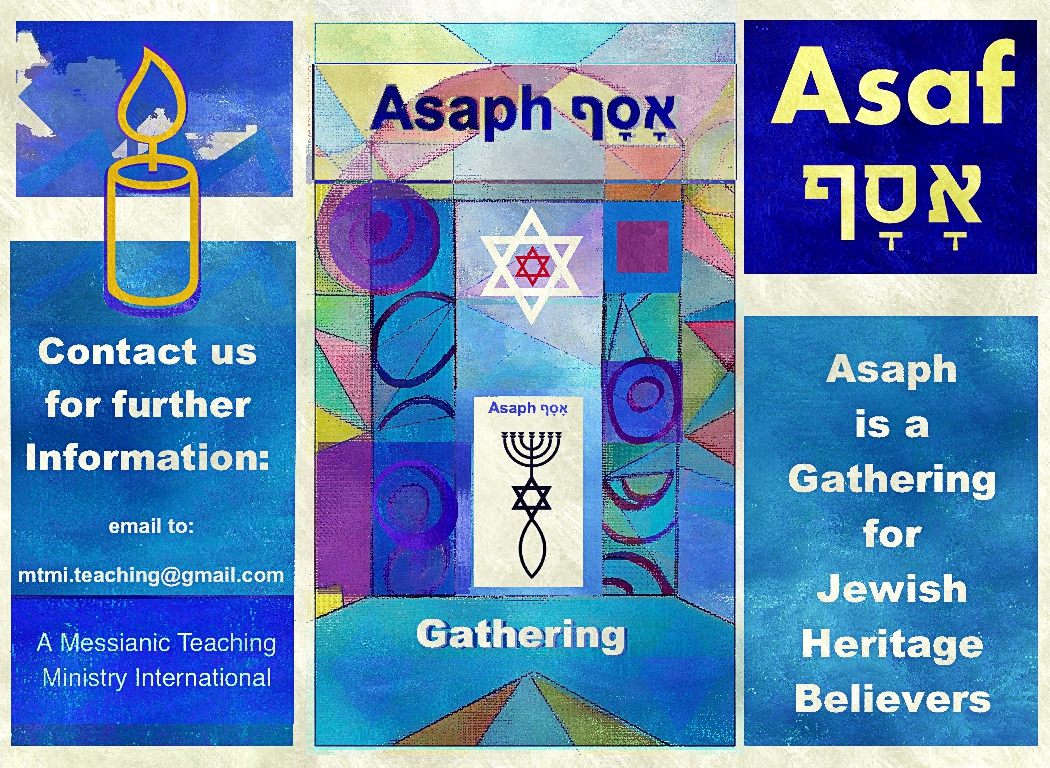
Asaph which is co-sponsored by CMJ UK – The Church’s Ministry Among Jewish People
Asaph is an online gathering of Jesus-believing-Jews and those from a Jewish heritage that meets monthly:
When you mail us, ask for more information about the Asaph meetings. We will put you in contact with one of the team members.
Who is Asaph?
When we ask, “Who is Asaph?”, we discover a fascinating figure from the biblical tradition. The name Asaph is commonly understood to mean “gatherer,” and he is remembered as a collector and composer connected with the Psalms.
The Psalms of Asaph — found in Psalm 50 and Psalms 73–83 — form a collection of twelve deeply reflective and often sombre songs. Asaph was a Levite musician, worship leader, and prophetic voice appointed during the reign of King David, serving before the Ark of the Covenant.
These Psalms are not merely songs of praise; they are honest conversations with God. They wrestle with some of life’s most difficult questions: Why do the wicked appear to prosper? Why do the faithful suffer? Where is God when His people experience pain and crisis?
One of the central themes in Asaph’s writings is the prosperity of the wicked. In Psalm 73, Asaph openly admits his struggle as he looks at the arrogant and successful, wondering why those who reject God seem to flourish. Yet, through his encounter with God, his perspective changes. He comes to recognise that earthly success is temporary, while God’s justice and faithfulness endure forever.
Another important theme is true worship versus empty ritual. In Psalm 50, God reminds His people that He is not seeking religious activity without genuine devotion. God desires gratitude, obedience, and a heart that is truly committed to Him rather than outward acts performed without sincerity.
The Psalms of Asaph also express national grief and crisis. Psalms such as 74 and 79 give voice to the sorrow of a people experiencing devastation, including the destruction of the Temple. These prayers reveal the pain of asking why God seems silent during times of suffering.
Yet, throughout these Psalms, there is a powerful message of hope. Although Asaph begins with confusion, sorrow, and uncertainty, he repeatedly returns to the truth that God remains sovereign. Human circumstances may change, but God’s presence, justice, and faithfulness remain constant.
These Psalms were written not only for worship but also for instruction. They remind future generations to remember God’s mighty works, remain faithful during hardship, and trust Him even when the path ahead appears uncertain.
One of the most beautiful expressions of renewed faith is found in Psalm 73:
“Yet I am continually with You; You hold me by my right hand. You guide me with Your counsel, and afterward receive me to glory.” — Psalm 73:23–24
The journey of Asaph teaches us that faith does not mean the absence of questions. Rather, it means bringing our deepest struggles before God and discovering that, even in the darkest moments, He remains present, guiding, and holding us by His hand.
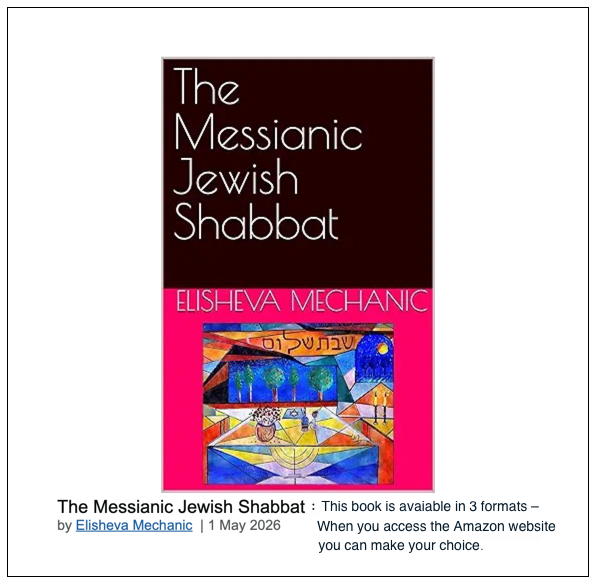
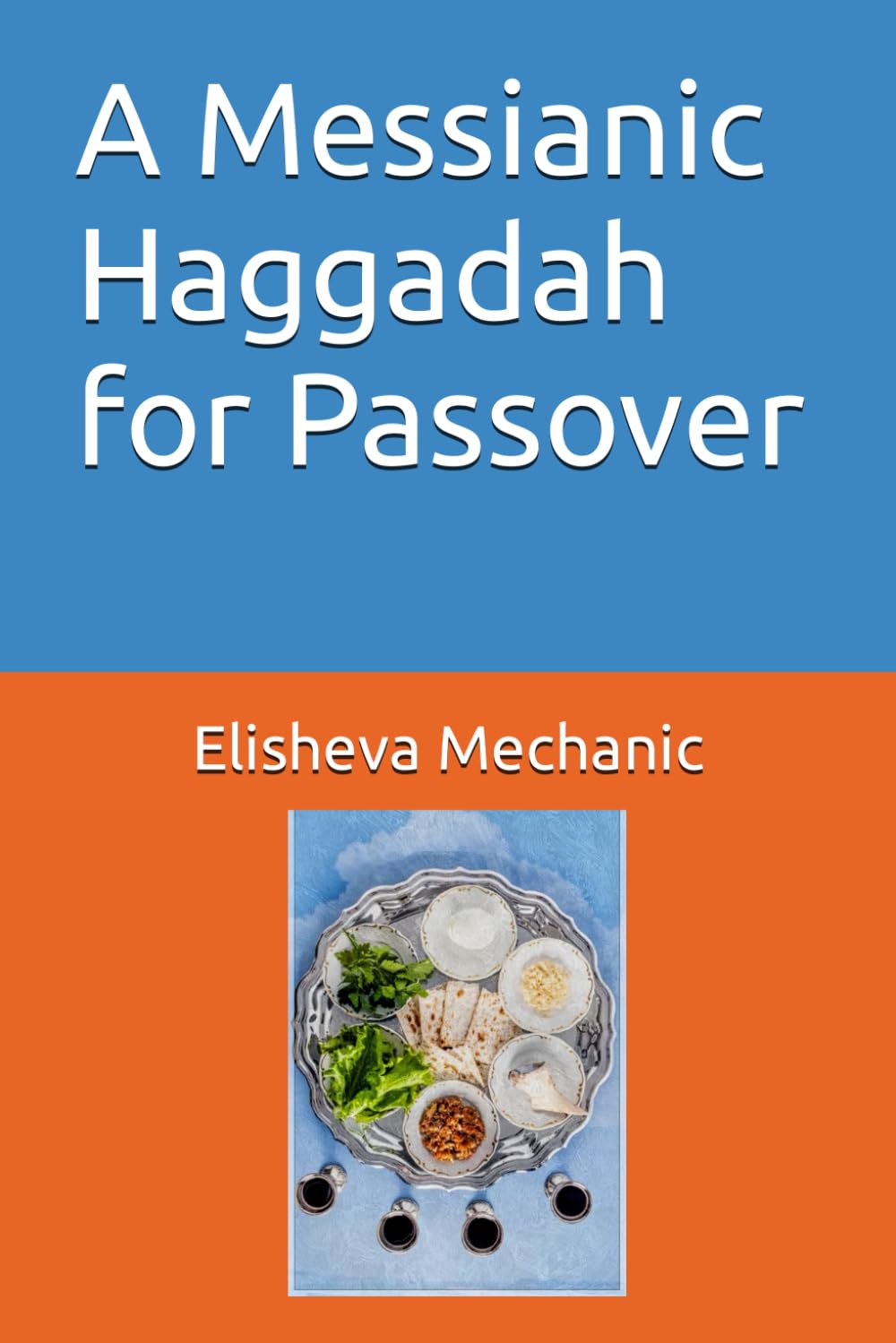
A Messianic Jewish Shabbat – Celebrating the Sabbath – With Elisheva Mechanic who is the author of The Messianic Jewish Shabbat.
Apple of My Eye –– By Roni Mechanic –– Please Note: This Poem is Copyright 2025 and may only be briefly quoted.
For fuller use contact the author: mtmi.teaching@gmail.com
The phrase “apple of my eye” has a long and storied journey, glimmering with layers of meaning. In its earliest English use, it spoke of a person or thing cherished above all else, one held in a place of rare affection. The image often refers to the pupil—the small, dark centre of vision—though it was also employed more broadly to describe what is dearest to the heart.
William Shakespeare used it with this sense in the late 16th century. In A Midsummer Night’s Dream, the fairy king Oberon, armed with a magical flower struck by Cupid’s arrow, leans over a sleeping youth and says, “Flower of this purple dye—hit with Cupid’s archery—sink in apple of his eye,” thus sealing a love-bound fate. In Love’s Labor’s Lost, the witty courtier Biron rebukes another with the sharp question, “Do not you know my lady’s foot by the square—and laugh upon the apple of her eye?” In both, the phrase carries the intimacy of a treasured focal point—whether in love, beauty, or desire.
The Focus of the Poem –– Apple of the Eye
In the Bible, however, this phrase takes on a deeper, more tender resonance. In the stately English of the 1611 King James Bible, “apple of my eye” glows like a thread of divine intimacy woven through the Scriptures. It sings in Moses’ desert song, where God finds His people in the waste howling wilderness and guards them as one would protect the most delicate part of sight itself. It rises in the psalmist’s prayer— “Keep me as the apple of the eye”—a cry to be hidden under the shadow of God’s wings. Proverbs utter it as the voice of a father’s counsel: to hold God’s commandments as one would shield the pupil from harm. Lamentations weep it in grief, calling for tears to flow without ceasing from the apple of the eye. And Zechariah proclaims it as a fierce warning: whoever touches Israel touches the apple of God’s eye.
In Zechariah, the phrase shifts: bava ‘ayin. Scholars differ here. Some trace bava to a root meaning “to hollow out,” evoking the eye as a hollowed gateway through which light enters. Others believe it simply means “apple,” thus giving us the English rendering. Yet, whether hollowed gate or fruit, the essence remains: the eye is the most sensitive, most fiercely guarded place. To touch it is to wound the seat of perception.
And so, in Scripture, this image is not of a God who loves from afar, but of a God whose care is as personal way as the guarding of His own sight. His gaze is steady, unblinking, protective. In it, we are not lost among the masses, but reflected clearly, held at the very centre of His vision. We are the little figure in His eye—the one He will not let go.
Apple of My Eye
In most of these verses, the ancient tongue speaks ‘iyshon ayin––
אִישׁוֹן עַיִן–– the pupil of the eye.
‘Iyshon
‘Iyshon—darkness, shadow— yet more than shade, it whispers of the little man, the tiny figure mirrored in another’s gaze.
This is no idle flourish— but the portrait of nearness: to be the little man in G_D’s own eye, so close, so beloved, that His gaze holds your image, and His sight cradles your soul.
He Speaks to His Beloved Ones
The “apple of my eye” glows— a thread of divine intimacy woven through the ancient scrolls.
Tales told long past— flowing from the heart of G_D: “You are my beloved ones, now, and throughout eternity.
Sacred, not only to behold, but to tenderly nurture, and to hold.
The light of My gaze rests on you, as the pupil to the eye, guarded from harm, kept in the depth of My sight.
No shadow shall hide you, no hand shall tear you away— for you are the little figure mirrored in My vision,
The treasure of My soul— in all your struggles, past, present, and yet to come, My eyes will ever watch for you.
Foes
Though the foe would tear you away from My tender care, I will stand, shield in hand, warding them off–– with a jealous, protecting strength.
You are My beloved— the apple of My eye. No one shall pluck you from My mighty grasp, nor dim the gaze that holds you close.
Moses’ Song
It sings in Moses’ desert song, where G_D finds His people in the waste howling wilderness, and guards them as one shields the tender centre of sight.
Hunger, thirst, a scorching sun— wild beasts, and those of evil intent, though each in turn seeks to wound or destroy you, I am there with you, now, and always— shadow in the heat, water in the parched land, fortress in the storm.
Guardian
Guardian of your soul, ever watchful, ever near, committed to keep you whole— body, soul, and spirit— now, and always.
Fear not for I am with you,”
the treasure of My soul— in all your struggles, past, present, and yet to come, My eyes will ever watch for thee.
The Psalmist
It rises in the psalmist’s plea: “Keep me as the apple of the eye,” a cry for shelter— beneath the shadow of His wings, where the heat of the day cannot scorch, nor the terrors of the night draw near.
It is the voice of One who knows that the pupil is the most guarded place, the place where sight begins, and that to be there, held within God’s gaze, is to be wrapped in a love of Thee, both fierce and tender.
There, no arrow can pierce, no darkness can blot out the light, for His wings are broad, and His watch unending, and the one kept there is forever safe.
Proverbs
Proverbs speaks it as a Father’s voice, urging the keeping of His commands as one would guard the pupil from the sting of harm.
Sayings of old, spoken and spoken again, for all to hear— a still small voice, a whisper in the listener’s ear, a steady gaze meeting the eye, reassuring, confident, to uphold–– and to guide along life’s way.
Stay in My sight, remain in My regard— apples of golden delight, the apple of My eye.
Lamentations
Lamentations weep––
its tears unending,
flowing like rivers, falling from the apple of the eye. Though weeping may endure for a time, assurance is given, clearly declared:
“I am with you always— in sorrow and in suffering, even in the face of loss and death.
Did I not say, ‘I will never leave you nor forsake you’?”
“I hate you, despise you, wish to see you slain, and dispossessed!”— is this not the bitter, often-repeated cry of Israel’s foes through the long corridors of time?
5785
Five thousand, seven hundred, and eighty-five years she has endured—[she=Israel] banished from her land, exiled to the ends of the earth, hounded and hunted, slaughtered by tyrants whose names fade like dust. Yet she still stands, her heartbeat steady, her lamp still burning in the night.
What is her secret? What unseen hand has shielded her from the graveyard of nations?
The Prophet
Bava ‘ayin—הָוָה עַיִן— hollowed and formed, a vessel made to receive the light.
And the word of the Lord through Zechariah still thunders across the hills: Touch Israel, and you touch the apple of My eye.
Thus says the Lord— a warning set for all generations, a promise sealed with fire: He who keeps Israel shall neither slumber nor sleep; the gaze of the Holy One shall not turn away, but shall watch her forever.
The apple of My eye— you are Mine, My beloved, and I am yours.
As a lover whispers, with fierce and tender devotion to the one his soul adores, so does Hashem speak to all who love Him:
“I will never leave you, nor forsake you. Not in the fire, nor in the flood, not in the shadow of death itself.
[It is my intention that through this ending I want the poem to breathe more like a psalm or prophetic reading that closes a liturgical work].
Apple of the Eye:
Refrain: Guard us, O L_RD, as the apple of Your eye.
Leader: Apple of the Eye—kept as the shadow of His wings, Congregation: Hidden in the secret place of the Most High. All: Guard us, O L_RD, as the apple of Your eye.
Leader: Guarded from the arrow that flies by day, Congregation: Preserved from the terror that walks in darkness. All: Guard us, O L_RD, as the apple of Your eye.
Leader: He found thee in the waste howling wilderness, Congregation: He led thee about, He instructed thee. All: Guard us, O L_RD, as the apple of Your eye.
Leader: He kept thee as the apple of His eye, Congregation: As an eagle stirs her nest and spreads her wings, He covers thee. All: Guard us, O L_RD, as the apple of Your eye.
Leader: Under His feathers thou shalt trust, Congregation: His truth shall be thy shield and buckler. All: Guard us, O L_RD, as the apple of Your eye.
Leader: Wisdom binds His words upon thy heart, Congregation: As one would guard the pupil from harm. All: Guard us, O L_RD, as the apple of Your eye.
Leader: Lament weeps without ceasing, Congregation: Tears falling from the apple of the eye. All: Guard us, O L_RD, as the apple of Your eye.
A Clear Vision
Leader: My gaze will hold you, My hand will keep you,
as the apple of My eye.”
Let every breath bear witness, and every heart resound with the song of the One who will never let go.
Congregation: Amen— and Hallelujah!
Resources available to assist you in your desire to gain a clearer understanding of Messianic Jewish Perspectives:
This the link that leads to my PayPal account, where you can easily support my blog and the content that I create. Your contributions help me to continue producing high-quality articles, engaging stories, and insightful reflections. Every donation, no matter how small, makes a significant difference and allows me to invest in better resources, conduct more research, and share even more valuable information with all of you. I appreciate your support and dedication to my work, and together, we can create a thriving community around the topics that matter most to us. Thank you for considering a contribution to my blog!
Shalom Radio UK is sponsored by MTMI
It is an independent internet based radio programme
MAKE A CHARITABLE DONATION TOWARDS THE BLOG’S RUNNING COSTS:
https://paypal.me/hotrodronisblogcom is the link that leads to my PayPal account, where you can easily support my blog and the content that I create. Your contributions help me to continue producing high-quality articles, engaging stories, and insightful reflections. Every donation, no matter how small, makes a significant difference and allows me to invest in better resources, conduct more research, and share even more valuable information with all of you. I appreciate your support and dedication to my work, and together, we can create a thriving community around the topics that matter most to us. Thank you for considering a contribution to my blog!