Unknown's avatar

About ronimechanic

Academic, Theological Commentator, Writer, Poet, Educator, Blogger, Artist, and Photographer

Link

image1

Shalom Radio UK is 

dedicated to sharing good news

Your radio host is Roni Mechanic 

Twitter: @roni_mechanic

Shalom shares Messianic Jewish perspectives – We cover topics concerning Jewish people, Israel, and the Middle-East, current affairs, social and political issues and how these impact upon Jewish life not only in Israel but the UK as well.

Programmes include music to uplift the soul, personal stories of folk on the journey of discovery, and how faith and prayer have given hope to many. The programmes are not only meant for Jewish listeners but all who want to gain a fresh insight into how you may find peace/shalom in this troubled world.

At the heart of Shalom is the conviction that Yeshua/Jesus is

the Messiah of Israel and Saviour of the World.

*

Charitable Donation to Support Shalom Radio UK’s Running Costs

This is to enable you the listener to express your thanks and help me expand the work of Shalom Radio UK by making a donation CLICK ON LINK TO DONATE: https://paypal.me/hotrodronisblogcom

£10.00

This Podcast is Reblogged:

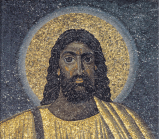
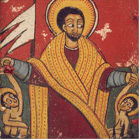
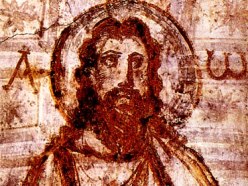
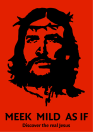
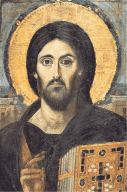
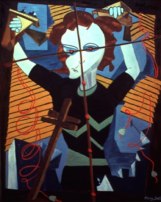
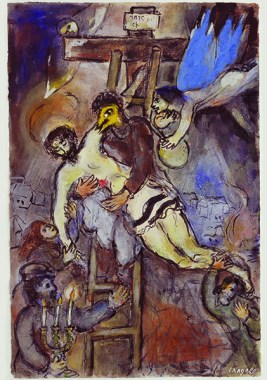
The different faces of Jesus are explored and some of the images of how he is portrayed are included in this programme as seen below:

  b_black_jesus black-jesus-2 ethiopic-jesus-3 

Black Jesus         –        Dark skinned –  Jesus    –     Ethiopian icon     –

 b_catacomb alpha_omega

Alpha & Omega    –   3rd Century image


  jesus-0131   Turin Shroud 

 holywood-jesus-4          guru-jesus-5     rasta-jesus-9    che-jesus-7 

Hollywood image  –  Indian Guru  –    Rastafarian   –  South American Revolutionary

                                jwish-jesus-6   1st Century Jewish man’s head

  Russian Jesus 10.png   Russian Icon                   

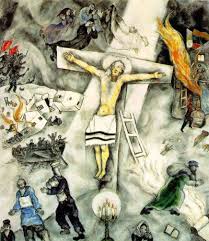
 crucifixion-11   Chagall’s White Crucifixion 

 asher-1-5in   Potok’s Brooklyn Crucifixion    

 chagall-marc-apocalypse-en-lilas-capriccio-600-1    Chagall’s Crucifixion in Lilac                                                                       chagall-green-fidler   Chagall’s Green Fidler  

  picasso-ldda   Picasso’s Les Demoiselles d’Avignon

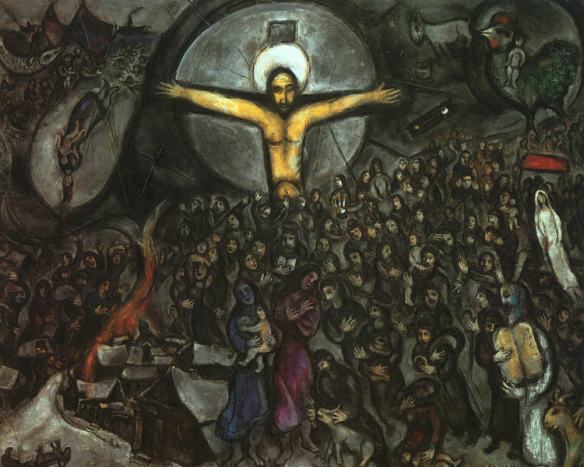
RNS-CHAGALL-PAINT a   Chagall’s Descent from the Cross

An independent internet based radio programme sponsored by

Messianic Teaching Ministry International – MTMI

Belief and Unbelief -Mark 7.24-37

belief 

                                Verse

unbelief2

(This short message is based on  Rev. Harold J. Staiti, First Baptist Church, Fairport, NY  sermon and adapted by Rev. Roni Mechanic for use in an English context).

TITLE: Belief and Unbelief

TEXT: Mark 7.24-37

Sunday 6 September 2015 

14th Sunday after Trinity

Proper 18

Love your neighbour as yourself

Today’s Readings are from The Common Lectionary

Psalm 125, James 2:1-10, Mark 7:24-end

Mark 7:24-37New Revised Standard Version, Anglicised (NRSVA)

The Syrophoenician Woman’s Faith

24 From there he set out and went away to the region of Tyre.[a] He entered a house and did not want anyone to know he was there. Yet he could not escape notice, 25 but a woman whose little daughter had an unclean spirit immediately heard about him, and she came and bowed down at his feet. 26 Now the woman was a Gentile, of Syrophoenician origin. She begged him to cast the demon out of her daughter. 27 He said to her, ‘Let the children be fed first, for it is not fair to take the children’s food and throw it to the dogs.’28 But she answered him, ‘Sir,[b] even the dogs under the table eat the children’s crumbs.’29 Then he said to her, ‘For saying that, you may go—the demon has left your daughter.’30 So she went home, found the child lying on the bed, and the demon gone.

Jesus Cures a Deaf Man

31 Then he returned from the region of Tyre, and went by way of Sidon towards the Sea of Galilee, in the region of the Decapolis. 32 They brought to him a deaf man who had an impediment in his speech; and they begged him to lay his hand on him. 33 He took him aside in private, away from the crowd, and put his fingers into his ears, and he spat and touched his tongue. 34 Then looking up to heaven, he sighed and said to him, ‘Ephphatha’, that is, ‘Be opened.’ 35 And immediately his ears were opened, his tongue was released, and he spoke plainly. 36 Then Jesus[c] ordered them to tell no one; but the more he ordered them, the more zealously they proclaimed it. 37 They were astounded beyond measure, saying, ‘He has done everything well; he even makes the deaf to hear and the mute to speak.’

Footnotes:

  1. Mark 7:24 Other ancient authorities add and Sidon
  2. Mark 7:28 Or Lord; other ancient authorities prefix Yes
  3. Mark 7:36 Gk he

TITLE: Belief and Unbelief

Mark 7.24-37

INTRODUCTION

Orientation

It is one of the great ironies of our faith that the message of a Jewish rabbi to Jewish people became the faith of Jews and Gentiles and became known as “Christianity.”

[Irony is a state of affairs or an event that seems deliberately contrary to what one expects and is often wryly amusing as a result].

         What is more ironic than when an English teacher gets a parking ticket in Durham town centre just having the previous day looked at the Road Code with her 6th form class. The parking warden hotly asked her, “Can’t you read?”

         It is more ironic when a bank clerk leaves his debit card in an ATM after having just come from work and had just attended a card security meeting.

         What’s more ironic than a man who held up a jewellery shop and used his work vehicle as the get away car with the sign that read:

Mike’s Roofing Repair

Phone: 01388 -762 293

for prompt attention?

         What is more ironic than a primary school pupil having spent the afternoon at his aunts house and is fetched by his father who on the way home stopped at the corner shop. He told his dad that he had lost his school bag – retracing their steps to his aunt’s house his father sees the missing bag on his son’s back where it had been all that afternoon – the boy was me!

Today’s passage heavily relies on irony to teach a larger story about belief and unbelief.

         In Mark’s time, the Lord was doing great things among the people, however not all were receiving his ministry happily.

         For Mark, it is ironic, that some in Israel, who should have believed, were refusing to believe the message from Jesus, and Gentiles who were outsiders were the ones who were readily coming to faith?

Proposition

While the synagogue leaders excluded people based on ritual purity laws, the Jesus movement maintained that faith is what makes a person clean. We need to become more embracing and welcoming of all.

How are we to respond to families with children that come to our services? Are we going to welcome them, or give them the cold shoulder because they may upset our sense of order and possible disruption that the children may cause? We say that we want the church to grow, but when growth potential presents itself through baptisms or those who may want to get married in our church, what is our response? It is a big challenge and test to how we will respond to these opportunities! Let is not hold back, but rise to the situation as it presents itself to us in a positive way.

The Inclusive Church ‘statement of belief’

“We believe in inclusive Church – church which does not discriminate, on any level, on grounds of economic power, gender, mental health, physical ability, race or sexuality. We believe in Church which welcomes and serves all people in the name of Jesus Christ; which is scripturally faithful; which seeks to proclaim the Gospel afresh for each generation; and which, in the power of the Holy Spirit, allows all people to grasp how wide and long and high and deep is the love of Jesus Christ.”

This is a very brave and challenging move and many may at first find this a hard thing to accept, but it is surely something that each of us need to come to terms with. How good are we at welcoming strangers, families with young children? We say that we want to grow, but are we willing to embrace all?

Preview

We see this teaching juxtaposed in two stories: One, the faith of a Gentile woman (Mark 7.24-30). The other is the unbelief of Israel’s leaders – Judeans (Mark 7.31-37).

Transition

Let’s look first at…

THE IRONIC EXAMPLE – GENTILE ARE ALSO COMING TO FAITH: MARK 7.24-30

Observation

We see here that the Gentiles have heard of the many miraculous things Jesus had done among the Jewish people. The word had even reached into the areas outside the Jewish regions:

         The place – The Gentile region of Tyre (7.24).

         The person – A Gentile woman born in Syrian-Phoenicia (Syrophoenician) – (7.26a).

         The plea – Request for the exorcism of a demon from her daughter (7.26b).

It is ironic that God honours faith in Christ from anyone who humbly comes to experience his grace and mercy – Jew and Gentile alike.

This is why God’s power was present in the ancient Church.  Even though it was largely Jewish, the church was faithfully honouring Christ, and many Gentiles were becoming believers too and glorified God as a result!

Even after Jesus used insulting language about not giving the children’s food to the dogs (household pets) – when he saw the woman’s persistence, that he granted her wish and delivered her child from the demons and praised her faith!

Illustration

In our modern, pluralistic society, we are used to coexisting among people of different cultures and religions.  I am uncertain if we can get our minds around how difficult this was for believers in the ancient world. At first, even the ancient Jewish Christians found it difficult to believe God was doing something new among the Gentiles. (i.e. Peter at Cornelius’ house – Acts 10.24-48). But when Peter and the Apostles recognized that God had given the Gentiles the same privilege of turning from sin and receiving the same eternal life and empowerment of the Spirit, they praised God  (Acts 11.17-18)!

Application

Appearing religious doesn’t mean being religious, but God will honour anyone’s faith in Jesus Christ.

Like this woman, the place you come from may not be particularly religious. You may not initially come to God with his word on your heart. But if you humble yourself before God, you will experience his grace and mercy.

This can be everyone’s story of faith.

Transition

But ironically, some remain deaf to the Gospel, reject faith as a cleansing act, and oppose the message of Christ based on religious conviction.  We see this in many congregations by folk who call themselves Christians, but their life-style tells a different story. Our talk and walk must be in harmony.

THE IRONIC EXAMPLE –  UNBELIEF in ISRAEL: Mark 7.31-37

Explanation

We see here that the Jewish people in the region knew of the many miraculous things Jesus had done. The word had reached to all the ten cities around the Sea of Galilee:

         The place – The Jewish region of the Ten Cities (7.31)

         The people – A Jewish crowd from the area (7.32a)

         The plea – Healing for a deaf and mute man (7.32b)

It is ironic in the story that the religious leaders refused to hear Jesus’ message, yet he opens the ears of strangers and they give him praise.

Realize this is a story about the belief and unbelief. Mark’s day were as astonished at the unbelief in their day as those Jesus encountered in the Decapolis (v.37).

Illustration

There was a time when I was “deaf” to the word of God and I had a tongue that was “mute” to speak of his greatness. I could not understand the message of scripture and I did not lead a life that gave glory to God.

But when I came to God through Jesus Christ, when I humbled myself and in faith cried out for him to make me whole, I experienced his grace and mercy. I experienced the truth of Isaiah 35.5-6. When God redeems his people, their spiritual eyes are no longer blinded, their spiritual ears will be unstopped, and their tongue will be loosed to proclaim the joy of the Lord’s redemption!

Light shone into the darkness that had been in my life and I was delivered [saved] by grace alone!

Application

Like the people of old, it may be more difficult for some to come to faith in Jesus Christ if they come from a religious background. That may be you today.

You may think that knowing God means being religious or very “spiritual,” but whenever we substitute ritual and form for authentic faith, we are deaf to the message and silent to give God praise.

Not only is the challenge for us personally, but it also means that we will be open to whosoever God sends to us!

Close

Let us embrace rather than exclude. The Jesus movement maintained that faith is what makes a person clean and includes them in the circle of God’s love. Let us embrace each other rather than exclude, as we now approach the communion table of Our Lord…

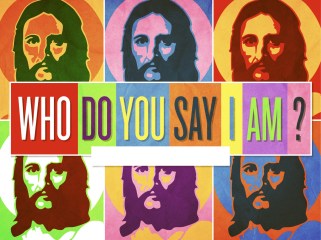
Who Do People Say That That I Am? Mark 8.22-38

Sermon Roni

PETER’S PARTIAL SIGHT

The healing of a blind man (Mk. 8.22-26) is followed by Peter’s confession that Jesus is the Messiah (Mk. 8:27-30), but Peter’s rebuke of Jesus in Mk. 8:32 indicates that he is “seeing” only partially.

Par-blind; short sighted; myopic; or partial sight afflict many of us physically, however, when applied to spiritual sight/insight this form of myopia leads to many different spiritual problems. This is abundantly apparent from Peter’s failure to understand that Jesus must suffer and face death.

Who is this Jesus?

whoisJesus-1

(Mk. 8:27-30) – Peter gives the correct answer to the question as to who do folk say that Jesus is.

What happens next indicates that Peter did not understand who Jesus is! (Mk. 8:31-33), consequently this led to a wrong understanding as to what Jesus came to do!

The result is that we who want to follow him often do not know what we are meant to do! 

Peter cannot think of a Messiah who suffers and dies. According to Jewish understanding Messiah was to come as a conquer and in their context that meant throwing off the Roman yoke. Because of Peter’s limited spiritual insight he was like the blind man whose sight was at first only partially restored and was about the same as seeing trees walking — it just doesn’t make any sense to him that Jesus must suffer and die.

A suffering Messiah was not something that Peter understood.

THE SETTING

The questioning about Jesus identity took place in the villages of Caesarea Philippi. This was a place that was known in antiquity as a shrine of the Greek and Roman nature god, Pan and was called Panion. However, Philip, Herod’s son renamed it Philippi in honour of the Emperor and himself. It had also been a place of worship dedicated to various Semitic deities such as Baal-gad or Baal-hermon (Josh 11:17 ff; Judg. 3:3; 1 Chr. 5:23).”

The questions about Jesus’ identity began at Caesarea Philippai.The question as to who folk thought Jesus is was asked in a place dedicated to a pagan god, with a name honouring the human Caesar (who was often presented as divine). This was at the spring and one of the headwaters of the river Jordan and Dan was also a place of a sacred shrine at the base of Mount Hermon. It was known severly as Panion/Panias or Banias.

Where does our real confession take place?

Certainly our confessions and statements about our faith that we say in our liturgy are sincere, but it goes to a deeper level when we proclaim our faith in Jesus against all the other things that compete for our allegiance. It is easy to say “I believe,” when involved in worship with other believers around us and who are all saying the same words of confession.

However, many of us may feel like the blind man, “Help my unbelief” when we are out and about busy with our daily lives, surrounded by other beliefs.

who-do-you-say-i-am_std_t_nv

WHO IS JESUS?

“Who do people say that I am?” 28 And they answered him, “John the Baptist; and others, Elijah; and still others, one of the prophets.” 29 He asked them, “But who do you say that I am?” Peter answered him, “You are the Messiah.” 30 And he sternly ordered them not to tell anyone about him. (In Mark we meet the Messianic Secret in which Jesus discouraged folk to openly declare who he is and what he came to do).

Some were saying he is “John the baptizer [that] has been raised from the dead; and for this reason these powers are at work in him.” But others said, “It is Elijah.” And others said, “It is a prophet, like one of the prophets of old.” But when Herod heard of it, he said, “John, whom I beheaded, has been raised” (6:14b-16).

Common ideas of who the Messiah is during the period of Second Temple Judaism is that he will be an eschatological king. Through the Messiah God would reestablish the Kingdom of David over all the earth. The Messiah would be the perfect king chosen by God, through whom he would first deliver Israel from its enemies and then cause Israel to live in peace and harmony.

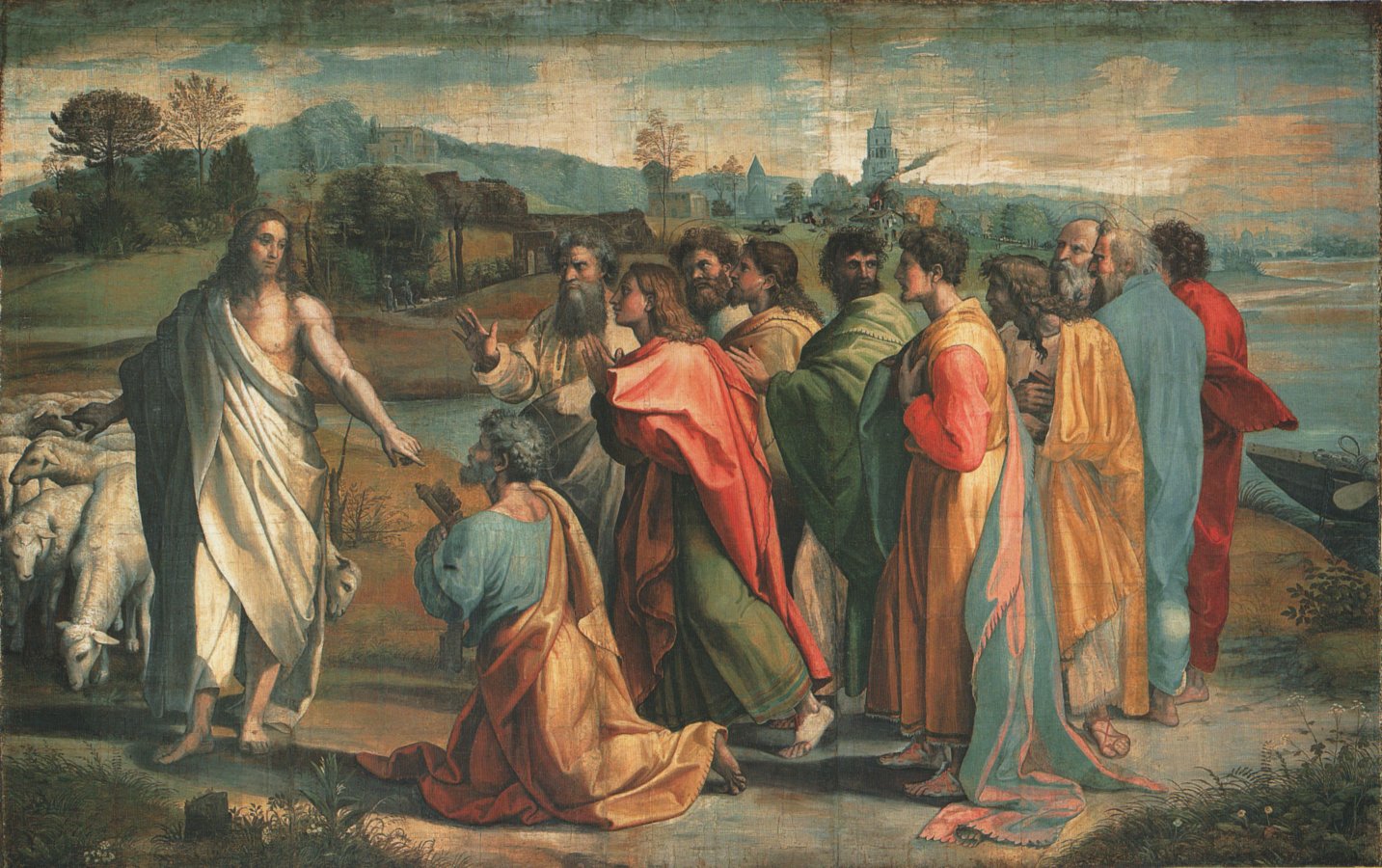
RaphaelThouArtPeter

Though one may have witnessed Jesus’ miracles and have heard his teaching and still come to the wrong conclusion about who he is and the source of his power.

In verse 31, Jesus begins to teach them with a strong emphasis on his suffering and death. Jesus’ teaching also functions as a renewed call to his disciples to follow him:

There are four parts to what Jesus must do:

  1. Suffer many things
  2. Be rejected (after testing) by the religious leaders
  3. Be killed
  4. After three days rise
  5. This verb is used most often of Jesus commanding evil forces:

This verb is used most often of Jesus commanding evil forces:

  1. evil spirits (1:25, 3:12; 9:25)
  2. and the wind (4:39).
  3. Jesus “orders” his disciples not to tell
  4. anyone about him (8:30)
  5. and he “rebukes” Peter (8:33).

(The phrase, “seeing his disciples — note the plural – “he rebuked” is found only in Mark. Neither Matthew nor Luke have Jesus “rebuking” Peter — and by extension the other disciples? Only Jesus gets the business of “rebukes,” correct, everyone else seems to get it wrong. Peter rebukes Jesus (8:32). The disciples rebuke those who were bringing little children to Jesus (10:13). The crowd rebukes the noisy blind man (10:48). This verb seems to carry an idea of exerting power over others — something Jesus can do with evil forces and what he tries to do with his disciples. It is not something anyone else should do with Jesus or with the beggars or children).

Why does Jesus say to Peter that he has become Satan?

Peter has not “set his mind” (phroneo) on the things of God, but on human things. This verb has an emphasis on the underlying disposition or attitude.

Jesus’ harsh critique of Peter involves more than just the few words spoken on this occasion. Even after the clear words from Jesus, Peter still hasn’t got the proper picture. He needs an “attitude change”. He is seeing with “human eyes” rather than through the will and eyes of God. He wrongly tells Jesus what is and what is not going to happen. Peter wants to be a leader, not a follower. Are we ever guilty of having wrong attitudes about Jesus and God’s purposes?

That is promised by the word at the empty tomb, “Go, tell his disciples and Peter that he is going ahead of you to Galilee; there you will see him, just as he told you”      We should not be to harsh with Peter. Jesus loved Peter, though he got things wrong. He was willing to speak out and step out even if he said the wrong thing or got himself into difficulties.

 who-do-u-say-i-am

WHAT ARE WE TO DO?

These words are addressed to a crowd along with the disciples. “It is not only Jesus’ destiny that they must begin to see in a new light, but their own” (R. T. France The Gospel of Mark, p. 333):

“If anyone wishes/wants (thelo) [follow Jesus]. . .” (vv. 34, 35) indicates that it is a matter of the will — perhaps related to the “inner disposition or attitude” indicated in v. 33 by phreneo.

 There are three parts to wishing to follow behind Jesus:

  1. deny oneself
  2. take up one’s cross
  3. follow Jesus

These are followed by five other sayings:

  1. Saving one’s life (8:35)
  2. What’s the benefit (8:36)
  3. Life’s Price (8:37)
  4. If we are ashamed of the Son of Man he will be ashamed of us (8:38)
  5. Some standing here will not see death (9:1)

Parasha Trumah [Gifts] Exodus 25:1-31:17

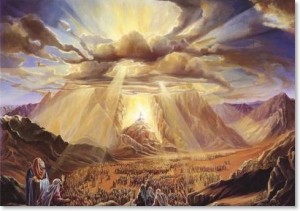
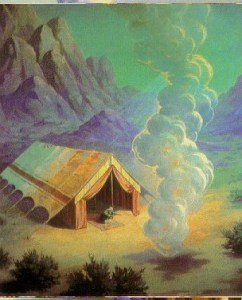
meetingwithgod-300x211   Mt Sinai 33-tent-of-meeting Molinari_Antonio-ZZZ-Adoration_of_the_Golden_Calf

Tent of Meeting                                       Golden Calf

Dear Friends

I had the privilage of presenting this message in London, at

Beit Sar Shalom Congregation, Golder Green.

CPM Logo bigt

Parasha Trumah [Gifts](Exodus 25:1-31:17)
[TRANSCENDENCE AND IMMANENCE – WHY A MISHKAN (Tabernacle)? – A DWELLING PLACE FOR GOD; REVELATION AND ENCOUNTER – GOD’S GLORY COVERED THE MISHKAN; SANCTIFICATION AND ENCOUNTER; HALACHAH – HOW WE SHALL LIVE –WE BRING OUR GIFTS (T’RUMAH)]

For us to place today’s Parasha Trumah (Gifts) in its context we must begin with the telling of the events that took place at the foot of Mount Sinai in the second half of the Book of Exodus (Sefer Sh’mot) and the relating of events about how Moshe and all of the B’nei Yisra’el (People of Israel) stood together at the foot of Mount Sinai and hear God’s Ten Commandments (20:1-14).

The People of Israel asked Moshe to approach God out of fear to hear the rest of the commandments, for they were terrified to have a close encounter with the Almighty (20:15-18). Moses enters the cloud at the foot of the mountain and received many more laws and commands (20:18-24:2). God told him to come up to the top of the mountain in order to worship and approach YHWH. (24:1-2). On his return Moses left the cloud and related all of the laws he has received to them; after their acceptance of the laws, he initiated a covenant ceremony to seal their commitment. (24:3-8). Rudolf Otto in his book the Idea of the Holy describes the Numinous (Radiance or Shinning Brightness of God) and when folk come into contact with this, there is terror, danger, trembling caused by a holy fear of the divine presence.

Moshe and his party ascended part way up the mountain to worship God. (24:9-11),
then Moses ascended alone in order to receive the “Tablets of stone, the Torah and the Mitzvoth (Commandments) which I have written in order to instruct them.” After six days of waiting outside of the cloud covering Mount Sinai, Moshe is called in on the seventh day – and stays for forty days and forty nights (24:12-18).

As God was giving Moshe the 2 stone tablets of stone (31:18).The people coerced Aharon into making a golden calf which they worshiped. (32:1-6). God told Moshe to descend on account of this grievous sin. Moshe prayed for God’s forgiveness (32:7-14).

Moshe chastised (and more) the people about the sin – he once more ascended the mountain to gain God’s forgiveness and a reaffirmation of the covenant – including the 13 attributes of compassion. (32:15-34:35). Following that, the command to build the Mishkan and all of the associated details were given not as a response to the sin of the golden calf. The sin of the golden calf although it caused a near disaster and interruption, however, through Moshe’s intervention he saved the people and restored the possibility of God’s presence being made known among them. (see 33:12-16). Moshe had to serve as mediator between Israel and LORD over the sin of the Golden Calf. He becomes a type (symbol) of the Prophet-like-me from among you that God will give (Deut. 18.15-22). From a Messianic perspective Yeshua is seen as that Prophet.

A PLACE FOR GOD TO DWELL – T’RUMAH, EXODUS 25:1−27:19: “Tell the Israelite people to bring Me gifts (t’rumah); you shall accept gifts for Me from every person whose heart is so moved” (Exodus 25:2). The Torah tells us precisely what gifts the people were to bring: gold and silver and copper and blue and purple and crimson and more. These are the gifts. “Let them make me a sanctuary that I may dwell among them” (V’asu li mikdash v’shachanti b’tocham), These are the gifts . . . and this is how you shall make it. “Exactly as I show you . . . (ken ta-asu), so shall you make it” (Exodus 25:8-9).

God commanded Moshe regarding the Mishkan (Tabernacle), it’s vessels, the clothes of the Kohanim and some of the worship-services to be done inside – ending with a reminder about the sanctity of Shabbat.

Moshe told the people about the building of the Mishkan – which is accomplished. All of the details of the Mishkan and its vessels, as presented in Chapters 25-31 (the command), are repeated here (the performance). (35:1-40:33) Moshe received lasting and enduring instructions that would last until 70 CE (AD) when the Second Mishkan /Beit HaMigdash/Temple is destroyed.

GOD’S GLORY COVERED THE MISHKAN (40:34-38) The Pillar of Cloud and the Column of Fire accompanied the Israelites, more specifically the PRESENCE OF GOD is viewed in the SHEKINAH (Shechinah, Shechina, or Schechinah (Hebrew: שכינה‎). This is the English transliteration of the Hebrew noun meaning dwelling or settling, and denotes the dwelling or settling of the Divine Presence of God that would abide in the Tabernacle.

One possible reason for the building of the Mishkan was as a reaction to the sin of the golden calf, the Midrash (rabbinic commentary) builds on Moses’ concerns that God’s presence should not abandon the people as a result of their sin:
“how will the nations of the world know that You have forgiven them? ‘Make for Me a Tabernacle and I will dwell among them.’ ”

WHY A MISHKAN? Rabbi Rashi a Medieval commentator said the purpose of the Mishkan is abundantly clear – it is, in one way or another, a response to the sin of the golden calf. According to Ramban (Moses Mimomadies), however, what purpose does it serve? Why did the B’nei Yisra’el need to have this moving Tabernacle to house God’s Presence? Ramban answers this question himself, in the introduction to his commentary on Parashat Terumah:

The Mishkan, Ramban explains, serves as a vehicle to perpetuate the Sinai experience. Once B’nei Yisra’el had experienced the great encounter with God at the mountain, it was His desire that they be able to keep this experience – albeit in a more confined manner – with them as they traveled to Eretz Yisra’el.

The Ramban’s approach explains the numerous similarities between the Mishkan and Ma’amad Har Sinai (the encounter at Mount Sinai). Here are a few examples:

Just as God had spoken to the B’nei Yisra’el at Mount Sinai, so too does He continue to speak to them (via Moses and Aaron the High Priest) from the Holy of Holies (Kodesh haKodoshim), through the Cherubim (K’ruvim) atop the Ark (Aron) (25:22); The Tablets of Testimony (Luchot Ha’eidut) which Moses will received (24:12) on Mount Sinai, served as a testimony to the giving of the Torah and thus, will be kept in the Aaron (Covenant Box), the focal point of the Mishkan (25:21); The Cloud created by the Incense Altar (30:1-10) symbolizes the Cloud that covered Mount Sinai (19:9, 24:15-18); The Fire on the Altar (Vayyikra [Leviticus] 6:6) symbolizes the Fire that descended on Mount Sinai (Sh’mot 24:17). The laws of the Altar reflect the Covenant ceremony that took place just before Moshe ascended Mount Sinai (see 24:4-5)

On the one hand, our existence is impossible without God, and we describe God as being omnipresent. While on the other hand, there is no place that could possibly “encompass” God – so He is transcendent. As Rav Aharon Lichtenstein points out:

We also understand Godliness as something transcendental, very distant – God lives in “heaven” with no connection to the material, corporeal and loathsome earth. In contrast, we regard God as being immanent, extremely near, like a person’s best friend – God is in the world and the world is [in] God.

For New Covenant believers we explain our belief in the immanence of God in and through the person and work of Yeshua HaMashiach (Jesus the Messiah). He is known to us as Emmanuel – Go-with-us. Through his incarnation, life, sacrificial death and resurrection we are enabled to encounter the presence of the living God – Yeshua said, I AM THE WAY, THE TRUTH AND THE LIFE. He has opened the Gates of Heaven (Shar HaShamiam).

SANCTIFICATION AND ENCOUNTER – God’s presence is experienced no longer in a tabernacle made by human hands, but through the indwelling Rauch Ha Kodesh (Holy Spirit). We are enabled to keep the Mitzvot (Commandments of God) because of the fact that the life of God in Yeshua gives life to our mortal bodies and is reflected a range of human activity through which God’s Presence is made manifest in this world – through ethical interaction, individual moral greatness, the creation and maintenance of a just society and personal sanctification through celebration and restraint.

The Mishkan (Tabernacle) [Following Ramban’s explanation,] just as THE STAND AT SINAI (Ma’amad Har Sinai) was a unique and powerful encounter with the Divine, so the ongoing “meeting” in the Mishkan would continue that encounter. And in addition we may add that we are able to enter into LORD’s presence due to the sanctifying work of the Holy Spirit (Ruach HaKodesh) which is a Mishkan not made by us, but for us by Yeshua is our expression and acknowledgment God’s Presence, it is not available at our whim (the thinking which generated the frenzy around the golden calf) – but rather, God chooses to meet with us when we meet together in Yeshua’s name. As we contemplate these things… let us think about bringing our gifts in the hope and assurance that God dwells among us. But what gifts do we bring? Ours are not made of colourful yarns or tanned skins or acacia wood. What exactly is expected of us, we whose hearts are so moved? And how do we know what gifts to bring to create a place for God to dwell?

Some of the gifts that we bring are material gifts: the physical things that are needed for living our lives in community. We offer resources and funds to help facilitate the work of God.

Some of the gifts that we bring are our voices: we sing and speak the words of our sacred texts and melodies, as we praise God alone or together. Some of the gifts that we bring are in our minds and hearts: we study and teach, we listen and respond, we laugh and we cry. Each of us brings what we can, “from every person whose heart is so moved.”

God says of the Israelites: “Let them make me a sanctuary that I may dwell among them” (V’asu li mikdash v’shachanti b’tocham). In reality, God did not need the sanctuary that was temporary in order to dwell among the people. After all, does the God who created the universe and split the sea need a human-made dwelling place? However, what does God require of us if we want God to be among them?

“The in-dwelling of God among his people cannot take place as long as we are passive and do nothing to help bring the sacred into the world [Ours is a partnership of the weaker and the stronger (God)]. “And let them make me a sanctuary—that I may dwell among them.” My dwelling among them is on the condition that they make the sanctuary of THE BODY OF MESSIAH. . . . though Human kind may start out on the path towards God . . . in order for God to meet, it is God in Yeshua that meets us while we were yet lost in sin and unbelief.

As magnificent as some sacred buildings are, and as inspiring as our places of worship are, we should understand that it is not the place where we find God that is of primary importance. The physical space is but one tool, one means of reaching the sacred. We all know people who claim that they find God in nature rather than within the walls of any building. Did God not promise that, “I will dwell among them” (v’shachanti b’tocham) and “I will dwell within them.” He wrote: “. . . in them, the people, not in it, the sanctuary. We are each to build a Tabernacle in our own heart for God to dwell in.”

May the gifts that we bring indicate that we want to give the offering of our hearts? We understand that we must be active participants in our relationship with God; that we must do something, bring something, in order for God to dwell in our midst. And we know that ultimately the most sacred dwelling place for God is within our own hearts. We offer, from our hearts, to bring God into our hearts. These are the gifts . . . from us and from God.

“ ‘You shall accept gifts for Me from every person. . . . gold, silver and copper; blue, purple and crimson yarns, fine linen, goats’ hair’: that each person’s gift was different and special, each person’s gift was that point of goodness unique to that person, special and unique to him or her.”

Rabbi Abraham Joshua Heschel (1907-1972) taught that “Judaism is not a religion of space. To put it sharply,” he wrote, “it is better to have prayer without a synagogue than a synagogue without prayer.”2 . If we are truly engaged in offering our innermost selves to God, only then God will dwell “among us.”
AMEN.

Wheat Allergies – in the United kingdom

Wheat Allergies
About four or five years ago I was suffering with great stomach discomfort and I came across a book by Dr William Davis called Wheat Belly: http://www.wheatbellyblog.com/.

Now we have all come across those promising wonder cures and are they really just a money making racket run by quacks and charlatans? However, Dr Davis is really genuine. His research is based upon proper scientific research and I can personally verify that by eliminating all wheat flour from my diet I feel so much better and as long as I avoid wheat products I keep well.

I am not a celiac nor am I gluten allergic, but I have developed a hyper-allergic reaction if I eat anything made with wheat. This now affects about one in ten people. This does make eating out challenging, things are getting better in the UK where a lot of restaurants and food outlets do sell free-from wheat alternatives. Some gastro-pubs are really good.

I am able to eat Oats, Spelt, Rice, Rye, Buckwheat, Maize, Almond, Gram (chickpea), Potato and Einkorn flour to mention just a few alternatives. I have taken to baking my own bread, making my own biscuits and cakes.
There are also Free-From pastas available at the main supermarkets. For Free-From products I have found Sainsbury’s the best, while, ASDA, Tesco, and Morrisons do carry a more limited range depending on the size of the store. Another place to shop is online from some health food stores. You do, however, have to pay delivery charges. Dove flower products do package Einkorn, brown Spelt, etc… but you cannot order directly from them.

Visited a local school to take their assembly – at reception in conversation two of the staff both described symptoms that they have as a consequence of eating wheat – I have recommended that they read Wheat Belly.

A Prophet Like Moses – Fresh Expressions of Faith

• The Liturgy of the Word
Deut. 18:15-20
Psalm 111
Mark 1:21-28

Deut. 18:15 ¶ The LORD your God will raise up for you a prophet like me from among your own people; you shall heed such a prophet.
Deut. 18:16 This is what you requested of the LORD your God at Horeb on the day of the assembly when you said: “If I hear the voice of the LORD my God any more, or ever again see this great fire, I will die.”
Deut. 18:17 Then the LORD replied to me: “They are right in what they have said.
Deut. 18:18 I will raise up for them a prophet like you from among their own people; I will put my words in the mouth of the prophet, who shall speak to them everything that I command.
Deut. 18:19 Anyone who does not heed the words that the prophet shall speak in my name, I myself will hold accountable.
Deut. 18:20 But any prophet who speaks in the name of other gods, or who presumes to speak in my name a word that I have not commanded the prophet to speak—that prophet shall die.”

Psa. 111:1 ¶ Praise the LORD!
I will give thanks to the LORD with my whole heart,
in the company of the upright, in the congregation.
Psa. 111:2 Great are the works of the LORD,
studied by all who delight in them.
Psa. 111:3 Full of honor and majesty is his work,
and his righteousness endures forever.
Psa. 111:4 He has gained renown by his wonderful deeds;
the LORD is gracious and merciful.
Psa. 111:5 He provides food for those who fear him;
he is ever mindful of his covenant.
Psa. 111:6 He has shown his people the power of his works,
in giving them the heritage of the nations.
Psa. 111:7 The works of his hands are faithful and just;
all his precepts are trustworthy.
Psa. 111:8 They are established forever and ever,
to be performed with faithfulness and uprightness.
Psa. 111:9 He sent redemption to his people;
he has commanded his covenant forever.
Holy and awesome is his name.
Psa. 111:10 The fear of the LORD is the beginning of wisdom;
all those who practice it have a good understanding.
His praise endures forever.

Hear the gospel of our Lord Jesus Christ according to Mark 1:21-28

Glory to you, O Lord

Mark 1:21 ¶ They went to Capernaum; and when the sabbath came, he entered the synagogue and taught.
Mark 1:22 They were astounded at his teaching, for he taught them as one having authority, and not as the scribes.
Mark 1:23 Just then there was in their synagogue a man with an unclean spirit,
Mark 1:24 and he cried out, “What have you to do with us, Jesus of Nazareth? Have you come to destroy us? I know who you are, the Holy One of God.”
Mark 1:25 But Jesus rebuked him, saying, “Be silent, and come out of him!”
Mark 1:26 And the unclean spirit, convulsing him and crying with a loud voice, came out of him.
Mark 1:27 They were all amazed, and they kept on asking one another, “What is this? A new teaching—with authority! He commands even the unclean spirits, and they obey him.”
Mark 1:28 At once his fame began to spread throughout the surrounding region of Galilee.

This is the gospel of the Lord
Praise to you, O Christ.

Sermon: Continue reading

The Birth of a Modern Language

When one reads the English Bible one gives little thought to the original tongues it was written in. Unless you have had a classical education you may know little if anything about Hebrew, Aramaic and Greek, which are the original languages of the Bible. The Hebrew Bible (Old Testament) is mostly written in Hebrew with a few section written in Aramaic.

With the turmoil of the dramatic changes and upheavals in Eastern Europe during the end of the 19th and early part of the 20th century and persecution under the Czars there was mass movement of people, and this particularly affected the Jews. As the numbers grew of those who moved to Palestine under the Ottoman Turks, the new arrivals brought with them their culture and languages. Yiddish, Russian, Polish, French and German together with their sacred texts written in Hebrew which was the language of the Bible and Synagogue, but not a spoken language.

Many of the new arrivals felt that Yiddish (Medieval Judeo – German language), should be the national spoken tongue, but others felt that that was the language of the their exile and was not what should become the national language of those who were returning. One such person was Eliezer Ben-Yehuda (Perlman). He was the driving spirit behind the revival of the Hebrew language in the modern era.

Eliezer Ben-Yehuda and wife Hemda, arrived in 1912 from Vitebsk Oblast, Belarus – “On a dreary, autumn morning in October 1881, a young, newly married Jewish couple were carried on the shoulders of Jaffa’s boatsmen onto the quay from a steamer anchored offshore,” so records an essay by Reuvan Sivan describing this new immigrant couple’s arrival in Ottoman Palestine (p 35, Ariel, Number 25, 1969).

He had a thorough grounding in Biblical Hebrew from his early childhood from the age of three as was customary among the Jews of Eastern Europe. By 12 he had read large portions of the Jewish Sacred texts (Torah, Mishna, and Talmud) Like many other bright young men of his age his parents hoped he would become a rabbi, and sent him to a yeshiva (Jewish theological academy). There he was exposed to the Hebrew of the enlightenment that included some secular writings. Later, he learned French, German, and Russian. He became acquainted with the early movement of Zionism and concluded that the revival of the Hebrew language in the Land of Israel could unite all Jews worldwide.

Upon graduation he went to Paris to study at the Sorbonne University. Among the subjects he studied there were history and politics of the Middle East. While he was in Paris he met a Jew from Jerusalem, who spoke Hebrew with him. It was this use of Hebrew in a spoken form that convinced him that the revival of Hebrew as the language of a nation was feasible. Ben-Yehuda spent four years in Paris.

So, having started a new life in Palestine, he and his family settled in Jerusalem. He found a job teaching at the Alliance Israelite Universelle School. Enthused with idealism he rejected the diaspora lifestyle, and this motivated Eliezer to develop a new language that would replace Yiddish and other European languages as the way Jews who made aliyah (come up to the land) from many parts of the world. He regarded Hebrew and Zionism as symbiotic (living together in close relationship): “The Hebrew language can live only if we revive the nation and return it to the fatherland,” he wrote.

With this ideal in mind Ben Yehuda insisted together with other members of the Committee of the Hebrew Language that, to quote the Committee records, “In order to supplement the deficiencies of the Hebrew language, the Committee coins words according to the rules of grammar and linguistic analogy from Semitic roots: Aramaic and especially from Arabic roots” He turned his family and small circle of friends into a language laboratory where only Hebrew was spoken.

Journalistic career
Eliezer Ben-Yehuda while working on his dictionary was the editor of several Hebrew-language newspapers: He faced severe opposition from Jerusalem’s ultra-Orthodox community, which fiercely objected to the use of Hebrew, their holy tongue, for everyday conversation.

Lexicography
Ben-Yehuda was a major figure in the establishment of the Committee of the Hebrew Language (Va’ad HaLashon), later the Academy of the Hebrew Language, an organization that still exists today. Like Dr Samuel Johnson who compiled the first English dictionary, Eliezer became the author of the first modern Hebrew dictionary and became known as the “reviver” of the Hebrew language, despite opposition to some of the words he coined. Many of these words have become part of the modern Hebrew language with his contribution numbering about 2,000 words.

Modern Arabic was a major source for Ben-Yehuda and the Committee. The Committee coined words according to the strict rules of grammar and linguistic analogy from Semitic roots with reference to Aramaic, Canaanite, Egyptian and as mentioned particularly words from Arabic.

In his book Was Hebrew Ever a Dead Language, Cecil Roth summed up Ben-Yehuda’s contribution to the Hebrew language: “Before Ben‑Yehuda, Jews could not speak Hebrew; after him, they did.”

Today, with technological advances many European words have been added and suitably modified into modern Hebrew usage. Examples such as televisia, electornica, technikiye, telphon to mention just a few. As a living language Hebrew also has it “urban” terminology – salat vcheeps (salad and chips).

Language is a vital and integral part of modern culture and Eliezer Ben Yehuda will always be saluted as one of its pioneers and heroes.

Reference
Many references for this short essay come from http://en.wikipedia.org/wiki/Eliezer_Ben-Yehuda

Aside

Lessons for April 6th, 2014 – Ezekiel 37.1-14; Romans 8.6-11 & John 11.1-45

The Valley of Dry Bones; Life in the Spirit; Lazarus: Death and Resurrection

  • Israel/Judah the Southern kingdom was in exile and in the 30th year [Ezekiel’s first *prophecy was in the year 593 *BCE and he continued to *prophesy for about 20 years. Ezekiel dates his last message as in the year 571 *BCE], the 5thday of the 4th month at Chebar canal in the land of the Chaldeans (Babylon).


  • This was the place and context of Ekekiel’s prophecy. So when he saw the Valley of Dry Bones, we must firstly see it as referring to the whole House of Israel and God’s promises of her physical restoration to the Land of Israel and also the people’s spiritual restoration to their God. Whatever other interpretations preachers and teacher may want to bring to the text – allegorical and metaphorical interpretation must always remember what its original    context is.


  •    In the Christian liturgical year in seasons like Advent and Lent there is always a definite theme and progression like a well warn path. In Lent there is a build up to Easter following the theme of the Death and Resurrection of Jesus, and his triumph over death.


  •    So not only is Israel’s restoration a type (symbol) of the death and resurrection of Jesus Christ, on Good Friday and Easter Sunday. The last enemy death is conquered.


  •    Lazarus’ sister Martha in John 11.23-24 gives testimony to the 1st century Jewish belief in the resurrection of the dead: Jesus said to her, “Your brother will rise again.”24 Martha said to him, “I know that he will rise again in the resurrection on the last day.” 


  •    Paul in Romans 8:6-11 speaks about life in the Spirit overcoming a purely carnal/fleshly life that is hostile towards God, to a life enthused by God that is life-giving. For just as the Dry Bones of Ezekiel’s vision gets meat and flesh on them, but without the breath of God breathing on them they will not live (Dem bone, dem dry bones, now hear the Word of the Lord…Old African-American Spiritual).
  • Zombies/ Living Dead are grotesque and macabre -symbolizing things that appear alive but are really dead, so we humans may appear alive, but are spiritually like the walking dead!


  •    This is where the image of both the Dry bones and the Dead Lazarus are very powerful graphically.


  •    Note the Dry Bones first come together and only then do they receive the breath/life giving Spirit from God. [Ruach/breath/wind/Spirit].


  •    Lazarus had died, was entombed and was decomposing (4 days dead). He was already stinking, then Jesus calls him forth (out) of the tomb after the stone had been removed from the entrance. There is a beautiful picture/image here when Jesus tells his friends to remove the grave cloths that that still bound him. We have a part to play in helping to unbind people who are coming to faith (deliverance = salvation).
  •    Light:
  • In John we see Lazarus laid in the darkness of the tomb. Jesus is called the Light of the World: He calls him out of the darkness of death into the Light and to Life. Jesus said:
  •  I am the Light of the world!
  • I am the resurrection and the life!
  •    John shows different aspects of Jesus self-revelation: 25 Jesus said to her, “I am the resurrection and the life. Whoever believes in me, though he die, yet shall he live, 26 and everyone who lives and believes in me shall never die.


  •    Note: Also, it is by the Word of Jesus that Lazarus is called forth to Life! (Lord, only say the word and my servant will be healed! Centurion said to Jesus).


  •    So What About Us?: How does all this work and apply to us and for us? (2 prepositions).

o   Let us not be like the walking dead! – Romans 8.6-11 – Live by the Spirit.

o   Though you may feel like Ezekiel’s Dry Bones, God is in the restoration and renewal business – New Life and New Hope – Hang in there and do not quit.

o   Finally, Lazarus’ death and resurrection testifies to the fact that Jesus triumphed over death for the grave could not hold him. Here is one of the greatest sources of hope for all, however weak your faith may be. In the face of death and loss [ death= physical; of hopes and dreams; relationships; Loss = things; meaning; purpose; identity; status] –

o   there is new life – Hallelujah, what a Saviour!


  • Amen!