THATHAT: Talking About Yeshua –– “Straight Talking”
Listen to this Programme by clicking on the Link below:
I recall some years ago on talk radio there was a conversation concerning a group of faith leaders –– and the subject of sharing the Good News arose. On the panel of four, three of the members were tying themselves in knots concerning the validity of preaching, when a certain evangelical minister spoke up in the midst of the discussion –– “Tell them about Jesus and tell them for 20 minutes.” The other three were full of doubtful disputations, bar the one who had the courage of his convictions, and he wan’t afraid to say so!
The Scripture declares, if our message is veiled, then how can anyone know what we are trying to say!
Straight talking is often in short supply –– there are numerous reasons why folk don’t want to talk about Jesus/Yeshua: So why are people afraid to talk about faith and particularly, about faith in God through the mediation of Yeshua the Messiah?
Click on Link below to Listen to Shalom Radio UK:Tikkun Olam
So let’s make a start! The other evening during a Zoom meeting, a Messianic Jewish friend said during our discussion on what its means to be a Messianic Jews, he said that, according to Judaism its not so much a question of correct doctrine like Christianity so often insists, but to quote him, “it is much more about orthopraxy––putting into practice our faith.”
We who claim that Yeshua is the Messiah should not only believe the things he said, but equally we need to do the things he did. One without the other will lead to an unbalanced faith that will result in the many thing that we will fail to do.
1. If the reason we claim that Jesus/ Yeshua is the Messiah, the how can we help make a difference in life?” Bob Dylan’s song “Everything is Broken,” says it all. The universe is broken, meaning that imperfection has effected every aspect of life––From our viewpoint the brokenness of humankind lays at the foundations of the one of the main causes for the chaos that we experience.
2. Tikkun Olam –– “Heal the World or Repairing the World” This phrase with kabbalistic roots has come to connote social justice.
Please don’t have a fit that we are advocating the esoteric aspects of the Kabbalah––not everything in the Kabbalistic writing is about magic. It contains a lot of good moral teaching that we can learn from.
“Tikkun Olam” ” (Hebrew for “world repair”) has come to connote social action and the pursuit of social justice. The phrase has origins in classical rabbinic literature and in Lurianic kabbalah, a major strand of Jewish mysticism originating with the work of the 16th-century kabbalistIsaac Luria. He was an ascetic and their were many very constructive things that he taught and we find some of them very similar to Eckhart Meister the great Catholic German ascetic, whose teaching led towards the development of German Pietism.This subsequently resulted in the development of the Holiness movement and subsequently to the development of Protestant piety out of which grew the Evangelical expression of the Christian faith.
Roots of the Term The term “mipnei tikkun ha-olam” (perhaps best translated in this context as “in the interest of public policy”) is used in the Mishnah (the body of classical rabbinic teachings codified circa 200 C.E.). There, it refers to social policy legislation providing extra protection to those potentially at a disadvantage — governing, for example, just conditions for the writing of divorce decrees and for the freeing of slaves.
In reference to individual acts of repair, the phrase “tikkun olam” figures prominently in the Lurianic account of creation and its implications: God contracted the divine self to make room for creation. Divine light became contained in special vessels, or kelim, some of which shattered and scattered. While most of the light returned to its divine source, some light attached itself to the broken shards. These shards constitute evil and are the basis for the material world; their trapped sparks of light give them power.
While this viewpoint does concur with a Gnostic view of creation and the fall of humankind, we should not reject all of this out of hand as being completely wrong, and of no use at all!
Let’s weigh it in the balance and see what we can learn?
While I reject the Gnostic/Lurianic view of creation and the fall of humankind, what I do concur with is the understanding that the universe is broken. However, Isaac Lurie’s raises some very useful ideas concerning how to address the question of fixing the world.
According to the Lurianic account, the first man, Adam, was intended to restore the divine sparks through mystical exercises, but his sin interfered. As a result, good and evil remained thoroughly mixed in the created world, and human souls (previously contained within Adam’s) also became imprisoned within the shards.The “repair,” that is needed, therefore, is two-fold: the gathering of light and of souls, to be achieved by human beings through the contemplative performance of religious acts. The goal of such repair, which can only be effected by humans, is to separate what is holy from the created world, thus depriving the physical world of its very existence—and causing all things return to a world before disaster within the Godhead and before human sin, thus ending history.
In contrast as Messianic believers we believe that it is in and through the redemption of Yeshua that we are able to address how we might get involved in the desperate need ‘to help fix things.‘
It is not through the gathering of light and of souls, to be achieved byhuman beings through the contemplative performance of religious acts. There is salvation in and through our trusting in Yeshua who is ‘the light of the world.’ Religious acts within themselves may be good, but they alone do not deal with the sin problem that is the cause of the brokenness that we witness within ourselves and in the world in general.
Tikkun Olam Today “Tikkun olam” has become such a commonly used term in liberal Jewish circles that it is the basis for a joke, in which an American Jew visiting Israel asks her guide, “How do you say tikkun olam in Hebrew?”
While contemporary activists also use the term “tikkun olam” to refer to acts of repair by human beings, they do not necessarily believe in or have a familiarity with the term’s cosmological associations. Their emphasis is on acts of social responsibility, not the larger realm of sacred acts — and on fixing, not undoing, the world as we know it.
The phrase “tikkun olam” was first used to refer to social action work in the 1950s.
In subsequent decades, many other organizations and thinkers have used the term to refer to social action programs; tzedakah(charitable giving) and gemilut hasadim (acts of kindness); and progressive Jewish approaches to social issues. It eventually became re-associated with kabbalah, and thus for some with deeper theological meaning.
The phrase “tikkun olam” remains connected with human responsibility for fixing what is wrong with the world.
Contemporary usage of the phrase shares with the rabbinic concept of “mipnei tikkun ha-olam” a concern with public policy and societal change, and with the kabbalistic notion of “tikkun” the idea that the world is profoundly broken and can be fixed only by human activity. Tikkun olam, once associated with a mystical approach to all mitzvot, now is most often used to refer to a specific category of mitzvot involving work for the improvement of society — a usage perhaps closer to the term’s classical rabbinic origins than to its longstanding mystical connotations. A Messianic Response This may be equated to the concept of how we as believers may approach the healing of the world. We need to make a start with ‘repairing humankind!’ This is because human beings are one of the major contributors to ‘breaking the world,’ in the first place.
5 Marks of Mission • To proclaim the Good News of the Kingdom. • To teach, baptise and nurture believers. • To respond to human need by loving service. • To transform unjust structures of society, to challenge violence of every kind and pursue peace and reconciliation. • To help restore our world and working together with nature More items…
The 5 Marks of Mission
We as Messianic believers need to assert that we have an important role to play as part of God’s Mission in the world––helping to repair the world. We are to be signpost to the reality of God’s Kingdom and God’s Kingdom Values.
We are: • To proclaim the Good News of the Kingdom • teach, immerse (baptise) in the name of Yeshua, and nurture believers • To respond to human need by loving service transform unjust structures of society, to challenge violence of every kind and pursue peace and reconciliation • To strive to safeguard the integrity of creation, and sustain and renew the life of the earth
As Messianic believers we have a God––given mandate to begin to address some of the issues that impact upon our personal world. For each of us that will be different depending on our context. Are from a Jewish heritage background? Are we from a Gentile background? Are one of your parents Jewish and the other Gentile? Where do you worship? Are you a member of a Messianic fellowship? A Christian church? Which denomination? Catholic, Orthodox, or Protestant?
These ‘Five Marks of Mission,’ should be part of our attempting ‘heal the world.’ One of the most important issues is that we need to recognise that it is only in and through the saving grace of God, in Yeshua Ha Mashiach that the beginning of the ‘fixing’ can begin.
Not Just a Band Aid Strip is Needed! The sticking plasters solution is only of temporary use––we need to dig into the wound of what is hurting to find a more full-time solution. Yeshua said: ‘the truth will set you free, and you will be free indeed!’ No more telling lies or half-truths will do. Don’t tell people what they want to hear, and fail to tell them the truth because we are afraid that they may not like what we have to say.
Don’t try and fix everything all at once –– choose one aspect from the Five Points of Mission, and explore how you may attempt to address that point of focus. One step at a time and trust God to give you wisdom and lead you onward. Amen.
In different cultures veils fulfil numerous religious, social and cultural significance and are still very important in many parts of the world.
Women and the veil
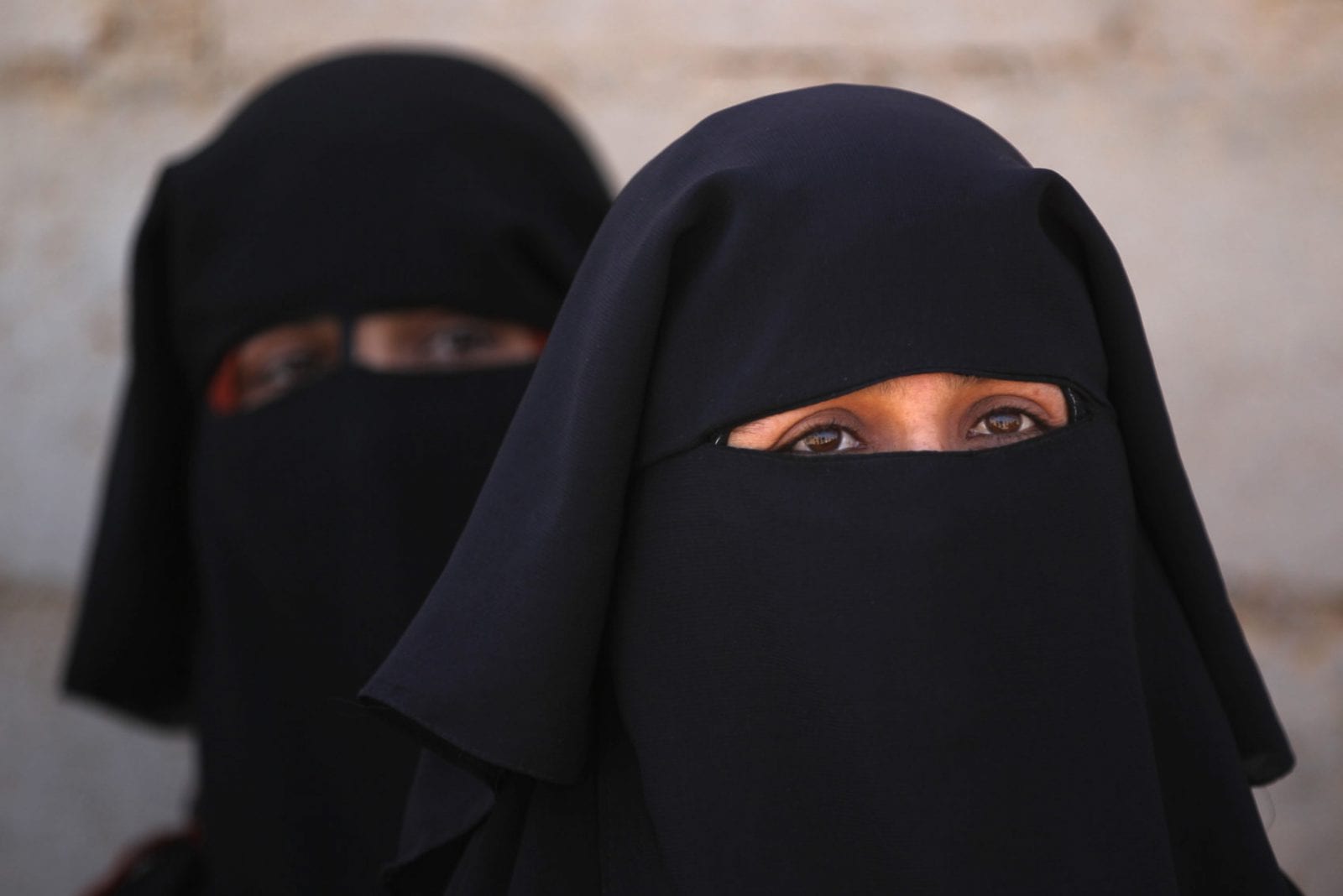
Subjugation, honour, dis-honour, respect and decorum are some of the reasons that women wear the veil. Sometime women don’t have a choice, this is particularly in strict Islamic countries.
Moslem women with veils
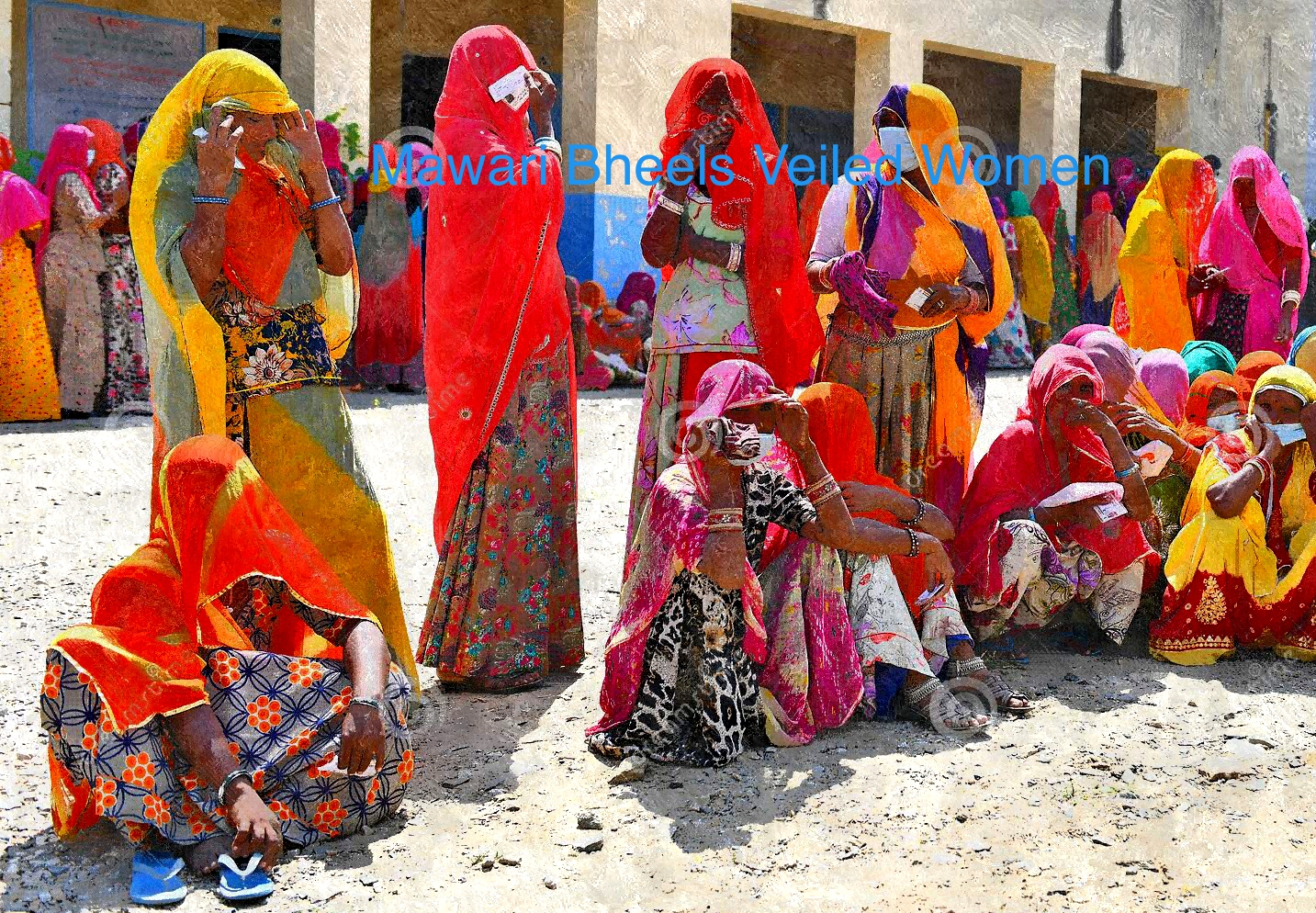
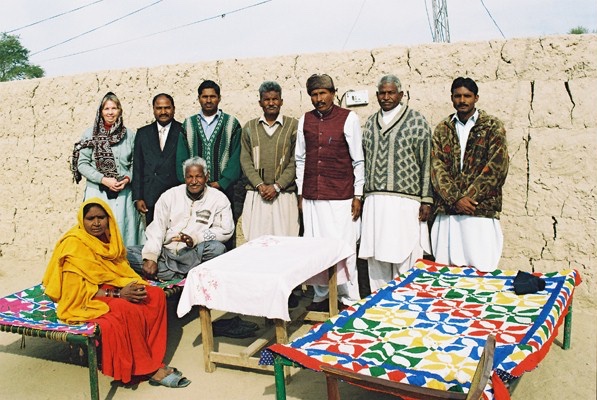
Marwari Bheel women in India and Pakistan
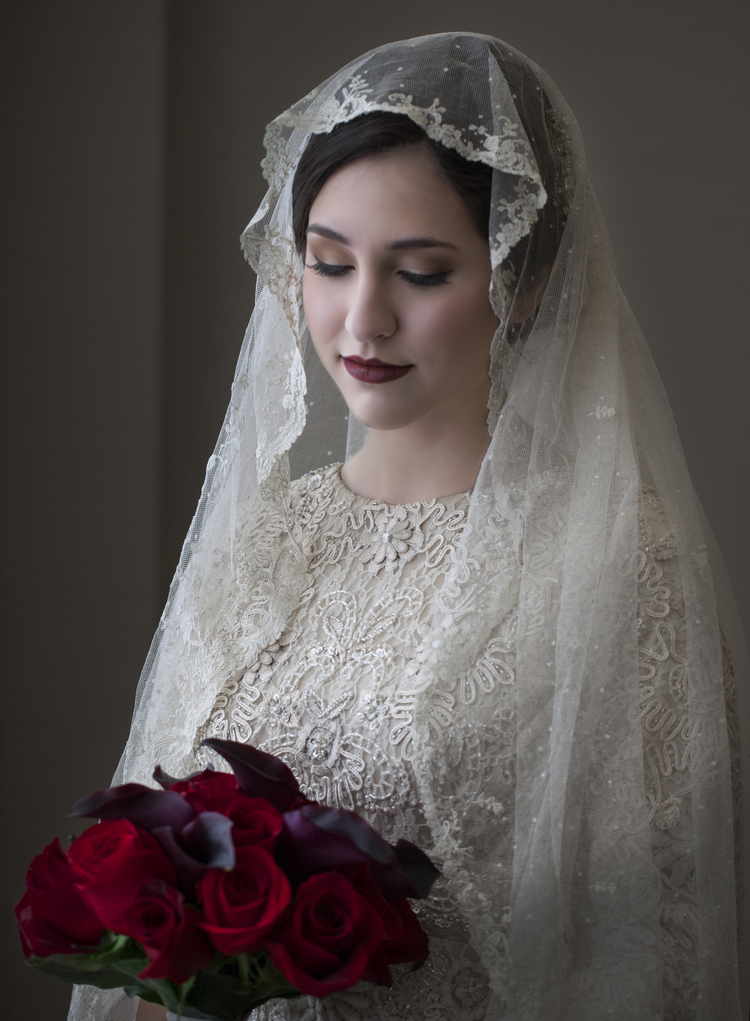
Jewish bride wearing a partial veil covering her hair on her wedding day
Some religious reasons for wearing veils
It does appear that the Koran does not stipulates that the veil must be warn by women, but it is imposed upon them by the men within their culture. One of the reasons given is to prevent men for lusting after a women. Notwithstanding, this has become a means of abuse and subjugation of women. When the Taliban took control of Afghanistan recently, the wearing of the veil by all women outside of their homes once again became mandatory.
Within Judaism, religious Orthodox Jewish women are required to cover their heads––this is due to the fact that a married women’s hair is considered her ‘crown of glory,’ that only her husband should see. Young girls and single women are not required to cover their heads.
The Marwari Bheel women also veil themselves before strangers and when outdoor as a sign of decorum––they are mostly found among the low cast Hindus and Moslem women.
Men and veils
Why do men wear veils? This appears in the Biblical narrative and this tradition began with Moses when he had been in the presence of God:
Moses veiled his face
QUESTION…
Why did Moses have to wear a veil?
ANSWER
When God…
...Gave the Torah to Israel, He did so accompanied by an overwhelming atmospheric display of thunder and lightning, smoke and fire, and the sound of a trumpet on the top of Mt. Sinai. This was to warn the people that He is holy and should not be approached. Anyone who tried to come up the mountain would be killed. (See Exodus 19 and Hebrews 12:18–19.)
When God delivers the Ten Commandments, the people are so frightened that they are afraid to have God speak. They ask that Moses deliver the Torah instead (Exodus 20:18–21). So Moses approaches God and receives the Torah in Exodus 21–23. He delivers it to the people who are called to affirm their willingness to obey in chapter 24.
After the sin of the Golden Calf had been dealt with, God invites Moses to come back up the mountain to receive the Torah again, engraved on new tablets of stone. Moses goes up the mountain alone and meets with God. There he begs for pardon for the nation. God forgives and renews the covenant with Israel and once again provides a summary form of the Torah, the Ten Commandments (see Exodus 34:1–27). Moses spends 40 days and nights with God on the mountain, and during that time he did not eat or drink (verse 28). It seems that the glory of God sustained him.
After spending this extended amount of time with God, Moses comes down the mountain, and his face is shining with the glory of God (Exodus 34:29). We don’t know exactly what this would have looked like, but it was frightening to his brother, Aaron, the high priest; and to all the rest of the people. Because everyone was afraid to come near Moses (verse 31), he wore a veil over his face to shroud the glory (verses 33–35).
The story of Moses’ veil as recorded in the Tenach (OT) is pretty clear. But Paul’s mention of the veil in the New Testament has caused some to take a second look at the reason Moses chose to wear a veil. Second Corinthians 3:13 says, “We are not like Moses, who would put a veil over his face to prevent the Israelites from seeing the end of what was passing away.” This makes it sound as if Moses put the veil over his face to prevent the Israelites from seeing that the glory was beginning to fade. When 2 Corinthians 3:13 is read in the context of Paul’s argument, we find that it says nothing about Moses’ motive for veiling his face.
In 2 Corinthians 3, Paul is contrasting the glories of the First and Renewed Covenants, and he concludes that the Second/Renewed Covenant reveals a more glorious future for the People of God.
God goes to a deeper level with his revelation to all his people of the Renewed Covenant! • The First Covenant has a glory that is renewed and the glory grows brighter shining in the face of Yeshua HaMashiach! (verses 10–11).
We as ministers of the Renewed Covenant –– like Moses, we become ministers proclaiming the unfading glory in a bold manner.
Why did Moses wear a veil?
The main focus is that of the First Covenant is renewed by the unfolding revelation of God––While the shining of Moses’ face did fade, when the individual turns to God through Yeshua the Messiah––just as on the Mount of Transfiguration so too the believer goes from one degree of glory to another!
The “veil” prevents anyone who does not yet have faith from seeing the true glory of God. The veil is only taken away when they turn to Messiah! (2 Corinthians 3:14–16).
The veil in Jewish and Christian understanding
Alas this aspect of the veil over hearts and minds is not desirable and perpetuates old hatreds and animosities –– Jewish spiritual blindness and Christian blindness more full explored…
The Jewish Book of Why? Part 2: A Messianic Jewish Perspective on “Why?”
Click on Link Below to Listen Now:
As way of Introduction From a Messianic Jewish viewpoint, while we agree with Alfred Kolatch on some of his ideas concerning Jewish faith and practice, there are points on which we express things differently. Notwithstanding, he still has many worthwhile subjects that are worthy of our consideration.
SoWhy? • do bad things happen to good people? • did six million Jews die in the holocaust? It was not so much a question as ‘to where was God?’ Rather it was the case of ‘where was humankind?’
• did nearly half million of those who died under the Nazis identify themselves as Jesus-believing-Jews? There were at least two churches in Warsaw Ghetto that Jewish believers regularly worshipped in. • do some people blame the Jews for pandemics? The Black Death, 1918 Flu, and Covid-19?
• do some say the Jews control world-world finances?
• that all Jews are wealthy?
• do people persecute the Jewish people? • do Jewish people believe in One GOD? • do most Jewish people not accept Yeshua as Lord and Messiah? • do folk say that Jesus-believing-Jews are no longer Jewish? • are some Jewish people called Messianic Jews/ Hebrew Catholics, Hebrew Christians (Protestants), etc.,?
• Why do some Messianic fellowships separate themselves from the church?
• are Gentile believers called Christians/ Messianic believers, • do some say that the Jews have fulfilled their role since Christ came?
What future is predicted: • for the Jewish people? • for the church? • for those who have embraced Yeshua as Messiah and Lord?
In today’s programme we continue to look at an introduction to Christian theology. Christian community is vital to our understanding of Theology. Also developing our relationship with God through prayer is important.
Two of the theologians that I introduce in the first chapter of my book Getting to Know God: An Introduction to Christian Theology are St Augustine of Hippo (354 C.E.- 430 C.E.) and Simone Weil (1909-1943).They came from different parts of the world and lived in very different eras. Augustine was from North Africa and became the most celebrated theologian of the Western world. He is still important for today and we can learn much from the books that he wrote. In the programme I read an excerpt about Augustine from my book Growing to Love God: An Introduction to Christian Spirituality. This book is available through Amazon. Simone Weil was born in 1909 in France and fled to England. She was from a secular Jewish background and came to faith in Jesus. Listen to more about these two theologians in the programme.
I address the challenge of finding out about Jesus. Since he is part of the triune Godhead I also look at God the Father and the Holy Spirit later on in the book.
In the programme I explain the meaning of the word theology. This leads on to questions of life such as “Why am I here?” and “Who is God?” “Who is Jesus?” and “What is the purpose of being on the earth?”
Theology also has resources to address the problems of today’s world. While the Bible may not have anything to say directly about some of the problems we face it can certainly help us decide how we can approach them in a Godly and just way.
Many of the questions are unique to each person. God has a plan and purpose for this earth and for each one of us. How do we discover answers to these questions? The Bible helps us to understand our relationship with Jesus and enables us to grow daily and guides us through life.
It is important in the study of theology to grapple with the big questions. As we look at Jesus we ask “Why did he come into the world?” A branch of theology is Christology which comes from the word Christ or Messiah and deals with the issues of the person and work of Jesus. At the end of Chapter One there are some study questions. One of these is “How can the study of theology help us to reflect on the questions of life?”
An Icon of St Augustine
Simone Weil
MTMI––Messianic Teaching Ministry International
To help with covering the cost of this Blog, please make a charitable donation now to: Shalom Radio UK:
“Why?” Life is filled with perplexity and many unanswered questions –– “The Jewish Book of Why,” was written by a rabbi who attempted to answer many of the difficult questions that his congregants ask him over a number of years.
Click on the Link Below
Jewish Book of Why Kolatch, Alfred J. and then Chief Rabbi Dr Hertz of the UK’s book –– The Jewish Book of Thoughts.
Jewish Book of Why Kolatch, Alfred J. This complete, concise, fascinating, and thoroughly informative guide to Jewish life and tradition, Rabbi Alfred J. Kolatch clearly explains both the significance and the origin of nearly every thing that is important that makes the Jewish people distinctive: • symbol, • custom, • and practice known to Jewish culture-from Afikomon to Yarmulkes, and from Passover to Purim.
• Why do Jews • circumcise their sons on the 8th day? •Disclaimer: We totally reject any notion of female circumcision! • even do this circumcision on the Sabbath? • follow the mother’s Jewish heritage, and not their fathers to prove that they are Jews? • called the ‘Chosen people?’ • eat Kosher food? What is the significance between clean and unclean foods? • keep the Sabbath? • observe the Jewish festivals, such as Purim, Pesach, Shavuot, The Feast of Trumpets [Rosh HaShona, Yom Kippur and Succoth] ? • keep Chanukah? • observe Shivah (7 days morning) for the dead? • read the Tenuch (Hebrew Scriptures) and also the Talmud? • believe in One GOD? • believe that when the Messiah comes there will be universal peace? • not believe that Yeshua/ Jesus is the Messiah? • suffer persecution? • look to Israel as their ‘Promised Land?’
From a Messianic Jewish perspective there are equally a multitude of perplexing unanswered questions.
Why? • do bad things happen to good people? • did six million Jews die in the holocaust? • do pandemics happen? • do some people blame the Jews? (Anti-Semitism) • do wars happen? • are there food shortages? • are there natural disasters happen? • do people blame the Jews? • do people persecute the Jewish people? • do Jewish people believe in One GOD? • do most Jewish people not accept Yeshua as Lord and Messiah? • do folk say that Jesus-believing-Jews are no longer Jewish? • does are the Jewish people called the God’s Chosen people? • do some say the Jews have fulfilled their role since Christ came?
Body, Mind, and Spirit––It became very popular about thirty years ago to speak about Body, Mind, and Spirit as a new approach to wellness and wholeness and out of this came alternate therapies, meditation, mindfulness and this included a lot of other new age ideas. Some were based on sound principles, while others were very suspect and lacked any real scientific or spiritual soundness. Suddenly, popular bookshops, such as Waterstones and WH Smiths in the UK, and Barnes & Nobles in the USA introduced a brand new book section under the heading of ‘Body, Mind, and Spirit.
What Does “Body, Mind, and Spirit” Truly Mean?
You have heard people talk about the connection between the mind, body, and spirit. Many people have a hazy interpretation of what it means, but it simply pertains to an individual’s mental, physical, and emotional/spiritual health.
According to a Biblical outlook, there are two distinct ways of viewing human beings––this should not be seen as contradictory, but rather complementary: Judaism speaks of people as being “living souls,”while in New Testament terms, Paul the Apostle speaks of a trinity of being as “body, soul and spirit.”
Feeling Troubled and Unwell
You have likely noticed that when something is troubling you mentally or emotionally, you actually begin to manifest symptoms physically. This is referred to as a ‘psychosomatic’ illness. Your heart starts racing, you get head aces, stomach cramps and in severe cases stomach ulcers, some even hyper-ventilate, while you may sweat more than usual, you have a hard time sleeping because you keep thinking about the problem – others begin to feel lethargic and fatigued. If these pressures persist one of the outcomes is clinical depression, and some have contemplated suicide too. Some begin to compulsively over eat or drink alcohol or even take drugs in a vain attempt to compensate for feeing troubled. Rather than these escapisms helping the situation it actually make them feel worse. This is when the mind-body-spirit are out of balance.
However, when your mind is at peace, you are more likely to be happier, kinder, and more grateful, because you’re not so embroiled from within. Physically, you are relaxed and ready to take on whatever challenges life throws your way.
The Connection Between Mind, Body, and Spirit
Dealing with struggles is a part of life that cannot always be avoided. Strengthening the connection between the mind, body, and spirit takes effort, so here is how these three factors work together to benefit your overall health:
A Healthy Mind
Someone with a healthy mind keeps the brain exercised regularly, and stress and worry are kept at bay by choice. Positive thoughts, gratitude, and a feeling of joy are present, and there is a thirst for knowledge and learning. Just like the brain requires sleep every night, the brain also requires things to think about and to ponder.
A Healthy Spiritual Life
It is only possible to enjoy a healthy spiritual life in and through getting to know and love God––this can only transpire through being “Born Anew.” When we born of God, our human spirit is made alive through God’s life-giving Spirit that regenerates us. Before that happens be can best be described being spiritually dead.
A Healthy Body
A healthy body is free of disease and illness, and it is not riddled with pain. Bodily health is also made possible by a healthy diet, good nutrition, and regular exercise.
A healthy body naturally wants to move and seeks activity. Maintaining physical health also includes keeping regular checkups with your primary care doctor in order to prevent illness, or to detect it and treat it right away if a disease does exist.
A Healthy Spirit
Being spiritual is being centered and having an understanding that you are part of something much bigger than yourself. Facilitating a healthy spiritual life includes being part of a faith community to share yourself with others, and enjoy the life of God and his people, in and through Yeshua the Messiah. Also through receiving God’s love and forgiveness, we in turn are able to give without expecting anything tangible in return. A healthy spirit requires to be able to love, and be loved.
The question of spiritual regeneration is fundamental to our experiencing God’s redeeming work––Yeshua, the Messiah and Lord is Saviour: He said, that He is the Light and Life of all who turn to him. He sends the Holy Spirit to enliven our human spirits and that is how we are ‘born agin.’
How is the Harmony to be Found?
According to the Scriptures, in both the Hebrew Bible and the New Testament there are numerous texts that encourage us individually to seek God and to discover his perfect will and purpose for our lives.
“If you seek me you will find me if you seek me with all your heart.”
Seeking and Finding
There needs to be an earnestness and a sincere endeavour to seek after the ways of the Lord God. Half-heartedness will yield little if any satisfaction in our quest. There is reward awaiting each one of us, if our desire is to discover the key to life and its meaning for our mortal lives.
Yes, We are Living Souls––Live Life to the Full
As the Jewish concept of human beings sees us as living souls, we need to not only understand ourselves to be whole integrated beings, but alive to God and to all that he has for us. Lay hold of what he has laid hold of for us. Grasp it, don’t neglect it or let it slip away from your reach. Determine that while you have life and strength that you make the most of the opportunities that you are presented with. Then you will have a fulfilled life, and a happy and blessed one.
Body, Mind, and Spirit––One Whole New Being
A new opportunity to enjoy God’s New Life that He has given us in Yeshua. As we live and have our being restored to the divine image that God envisaged for us we will be able to live out our lives just as God had intended us to do––more according to his perfect will and our purpose for us, and less of our empty and futile imaginings––Wow, it’s good to be alive and to be able to walk in the ways and light of God. Amen!
How Can We Fix People’s View of Messianic Judaism?
The Messianic Community and its Many Manifestations
To Listen to Shalom Radio – Click on the Link below
World Religions
The world’s primary religions fall into two categories: Abrahamic religions, such as Judaism, Christianity, and Islam; and Indian religions, which include Hinduism, Buddhism, Sikhism, and others. Of the world’s major religions, Christianity is the largest, with more than two billion followers. Now each of these religions each in turn have their varied sects, sub-sects and off-shoots. Some are considered, as being orthodox, while others are considered as heterodox and at time heretical and are rejected from the main religious group. For the purpose of this talk, Judaism and Christianity are the primary focus of this consideration.
Judaism is the oldest monotheistic faith––the belief in one God only in contrast to the polytheistic belief in many gods.
Christianity traces its early origins as one of the manifestations within Judaism and did not, nor could it stand alone as a separate faith. It was wholly dependent upon Second and Post Second Temple Judaism for its beliefs. It was in relationship to this early Judaism that the Messianic/ Christian faith developed. Two faith emerged from the one belief in Judaisms God––But why? Was this separation inevitable, part of the divine plan and unavoidable? Following the destruction of the Second Temple of the Jewish people by the Romans under Titus, Judaism and its many expressions faced an existential crisis that threatened its very future. What happened following this catastrophe is a fact of history and its outcome has fundamentally shaped the destiny of humanity. Judaism, A Short Introduction, by Norman Solomon, explains that as he puts it Christianity (the Older Sister), and Rabbinic Judaism (the younger sister), were both derived from Post Second Temple Judaism. Prior to the destruction of the Temple by the Romans under Titus (70 CE), Second Temple had many different sects and this included Jewish Christianity, the Sadducees, the Pharisees, Zealots, and the Essenes. The Pharisees emerged as the custodians of Judaism and at the Council of Javna, in 125 CE, Rabbinic Judaism was firmly established. If we follow Solomon’s chronology, then he is correct that Jewish Christianity is older.
Why theSplit? There are numerous contributing factors that led to the split––firstly, Yeshua’s claims to be the Messiah, i.e. the Anointed One (Mashiach) and also the divine Son of God, was bound to cause a division among his contemporary Jews.
The Trilema––Lunatic,Liar or Lord: So which is it to be? Lunatic is a non––pc way of describing someone who is mentally ill or delusional. As C S Lewis puts it as on the level with someone who thinks that he is a poached egg.Liar, he knew that he was not the Messiah, but nonetheless, he still claimed to be one and was in fact demonically inspired. Lord, he is the Messiah as he claimed. There are equally three responses to be made to the Trilema––dismiss him as being a harmless fool, lock him up because he is dangerous due to his false claims, or fall at his feet as Lord and Messiah.
The Third Option––this third option needs further exploration: If he is Lord and Messiah then the Evidence Demands a Verdict (Josh McDowell). It is up to each individual. Now those first century Jews who embraced him became known as Jewish Christians. Initially they were tolerated as one of the various Jewish sects of late Second Temple Judaism. We are aware from Yeshua’s /Jesus contemporaries during his life time he received varied reactions––Pharisee, Sadducees, Zealots, Essenes and Gentile God-fearers each had different responses to his life and ministry.
The two strongest groups that opposed Jesus were the Sadducees that were made up of the High Priestly clan together with a number of Pharisees. Some of these people constituted the Sanhedrin or the Jewish Ruling Council and they were the official custodians of first century Jewry and are severely referred to as the Jerusalem Temple Leadership, and also the Judaean Leaders. The second and most powerful group of leaders were the Romans, and their puppet leaders––Pontus Pilat and the various Herods. They were subservient to Roman and were particularly responsible for law and order in the Galilee. The Romans focused their main attention on Judaean province because that included Jerusalem and the Jewish Temple. The High Priestly leadership were directly responsible to the Roman overall and they had to ensure that peace and stability was maintained among the various and at times very fractious Jewish sects. The followers of the Nazarene Jesus were a growing cause of concern and their presence was threatening the status quo. Things were rapidly escalating with Jesus and his followers making claims that he is Messiah, King of Israel and that the Kingdom of Heaven/God was at hand!
The Death of Yeshua: Following his crucifixion and burial surely that was the end of all those false claims? But, not so––Now his followers were claiming that he had risen and was alive! The Resurrection of Yeshua/Jesus became the cornerstone of the New Faith. Into this turbulent mix the numerous Jewish sects were getting more and more fractious and things were increasingly challenging Roman rule over this fractious Judaean province. Titus the Roman General was appointed by Rome to put things in order, and in the process the Jewish uprising resulted in the Romans destroying the Jewish Temple and ultimately any Jewish sovereignty over the Holy Land was ended. Jews were scattered far and wide and without the Jewish Temple the Rabbinic Council was convened at Javna in 125 CE under the leadership of Rabbi Johanan Ben Zakki.
Jewish Christians were rejected as Jews. This was due to the fact that they persisted in their claims that Jesus is the Messiah who they claimed is alive. Additionally, the Gentile mission began to flourish, particularly under the Apostle Paul’s ministry. Paul insisted, that while Jews who followed Yeshua should remain Jewish, Gentiles no longer were required to observe aspects of the Torah/Law. This made the separation between the two faith final.
Is there any Good News? It would appear that the last remnants of Jewish Christianity survived up until the tenth century and evidence of this was traced to modern day Iraq in Mosul. So how can Jewish people claim to be Messianic Jews if in fact the sect disappeared in the tenth century?
What’s in a Name? Christian Jews, Jewish Christians, Hebrew Christians and Hebrew Catholics are some of the names that Jewish followers of Yeshua call themselves, and latterly, the term Messianic Jews has become popular.
Some explain the fundamental differences between being called a Hebrew Christian and Messianic Jews is more than simple semantics. In English usage and grammar we have the adjective and the noun. With Hebrew Christian––”Hebrew” is the adjective and “Christian” is the noun. By referring to oneself as a Messianic Jew––”Messianic” is the adjective and “Jew” is the noun. This change in usage is much more important than an issue of a grammatical construction, it is a different way of looking the world and also forces people to sit up and take note when a Jesus believing Jew calls him or her self a Messianic Jew. It can be referred to as cognitive dissonance.
Uncomfortable, conflicting beliefs and certainly mental discomfort are not wholly undesirable–the term Messianic Jew certainly makes people sit up and take note.
What are Messianic Jews saying?
We are here and as much as many would want us to disappear as the tenth century Jewish Christians of Mosul, Iraq did––its is not going to happen.
By God’s grace we are growing as a movement with more and more Jewish people making the discovery that Yeshua is their Messiah and Lord.
This increase is due to numerous mitigating factors–– There is greater Jewish pluralism with Jewish people no longer feeling bound to remain loyal to former religious classifications, and also the willingness to move beyond the narrow confines of the so–called tribal boundaries. Many Jews have ‘married out,’ which does not automatically mean that their Jewish heritage is no longer important to them. This particular group of people are often more open to exploring alternatives to faith––this makes the Messianic Jewish expression of the faith particularly attractive. This is particularly the case if it is an inter-faith marriage of a Jew and Catholic or Protestant. Increasingly there are Jewish families who know of one or more relative who is a Jesus-believing-Jew. Personally, I have had family members who have wanted to know about my faith in Yeshua. The questions have come from them, rather than I attempting to share my faith with them, that all too often can lead to accusations of one trying to proselytise. It is quite different if the questions come from them.
Charitable Donation to Support Shalom Radio UK’s Running Costs
This is to enable you the listener to express your thanks and help me expand the work of Shalom Radio UK by making a donation
Thanks to Roni for inviting me to share some thoughts with you about my faith. I would also like to introduce myself and tell you about the two books that I have written. I came to faith in Jesus the Messiah when I was in my late teens and have been travelling this journey ever since then.
A pathway to knowing God
Studying the Bible provides us with a pathway to knowing God. Jesus said, I am the way, the truth and the life.
Elisheva Mechanic
I spent time ministering among the Marwari Bheel tribes in Pakistan and found them so eager to learn about the Word of God. Listen further to the audio programme about my experience in teaching them in Pakistan.
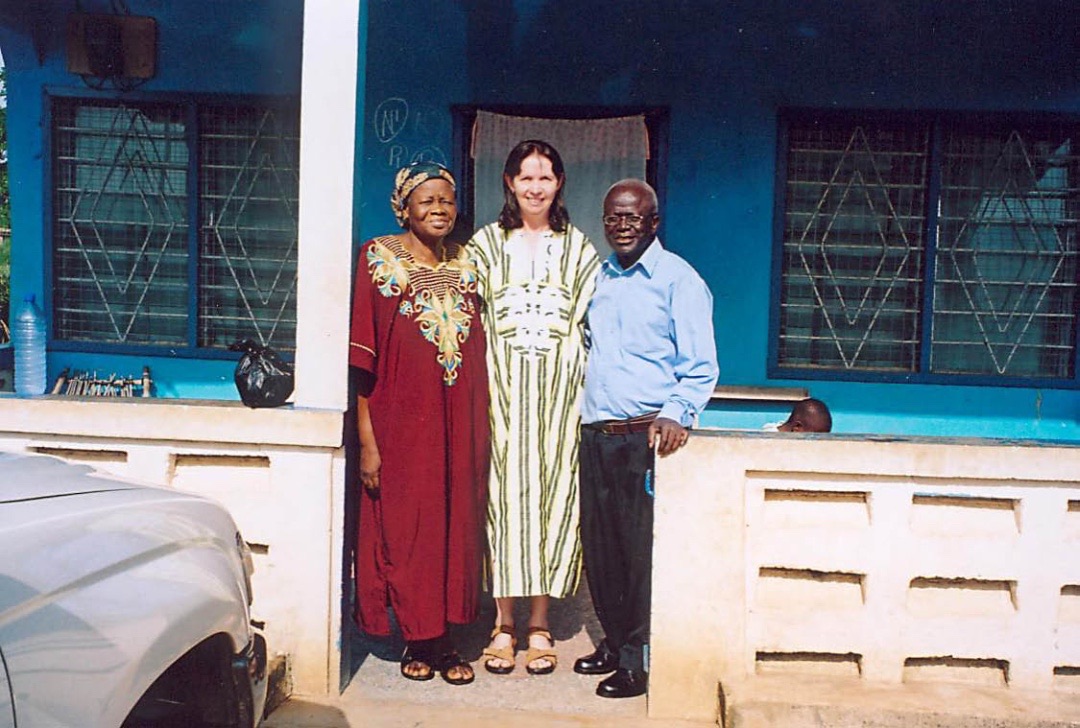
Marwari BheelsElisheva with Victor and Theresa Donna in Wa, Ghana
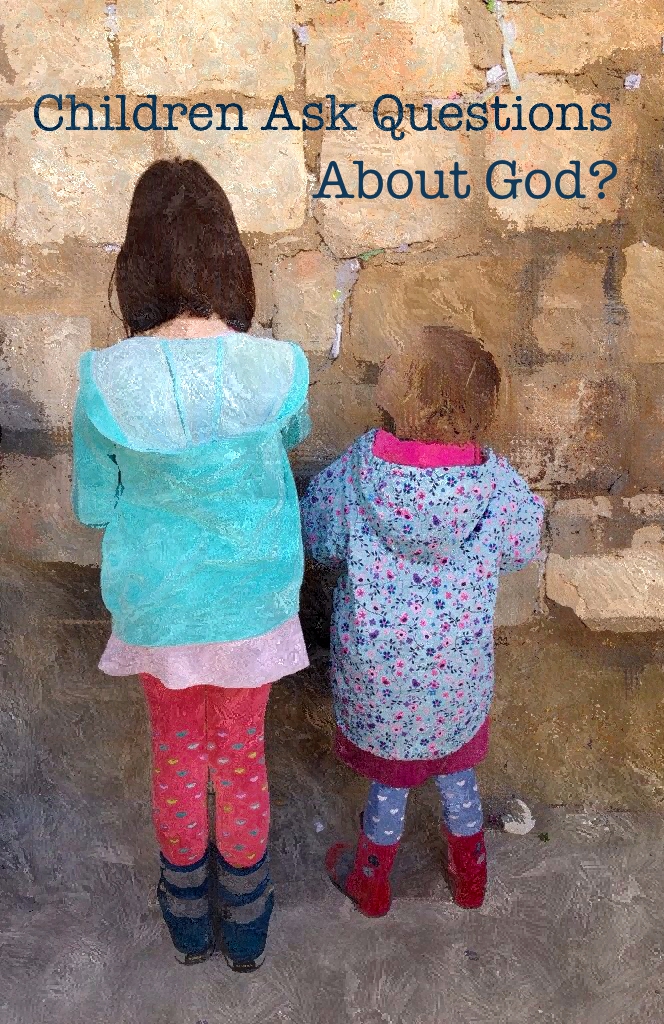
Even children are keen to ask questions about God. In studying theology we learn more about the Christian faith and discover more about God at the same time.
Details about my book Getting to Know God: An Introduction to Christian Theology.
Getting to Know God: An Introduction to Christian Theology, by Elisheva Mechanic. Resource Publications, Wipf and Stock Publishers. Paperback ISBN: 978-1-6667-0946-9 Hardback ISBN: 978-1-6667-0947-6 Ebook ISBN:978-1-6667-0948-3 Available from Amazon or directly from the Publisher, Wipf and Stock: https://wipfandstock.com
Make a Charitable Donation towards the Running Costs of Shalom Radio UK:
How did you land up with a name like “Mechanic?” It is of Russian Jewish origin, and in the Russian language Mechanic means a technician or mechanic. My younger brother and I are the two most technically, practically and mechanically minded of our direct family. As far as I can tell all those who bear this surname are of eastern European origin.
When my wife and I visited Auschwitz in September 2021, Poland, in the hall that has the record of over 4,000,000 Jews that perished due to the Nazi genocide there were at least 25 Jewish name called “Mechanik or “Mechanic” or similar spelling.
OLYMPUS DIGITAL CAMERA
What needs fixing?
That is an important question to ask. For as some great philosopher said, “The Universe is broken!”
Brokenness can be expressed in many different ways:
While there is scientific and physical evidence of brokenness, I am particularly concerned about the spiritual state of humankind. Everywhere we care to look we not that things are out of order and lay broken to some extent.
According to the Scriptures:
The Hebrew Scriptures and equally the New Testament Scriptures testify to the human condition. It was not always like that, but the more people turned away from God’s design for humankind the worse things got. In the beginning our common ancestors Adam and Eve lived in harmony with their creator and enjoyed fellowship with him. It was not God’s designer intention that humans should be like robots or puppets on a string. He gave us free will and the ability to choose between good and evil. According to Judaism we are given two inclinations––nefesh ha tov and nefesh ha rah. According to St Augustine in his attempt to explain the condition of human nature and the subsequent fall, as “original sin.” In contrast Judaism teaches that babies are born innocent, but as they grow mature they must begin to make moral choices that will lead in them either becoming good or bad people.
How are we to choose to live? According to Judaism to gain God’s favour it is an issue to which of the two inclinations that we yield to––the choice is unto us individually. If we want to be good then we should pay attention to the study of the Torah. In addition one must seek to keep the mitzvoth––commandments, show acts of mercy to our fellow human beings and practice tesuvah––repentance for our wrong doing. According to the Messianic/Christian faith, all of humankind have failed to live righteously and fall short of the glory of God. Salvation or deliverance is only possible through trusting in the ‘finished work of Messiah Yeshua,’ when he died on the Cursed Tree (Cross). All human virtue however good we may be, does not fulfil God’s way of making atonement. We cannot save ourselves!
God’s Part verse Our Part
We are the weaker and He is the stronger and we depend upon him to do his work in the world. In helping to play our part in Tikun Olam––Repairing the World, a partnership needs to be developed, a plan devised and then action begin to be taken.
As we face the New Year let us go forth with courage and hope trusting in God’s unending love.
To help with covering the cost of this Blog, please make a charitable donation now to: Shalom Radio UK:






 5 Marks of Mission