You’re writing your autobiography. What’s your opening sentence?
In this life I have sought to live it well. Despite all the difficulties, pitfalls, obstacles which I have encountered, I determined a long time ago that through those words of Winston Churchill – “Men never give up,” that I am constantly reminded that I am not a quitter but am grateful for the stubborn streak that is part of my DNA.
[Please refer to this Text and Commentary on the Wisdom of Solomon] ––
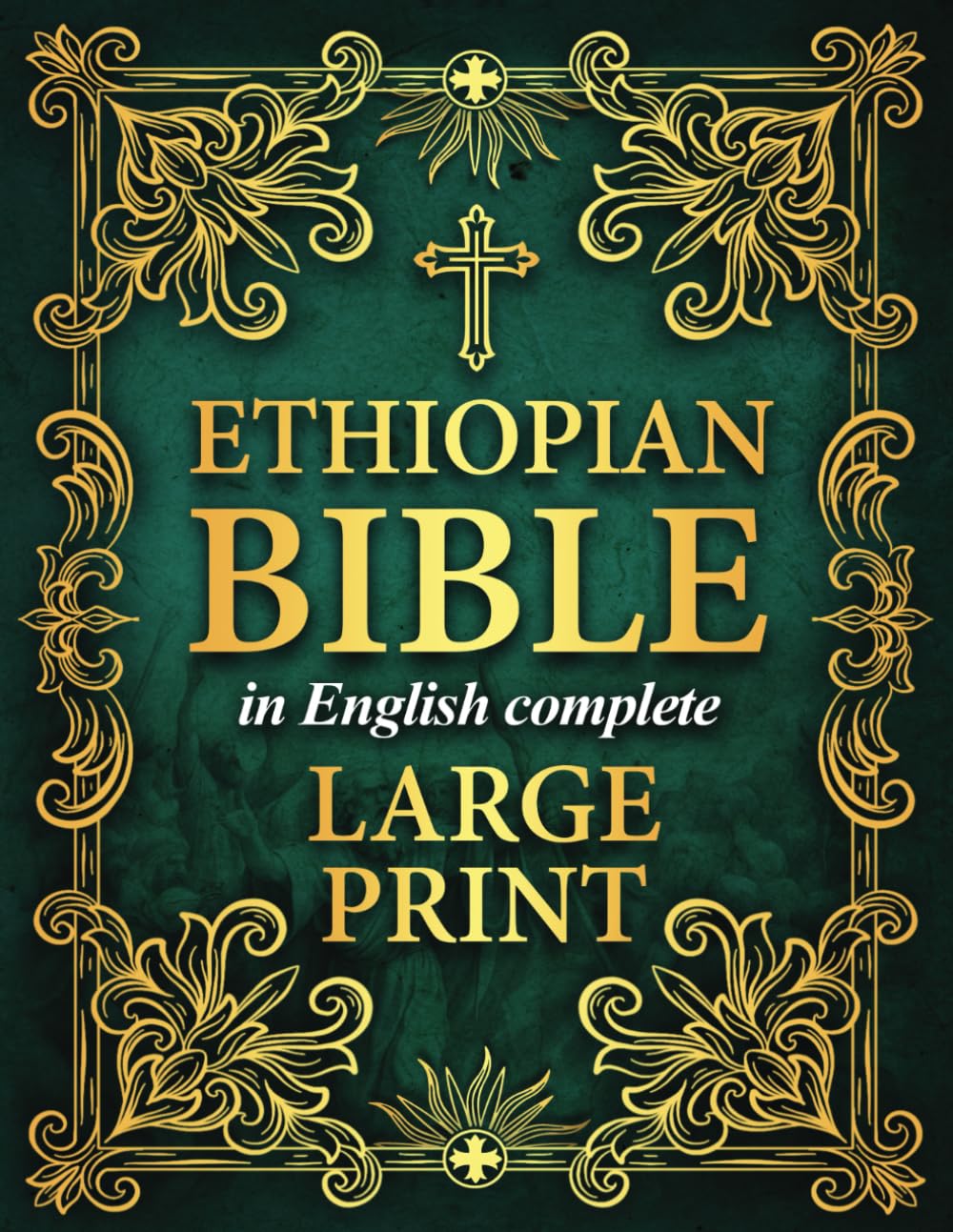
When we study Intertestamental literature—often called the Apocrypha or Pseudepigrapha—we quickly notice a striking difference between biblical canons. The Ethiopian Bible contains far more books (81 or 88, depending on classification) than the Protestant Bible’s 66. This raises an obvious question: why such a large discrepancy?
The answer is that the Bible was not canonized in a single moment. Rather, the canon developed gradually over several centuries. The New Testament reached broad agreement by the late fourth century, when Athanasius of Alexandria listed the 27 books now universally recognized. This list was affirmed by Western church councils at Rome, Hippo, and Carthage. The Hebrew Bible likewise reached consensus among Jewish communities by the second century CE, though its formation was also long and complex.
Later developments further shaped the differences we see today. The Roman Catholic canon was formally defined at the Council of Trent in response to the Reformation, while Protestant churches finalized their canon in the seventeenth century, limiting the Old Testament to the books preserved in Hebrew by rabbinic Judaism. This resulted in the familiar Protestant Bible of 39 Old Testament books and 27 New Testament books.
By contrast, the Ethiopian Christian tradition followed a very different historical path. Christianity reached Ethiopia by the fourth century, and the church developed largely outside later European theological debates. Rather than revising its Scriptures in response to post–Second Temple Jewish decisions or Reformation controversies, Ethiopia preserved the texts it had received early on. These writings were transmitted in Ge’ez, the sacred liturgical language, with remarkable continuity.
This distinct inheritance is tied closely to the theology of the Ethiopian Orthodox Tewahedo Church. Central to its faith is Tewahedo, meaning “made one,” a deep emphasis on the unity of Christ’s divinity and humanity. This instinct toward unity rather than analytical division shaped not only Ethiopian Christology but also its approach to Scripture. The Ethiopian canon retains books that disappeared from most other Christian Bibles, including 1 Enoch and Jubilees—texts widely read in Second Temple Judaism and echoed in the New Testament itself. Modern discoveries such as the Dead Sea Scrolls confirm that these works were once part of a broader Jewish scriptural world.
The difference between Ethiopian, Catholic, and Protestant Bibles, therefore, is not a matter of one tradition being careless or another adding texts late. It reflects different historical journeys. Protestant Christianity aligned its Old Testament with the later, standardized Jewish canon. Ethiopian Christianity preserved an earlier and wider collection of sacred writings rooted in ancient Jewish and early Christian usage. What initially appears strange is actually a window into the diverse ways Scripture was received and transmitted.
Within this landscape, The Wisdom of Solomon occupies a distinctive place. Written in Greek by a Hellenistic Jewish author in Alexandria during the late Second Temple period, it expresses Jewish faith through Greek philosophical categories. It strongly influenced early Christian thought and is fully accepted in Catholic and Eastern Orthodox traditions. However, it never entered the Hebrew canon and was therefore excluded from Protestant Bibles. Interestingly, despite preserving other ancient Jewish texts, the Ethiopian canon does not include Wisdom of Solomon, likely because it was never transmitted within the Ge’ez scriptural tradition.
This leads to enduring questions: How do we define canon and orthodoxy? Who sets those boundaries? How should believers today respond to different biblical traditions? For Messianic Jewish believers in particular, the challenge is to honour the Hebrew Scriptures, recognize the significance of the Reformation, remain open to Eastern and ancient Christian traditions, and thoughtfully engage intertestamental literature without confusing historical value with canonical authority.
Seen this way, the question of canon is not merely about counting books. It is about inheritance, history, theology, and faithfulness—and about learning to navigate difference with clarity, humility, and discernment.
Significant influences
The author of Wisdom appears to be a euhemerist, treating mythology as disguised history in which gods represent notable human figures. It He is also deeply Platonist, viewing the beauty of the world as pointing to a supreme First Cause, and drawing on Plato’s ideas of pre-existing matter (xi.17), the soul’s pre-existence (viii.19), and the body as an obstacle to spiritual knowledge (ix.15).
At the same time, it he reflects Stoic thought in his portrayal of Wisdom’s penetrating power (vii.24), her quick understanding (vii.22), the doctrine of Providence (xiv.3), and the four cardinal virtues (viii.7). Set against the biblical affirmation that God created all things from tohu va-vohu (Gen. 1:2–5), these philosophical strands point strongly to Alexandrian Egypt as the author’s milieu. He was a Jew firmly loyal to Israel’s faith yet fully engaged with Greek learning—something Alexandria uniquely enabled.
A Question to ponder
In our consideration and deliberations, it is important to contemplate how in many ways, the book of Wisdom itself embodies the very tension of the intertestamental age: Israel’s ancient faith speaking fluently in the language of the surrounding world, standing on the threshold between the Hebrew Scriptures and the New Testament vision that would soon emerge. It is helpful to discuss some of the questions that arise from a book like The Wisdom of Solomon.
“What may we deduce, and learn from its place between the two testaments, and what impact if any does it have on post-Second Temple Judaism, and the emerging Christian Church?”
The Psalms of Solomon
The Psalms (or Psalter) of Solomon are not part of the Ethiopic (Ethiopian Orthodox) biblical canon. This most definitely must not be confused with The Wisdom of Solomon.
Here’s the fuller, careful picture:
The Psalms of Solomon are a Jewish work from the 1st century BCE, probably written in response to the Roman conquest of Jerusalem. They are extremely important historically and theologically, especially because they contain some of the clearest pre-Christian Jewish expectations of a Davidic Messiah.
However, despite their value:
They are not included in the Ethiopian Orthodox Tewahedo Church’s canon (neither the narrower 88-book canon nor the broader liturgical collections).
They were never translated into Ge’ez as part of Ethiopia’s received scriptural tradition.
They survive primarily in Greek manuscripts, with later Syriac versions—not in Ethiopic transmission.
This is an important distinction, because people often assume that any Second Temple Jewish text survived in Ethiopia. That isn’t the case. Ethiopia preserved some texts that vanished elsewhere (like 1 Enoch and Jubilees), but not all of them.
Why were the Psalms of Solomon excluded while Enoch and Jubilees were retained?
The most likely reason is usage, not theology. Enoch and Jubilees were deeply embedded in certain Jewish-Christian communities very early and became part of Ethiopia’s inherited liturgical and instructional life. The Psalms of Solomon, while respected, seem to have remained more sectarian and limited in circulation, never achieving the same canonical status in any major Christian tradition.
So, interestingly:
Quoted in the New Testament? No.
Found among the Dead Sea Scrolls? No (unlike Jubilees).
Canonical anywhere in Christianity? No.
Massively important for Messianic expectations? Absolutely yes.
In other words, the Psalms of Solomon sit in a fascinating middle space: hugely illuminating for understanding Jewish messianism at the time of Jesus, but never formally canonized—even in Ethiopia.
Conclusion
We are on an exciting, and dare I say it, an epic journey that with careful thought and deliberation can only but enrich our spiritual walk. “Tread carefully, and not in haste!” We must keep in focus that our purpose is to enhance our Messianic faith, and upbuild a credible Messianic Jewish theological understanding.
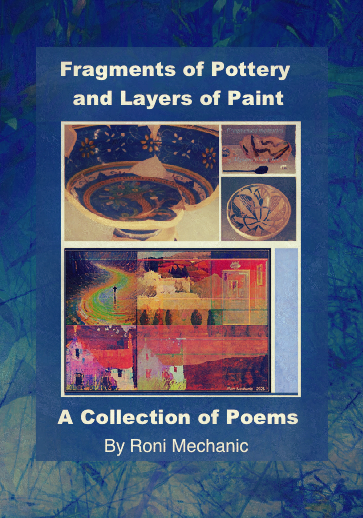
In this collection of poems, I invite you to walk with me—to be lifted, encouraged, and drawn into a deeper poetic journey. Within these pages, language opens doors to whimsical landscapes and emotional spaces where words move, breathe, and come alive. Each poem reaches toward the hidden places of thought and longing, calling you to listen, to imagine, to feel. Together, we will move through the highs and lows of the human experience, discovering moments of solace, joy, and quiet inspiration in the shared art of poetry.
Heritage is a very important part of our lives, and culture. Who are we? Where do we come from, and where are we going? No one ever said that this journey through life would be easy. Each one of us have had to confront huge challenges along life’s way. And the long awaited ‘son of promise, Isaac,’ born to Abraham and Sarah in their old age becomes the biggest test of their faith ever.
In Genesis 22 we have the narrative of the testing of Abraham our Father:
Abraham’s Faith is Tested
1 Some time later God tested Abraham. He said to him, “Abraham!” “Here I am,” he replied. 2 Then God said, “Take your son, your only son, whom you love—Isaac—and go to the region of Moriah. Sacrifice him there as a burnt offering on a mountain I will show you.” 3 Early the next morning Abraham got up and loaded his donkey. He took with him two of his servants and his son Isaac. When he had cut enough wood for the burnt offering, he set out for the place God had told him about. 4 On the third day Abraham looked up and saw the place in the distance. 5 He said to his servants, “Stay here with the donkey while I and the boy go over there. We will worship and then we will come back to you.” 6 Abraham took the wood for the burnt offering and placed it on his son Isaac, and he himself carried the fire and the knife. As the two of them went on together, 7 Isaac spoke up and said to his father Abraham, “Father?” “Yes, my son?” Abraham replied. “The fire and wood are here,” Isaac said, “but where is the lamb for the burnt offering?”8 Abraham answered, “God himself will provide the lamb for the burnt offering, my son.” And the two of them went on together. 9 When they reached the place God had told him about, Abraham built an altar there and arranged the wood on it. He bound his son Isaac and laid him on the altar, on top of the wood. 10 Then he reached out his hand and took the knife to slay his son. 11 But the angel of the LORD called out to him from heaven, “Abraham! Abraham!” “Here I am,” he replied. 12 “Do not lay a hand on the boy,” he said. “Do not do anything to him. Now I know that you fear God, because you have not withheld from me your son, your only son.” 13 Abraham looked up and there in a thicket he saw a ram caught by its horns. He went over and took the ram and sacrificed it as a burnt offering instead of his son. 14 So Abraham called that place The LORD Will Provide. And to this day it is said, “On the mountain of the LORD it will be provided. 15 The angel of the LORD called to Abraham from heaven a second time 16 and said, “I swear by myself, declares the LORD, that because you have done this and have not withheld your son, your only son, 17 I will surely bless you and make your descendants as numerous as the stars in the sky and as the sand on the seashore. Your descendants will take possession of the cities of their enemies,18 and through your offspring all nations on earth will be blessed, because you have obeyed me.”
So, who do you think you are?
You are a human being?
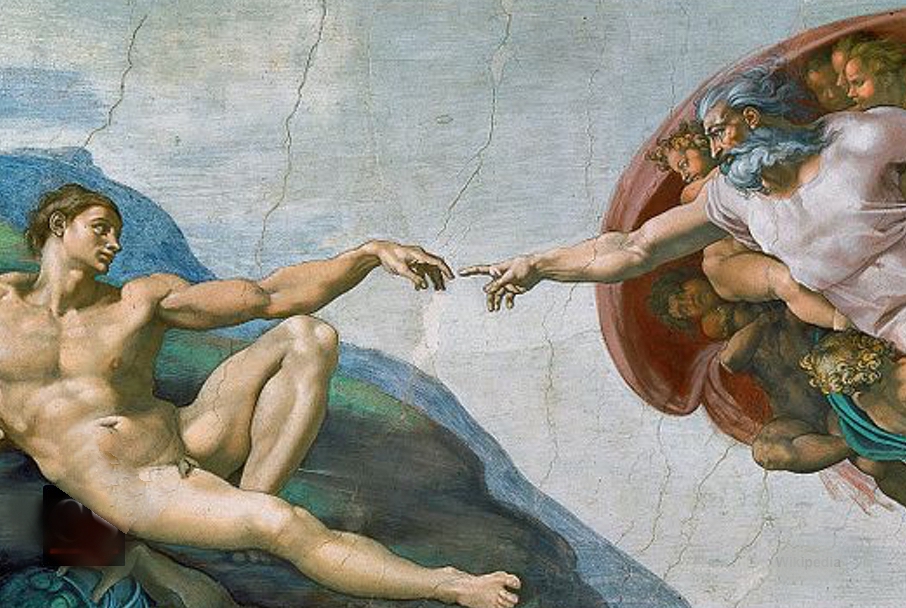
According to the Scriptures we are created in the image of G_D –– that does not mean his physical likeness, but his moral nature and being, i.e., G–D likeness. However, there is an inherent flaw to our character due to the ‘fall.’ Sin entered the world to the disobedience and rebellion of our common ancestors –– Adam, and Eve.
Please make a Donation today towards theRunning Podcast’s Costs:
Pontius Pilate asked Yeshua, “WHAT IS TRUTH?” That selfsame question echoes down through the ages. So, “What do you think?” Well can anyone still be trusted? Truth appears to be in very short supply. Paul Carrack when he was with Mike and the Mechanics wrote Silent Running and he penned these words: Don’t believe the church and state and everything they tell you…
Take the children and yourself And hide out in the cellar By now the fighting will be close at hand Don’t believe the church and state And everything they tell you Believe in me, I’m with the high command
Can you hear me, can you hear me running? Can you hear me running, can you hear me calling you? Can you hear me, can you hear me running? Can you hear me running, can you hear me calling you?
This phrase: Don’t believe the church and state And everything they tell you is a very serious accusation –– So, why can’t they be trusted?
Let’s begin with ‘church:
What Is Good About Church?
What Is Bad About Church?
Where This Leaves Us?
What Is Good About the State and Its Leadership?
What Is Bad About the State and Its Leadership?
Where This Leaves Us
What can we do, if anything when we have dictatorial church and state leadership?
Wake Up — Don’t Be Deceived
Wake up.
“Peace, Peace”—The Cry of False Prophets
Peace is Not the Absence of Conflict—It Is the Presence of Truth
What Awakening Looks Like
Awakening is not rebellion; it is responsibility.
It is not anger; it is clarity.
It is not cynicism; it is wisdom.
False Peace Never Lasts—True Peace Begins With Truth, and Real peace is often born in the very moment when false peace dies.
To the true story you will need to listen to this Podcast!
This the link that leads to my PayPal account, where you can easily support my blog and the content that I create. Your contributions help me to continue producing high-quality articles, engaging stories, and insightful reflections. Every donation, no matter how small, makes a significant difference and allows me to invest in better resources, conduct more research, and share even more valuable information with all of you. I appreciate your support and dedication to my work, and together, we can create a thriving community around the topics that matter most to us. Thank you for considering a contribution to my blog!
Apple of My Eye –– By Roni Mechanic –– Please Note: This Poem is Copyright 2025 and may only be briefly quoted.
For fuller use contact the author: mtmi.teaching@gmail.com
The phrase “apple of my eye” has a long and storied journey, glimmering with layers of meaning. In its earliest English use, it spoke of a person or thing cherished above all else, one held in a place of rare affection. The image often refers to the pupil—the small, dark centre of vision—though it was also employed more broadly to describe what is dearest to the heart.
William Shakespeare used it with this sense in the late 16th century. In A Midsummer Night’s Dream, the fairy king Oberon, armed with a magical flower struck by Cupid’s arrow, leans over a sleeping youth and says, “Flower of this purple dye—hit with Cupid’s archery—sink in apple of his eye,” thus sealing a love-bound fate. In Love’s Labor’s Lost, the witty courtier Biron rebukes another with the sharp question, “Do not you know my lady’s foot by the square—and laugh upon the apple of her eye?” In both, the phrase carries the intimacy of a treasured focal point—whether in love, beauty, or desire.
The Focus of the Poem –– Apple of the Eye
In the Bible, however, this phrase takes on a deeper, more tender resonance. In the stately English of the 1611 King James Bible, “apple of my eye” glows like a thread of divine intimacy woven through the Scriptures. It sings in Moses’ desert song, where God finds His people in the waste howling wilderness and guards them as one would protect the most delicate part of sight itself. It rises in the psalmist’s prayer— “Keep me as the apple of the eye”—a cry to be hidden under the shadow of God’s wings. Proverbs utter it as the voice of a father’s counsel: to hold God’s commandments as one would shield the pupil from harm. Lamentations weep it in grief, calling for tears to flow without ceasing from the apple of the eye. And Zechariah proclaims it as a fierce warning: whoever touches Israel touches the apple of God’s eye.
In Zechariah, the phrase shifts: bava ‘ayin. Scholars differ here. Some trace bava to a root meaning “to hollow out,” evoking the eye as a hollowed gateway through which light enters. Others believe it simply means “apple,” thus giving us the English rendering. Yet, whether hollowed gate or fruit, the essence remains: the eye is the most sensitive, most fiercely guarded place. To touch it is to wound the seat of perception.
And so, in Scripture, this image is not of a God who loves from afar, but of a God whose care is as personal way as the guarding of His own sight. His gaze is steady, unblinking, protective. In it, we are not lost among the masses, but reflected clearly, held at the very centre of His vision. We are the little figure in His eye—the one He will not let go.
Apple of My Eye
In most of these verses, the ancient tongue speaks ‘iyshon ayin––
אִישׁוֹן עַיִן–– the pupil of the eye.
‘Iyshon
‘Iyshon—darkness, shadow— yet more than shade, it whispers of the little man, the tiny figure mirrored in another’s gaze.
This is no idle flourish— but the portrait of nearness: to be the little man in G_D’s own eye, so close, so beloved, that His gaze holds your image, and His sight cradles your soul.
He Speaks to His Beloved Ones
The “apple of my eye” glows— a thread of divine intimacy woven through the ancient scrolls.
Tales told long past— flowing from the heart of G_D: “You are my beloved ones, now, and throughout eternity.
Sacred, not only to behold, but to tenderly nurture, and to hold.
The light of My gaze rests on you, as the pupil to the eye, guarded from harm, kept in the depth of My sight.
No shadow shall hide you, no hand shall tear you away— for you are the little figure mirrored in My vision,
The treasure of My soul— in all your struggles, past, present, and yet to come, My eyes will ever watch for you.
Foes
Though the foe would tear you away from My tender care, I will stand, shield in hand, warding them off–– with a jealous, protecting strength.
You are My beloved— the apple of My eye. No one shall pluck you from My mighty grasp, nor dim the gaze that holds you close.
Moses’ Song
It sings in Moses’ desert song, where G_D finds His people in the waste howling wilderness, and guards them as one shields the tender centre of sight.
Hunger, thirst, a scorching sun— wild beasts, and those of evil intent, though each in turn seeks to wound or destroy you, I am there with you, now, and always— shadow in the heat, water in the parched land, fortress in the storm.
Guardian
Guardian of your soul, ever watchful, ever near, committed to keep you whole— body, soul, and spirit— now, and always.
Fear not for I am with you,”
the treasure of My soul— in all your struggles, past, present, and yet to come, My eyes will ever watch for thee.
The Psalmist
It rises in the psalmist’s plea: “Keep me as the apple of the eye,” a cry for shelter— beneath the shadow of His wings, where the heat of the day cannot scorch, nor the terrors of the night draw near.
It is the voice of One who knows that the pupil is the most guarded place, the place where sight begins, and that to be there, held within God’s gaze, is to be wrapped in a love of Thee, both fierce and tender.
There, no arrow can pierce, no darkness can blot out the light, for His wings are broad, and His watch unending, and the one kept there is forever safe.
Proverbs
Proverbs speaks it as a Father’s voice, urging the keeping of His commands as one would guard the pupil from the sting of harm.
Sayings of old, spoken and spoken again, for all to hear— a still small voice, a whisper in the listener’s ear, a steady gaze meeting the eye, reassuring, confident, to uphold–– and to guide along life’s way.
Stay in My sight, remain in My regard— apples of golden delight, the apple of My eye.
Lamentations
Lamentations weep––
its tears unending,
flowing like rivers, falling from the apple of the eye. Though weeping may endure for a time, assurance is given, clearly declared:
“I am with you always— in sorrow and in suffering, even in the face of loss and death.
Did I not say, ‘I will never leave you nor forsake you’?”
“I hate you, despise you, wish to see you slain, and dispossessed!”— is this not the bitter, often-repeated cry of Israel’s foes through the long corridors of time?
5785
Five thousand, seven hundred, and eighty-five years she has endured—[she=Israel] banished from her land, exiled to the ends of the earth, hounded and hunted, slaughtered by tyrants whose names fade like dust. Yet she still stands, her heartbeat steady, her lamp still burning in the night.
What is her secret? What unseen hand has shielded her from the graveyard of nations?
The Prophet
Bava ‘ayin—הָוָה עַיִן— hollowed and formed, a vessel made to receive the light.
And the word of the Lord through Zechariah still thunders across the hills: Touch Israel, and you touch the apple of My eye.
Thus says the Lord— a warning set for all generations, a promise sealed with fire: He who keeps Israel shall neither slumber nor sleep; the gaze of the Holy One shall not turn away, but shall watch her forever.
The apple of My eye— you are Mine, My beloved, and I am yours.
As a lover whispers, with fierce and tender devotion to the one his soul adores, so does Hashem speak to all who love Him:
“I will never leave you, nor forsake you. Not in the fire, nor in the flood, not in the shadow of death itself.
[It is my intention that through this ending I want the poem to breathe more like a psalm or prophetic reading that closes a liturgical work].
Apple of the Eye:
Refrain: Guard us, O L_RD, as the apple of Your eye.
Leader: Apple of the Eye—kept as the shadow of His wings, Congregation: Hidden in the secret place of the Most High. All: Guard us, O L_RD, as the apple of Your eye.
Leader: Guarded from the arrow that flies by day, Congregation: Preserved from the terror that walks in darkness. All: Guard us, O L_RD, as the apple of Your eye.
Leader: He found thee in the waste howling wilderness, Congregation: He led thee about, He instructed thee. All: Guard us, O L_RD, as the apple of Your eye.
Leader: He kept thee as the apple of His eye, Congregation: As an eagle stirs her nest and spreads her wings, He covers thee. All: Guard us, O L_RD, as the apple of Your eye.
Leader: Under His feathers thou shalt trust, Congregation: His truth shall be thy shield and buckler. All: Guard us, O L_RD, as the apple of Your eye.
Leader: Wisdom binds His words upon thy heart, Congregation: As one would guard the pupil from harm. All: Guard us, O L_RD, as the apple of Your eye.
Leader: Lament weeps without ceasing, Congregation: Tears falling from the apple of the eye. All: Guard us, O L_RD, as the apple of Your eye.
A Clear Vision
Leader: My gaze will hold you, My hand will keep you,
as the apple of My eye.”
Let every breath bear witness, and every heart resound with the song of the One who will never let go.
Congregation: Amen— and Hallelujah!
Resources available to assist you in your desire to gain a clearer understanding of Messianic Jewish Perspectives:
This the link that leads to my PayPal account, where you can easily support my blog and the content that I create. Your contributions help me to continue producing high-quality articles, engaging stories, and insightful reflections. Every donation, no matter how small, makes a significant difference and allows me to invest in better resources, conduct more research, and share even more valuable information with all of you. I appreciate your support and dedication to my work, and together, we can create a thriving community around the topics that matter most to us. Thank you for considering a contribution to my blog!
Shalom Radio UK is sponsored by MTMI
It is an independent internet based radio programme
MAKE A CHARITABLE DONATION TOWARDS THE BLOG’S RUNNING COSTS:
https://paypal.me/hotrodronisblogcom is the link that leads to my PayPal account, where you can easily support my blog and the content that I create. Your contributions help me to continue producing high-quality articles, engaging stories, and insightful reflections. Every donation, no matter how small, makes a significant difference and allows me to invest in better resources, conduct more research, and share even more valuable information with all of you. I appreciate your support and dedication to my work, and together, we can create a thriving community around the topics that matter most to us. Thank you for considering a contribution to my blog!
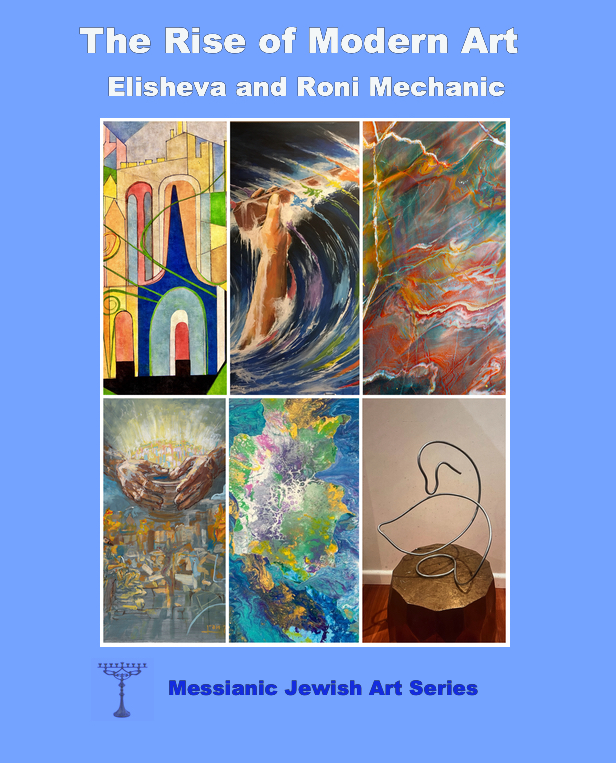
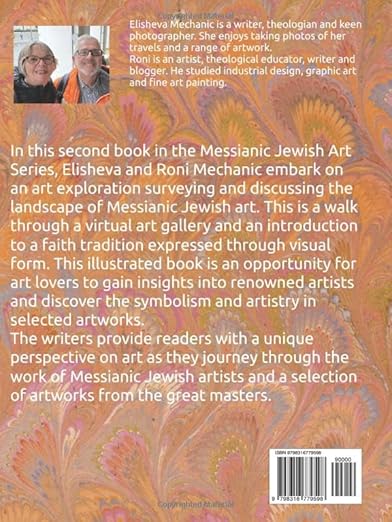
ART BOOKS PUBLISHED BY ELISHEVA AND RONI MECHANIC — Available from AMAZON
Marc Chagall –– Israeli Artist
Bring Them Home!
The Wise Seek Him –– by Roni Mechanic, 2025 –––––––––––––––––––––––––––––––––––––––––– Notice that the forth person in this painting is me. I am being inquisitive and exploring what the three wise men are endeavouring to do.
How Helen and Roni gave expression to the tragic loss of the 40 children murdered by Hamas on 7th October, 2023
Helen painted the images of children floating up into the sky. While Roni depicted grave stones as symbols of the murdered children. These stones are also seen floating heavenwards. Included are threeCyprus trees whichare often associated with burial grounds, as viewed in Roni’s painting.
Helen Burman, 2023
Roni Mechanic, 2023
What the Layers of Paint Say
By Roni Mechanic –– Inspired by recent abstract paintings.
Introduction
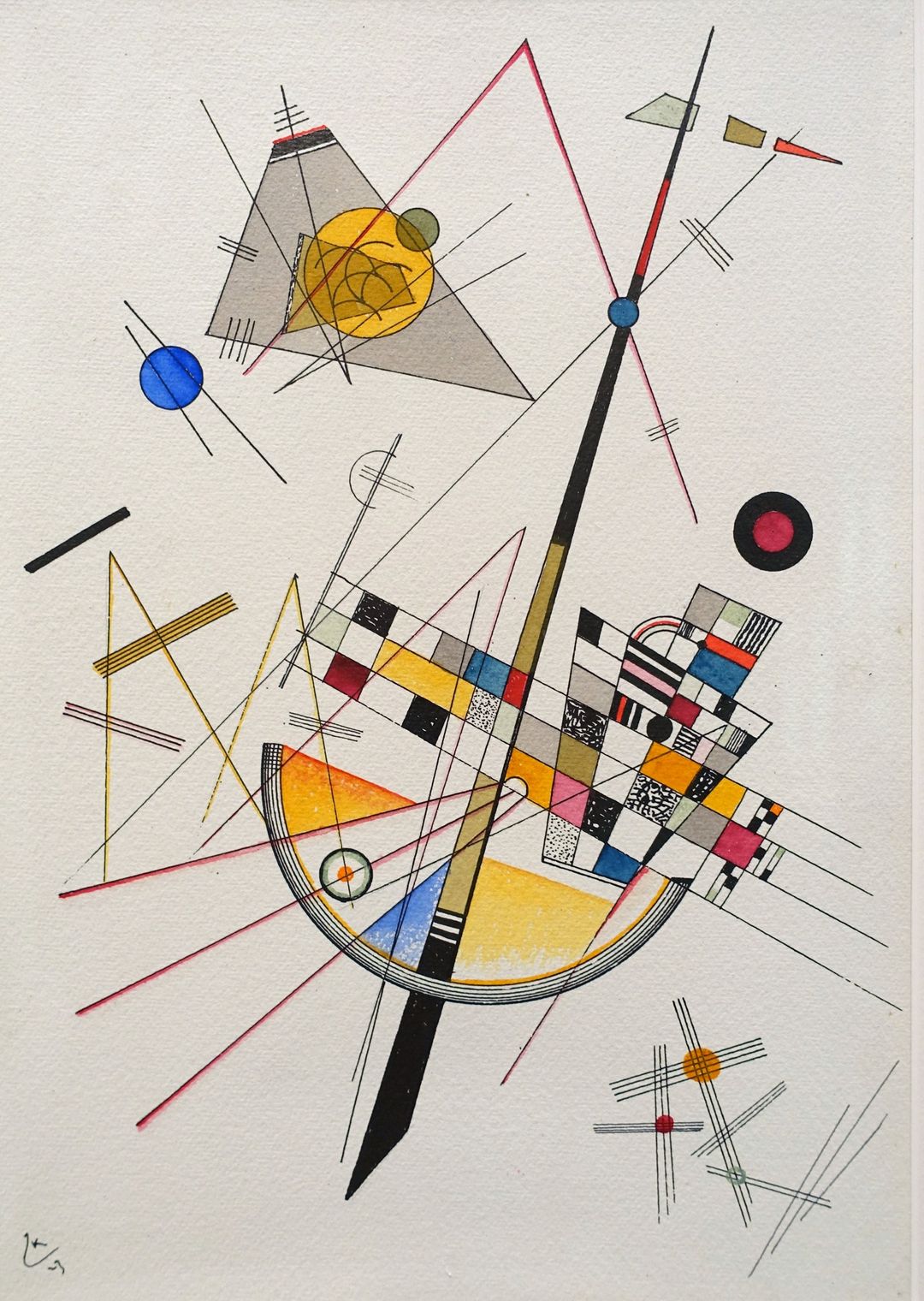
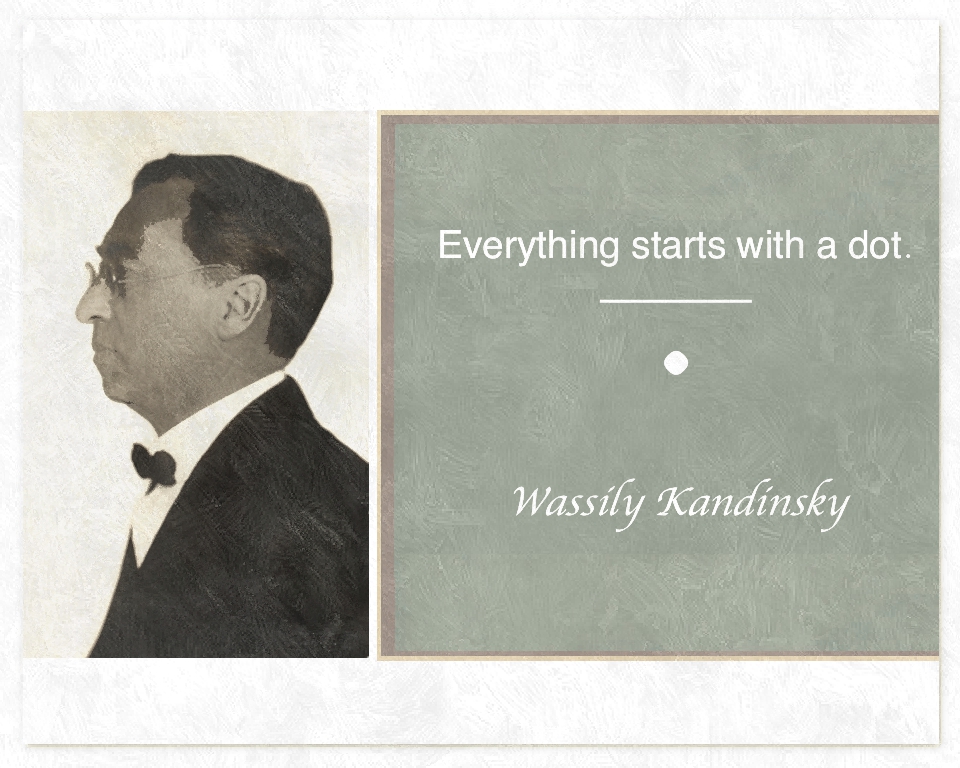
Colour sings, shape speaks, and lines are more than what the eye beholds— spirit traces echoes of the unseen. Kandinsky once glimpsed this truth.
So too the artist paints— not merely to show, but to sound, to let colour pray, to let praise breathe.
Each canvas becomes a quiet altar, each stroke, a whispered psalm— layered with longing, with wonder, with the hush of the holy.
Each gesture is a note, each hue a chord; the canvas a silent symphony— layered, rhythmic, poem and pulse, alive with something, just beyond the visual.
Like music felt through the body’s skin, the colours move.
They breathe, they weep and dance— an abstract language for the soul.
Layers of Sound
There are voices beneath the surface, beneath the brush and broken line— not loud, but present, like breath caught in linen, like Scripture sung in the dark.
A colour trembles. Another answers. They speak in tongues— of saffron, umber, and indigo— ancient arguments resolved in silence.
From dust and spirit, the tapestry is stretched— threads of mystery, tangled yet divine.
In the chambers of time, the pulse of nations stirred. Two heartbeats in one womb, two paths divided by a single cry.
Love and rivalry, covenant and exile— entwined like roots beneath ancestral soil.
The breath of prophecy passed through a mother’s pain—
Rebekah, torn by the war within, felt the future shift inside her womb: a tremor that would echo through the centuries.
Still today, in city streets and silent prayers, in borderlands and broken altars, the ancient wrestling continues.
The Artist’s Vision
The Creative Master made a choice, bringing forth sons and daughters— not merely of flesh, but of calling, of covenant, of light drawn from the womb of chaos.
Jacob and Esau— an eternal struggle, born in silence and strife. Rebekah bore more than children that day; she gave birth to a tension that shaped the world.
Jew and Arab— twin destinies entwined— still carry the weight of ancient blood and blessing.
Letters emerge—
ancient Chaldaic, Paleo-Hebrew,
and Aramaic, fragments of Babel’s broken tower:
Hebrew, Arabic, Greek, and Latin. Not merely differing tongues, but diverging destinies written in script.
Hebrew curves,
Roman bones, Greek questions carved
in broken stones–– lines of faith and empires, half-hidden, half-revealed, as if the Word were still being written in the dust of human longing.
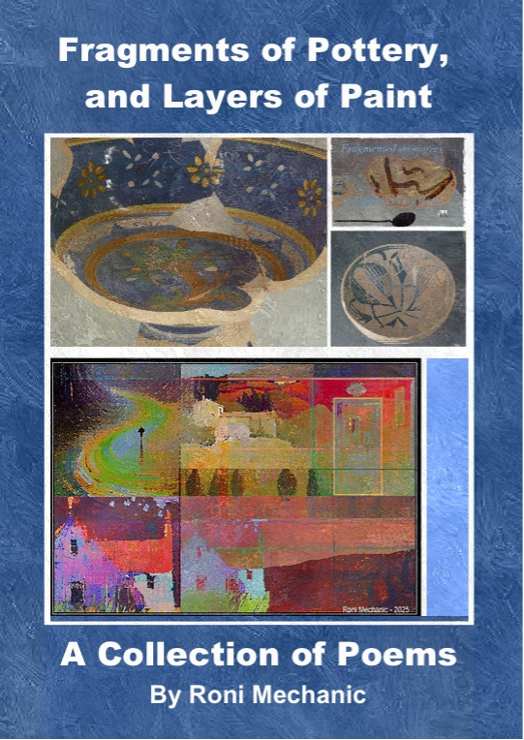
Shattered pottery shards, mosaic fragments— like lost memories echoing from the past. Each piece a whisper of what was spoken. Each crack a vein of silence holding meaning.
These remnants speak in tongues of stone and flame, where history bleeds into symbol, and brokenness becomes design.
Alexander, Antiochus, Mattathias Maccabee— we watched empires rise,
then fall to dust and sea. Hebrew curves, Roman bones, Greek thoughts etched into exiled stones.
O seeker, sift the grains with care— beneath your feet, lies buried there. Lift your eyes, the thread still shines from ancient cloth to end of time.
Yeshua, royal, priestly strand, God’s own binding in the land. His wounds are knots that tie and hold the Torah, Spirit, and the gold.
And as the layers thickly paint, each story worn, both bold and faint, so too his presence, hidden deep, awaits the ones who seek and keep. The veil peels back, the colours blend— a sacred thread that has no end. Within the layers, truth is spun: Yeshua—G_D’s eternal Son.
In the artist’s hand, they find new order— not to erase the fracture, but to honour it. To make of the broken whole, and of the scattered, song.
Not Pictures, but Places
These are not pictures. They are places— maps of inner terrain where the soul remembers what the mind has forgotten.
Icons dissolve into abstraction, but the holy remains. A gesture becomes a sanctuary, a texture, a psalm.
In every layer: a question. In every mark:
A memory. In the space between: the whisper of the Spirit hovering, still creating.
An invisible creative Guiding Hand— the One who spoke, and there was light; form emerging from the void unknown— Tohu Vavohu, without form and void.
Just as the artist grasps for those creative sounds, so do we—
with brush, palette knife, sculptor’s clay, or chisel— tackling blank canvas, clay and wood, fashioning not from certainty, but from yearning.
From silence that longs to speak, from chaos seeking order, from shadows aching for the light. We echo the First Artisan— breathing life into dust and fiber, calling forth structure from texture, meaning from gesture, and hope from hue.
Each mark becomes an offering, each stroke, a fragment of prayer, each layer, a testament to the mystery of being, and the mercy of becoming.
For what is creation if not surrender— to the unseen voice, to the Spirit hovering still over waters–– deep and untamed?
To Touch the Hem
For the artist, for the worshipper:
And so, we paint, sculpt, write— not merely to create, but to commune.
Each gesture, each stroke of brush or word, is an act of reaching toward the unseen— to touch the hem of the garment of glory.
Fringes tipped with sky and light, swaying at the edge of divinity.
Tekhelet Returns
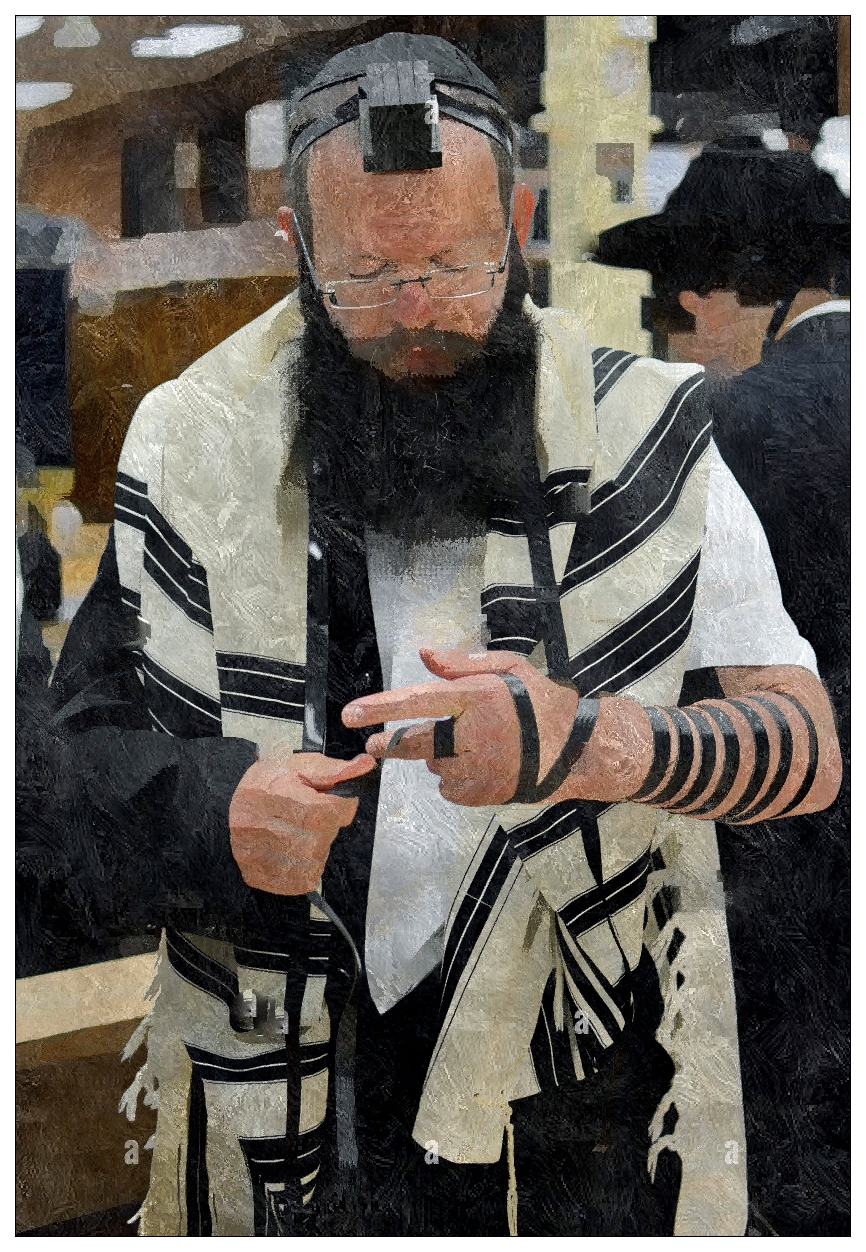
A slender blue thread, woven with white, has quietly returned— gracing the corners of prayer and cloth, almost unnoticed, until it is everywhere.
It crept in softly, like memory, like longing finding form— a whisper of blue sky against fields of white.
Now it swings from the tallit’s edge— a thread reborn.
Tekhelet once lost, now found–– in the rhythm of fingers
And still the voice speaks, calling for corners— marked with covenant. With the blue of heaven, the blue of remembering.
What was hidden in time has returned in colour— a renaissance of dye, a revival of meaning.
Not just a thread, but a promise— a whisper of redemption twisting through generations, binding earth to sky, to G_D.
And somewhere, a woman once reached through the crowd— to touch the fringe, the p’til tekhelet, [2] and found herself whole.
Layers of Paint Say: Thread of Heaven
A thread of blue, sky-breathed and deep, is woven where the edges sleep— on garments kissed by desert wind, a ribbon where the laws begin.
They said, “Remember, do not stray,” so G_D dyed sky into the clay. But who could find that holy hue where tides conceal and time withdrew?
The chilazon, a mystery’s shell, its dye once sought, untraceable, rose from depths where secrets sleep, the sea’s own shade the prophets keep.
Its blood—once hidden, now revealed— spoke of a covenant unsealed. So walked he once among the grain, where sandals stirred the dusty plain.
No one saw the thread he wore— it lay beneath the flesh he bore. A hidden Messiah—now unveiled. What is his name, once long concealed?
Who dares to name the Son of G_D, the treasure buried in the sod? A gleam beneath the desert’s hand, a secret woven through the sand.
Not pearl or gem held in the hand, but breath unstirred, divinely planned— a silence speaking through his death, a whisper stronger still than breath.
Tekhelet lost, now found anew— not in dye, but what is true. A thread not sewn on outer seams, but stitched within prophetic dreams.
Yeshua, royal, priestly strand, G_D’s own binding in the land. His wounds are knots that tie and hold the Torah, Spirit, and the gold. Lift your eyes, the thread still shines from ancient cloth to end of time.
And as the layers thickly paint each story worn, both faint and quaint, so too his presence, hidden deep, awaits the ones who seek and keep.
The veil peels back, the colours blend— a sacred thread that has no end. Within the layers, truth is spun: Yeshua—G_D’s eternal Son.
Unveiled
But who will dare to listen? To behold what once was hidden?
Then, we did not know or see— but now, with unveiled faces, we perceive what was veiled in paint, wood, and clay.
Drawing near in wonder, a new sound awaits those willing to listen. Ears unstopped, eyes opened in amazement.
For what was forgotten is now being declared.
We, with new perception, see colours bright illuminating the way—
ahead and beyond.
A hope recreated— for all to see, to hear, and to know.
When we consider the history of the Jews of the United Kingdom, while England is named as that place where the Jews have lived, we must also include the other three nations of Scotland, Wales, Northern Ireland as well.
The Jews of these isles have had a very mixed experience, of blessing and cursing by its rulers, and its people.