To continue to read the book please purchase it at Amazon – amazon.co.uk/s
These are all the places where Amazon has websites to enable you to order a copy of my book:
Amazon.com
Amazon.co.uk
Amazon.de
Amazon.fr
Amazon.es
Amazon.it
Amazon.nl
Amazon.co.jp
Amazon.in
Amazon.ca
Amazon.com.br
Amazon.com.mx
Genesis 22:8 KJV And Abraham said, “My son, God will provide himself a lamb for a burnt offering; so they went both of them together.
Forward
I recall some years ago while studying at Trinity Theological College in Bristol, UK, the librarian, as a way of introduction on the use of the college library, said, “There is no end of books” – (sounding more like ‘boeks’ in his Northern Ireland, Ulster accent).
So why another book of theology and testimony? This is a good question – I feel compelled to share, not only my personal story, but also theological insights that I have gained in the nearly fifty years of walking along this long road that I have trod.
From my personal perspective, over these five decades I have worked in ministry, that includes inter-faith dialogue. I am also an artist, teacher, writer and internet blogger. In addition, I have travelled internationally, with some cross-cultural exposure in the first world, and the majority two-thirdsworld (the so called “third world”). I am widely read, with an interest in English literature, theology, missiology (science of mission), philosophy, psychology, sociology, history, art and politics. I have particularly focused on Jewish studies that includes Jewish-Christian relations and Holocaust studies. I hope that from my broad life experience I have something worthwhile to contribute to the wider debate about Jesus’ identity as a Jewish first century luminary.
I invite you to join me on this journey of discovery in which, I will not only grapple with the issue of ‘A Quest for the Jewish Jesus,’ but I will also look at many other facets that affect Jewish life and Jewish identity. You will meet the Push-Me-Pull-You [i]brigade along the way – some have attempted to pull Jesus this way and others pushed him that way!
Though Jews and Christians share a common heritage with both looking to Abraham as father, like Ishmael and Isaac and Jacob and Esau, very different paths have helped shape and forge the identities of two distinct people. Mutual mistrust; martyrdom, resulting in alienation, pain and sorrow; have helped separate them. Those Jews who seek to identify with Jesus often find themselves caught in the middle of two opposing forces. This can be a very challenging and uncomfortable place to be, yet it is possible to view it as a creative tension and not as something wholly irreconcilable and undesirable. The third mono-theistic faith of Islam is only briefly mentioned concerning the problems and opposition that both Jews and Moslems face concerning issues such as ritual slaughter and circumcision and the conflict over Israel-Palestine.
We should not forget that in both cases, Ishmael and Esau, as well as Isaac and Jacob, each had their own blessing from their earthly fathers which, in turn, were given by divine sanction. So too, Jews and Christians each have their own path that they follow within the divine scheme of things. A common destiny inextricably links these two faiths in a way that no other faiths do.
Not A Marginal Jew
All too often, those who oppose faith in Jesus as the Messiah of Israel have sought to, not only marginalise him, but equally those Jewish people who identify with him. However, it is my intention to show that to follow Jesus as Lord and Messiah, one is ‘not a marginal Jew,’ but one has become truly a completed and fulfilled Jew: An “Israelite indeed in whom there is no guile” (See John 1.47 – KJV).
Introduction
“Who do you say that I am” (Matthew 16:15)
Most Jewish and Christian scholars, agree that the historical Jesus of the first century was a Galilean Jew. His mother was Jewish, his Jewish followers called him “Rabbi,” he spoke Aramaic, quoted the Hebrew Scripture in his teachings and he taught in the synagogue in Galilee and the Jewish Temple in ancient Jerusalem. His Hebrew name was Yeshua (God saves). Also, almost all his early followers were Jews. So how did we get from the Jewish Jesus of Nazareth of the first century of the common era to the Gentile Christian Jesus of today? Jewish people say, “look at what they have done to him – We don’t recognise him at all – he does not appear to be a Jewish person.”[ii]
Yet, Rabbi Leo Baeck says, “He was a Jew among Jews; from no other people could a man like him have come forth and in no other people could a man like him work; in no other people could he have found the apostles who believed in him.”[iii]
A Quest for the Jewish Jesus
So, is it possible to discover the Jewish Jesus? This quest is not only something that is personally of great importance to me, but it also has a lot to do with the integrity of the of New Testament account of him; it also has to do with how Jewish people may approach him. Jewish and Christian scholars, in their quest for the historical Jesus, bring with them their own theological outlook and prejudices. We discover that the majority, rather than help resolve who Jesus is, serve to complicate the issues by further obscuring his true identity. While Jewish scholars have helped to reclaim him as a Jew, they universally deny that he is the divine Son of God and the Messiah. Moses Maimonides well illustrates this in his book On Inter-faith Dialogue when he said, “All these activities of Jesus the Christian, and the Ishmaelite (Muhammed) who came after him, are for the purpose of paving the way for the true King Messiah, and preparing the entire world to worship God together…” Equally, many of the nineteenth and early twentieth century Liberal Protestant Christian scholars, while affirming his deity and messiahship, have all too often de-Judaized him. Equally, Catholic scholarship is vexed with a long history of anti-Judaism that has also obscured the Jewish heritage of Jesus, Mary and the early Apostles and disciples.
If he is not a Jew, then…
My quest for the Jewish Jesus, though related to “The Jesus Quest” of the nineteenth and twentieth century, follows a different line of enquiry and reasoning. I am not only concerned with discovering the Jesus of history, but more importantly, he must equally be the Jesus of faith. There can be no division between these dual aspects of his being. If he is not a Jew, and not the Jewish Messiah, then I can have nothing to do with him or the faith that he and subsequently his disciples proclaimed, because he would not be the Jesus who was anticipated and revealed in the Scriptures. This quest poses numerous challenges for the genuine enquirer. I have used the name Jesus and his Hebrew name Yeshua interchangeably. It is my sincere hope that you will discover the answer to the question posed by the subtitle of this book, “Who do you say that I am?”
1 — My Background
I am of British Jewish parents who emigrated to South Africa in 1947, and I was born in Johannesburg in the second half of 1948. They were among the 688 British Jews that came to South Africa in 1947.[iv] I was raised in a traditional English-speaking Jewish home. We regularly attended our local synagogue and I received Hebrew instruction in preparation for my Bar-mitzvah.
I recall my Torah portion: – Shabbat Shuva שבת שובה or “Sabbath [of] Return” – which refers to the Shabbat that occurs during the Ten Days of Repentance (Days of Awe), between Rosh Hashanah and Yom Kippur[v]. This Shabbat is named after the first word of the Haftorah (Hosea 14:2-10) and literally means “Return!” It is perhaps a play on shuvah, but not to be confused with Teshuvah – תשובה. This is the word for repentance. My journey to faith has been one of both return and repentance towards the God of Israel.
I was an active member of the Habonim (The Builders) Zionist Youth Movement (aligned to the Histadrut – Labour movement in Israel) – a secular Jewish Zionist organisation that not only encouraged Aliyah, immigration to Israel, but also included scouting and outdoor activities.
It was intellectually stimulating, but also tremendous fun. On the one hand, debates, discussions, Israeli cultural and political insights; on the other hand, camping, hiking and boating were just some of our activities. I was in the movement for ten years from the ages of 7 to 17 years old. I must express my gratitude to our very talented leadership, names like Simon Kuiper, Lee Flax, and David Gordon who were our group leaders, together with the Mendelsohn brothers (they became very important in Israeli Labour politics). Lee Flax introduced us to Franz Kafka, an existentialist writer and philosopher whose books, Metamorphosis, The Trial and The Castle had a significant influence on my young mind. I still personally consider Kafka’s writing of importance and make reference to it in Chapter 31. We also considered the writing of Jean-Paul Sartre’s books including Nausea and his book on Anti-Semitism and the Jew.
In my final year of high school in Johannesburg, South Africa, I became an active member of the debating society at Theodore Roosevelt High School, Roosevelt Park, Johannesburg. There were three subject that were off limits, namely, sex, politics and religion. As a consequence, we rebelled when a group of us established an informal forum that we called ‘The Conversation Club’ and our meetings took place off school property at friends’ homes and our only agenda was sex, politics and religion.
Personally, there was an important link between the Conversation Club of students from Roosevelt High, and the influence of Habonim that included four of our members who were also involved in the Zionist youth movement as well as our local synagogue. We were young free-thinking liberals. I recall that we regularly invited guest speakers who were experts in their subject – a Jehovah’s Witness, a Moslem, a left-wing trade unionist and a gynaecologist were just some of those whose ideas were considered. Discussions about sex, politics and religion helped to broaden our outlook and not to stay confined to the political and social conservatism that good South African girls and boys were expected to adhere to. These endeavours contributed to our intellectual development and helped me to also question my own religious and spiritual thinking. At one level, I found my Jewish faith fulfilling. However, at another level, I had a growing sense of a spiritual void in my life. This is sometimes referred to as ‘a God-shaped hole or void.’
When the Rolling Stones said, “I can’t get no satisfaction,” they hit the nail on the head. Keith Richards and Mick Jagger expressed the places we often seek satisfaction – sex, drugs, rock ‘n roll and consumerism fail to satisfy the longing in the human soul. We try to satisfy our appetites for creature comforts, and yet we still feel unsatisfied.
I recall asking two deep existential questions:
Where do we come from? Where are we going? These lie at the heart of humankind’s quest for meaning that goes beyond the bounds of our material existence.
In this book I include autobiographically significant aspects of my journey to faith and beyond. Yet, I do not necessarily follow a chronological sequence. In addition to my quest for discovering the Jewish Jesus, I am also concerned about laying out the case for how Jewish people may encounter him as Yeshua of Nazareth. The personal anecdotes that I include will hopefully contribute to the overall theme. I also explore how a Jewish person who believes in Yeshua is able to not only maintain a Jewish identity, but also give expression to their faith within both the Jewish and Christian world.
In addition, the question of Jews living in a hostile world is something that impacted upon me personally from an early age. I discovered being Jewish placed an additional burden upon me. I experienced the phenomenon of anti-Semitism at a comparatively early age with my first encounter at primary school. I will say more about this in due course. My experience as a Jew is by no means unique for many of diverse backgrounds encounter xenophobia and race hatred early in their existence.
On my quest for the Jewish Jesus
It has been my desire for some time to lay out my faith journey. An equal concern is how Jewish people may reclaim Yeshua as their own. This is not just of academic interest to me, but it has a very personal significance because, as a Messianic Jew, one is caught in a world between the two faiths that sometimes feels a bit like someone trapped in “no-man’s-land.” This is a paradoxical position to find oneself in. I did not embrace Yeshua because I wanted to escape being Jewish, but as a consequence of my quest for life’s meaning.
Fellow Jews say, “you are no longer Jewish,” while many Christians say, “you are one of us now!” This is sometimes said in an almost triumphalist way, as if to say, “We have saved one more lost Jew!” This is both patronizing and hurtful. I was neither fleeing my Jewishness, nor was I seeking assimilation into the wider Gentile Christian society in which I found myself. I am proud of my Jewish heritage and upbringing. I have never stopped enjoying the rich Jewish life-experience which I claim as my own. My reason for embracing belief in Yeshua is a complex one.
Religious life is a very personal thing. Yet one must face numerous challenges in the desire to give expression to one’s new faith as a Messianic Jewish. Also, there are questions that arise about one’s identity. Can one attend synagogue (Orthodox), or temple (Reform) as well as church? Should one only eat kosher food and observe the sabbath and what other aspects of being Jewish should one keep? Does the Torah still have significance? When a Jewish person regularly attends a church service will it not, to all outward appearances, cause one to be identified not as a Jew but a Gentile Christian? Should one get baptised? This issue is viewed by the Jewish world as the cross over point. A Messianic Jewish identity offers a different paradigm to give expression to one’s faith in Yeshua: Christian Jews; Jewish Christian; Hebrew Christian or Messianic Jew. Which one best describes the person you are?
Self-identity
Theological, sociological and psychological issues about personal identity need to be faced. Who are you? Where do you come from? Where are you going and how do you want to be identified. These are just some of the questions to ponder. These and other issues related to my own personal story are intricately woven into the warp and woof of its very fabric.
Theological issues surrounding personal identity help to address the question of how, according to Holy Scripture, we are viewed by God? This is a very important question and it helps to introduce an objectivity outside of ourselves. This adds a frame of reference beyond our narrow group and self-perception.
The sociological implications of becoming a Messianic believer, for someone from a Jewish background, will have profound implications due to the hostility that the majority of Jewish people have towards Messianic Jews who embrace Yeshua as Messiah and Lord. Misunderstanding about what you will call yourself also characterises part of the question about identity that you will have to contend with.
We must not underestimate the psychological impact that we may encounter from those who show hostility. While there may be an emotional struggle at first, I must personally say that my decision to follow Yeshua has given me a sense of determination. I discovered an inner strength that enabled me to overcome any hostility and rejection that I faced. The personal conflict that I am confronted with is far outweighed by a sense of well-being and Godly contentment. This sense of wholeness transcends any human suffering caused by rejection. This is due to the indwelling Ruach HaKodesh (Holy Spirit), that the Scriptures call the Spirit; the ‘Counsellor, Comforter, Guide, Go-between-God, Helper’. Though there is a personal cost to pay for becoming a Messianic Jew, the benefits far outweigh any negative issues that you may experience (see John 14.26). The concept of the activity of the Holy Spirit is not foreign to Judaism, for the work of the Spirit of God is ever present in the lives of the people of Israel. Judges, kings, prophets, prophetesses and priests alike were moved by the prompting of the Ruach HaKodesh (Holy Spirit) to perform and fulfil the work of God. This was not only for the benefit of Israel, but for the other nations as well. When the great outpouring of the Holy Spirit happened on the day of Pentecost, the limited work of the Spirit was then extended to all who yielded their lives to God through his Son Yeshua.
2 — Personal experiences of anti-Semitism,
When at Franklin D. Roosevelt Primary School, Roosevelt Park, Johannesburg at the age of nine or ten years old, a fellow pupil from a Czechoslovakian background verbally abused me for being Jewish. Subsequently, this incident has caused me to ponder as to whether his father was a fascist who had collaborated with the Nazis during the Holocaust and then found his way to South Africa after the war? While this is conjecture on my part, having studied about the way that many Europeans under Nazi occupation collaborated with them during WWII, there is a reasonable possibility that his father could have been an active collaborator. What is clear, is that he harboured an anti-Semitic attitude and brought this with him to his new life in South Africa, influencing his son to be negative towards Jews.
“Hate speech” and physical assault
This incident was deeply distressing, and when I came home, I related it to my mother. She told me that during WWII in England, while doing war work in an ammunition’s factory, one of the supervisors had verbally abused her for being Jewish saying, “You Jews need to go back to Palestine, because you don’t belong here!” She discovered that he was a member of the Blackshirts who were fascists and members of the British Union of Fascists who held a pro-Nazi outlook and who actively practised anti-Semitism.
In addition, my maternal grandfather Isaac had been blinded in one eye when a brick was thrown at him during the fascist unrest in the East-End of London during the 1930’s, with him sustaining a detached retina. That was the side of his body that was struck by the bus that killed him during the blackouts during WWII. Therefore, I can hold the fascists indirectly responsible for his death.
Similarly, my father Thomas and his cousin Cyril lived and grew up in Birmingham. Their journey to school took them through an area of the city where anti-Semitic attacks regularly took place during the 1930’s. My grandfather Hyman fashioned a whip for my father to use to fend off attacks from boys inspired by fascists to harass Jews. This begs the question as to whether Jewish people are safe anywhere? The phenomenon of anti-Semitism appears to be a universal problem.
Christian Anti-Judaism
I recall that while living in the Cape, South Africa, I was invited to share a word of testimony at an Afrikaans Reformed Church in the Cape Peninsula.The minister preached from a passage in the Gospels in which Jesus and the Pharisees locked swords. During his sermon he ranted against the Pharisees.
After his sermon, he invited me to come to the front and share a word of testimony of how I had come to faith. I felt insulted by his negative attitude. Had the minister deliberately preached that sermon for my benefit or was that part of his normal preaching? Whatever his motive, his theology was an appalling travesty and caricature of Judaism and if not deliberately anti-Semitic, it certainly reeked of anti-Judaism of the worst kind. It appeared that he had no understanding of the meaning and deep significance of what I had experienced as a Jew who has come to faith in Yeshua. Neither did he show any empathy or insight into what a Jewish person faces in their sense of self-identity. He had missed the fact that many Pharisees became followers of Yeshua. The inheritor of the Pharisaic tradition is Rabbinic Judaism. Certainly, it has failures, but equally it also has great strengths and laid the foundation of Judaism.
The attitude of this minister of the Christian Reformed Church is not an isolated phenomenon but is symptomatic of a deeper malady within Christian theology and its outlook towards Judaism. This problem will be more fully explored and addressed in my journey of faith. Negative as well as positive influences help to shape what we believe. My response is always to look beyond the particular experience, whether good or bad, and ask the question as to why someone holds a particular viewpoint or attitude and not to simply reject out of hand what they represent.
Anti-Zionism
Anti-Zionism, while not directly linked to the question of whether God has rejected the Jewish people [Israel], helps to contribute to an antipathy towards Jews, Judaism and Israel. Anti-Zionism is increasingly having a negative impact upon the Evangelical Christian church. I have personally encountered this phenomenon when people discover that I am a Messianic Jew, and also someone who declares his love for Israel. I have been accused of being a ‘Christian Zionist’ (as if that is a crime), and of holding racist attitudes because I stand for Israel’s sovereign right to exist as a nation. Many wrongly think that, if you support Israel, then you must be anti-Palestinian or anti-Arab. This accusation cannot be further from the truth. I have a number of Arab and Palestinian friends and I continue to seek ways to foster understanding and love between these two peoples whose destiny is inter-linked. (Visit my blog: http://www.hotrodronisblog.com).
Five Broken Cameras is an anti-Israeli propaganda film that was shot over a 5-year period, 2005-2009, by Palestinian Emad Burnat. It records the protests against the construction of a security barrier through the West Bank village of Bil’in. Burnat uses the destruction of his five cameras as a motif and connects the narrative to the development of his growing family. The film constructs a story that portrays the Palestinians as innocent, childlike victims fighting for land that has purportedly been stolen from them. Israelis are portrayed as cold-faced, heartless brutes. The Israelis are presented as acting only to cause suffering to the residents of Bil’in. This kind of one-sided accusation is becoming more frequent from Christians who follow the media and its constant negative reporting of Israel. The majority of these Christians have little, if any, first-hand contact with Israel or Israelis. They base their assertions on what they glean from an often-biased media.
What is the reason for Israel erecting the security barrier which is often referred to as the “apartheid wall?” It was built not to exclude Palestinians from Israel, but to protect its citizens from regular terrorist attacks. People conveniently choose to forget the deadly attacks that were a regular occurrence inside Israel. With the building of the barrier there has been a drastic decline of such attacks. In addition, there is another aspect of the conflict that is hardly ever reported by the mainstream media: “Rioters hurl rocks, Molotov cocktails and burning tires at the defence force and the security fence … Since the beginning of 2008, about 170 members of the defence force have been injured in these villages.”[vi]
A new face of anti-Semitism
Julie Burchill in The Sunday Telegraph, Sunday 3 February, 2019 (p 18), discusses a report by the Institute for Jewish Policy Research into the link between anti-Zionism and anti-Semitism, concluding that those who are active in attacking Israel are more likely than not to be anti-Semitic. She has considered why the hard left in British politics is inherently anti-Semitic. Some claim to be anti-racist on the one hand, yet on the other hand happily believe “that the Jews asked for it.” Burchill calls this trend “Fresh ‘N’ Funky Anti-Semitism.” Alas, this type of jumbled thinking and activism is dangerous. When Jewish politicians challenge their colleagues in the British Labour Party about their anti-Semitic attitudes, instead of being taken seriously they are accused of overreacting. The victim is blamed for the actions of the victimiser. This is both perverse and a sign of a great sickness within the body politic. It is like blaming the actions of the Nazis upon their victims. “Jews had it coming to them!”
Labour movement in Britain
Historically, the Labour movement in Britain was the natural home of many British Jews, with the Israeli Labour Party closely aligned to her sister movement in the UK. However, this is not the case anymore. British Jews are increasingly feeling insecure about their place in the Labour party and its future in Britain. This change has taken place due to the rise of anti-Semitism that has manifested itself within the Labour party. This is driven by those on the hard-left whose anti-Zionism has led to increased anti-Semitic attitudes being expressed towards Jewish Labour MP’s. These attacks include hate-speech, hate-mail and death threats. “Debates over alleged antisemitism in the Labour Party may have sparked an increase in hate incidents against Jews in the UK, a report has found. The Community Security Trust (CST) recorded a record high of 1,652 incidents in 2018, an increase of 16 per cent on the previous year.” Alas, many of the front bench Labour leadership have been slow in tackling the problems of anti-Semitism within the party.[vii]
This trend that British Labour is manifesting is of personal significance to me due to my background in the Habonim movement with its close alignment to the Histadrut – the Labour movement in Israel (see p 5). As someone whose political inclination is of the centre-left, the hard-left’s anti-Semitic shift of British Labour’s current leadership is a source of deep concern. Together with many other fellow British Jews what is taking place at this present time within the Labour movement, is causing a deep sense of disquiet. Historically anti-Semitism found its home only in fringe hard-right fascist movements. However, with the UK’s main opposition party having become the home of so many people who hold anti-Semitic ideas, it has become main-stream. I too have begun to feel unsafe in Britain. Some political commentators are now openly saying that “Labour is a racist party.” With the election of the new Labour leader, Sir Keir Starmer (2020), he has attempted to repair the damage done during the Jeremy Corbyn years. Yet there is still a long way to go in healing the relationship with the Jewish community in Britain, and particularly those former disaffected members who left the Labour Party.
[i]Push-Me-Pull-You – is a sports game for 2–4 players who are joined at the waist, you and your partner share a single worm-like body as you wrestle your opponent for control of the ball – It’s a bit like a big hug, or playing soccer with your small intestines. With every action affecting both you and your partner (and mandatory shouting) PMPY combines the best parts of co-op multiplayer with the worst parts of your last breakup. https://pmpygame.com
Fundamental to understanding the Jewish Bible – Hebrew Scriptures or Tenach is the fact that the Scriptures may be divided in to Haggadah and Halacha – that is Story and Torah.
Story is the narrative or the telling of how it happened and this involves the account of how G_D created the Heavens and the Earth and every living creature. The crown of his creation was humankind – male and female he created them. The narrative relates how the perfect humans that G_D made quickly rebelled and this resulted in their subsequent fall and alienation. The rest of the story relates to how G_D went about enacting his plan of redemption.
Torah or instruction involves the laying out or down of that framework of redemption and what G_D expected of humankind for them to experience his plan of salvation. This involves not only obeying his laws and commandments, but also the divine provision for their redemption.
Haggadah
Haggadah or Story needs explaining.
Halacha
Equally Halacha or how to walk according to the teaching of the Torah requires interpretation – and in Judaism the interpretation of Scripture and tradition as given in the Tulmud involves Midrash. This is also know as Hermeneutics science of interpretation or Hermanutical studies.
Midrash
PaRDeS – is an acronym for the four main levels of Midrash –
“Pardes” refers to (types of) approaches to biblical exegesis in rabbinic Judaism or to interpretation of text in Torah study. The term, sometimes also spelled PaRDeS, is an acronym formed from the same initials of the following four approaches:
Peshat (פְּשָׁט) – “surface” (“straight”) or the literal (direct) meaning.[1]
Remez (רֶמֶז) – “hints” or the deep (allegoric: hidden or symbolic) meaning beyond just the literal sense.
Derash (דְּרַשׁ) – from Hebrew darash: “inquire” (“seek”) – the comparative (midrashic) meaning, as given through similar occurrences.
Sod (סוֹד) (pronounced with a long O as in ‘lore’) – “secret” (“mystery”) or the esoteric/mystical meaning, as given through inspiration or revelation.
Listen and learn from this programme on Jewish Spirituality – If you missed Part 1 listen below:
Your Help is Needed!
To enable me to continue to produce these programmes, your financial assistance is appreciated. Please visit the Paypal Donate button at the bottom of this page.
Charitable Donation to Support Shalom Radio UK’s Running Costs
This is to enable you the listener to express your thanks and help me expand the work of Shalom Radio UK by making a donation
Over a 12 year period while living in Manchester, UK, I had the opportunity to teach Contemporary Judaism at one of the Manchester University theological colleges to final year theological students – NTC.
This was an elective 12 week course – [approximately 24 hours of teaching]. The course included synagogue visits; Holocaust Remembrance seminars conducted by rabbis; visits to the Manchester Jewish Museum; an opportunity to dialogue with a rabbi for a whole day; and one of the highlights was an all day visit to an Orthodox synagogue that included a discussion of Jewish Texts that included the Amidah, Pirkei Avot and the Shema.
Amidah, Pirkei Avot and the Shema – these 3 significant Jewish texts from the Talmud, Jewish Payer Book and Torah are featured in this programme.
Judaism is a living faith and not a relic from the past. Many people are not well informed when it comes to knowing about modern Judaism. Let the rabbis and Jewish scholars speak for themselves.
Listen and enjoy this podcast of Shalom Radio, UK
*
To enable me to continue to produce these programmes, your financial assistance is appreciated. Please visit the Paypal Donate button at the bottom of this page.
Charitable Donation to Support Shalom Radio UK’s Running Costs
This is to enable you the listener to express your thanks and help me expand the work of Shalom Radio UK by making a donation
“It was the best of times, it was the worst of times, it was the age of wisdom, it was the age of foolishness, it was the epoch of belief, it was the epoch of incredulity, it was the season of light, it was the season of darkness, it was the spring of hope, it was the winter of despair.”
Perhaps you recognize the opening paragraph from A Tale of Two Cities by the immortal Charles Dickens. He was providing analysis of the disruptive state of affairs in 18th century England, as well as across the Channel, in France. If you know about the disruptive state of affairs in the 21st century, perhaps you’ll appreciate the allegorical reference of these phrases of human affairs almost two and a half centuries later.
Why do people hate Jews? Well do they?
“Let God be true and everyone else is a liars” (See Romans 3.4).
Firstly, is this statement true and how universal is Jew-hatred?
Secondly, there are multitudes of people throughout the world that positively love Jewish people and do not have an anti-Semitic bone in their bodies.
Sweeping generalizations are not helpful at all when dealing with the love or hatred that may be held about a particular group of people.
In two recent films both that deal with the stereotypes that people hold about Jews, namely JoJo Rabbit an anti-hate satire and Hunters, inspired by true events.
Hunters is about a rag-tag team of Nazi Hunters in 1977 New York City who discover that hundreds of escaped Nazis are living in America. Like a ‘bad-ass’ vigilante squad set out on a bloody quest for revenge and justice. The soon discover that a far-reaching conspiracy and must race against time to thwart the Nazis’ new genocidal plans, that not only targets Jews, but all those deemed to be of inferior racial origins. Only the ‘true white race is to be preserved.’
Particularly in Episode 8 Nazi racial stereotypes are expounded in a TV – Money Show:
It should not come as a suprise that these two films deal with the myths and racial stereotypes that many people hold concerning Jewish people. Alas, this is not a new phenomena but it has a very long history.
I find this question odd – as it presupposes that some stereotypes are true. One definition of the word “stereotype” is “A widely held but fixed and oversimplified image or idea of a particular type of person or thing”. So any stereotype must agree with the facts and more often than not is likely to be false because it is an oversimplification.
Myth Busting
Nevertheless – there are numerous false stereotypes about Jews: So here goes with a list of stereotypes that are untrue:
1) Jews have big noses
2) Jews are all dark haired.
3) Jews are all white
4) Jews are all rich
5) Jews control the media
6) Jews control the banks and world finances
7) Orthodox Jews have sex through a hole in the sheet
8) Jews use human blood in cooking their Passover “bread” – matzoth
9) Jews killed Jesus
10) Jews hate Arabs and Moslems
11) Ponzi (Scams) Schemers
12) And just because they are Jews
There are many more – but let’s look at some of these:
1) Lots of Jews have small noses. Jewish noses show the same differences in size as non-Jewish noses.
2) There are lots of blonde haired Jews. Traditionally, King David was a red-head and there are lots of red-headed Jews too.
3) Jews are all white. False – look at the Ethiopian Jews living in Israel, or Jews from Iraq, Morocco, Algeria, and the rest of the Middle East. There are Indian Jews, and even some Chinese Jews. (Look up the history of the town called Kai Feng in China).
4) There are lots of poor Jews. Look at the story “Fiddler on the Roof” – it’s all about poor Jews. Look at the photos of Jews arriving at Ellis Island as immigrants to America. These were not rich Jews. Look at the films of Woody Allen describing his family. However one stereotype that is not false is that Jews put a high emphasis on education and so study and finish schooling. This means they are more likely to go into white-collar type professions and so be more successful than lesser educated non-Jews. However, in Israel there are lots of Jews below the poverty line – partly because even if all are literate, there are only so many jobs.
5 and 6) What about Jewish scientists, doctors, shopkeepers…. If you look at the world’s banks only are few are Jewish owned. It’s just that anti-Semites ignore Barclays, HSBC, Bank of America, Citibank, Chase, Swissbank, and 100s more not led by Jews and focus on Rothschilds and then say that this proves Jews control the banks. The same applies to the media – look at the top press barons and count the non-Jews versus the Jews. Non-Jews win out by far.
7) This is a joke – but some idiots will believe anything, like it is because they are Jews – that is is enough reason to hate them. You don’t need a reason just turn on the hate thing.
How sick can people get? This type of hatred without a reason
is verging upon insanity.
Crazy Man
8) This is raised to create hatred, like the ‘blood lible,’ for if you read the Bible you will discover the Jewish views on eating blood. It is abhorrent to Jews. Jews are forbidden totally to eat blood – even black pudding (made with dried blood) is forbidden.
9) I wasn’t there. Nor were you – so this proves that this is stupid.
10) Why – we both revere Abraham as the first monotheist. There are millions of Jews who are of Arabic origin, so why should we hate Arabs. We hate those who want to kill us – whoever they are.
In fact there are more ultra-wealthy Arabs in today’s world than Jews.
Why do so many people have a negative attitude toward Jewish people?
It is not a question of what Jews have done, rather it is a question of how they are perceived. This often occurs through very tainted lenses. One should exercise caution when blaming the victim for such hatred. Having said that here are a number of different types of anti-Semitisms that I have identified in my reading.
I have qualified these seven types in my study of Jewish History. While they may not be independent from one another in the strict sense, they provide a useful methodology for understanding the historical hatred of the Jews.
The problem is that the noun “Jew” or the three-letter word “Jew,” for one thing, it’s been used as a very, very negative verb in English, so to “Jew” someone is to try to cheat them, so that’s a negative connotation of the word.
A hateful stereotypical image of a Jew
What are Jews like?
Not all stereotypes are negative, some are very positive and can result in an active appreciation of the particular group in focus. In contrast, negative stereotypes feed prejudice and will consequently result in negative, xenophobic, racist and anti-Semitic attitudes and action taking place.
The important question is not what religion is,
but what does it make you.
Jews are not all alike, for many are very different from each other. Just like the rest of humanity.
With very different social groups, differing by their relationship to religion – orthodox, conservative, reform, liberal, secular and atheistic identity, family values, clothing, food, work, physical appearance, people of other religions and ethnicity, language, politics, and a million other things.
Possibly the most frequently repeated positive stereotype about Jews is that Jews value education very much and do their best to give their children the best education possible. This may have some merit, given the relatively strong representation of Jews among Nobel prize winners, as well as physicians, lawyers and other professions that require long and difficult studies, but I also know a lot of Jews who unfortunately don’t care about their children’s education that much and blindly trust public schools, so it definitely doesn’t apply to all Jews.
The most frequent negative stereotype about Jews is that Jews are cunning liars who trick people out of their money and are trying to take over the world. It’s total nonsense and is based not on fact, but blind prejudice and often based on jealousy on the part of those who hold to such ideas.
What was Adolf Hitler’s rationale for hating Jews?
This answer begins in antiquity with the ancient Egyptians who feared the Hebrews because the had grown strong and numerous. In Medo-Persia, wicked Haman devised a plot to kill the Jews who refused to bow down and show him obesence. The the Greek Seleucids tried to destroy Judaism in the 2nd century B.C.E. The Roman empire did grant the Jews legal religiuos status. Many Jews prospered under Rome. The Roman empire’s strength depended upon its system of laws and its financial strength (much like the United States today).
The Romans needed good, honest tax collectors whom they could trust to collect taxes in their provinces (colonies) and send them to Rome. The Romans found the Jews the best people for the job.
After the fall of the Roman Empire, the Jewish tax collectors ended up with a lot of the Roman tax money and nowhere to send it. If they did, when the Roman Empire began to collapse, they saw no need to send all of the proceeds to Rome.
After War 1, Germany was very financially strapped due to the financial restraints placed upon it by the League of Nations. Life in Germany was very miserable at this time. Germany had a debt to repay the Allied Nations that was impossible to repay.
Jewish people are not pretentious or showy, yet they have a lot of financial power. They also stick together perhaps better than any other group of people.
A lot of the German people needed to borrow money for one thing or another. While some of the banking system in Germany had Jews involved in it, they were by no means the only financiers in Germany. Hitler in looking for someone to blame for Germany’s economic and financial woes saw the Jews as a ready scapegoat and he blamed them for the economic hardships that post WWI had imposed upon Germany at the Treaty of Versailles.
Adolf Hitler began to speak publicly about a new Germany that people will not have to borrow money from others at such high interest rates that they could not afford nor feel strapped by. His speeches gave the people of Germany new hope in a land that desperately needed some. He blamed the Jews for the hardship that they faced as a nation.
Mein Kamph
Hitler speeches aroused the German people and helped him come into power. His appointment as Chancellor of Germany did not happen overnight, but came after years of struggle Hitler’s Mein Kamph (stuggle). President Von Hindenburg though he despised Hitler, in a political stalemate, an old tired Von Hindenburg capitulated and following a series of failed national election, he allowed Hitler to form a minority government in 1933. Hitler convinced the industialists and bankers to the back him. With their financial support, he was on his way to control and rule Germany.
In Mein Kampf Hitler expresses his distrust towards the Jews that began as a loathing and developed into a pathological hatred. His psychological state was that of someone with an obsessive personality, that became a mental illness. He was prone to bouts of ranting and when this was directed at the Jews he worked himself up into a frenzied rage, spewing out his hate-filled bile.
Once in control of Germany, he began his systematic persecution and enactment of his anti-Jewish race laws that were ratified in Nurenberg. He sought a solution to the Jewish Question, that resulted in Hitler’s Final Solution of anihalating the Jews. This became known as the Holocaust and the Shoah. Forced the migration of Jewish people was one of the earlier polocies, before the march towards the death camps was enacted. The Jews were protrayed as the enemy of the people of Germany.
The beginning of his persecution of the Jews at first, he simply marked them by having them wear special marks and then by the time they were sent to the concentration camps they had numbers tattooed on them like branded cattle. It is true there were slums in Germany that we’re predominantly Jewish. These areas were “cleaned up.” Adolf Hitler perhaps as an effort to get the German people behind him. In addition, the bankers probably liked the idea of taking the assets of the wealthy Jewish people for their own use.
In essence, Hitler used the Jewish people as a way to get the Germans together against a common enemy which happened to be people of Jewish ancestry. To a large extent Hitler blamed the Jews for the condition that the country was in. Hatred and anti-Semitism resulted. On the other hand German people stood together for the first time since World War 1 and the crippling stipulations against it made during the peace treaty.
With the new diffusion of wealth, conditions in Germany changed for the better and the people actually fared better under Hitler.
Ironically, the same people that Hitler persecuted, were the same people that Hitler used to develop the jet engines, V-2 rockets, and many other technological advances that no one else in the world could match. In WWI over 100,000 Jews had served in the German Forces, with 10,000 being decorated for bravery and loyalty. This was forgotten.
It could be argued that if the United States had not been able to get the scientists out of Germany and put them to work for the Allied Nations developing the same weapons, we would be speaking German or Japanese now.
Don’t think that genocide is gone now.
It exists today and is as ugly as it has ever been.
With the rise of anti-Semitism,
Miriam Margolis, the British Jewish actress recently said,
‘pogroms could happen in the UK.’
What is your own personal view about the Jewish people?
Jewish people are a the Rainbow Gatherings of people and this is particularly true in modern Israel
in business (Russian Jews)
in the Art (I like Sephardic Ladino music and kinda collect it, Leonard Cohen…Isaac Singer is one of my favourite authors…)
in the science (I studied physics and spent a lot of sleepless nights with Feynman and Landau).
Turn to Loving Instead of Hating
Love is a very powerful force and I encourage us all to counter negative hateful stereotypes not only about Jewish people, but all kinds of God’s Rainbow People.
___________________________________
Charitable Donation to Support Shalom Radio UK’s Running Costs
This is to enable you the listener to express your thanks and help me expand the work of Shalom Radio UK by making a donation
My dears, Ihr Lieben, From a good friend of Ruthi and me I got this prayer request from the underground churches especially in Wuhan – but also all around China! With love from Nahariya! Betty/Bettina
I am sharing thIs letter from a leader of underground churches in Wuhan, China, the origin of Corona Virus. A call for heartfelt prayer, thank you, Kim ++++++++++++++++++++++++++++++++++++++++++++ In 2019, Wuhan was designated as a demonstrate site for religious policy by Chinese regime, with the most severe church persecution, forcing 48 underground churches to be closed. By the end of 2018, almost all missionaries were deported. But here in the report of a newspaper, the highest man in the department who implements the religious policy over the underground churches died as the number one victim of Wuhan pneumonia(Corona Virus)! It is possible to guess why Wuhan became the epicenter of the plague, and why it quickly spread across the country and caused great damages to the nation even in its full efforts to stop it. By all means, China has taken this opportunity to persecute churches: destructing church buildings, burning of Bibles, taking down crosses, monitoring by CCTVs for each church, forcing to hang the portrait of Xi, flags, putting public propaganda in worship time, blocking church meetings, deporting missionaries, and putting church leaders into prison. Please pray for them to listen God’s message and to repent, and to acknowledge and believe in God, to rule the nation correctly, so that they will no longer oppose God. Ah .. But three days ago, the churches of Wenzhou Province sent 10,000 masks, 10,000 gloves, 5,000 protective clothings, and 5,000 bottles of antiseptic to the underground churches in Wuhan. But those were intercepted by them. Please pray also for the realization of justice in this country so that people of government agencies can distribute these supplies and aids according to their consciences (so as not to sell them personally) and no longer sin. Not only Wuhan but most of China is in confinement. This measure of preventing all people from leaving the house would probably prevent us from worshiping for at least a month or two. Please pray for us: While confined at home, each saint sheds away all fears and worries, personally becomes more intimate with God through prayer and meditating His words, and becomes more robust in spirit. And through this period of suffering, the saints of China can enjoy peace in the storm by listening to the voice of the Lord, not to the sound of the world, so that they can grow in His Spirit. Please pray for us to preach the Gospel via the Internet or WeChat, so that the churches (saints) in China will be more able to pray and be filled with the Holy Spirit to take the mission for His Kingdom more wisely and powerfully during this time of suffering. We are asking you to intercede for the leaders of each church and for the saints so that they may strive to save souls. Even preaching of the Gospel has been illegitimately stopped due to the religious policy, but this may be the best time and opportunity for the soul harvest. Dear prayer supporters! How desperately we need the cooperation of the prayers of our co-workers in this emergency! <From the Underground Churches in Wuhan, China>
27th of January is Holocaust Remembrance Observance Day and this interview with the de Bosks is most appropriate as Inika’s family saved a young Jewish boy during WWII. They tell their story to Roni:
Roni and Elisheva in a recent visit to Israel interviewed a Dutch-Israeli couple Inika and Chris de Boks and discovered that Inika’s family are Righteous Among the Nations for saving a Jewish child from the Nazis in occupied Holland during WII. Chris also found out that his family are descended from Spanish Jews who fled the Inquisition and settled in the Netherlands.
Yad V’Shem – Righteous Among
the Nations symbol
___________________________________
Charitable Donation to Support Shalom Radio UK’s Running Costs
This is to enable you the listener to express your thanks and help me expand the work of Shalom Radio UK by making a donation
Dedication is an integral aspect of religious life for both Jews and Christians:
In this programme we will consider what Dedication means. Moses dedicated the Tabernacle in the Wilderness; Solomon dedicated the Davidic Temple; Zerubbabel re-dedicated the Temple; the Maccabees’ cleansing and re-dedication of the Zerubbabel Temple – Chanukkah celebrates this triumphant Dedication; Yeshua’s dedication as a infant child and the Chanukkah of the Future is considered…
How do we dedicate our lives to serve the LORD? Listen to how we may make our personal response:
_____________________________________________
I Need Your Help To Continue This Broadcast:
Please help to meet the running costs of Shalom Radio UK:
This is to enable you the listener to express your thanks and help me expand the work of Shalom Radio UK by making a donation –
The Unsettling of Europe: The Great Migration, 1945 to the Present by Peter Gatrell
Migrants have stood at the heart of modern Europe’s experience, whether trying to escape danger, to find a better life or as a result of deliberate policy, whether moving from the countryside to the city, or between countries, or from outside the continent altogether.
I have recently aquired a very significant book called the Unsettling of Europe by Peter Gatrell in which the author discusses the Great Migration from 1945 to the Present. While Gatrell’s interest does not specifically concern the post-WWII Jewish mirgration and displacement following the Holocaust, the Jews of Europe that survived the Holocaust are mentioned.
Peter Gatrell’s powerful new book is the first to bring these stories together into one place. He creates a compelling narrative bracketed by two nightmarish periods: the great convulsions following the fall of the Third Reich and the mass attempts in the 2010s by migrants to cross the Mediterranean into Europe.
The Unsettling of Europe is a new history of the continent, charting the ever-changing arguments about the desirability or otherwise of migrants and their central role in Europe’s post-1945 prosperity. Gatrell is as fascinating on the giant movements of millions (such as the epic waves of German migration) to that of much smaller groups, such as the Karelians, Armenians, Moluccans or Ugandan Asians. Above all he has written a book that makes the reader deeply aware of the many extraordinary journeys taken by countless individuals in pursuit of work, safety and dignity, all the time.
Gatrell says, “132,000 Jewish DPs (Displaced Persons) went to Israel with the assistance of the Jewish Agency of Palestine and the American Distribution Committee. Britain accepted around 87,000 Jewish DPs, France and Belgium agreed to take 38,000 and 23,000 respectively” (p 47).
This is a landmark book on a subject that, decade by decade, will always haunt Europe. His focus was a general one and not particularly one that focused upon the post WWII plight. Other sources give specific attention to the question of Jewish DPs.
Equally, haunting is the Lost Jews of North Africa, the Middle-East and Muslim Lands
“There was a Jewish Nakba, and it was even bigger than the Palesinian one.”
Nakba Day (Arabic : يوم النكبة Yawm an-Nakba, meaning “Day of the Catastrophe”
______________________________________
My particular focus and interest are the Jewish survivors and what happended to them and where they went followng WWII. This concern that I have focuses not only on the Jews of Europe, but particularly upon those who were displaced in North Africa, the Middle-East, and Muslim lands leading up to and following the establisment of the State of Israel, with the dispalcement of over 800,000 Jews from Arab and Muslim lands.
There is so much talk about the displaced Arab Palestinians and I do not want to minimise the impact that had upon them, but so little is said about an equal number of displaced Jews that took place.
A number of small-scale Jewish exoduses began in many Middle Eastern countries early in the 20th century with the only substantial aliyah (immigration to the area today known as Israel) coming from Yemen and Syria.[3] Interestingly, very few Jews from Muslim countries immigrated during the period of Mandatory Palestine.[4] Prior to the creation of Israel in 1948, approximately 800,000 Jews were living in lands that now make up the Arab world. Of these, just under two-thirds lived in the French and Italian-controlled North Africa, 15–20% in the Kingdom of Iraq, approximately 10% in the Kingdom of Egypt and approximately 7% in the Kingdom of Yemen. A further 200,000 lived in Pahlavi Iran and the Republic of Turkey.
The first large-scale exoduses took place in the late 1940s and early 1950s, primarily from Iraq, Yemen and Libya. In these cases over 90% of the Jewish population left, despite the necessity of leaving their property behind.[5] Two hundred and sixty thousand Jews from Arab countries immigrated to Israel between 1948 and 1951, accounting for 56% of the total immigration to the newly founded state;[6] this was the product of a policy change in favour of mass immigration focused on Jews from Arab and Muslim countries.[7] The Israeli government’s policy to accommodate 600,000 immigrants over four years, doubling the existing Jewish population,[8] encountered mixed reactions in the Knesset; there were those within the Jewish Agency and government who opposed promoting a large-scale emigration movement among Jews whose lives were not in danger.[8]
Later waves peaked at different times in different regions over the subsequent decades. The peak of the exodus from Egypt occurred in 1956 following the Suez Crisis. The exodus from the other North African Arab countries peaked in the 1960s. Lebanon was the only Arab country to see a temporary increase in its Jewish population during this period, due to an influx of Jews from other Arab countries, although by the mid-1970s the Jewish community of Lebanon had also dwindled. Six hundred thousand Jews from Arab and Muslim countries had reached Israel by 1972.[9][10][11][12] In total, of the 900,000 Jews who left Arab and other Muslim countries, 600,000 settled in the new state of Israel, and 300,000 migrated to France and the United States. The descendants of the Jewish immigrants from the region, known as Mizrahi Jews (“Eastern Jews”) and Sephardic Jews (“Spanish Jews”), currently constitute more than half of the total population of Israel,[13] partially as a result of their higher fertility rate.[14] In 2009, only 26,000 Jews remained in Arab countries and Iran.[15] and 26,000 in Turkey.[16]
The reasons for the exodus included push factors, such as persecution, antisemitism, political instability,[17] poverty[17] and expulsion, together with pull factors, such as the desire to fulfill Zionist yearnings or find a better economic status and a secure home in Europe or the Americas. The history of the exodus has been politicized, given its proposed relevance to the historical narrative of the Arab–Israeli conflict.[18] When presenting the history, those who view the Jewish exodus as analogous to the 1948 Palestinian exodus generally emphasize the push factors and consider those who left as refugees, while those who do not, emphasize the pull factors and consider them willing immigrants.[19]
At the time of the Muslim conquests of the 7th century, ancient Jewish communities had existed in many parts of the Middle East and North Africa since Antiquity. Jews under Islamic rule were given the status of dhimmi, along with certain other pre-Islamic religious groups.[20] As such, these groups were accorded certain rights as “People of the Book“.
The French began the conquest of Algeria in 1830. The following century had a profound influence on the status of the Algerian Jews; following the 1870 “Décret Crémieux”, they were elevated from the protected minority dhimmi status to French citizens of the colonial power.[27][28] The decree began a wave of Pied-Noir-led anti-Jewish protests (such as the 1897 anti-Jewish riots in Oran[29]), which the Muslim community did not participate in, to the disappointment of the European agitators. [30] Though there were also cases of Muslim-led anti-Jewish riots, such as in Constantine in 1934 when 34 Jews were killed.[31]
Neighbouring Husainid Tunisia began to come under European influence in the late 1860s and became a French protectorate in 1881. Since the 1837 accession of Ahmed Bey,[32] and continued by his successor Muhammed Bey,[33] Tunisia’s Jews were elevated within Tunisia society with improved freedom and security, which was confirmed and safeguarded during the French protectorate.[34] Around a third of Tunisian Jews took French citizenship during the protectorate.[35]
Morocco, which had remained independent during the 19th century, became a French protectorate in 1912. However, during less than half a century of colonization, the equilibrium between Jews and Muslims in Morocco was upset, and the Jewish community was again positioned between the colonisers and the Muslim majority.[36] French penetration into Morocco between 1906 and 1912 created significant Morocco Muslim resentment, resulting in nationwide protests and military unrest. During the period a number of anti-European or anti-French protests extended to include anti-Jewish manifestations, such as in Casablanca, Oujda and Fes in 1907-08 and later in the 1912 Fes riots.[37]
The situation in colonial Libya was similar; as for the French in the other North African countries, the Italian influence in Libya was welcomed by the Jewish community, increasing their separation from the non-Jewish Libyans.[38][39]
The Alliance Israelite Universelle, founded in France in 1860, set up schools in Algeria, Morocco and Tunisia as early as 1863.[40][41][42]
World War II
During World War II, Morocco, Algeria, Tunisia and Libya came under Nazi or Vichy French occupation and their Jews were subject to various persecution. In Libya, the Axis powers established labor camps to which many Jews were forcibly deported.[43] In other areas Nazi propaganda targeted Arab populations to incite them against British or French rule.[44] National Socialist propaganda contributed to the transfer of racial antisemitism to the Arab world and is likely to have unsettled Jewish communities.[45] An anti-Jewish riot took place in Casablanca in 1942 in the wake of Operation Torch, where a local mob attacked the Jewish mellah. (Mellah is the Moroccan name for a Jewish ghetto.)[46] However, according to the Hebrew University of Jerusalem‘s Dr. Haim Saadon, “Relatively good ties between Jews and Muslims in North Africa during World War II stand in stark contrast to the treatment of their co-religionists by gentiles in Europe.”[47]
From 1943 until the mid 1960s, the American Jewish Joint Distribution Committee was an important foreign organization driving change and modernization in the North African Jewish community.[48] It had initially become involved in the region whilst carrying out relief work during World War II.[48]
As in Tunisia and Algeria, Moroccan Jews did not face large scale expulsion or outright asset confiscation or any similar government persecution during the period of exile, and Zionist agents were relatively allowed freedom of action to encourage emigration.[49]
In Morocco the Vichy regime during World War II passed discriminatory laws against Jews; for example, Jews were no longer able to get any form of credit, Jews who had homes or businesses in European neighborhoods were expelled, and quotas were imposed limiting the percentage of Jews allowed to practice professions such as law and medicine to no more than two percent.[5]King Mohammed V expressed his personal distaste for these laws, assuring Moroccan Jewish leaders that he would never lay a hand “upon either their persons or property”. While there is no concrete evidence of him actually taking any actions to defend Morocco’s Jews, it has been argued that he may have worked on their behalf behind the scenes.[51][52]
In June 1948, soon after Israel was established and in the midst of the first Arab–Israeli war, violent anti-Jewish riots broke out in Oujda and Djerada, leading to deaths of 44 Jews. In 1948–49, after the massacres, 18,000 Moroccan Jews left the country for Israel. Later, however, the Jewish exodus from Morocco slowed to a few thousand a year. Through the early 1950s, Zionist organizations encouraged emigration, particularly in the poorer south of the country, seeing Moroccan Jews as valuable contributors to the Jewish State:
The more I visited in these (Berber) villages and became acquainted with their Jewish inhabitants, the more I was convinced that these Jews constitute the best and most suitable human element for settlement in Israel’s absorption centers. There were many positive aspects which I found among them: first and foremost, they all know (their agricultural) tasks, and their transfer to agricultural work in Israel will not involve physical and mental difficulties. They are satisfied with few (material needs), which will enable them to confront their early economic problems.
— Yehuda Grinker, The Emigration of Atlas Jews to Israel[53]
Incidents of anti-Jewish violence continued through the 1950s, although French officials later stated that Moroccan Jews “had suffered comparatively fewer troubles than the wider European population” during the struggle for independence.[54] In August 1953, riots broke out in the city of Oujda and resulted in the death of 4 Jews including an 11-year-old girl.[55] In the same month French security forces prevented a mob from breaking into the Jewish Mellah of Rabat.[55] In 1954, a nationalist event in the town of Petitjean (known today as Sidi Kacem) turned into an anti-Jewish riot and resulted in the death of 6 Jewish merchants from Marrakesh.[56] However, according to Francis Lacoste, French Resident-General in Morocco, “the ethnicity of the Petitjean victims was coincidental, terrorism rarely targeted Jews, and fears about their future were unwarranted.”[57] In 1955, a mob broke into the Jewish Mellah in Mazagan (known today as El Jadida) and caused its 1700 Jewish residents to flee to the European quarters of the city. The houses of some 200 Jews were too badly damaged during the riots for them to return.[58] In 1954, Mossad had established an undercover base in Morocco, sending agents and emissaries within a year to appraise the situation and organize continuous emigration.[59] The operations were composed of five branches: self-defence, information and intelligence, illegal immigration, establishing contact, and public relations.[60] Mossad chief Isser Harel visited the country in 1959 and 1960, reorganized the operations, and created a clandestine militia named the “Misgeret” (“framework”).[61]
Emigration to Israel jumped from 8,171 persons in 1954 to 24,994 in 1955, increasing further in 1956. Between 1955 and independence in 1956, 60,000 Jews emigrated.[59] On 7 April 1956, Morocco attained independence. Jews occupied several political positions, including three parliamentary seats and the cabinet position of Minister of Posts and Telegraphs. However, that minister, Leon Benzaquen, did not survive the first cabinet reshuffling, and no Jew was appointed again to a cabinet position.[62] Although the relations with the Jewish community at the highest levels of government were cordial, these attitudes were not shared by the lower ranks of officialdom, which exhibited attitudes that ranged from traditional contempt to outright hostility.[63] Morocco’s increasing identification with the Arab world, and pressure on Jewish educational institutions to arabize and conform culturally added to the fears of Moroccan Jews.[63] Between 1956 and 1961, emigration to Israel was prohibited by law;[59] clandestine emigration continued, and a further 18,000 Jews left Morocco.[citation needed]
On 10 January 1961 the Egoz, a Mossad-leased ship carrying Jews attempting to emigrate undercover, sank off the northern coast of Morocco. According to Tad Szulc, the Misgeret commander in Morocco, Alex Gattmon, decided to precipitate a crisis on the back of the tragedy,[64] consistent with Mossad Director Isser Harel‘s scenario that “a wedge had to be forced between the royal government and the Moroccan Jewish community and that anti-Hassan nationalists had to be used as leverage as well if a compromise over emigration was ever to be attained”.[65] A pamphlet agitating for illegal emigration, supposedly by an underground Zionist organization, was printed by Mossad and distributed throughout Morocco, causing the government to “hit the roof”.[66] These events prompted King Mohammed V to allow Jewish emigration, and over the three following years, more than 70,000 Moroccan Jews left the country,[67] primarily as a result of Operation Yachin.
Operation Yachin was fronted by the New York-based Hebrew Immigrant Aid Society (HIAS),[68] who financed approximately $50 million of costs.[69] HIAS provided an American cover for underground Israeli agents in Morocco, whose functions included organizing emigration, arming of Jewish Moroccan communities for self-defense and negotiations with the Moroccan government.[70] By 1963, the Moroccan Interior Minister Colonel Oufkir and Mossad chief Meir Amit agreed to swap Israeli training of Moroccan security services and some covert military assistance for intelligence on Arab affairs and continued Jewish emigration.[71]
The 1967 Six-Day War led to increased Arab–Jewish tensions worldwide, including in Morocco, and significant Jewish emigration out of the country continued. By the early 1970s, the Jewish population of Morocco fell to 25,000; however, most of the emigrants went to France, Belgium, Spain, and Canada, rather than Israel.[72]
Despite their dwindling numbers, Jews continue to play a notable role in Morocco; the King retains a Jewish senior adviser, André Azoulay, and Jewish schools and synagogues receive government subsidies. Despite this, Jewish targets have sometimes been attacked (notably the 2003 bombing attacks on a Jewish community center in Casablanca), and there is sporadic anti-Semitic rhetoric from radical Islamist groups. Invitations from the late King Hassan II for Jews to return to Morocco have not been taken up by the people who had emigrated.
According to Esther Benbassa, the migration of Jews from the North African countries was prompted by uncertainty about the future.[73] In 1948, over 250,000[74]–265,000[75] Jews lived in Morocco. By 2001 an estimated 5,230 remained.[76]
Great Synagogue of Oran, Algeria, confiscated and turned into a mosque after the departure of Jews
As in Tunisia and Morocco, Algerian Jews did not face large scale expulsion or outright asset confiscation or any similar government persecution during the period of exile, and Zionist agents were relatively allowed freedom of action to encourage emigration.[49]
Jewish emigration from Algeria was part of a wider ending of French colonial control and the related social, economic and cultural changes.[77]
The Israeli government had been successful in encouraging Morocco and Tunisian Jews to emigrate to Israel, but were less so in Algeria. Despite offers of visa and economic subsidies, only 580 Jews moved from Algeria to Israel in 1954-55.[78]
Emigration peaked during the Algerian War of 1954–1962, during which thousands of Muslims, Christians and Jews left the country,[79] particularly the Pied-Noir community. In 1956, Mossad agents worked underground to organize and arm the Jews of Constantine, who comprised approximately half the Jewish population of the country.[80] In Oran, a Jewish counter-insurgency movement was thought to have been trained by former members of Irgun.[81]
As of the last census in Algeria, taken on 1 June 1960, there were 1,050,000 non-Muslim civilians in Algeria (10 percent of the total population including 130,000.” Algerian Jews).[82] After Algeria became independent in 1962, about 800,000 Pieds-Noirs (including Jews) were evacuated to mainland France while about 200,000 chose to remain in Algeria. Of the latter, there were still about 100,000 in 1965 and about 50,000 by the end of the 1960s.[83]
As the Algerian Revolution began to intensify in the late 1950s and early 1960s, most of Algeria’s 140,000 Jews began to leave.[84] The community had lived mainly in Algiers and Blida, Constantine, and Oran.
Almost all Jews of Algeria left upon independence in 1962, particularly as “the Algerian Nationality Code of 1963 excluded non-Muslims from acquiring citizenship”,[85] allowing citizenship only to those Algerians who had Muslim fathers and paternal grandfathers.[86] Algeria’s 140,000 Jews, who had French citizenship since 1870 (briefly revoked by Vichy France in 1940) left mostly for France, although some went to Israel.[87]
The Algiers synagogue was consequently abandoned after 1994.
Jewish migration from North Africa to France led to the rejuvenation of the French Jewish community, which is now the third largest in the world.
As in Morocco and Algeria, Tunisian Jews did not face large scale expulsion or outright asset confiscation or any similar government persecution during the period of exile, and Zionist agents were relatively allowed freedom of action to encourage emigration.[49]
In 1948, approximately 105,000 Jews lived in Tunisia.[88] About 1,500 remain today, mostly in Djerba, Tunis, and Zarzis. Following Tunisia’s independence from France in 1956, a number of anti-Jewish policies[citation needed] led to emigration, of which half went to Israel and the other half to France. After attacks in 1967, Jewish emigration both to Israel and France accelerated. There were also attacks in 1982, 1985,[89][90] and most recently in 2002 when a bombing in Djerba took 21 lives (most of them German tourists) near the local synagogue, a terrorist attack claimed by Al-Qaeda.
According to Maurice Roumani, a Libyan emigrant who was previously the Executive Director of WOJAC,[91] the most important factors that influenced the Libyan Jewish community to emigrate were “the scars left from the last years of the Italian occupation and the entry of the British Military in 1943 accompanied by the Jewish Palestinian soldiers”.[92]
Zionist emissaries, “shlichim”, has begun arriving in the early 1940s, with the intention to “transform the community and transfer it to Palestine”.[93] In 1943, Mossad LeAliyah Bet began to send emissaries to prepare the infrastructure for the emigration of the Libyan Jewish community.[94]
In 1942, German troops fighting the Allies in North Africa occupied the Jewish quarter of Benghazi, plundering shops and deporting more than 2,000 Jews across the desert. Sent to work in labor camps, more than one-fifth of that group of Jews perished. At the time, most of the Jews were living in cities of Tripoli and Benghazi and there were smaller numbers in Bayda and Misrata.[43] Following the allied victory at the Battle of El Agheila in December 1942, German and Italian troops were driven out of Libya. The British installed the Palestine Regiment in Cyrenaica, which later became the core of the Jewish Brigade, which was later also stationed in Tripolitania. The pro-Zionist soldiers encouraged the spread of Zionism throughout the local Jewish population[95][96][97]
Following the liberation of North Africa by allied forces, antisemitic incitements were still widespread. The most severe racial violence between the start of World War II and the establishment of Israel erupted in Tripoli in November 1945. Over a period of several days more than 130 Jews (including 36 children) were killed, hundreds were injured, 4,000 were displaced and 2,400 were reduced to poverty. Five synagogues in Tripoli and four in provincial towns were destroyed, and over 1,000 Jewish residences and commercial buildings were plundered in Tripoli alone.[98]Gil Shefler writes that “As awful as the pogrom in Libya was, it was still a relatively isolated occurrence compared to the mass murders of Jews by locals in Eastern Europe.”[47] The same year, violent anti-Jewish violence also occurred in Cairo, which resulted in 10 Jewish victims.
In 1948, about 38,000 Jews lived in Libya.[75][99] The pogroms continued in June 1948, when 15 Jews were killed and 280 Jewish homes destroyed.[100] In November 1948, a few months after the events in Tripoli, the American consul in Tripoli, Orray Taft Jr., reported that: “There is reason to believe that the Jewish Community has become more aggressive as the result of the Jewish victories in Palestine. There is also reason to believe that the community here is receiving instructions and guidance from the State of Israel. Whether or not the change in attitude is the result of instructions or a progressive aggressiveness is hard to determine. Even with the aggressiveness or perhaps because of it, both Jewish and Arab leaders inform me that the inter-racial relations are better now than they have been for several years and that understanding, tolerance and cooperation are present at any top level meeting between the leaders of the two communities.”[101][102]
Immigration to Israel began in 1949, following the establishment of a Jewish Agency for Israel office in Tripoli. According to Harvey E. Goldberg, “a number of Libyan Jews” believe that the Jewish Agency was behind the riots, given that the riots helped them achieve their goal.[103] Between the establishment of the State of Israel in 1948 and Libyan independence in December 1951 over 30,000 Libyan Jews emigrated to Israel.
On 31 December 1958 a decree was issued by the President of the Executive Council of Tripolitania, which ordered the dissolution of the Jewish Community Council and the appointment of a Muslim commissioner nominated by the Government. A law issued in 1961 required Libyan citizenship for the possession and transfer of property in Libya, a requirement that was rejected to all but 6 Libyan Jewish individuals. Jews were banned from voting, attaining public offices and from serving in the army or in police.[104][105]
In 1967, during the Six-Day War, the Jewish population of 4,000 was again subjected to riots in which 18 were killed,[citation needed] and many more injured. According to David Harris, the Executive Director of the Jewish advocacy organization AJC, the pro-Western Libyan government of King Idris I “faced with a complete breakdown of law and order … urged the Jews to leave the country temporarily”, permitting them each to take one suitcase and the equivalent of $50. In June and July over 4,000 traveled to Italy, where they were assisted by the Jewish Agency for Israel. 1,300 went on to Israel, 2,200 remained in Italy, and most of the rest went to the United States. A few scores remained in Libya and others managed to return between 1967 and 1969.[106][107]
In 1970 the Libyan government issued new laws that confiscated all the assets of Libya’s Jews, issuing in their stead 15-year bonds. However, when the bonds matured no compensation was paid. Libyan leader Muammar Gaddafi justified this on the grounds that “the alignment of the Jews with Israel, the Arab nations’ enemy, has forfeited their right to compensation.”[108]
Although the main synagogue in Tripoli was renovated in 1999, it has not reopened for services. The last Jew in Libya, Esmeralda Meghnagi, died in February 2002. Israel is home to about 40,000 Jews of Libyan descent, who maintain unique traditions.[109]
Sudan
Meron Semedar, one of 40,000 Eritreans in the U.S. (Photo/Courtesy Dona Kopol Bonick)
Refugees’ stories illuminate universal pain of leaving home
In “Refugees in America,” Rabbi Lee T. Bycel introduces his book with lines from a poem by British-based writer and activist Warsan Shire, born in Kenya to Somali parents: “No one leaves home unless home is the mouth of a shark.”
No doubt Jewish journalist and political philosopher Hannah Arendt, who fled Nazi Germany for the United States in the early 1940s — and whom Bycel quotes a bit later — would concur.
Rabbi Lee Bycel
“We lost our home, which means the familiarity of daily life,” Arendt wrote of her fellow refugees. “We lost our occupation, which means the confidence that we are of some use in the world. We lost our language, which means the naturalness of reactions, the simplicity of gestures, the unaffected expressions of feelings.”
Those who decide to leave everyone and everything they know to escape “horrific situations,” such as civil wars, gang retaliation and totalitarian regimes, do not do so lightly, Bycel said in a recent phone interview with J. The 70-year-old rabbi is the Sinton Visiting Professor of Holocaust, Ethics and Refugees Studies at the University of San Francisco and a longtime humanitarian and social justice activist.
“Refugees in America: Stories of Courage, Resilience, and Hope in Their Own Words,” Bycel’s first book, contains 11 profiles of individuals who fled their homelands, such as Vanny Loun of Cambodia, who escaped the Khmer Rouge, and Jawad Khawari of Afghanistan, who ran from the Taliban. Their travails in their home countries and their arduous treks — Meron Semedar covertly walked over the border into Sudan to break free of Eritrea’s dictatorship, for example — are recounted mostly in the subjects’ own words. Bycel interjects only to fill in historic background or move the narrative forward.
“Every morning, and it was December and there was a lot of ice, we had to line up and stand still for hours, like in the army, straight on our feet on the ice,” relates Polish-born Holocaust survivor Sidonia Lax about her early days at Auschwitz. “If anybody hadn’t relieved themselves in the bathroom early in the morning, they were killed right in front of us.”
Bycel’s advocacy for the importance of documenting genocide has a long provenance. In 1988 he was a guest of the German government to observe how the Holocaust was being taught. A former Western region executive director for American Jewish World Service, he focused on refugee issues, traveling frequently to Africa. He was in Rwanda for the 12th commemoration of their genocide in 2006. He was appointed to the council of the U.S. Holocaust Memorial Museum in 2014, and serves on the board of 3DG, a nonprofit dedicated to helping survivors tell their stories using film.
Having visited refugee camps in Darfur, Chad, South Sudan, Rwanda, Kenya, Ethiopia and Haiti over the years with nongovernmental organizations as part of humanitarian efforts, he said he felt it was imperative to humanize the stories of people who often become casualties of the political tensions between pro- and anti-immigrant forces. He said he was particularly frustrated in 2014 when the House of Representatives “did not take up the comprehensive immigration bill” crafted by the Senate’s bipartisan “Gang of Eight,” which included the late Sen. John McCain of Arizona.
But his concern for refugees, along with every individual and group marginalized in this country, hearkens back to his faith tradition, he said, calling it a “caring for the most vulnerable [that] comes out of our deepest Jewish roots.”
Sidonia Lax, 93-year-old Polish-born Holocaust survivor (Photo/Courtesy Dona Kopol Bonick)
Bycel said his personal empathy for the dispossessed also comes from his upbringing in a blue collar, working-class suburb of Los Angeles, where his household was reminiscent of the Loman family in the classic Arthur Miller play “Death of a Salesman.” Bycel’s father was a salesman and a compulsive gambler who lost huge amounts of money, along with businesses, on card games and at the races. His mother was ahead of her times, one of two women in her law school class in the 1930s, who held the family together by becoming a kindergarten teacher.
It was a “complex, problematic” household, Bycel recalls. “I was the peacemaker.”
All of the individuals profiled in in “Refugees,” some of whom Bycel met through connections to immigrant and relief organizations, are presented in a rich narrative portrait. Bycel partnered with professional photographer Dona Kopol Bonick of Napa, who took nine of the 11 color images of the refugees appearing at each chapter’s start.
Kopol Bonick, a member of Congregation Beth Shalom in Napa Valley, which Bycel led from 2012 to 2017, said the rabbi told her that she need not stay for the entire interview sessions with the refugees, each of which could last up to three hours. “You can come in while I am speaking to the interviewee, take the picture and leave,’” she recalled him saying.
But “I quickly realized it was important to stay” for the whole interview, Kopol Bonick said. “It’s a very personal, intimate situation … You see people change physically as they share their stories, which were heartbreaking and fascinating. It was an honor to be there.”
Rabbi Lee Bycel will appear at book events throughout the fall, including at 5 p.m. Sept. 22 at Congregation Beth Shalom Napa Valley; 7 p.m. Oct. 15 at Book Passage Corte Madera, 1:30 p.m. Nov. 3 at the Jewish Community Library in San Francisco and Nov. 22 at Congregation Rodef Sholom in San Rafael. Proceeds from book sales will be divided between the refugee resettlement nonprofits HIAS and IRC. refugeesinamerica.com
The British mandate over Iraq came to an end in June 1930, and in October 1932 the country became independent. The Iraqi government response to the demand of Assyrian autonomy (the Assyrians being the indigenous Eastern Aramaic-speaking Semitic descendants of the ancient Assyrians and Mesopotamians, and largely affiliated to the Assyrian Church of the East, Chaldean Catholic Church and Syriac Orthodox Church), turned into a bloody massacre of Assyrian villagers by the Iraqi army in August 1933. This event was the first sign to the Jewish community that minority rights were meaningless under Iraqi monarchy. King Faisal, known for his liberal policies, died in September 1933, and was succeeded by Ghazi, his nationalistic anti-British son. Ghazi began promoting Arab nationalist organizations, headed by Syrian and Palestinian exiles. With 1936–39 Arab revolt in Palestine, they were joined by rebels, such as the Grand Mufti of Jerusalem. The exiles preached pan-Arab ideology and fostered anti-Zionist propaganda.[110]
Under Iraqi nationalists, Nazi propaganda began to infiltrate the country, as Nazi Germany was anxious to expand its influence in the Arab world. Dr. Fritz Grobba, who resided in Iraq since 1932, began to vigorously and systematically disseminate hateful propaganda against Jews. Among other things, Arabic translation of Mein Kampf was published and Radio Berlin had begun broadcasting in Arabic language. Anti-Jewish policies had been implemented since 1934, and the confidence of Jews was further shaken by the growing crisis in Palestine in 1936. Between 1936 and 1939 ten Jews were murdered and on eight occasions bombs were thrown on Jewish locations.[111]
In 1941, immediately following the British victory in the Anglo-Iraqi War, riots known as the Farhud broke out in Baghdad in the power vacuum following the collapse of the pro-Axis government of Rashid Ali al-Gaylani while the city was in a state of instability. 180 Jews were killed and another 240 wounded; 586 Jewish-owned businesses were looted and 99 Jewish houses were destroyed.[112]
In some accounts the Farhud marked the turning point for Iraq’s Jews.[113][114][115] Other historians, however, see the pivotal moment for the Iraqi Jewish community much later, between 1948–51, since Jewish communities prospered along with the rest of the country throughout most of the 1940s,[116][117][118][118][119] and many Jews who left Iraq following the Farhud returned to the country shortly thereafter and permanent emigration did not accelerate significantly until 1950–51.[117][120]
Either way, the Farhud is broadly understood to mark the start of a process of politicization of the Iraqi Jews in the 1940s, primarily among the younger population, especially as a result of the impact it had on hopes of long term integration into Iraqi society. In the direct aftermath of the Farhud, many joined the Iraqi Communist Party in order to protect the Jews of Baghdad, yet they did not want to leave the country and rather sought to fight for better conditions in Iraq itself.[121] At the same time the Iraqi government that had taken over after the Farhud reassured the Iraqi Jewish community, and normal life soon returned to Baghdad, which saw a marked betterment of its economic situation during World War II.[122][123]
Shortly after the Farhud in 1941, Mossad LeAliyah Bet sent emissaries to Iraq to begin to organize emigration to Israel, initially by recruiting people to teach Hebrew and hold lectures on Zionism. In 1942, Shaul Avigur, head of Mossad LeAliyah Bet, entered Iraq undercover in order to survey the situation of the Iraqi Jews with respect to immigration to Israel.[124] During the 1942–43, Avigur made four further trips to Baghdad to arrange the required Mossad machinery, including a radio transmitter for sending information to Tel Aviv, which remained in use for 8 years.[125] In late 1942, one of the emissaries explained the size of their task of converting the Iraqi community to Zionism, writing that “we have to admit that there is not much point in [organizing and encouraging emigration]. … We are today eating the fruit of many years of neglect, and what we didn’t do can’t be corrected now through propaganda and creating one-day-old enthusiasm.”[126] It was not until 1947 that legal and illegal departures from Iraq to Israel began.[127] Around 8,000 Jews left Iraq between 1919–48, with another 2,000 leaving between mid-1948 to mid-1950.[120]
1948 Arab–Israeli War
In 1948, there were approximately 150,000 Jews in Iraq. The community was concentrated in Baghdad and Basra.
Before United Nations Partition Plan for Palestine vote, the Iraq’s prime minister Nuri al-Said told British diplomats that if the United Nations solution was not “satisfactory”, “severe measures should [would?] be taken against all Jews in Arab countries”.[128] In a speech at the General Assembly Hall at Flushing Meadow, New York, on Friday, 28 November 1947, Iraq’s Foreign Minister, Fadel Jamall, included the following statement: “Partition imposed against the will of the majority of the people will jeopardize peace and harmony in the Middle East. Not only the uprising of the Arabs of Palestine is to be expected, but the masses in the Arab world cannot be restrained. The Arab–Jewish relationship in the Arab world will greatly deteriorate. There are more Jews in the Arab world outside of Palestine than there are in Palestine. In Iraq alone, we have about one hundred and fifty thousand Jews who share with Moslems and Christians all the advantages of political and economic rights. Harmony prevails among Moslems, Christians and Jews. But any injustice imposed upon the Arabs of Palestine will disturb the harmony among Jews and non-Jews in Iraq; it will breed inter-religious prejudice and hatred.”[129] On 19 February 1949, al-Said acknowledged the bad treatment that the Jews had been victims of in Iraq during the recent months. He warned that unless Israel would behave itself, events might take place concerning the Iraqi Jews.[130] Al-Said’s threats had no impact at the political level on the fate of the Jews but were widely published in the media.[131]
In 1948, the country was placed under martial law, and the penalties for Zionism were increased. Courts martial were used to intimidate wealthy Jews, Jews were again dismissed from civil service, quotas were placed on university positions, Jewish businesses were boycotted (E. Black, p. 347) and Shafiq Ades (one of the most important anti-Zionist Jewish businessmen in the country) was arrested and publicly hanged for allegedly selling goods to Israel, shocking the community (Tripp, 123). The Jewish community general sentiment was that if a man as well connected and powerful as Shafiq Ades could he eliminated by the state, other Jews would not be protected any longer.[132]
Additionally, like most Arab League states, Iraq forbade any legal emigration of its Jews on the grounds that they might go to Israel and could strengthen that state. At the same time, increasing government oppression of the Jews fueled by anti-Israeli sentiment together with public expressions of antisemitism created an atmosphere of fear and uncertainty.
Like most Arab League states, Iraq initially forbade the emigration of its Jews after the 1948 war on the grounds that allowing them to go to Israel would strengthen that state. However, by 1949 Jews were escaping Iraq at about a rate of 1,000 a month.[133] At the time, the British believed that the Zionist underground was agitating in Iraq in order to assist US fund-raising and to “offset the bad impression caused by the Jewish attitudes to Arab refugees”.[134]
The Iraqi government took in only 5,000 of the c.700,000 Palestinians who became refugees in 1948–49 and refused to submit to American and British pressure to admit more.[135] In January 1949, the pro-British Iraqi Prime Minister Nuri al-Said discussed the idea of deporting Iraqi Jews to Israel with British officials, who explained that such a proposal would benefit Israel and adversely affect Arab countries.[136][137][138][139] According to Meir-Glitzenstein, such suggestions were “not intended to solve either the problem of the Palestinian Arab refugees or the problem of the Jewish minority in Iraq, but to torpedo plans to resettle Palestinian Arab refugees in Iraq”.[140] In July 1949 the British government proposed to Nuri al-Said a population exchange in which Iraq would agree to settle 100,000 Palestinian refugees in Iraq; Nuri stated that if a fair arrangement could be agreed, “the Iraqi government would permit a voluntary move by Iraqi Jews to Palestine.”[141] The Iraqi-British proposal was reported in the press in October 1949.[142] On 14 October 1949 Nuri Al Said raised the exchange of population concept with the economic mission survey.[143] At the Jewish Studies Conference in Melbourne in 2002, Philip Mendes summarised the effect of al-Saids vacillations on Jewish expulsion as: “In addition, the Iraqi Prime Minister Nuri as-Said tentatively canvassed and then shelved the possibility of expelling the Iraqi Jews, and exchanging them for an equal number of Palestinian Arabs.[144] ”
A reversal: Allowing a Jewish immigration to Israel
In March 1950 Iraq reversed their earlier ban on Jewish emigration to Israel and passed a law of one-year duration allowing Jews to emigrate on the condition of relinquishing their Iraqi citizenship. According to Abbas Shiblak, many scholars state that this was a result of British, American and Israeli political pressure on Tawfiq al-Suwaidi‘s government, with some studies suggesting there were secret negotiations.[145] According to Ian Black,[146] the Iraqi government was motivated by “economic considerations, chief of which was that almost all the property of departing Jews reverted to the state treasury”[146] and also that “Jews were seen as a restive and potentially troublesome minority that the country was best rid of.”[146] Israel mounted an operation called “Operation Ezra and Nehemiah” to bring as many of the Iraqi Jews as possible to Israel.
The Zionist movement at first tried to regulate the amount of registrants until issues relating to their legal status were clarified. Later, it allowed everyone to register. Two weeks after the law went into force, the Iraqi interior minister demanded a CID investigation over why Jews were not registering.[citation needed] A few hours after the movement allowed registration, four Jews were injured in a bomb attack at a café in Baghdad.
Immediately following the March 1950 Denaturalisation Act, the emigration movement faced significant challenges. Initially, local Zionist activists forbade the Iraqi Jews from registering for emigration with the Iraqi authorities, because the Israeli government was still discussing absorption planning.[147] However, on 8 April, a bomb exploded in a Jewish cafe in Baghdad, and a meeting of the Zionist leadership later that day agreed to allow registration without waiting for the Israeli government; a proclamation encouraging registration was made throughout Iraq in the name of the State of Israel.[148] However, at the same time immigrants were also entering Israel from Poland and Romania, countries in which Prime Minister David Ben-Gurion assessed there was a risk that the communist authorities would soon “close their gates”, and Israel therefore delayed the transportation of Iraqi Jews.[149] As a result, by September 1950, while 70,000 Jews had registered to leave, many selling their property and losing their jobs, only 10,000 had left the country.[150] According to Esther Meir-Glitzenstein, “The thousands of poor Jews who had left or been expelled from the peripheral cities, and who had gone to Baghdad to wait for their opportunity to emigrate, were in an especially bad state. They were housed in public buildings and were being supported by the Jewish community. The situation was intolerable.” The delay became a significant problem for the Iraqi government of Nuri al-Said (who replaced Tawfiq al-Suwaidi in mid-September 1950), as the large number of Jews “in limbo” created problems politically, economically and for domestic security.[151] “Particularly infuriating” to the Iraqi government was the fact that the source of the problem was the Israeli government.
As a result of these developments, al-Said was determined to drive the Jews out of his country as quickly as possible.[152][153][154][155] On 21 August 1950 al-Said threatened to revoke the license of the company transporting the Jewish exodus if it did not fulfill its daily quota of 500 Jews,[failed verification] and in September 1950, he summoned a representative of the Jewish community and warned the Jewish community of Baghdad to make haste; otherwise, he would take the Jews to the borders himself.[156][157] On 12 October 1950, Nuri al-Said summoned a senior official of the transport company and made similar threats, justifying the expulsion of Jews by the number of Palestinian Arabs fleeing from Israel.[citation needed]
Two months before the law expired, after about 85,000 Jews had registered, a bombing campaign began against the Jewish community of Baghdad. The Iraqi government convicted and hanged a number of suspected Zionist agents for perpetrating the bombings, but the issue of who was responsible remains a subject of scholarly dispute. All but a few thousand of the remaining Jews then registered for emigration. In all, about 120,000 Jews left Iraq.
According to Gat, it is highly likely that one of Nuri as-Said’s motives in trying to expel large numbers of Jews was the desire to aggravate Israel’s economic problems (he had declared as such to the Arab world), although Nuri was well aware that the absorption of these immigrants was the policy on which Israel based its future.[158] The Iraqi Minister of Defence told the U.S ambassador that he had reliable evidence that the emigrating Jews were involved in activities injurious to the state and were in contact with communist agents.[159]
Between April 1950 and June 1951, Jewish targets in Baghdad were struck five times. Iraqi authorities then arrested 3 Jews, claiming they were Zionist activists, and sentenced two — Shalom Salah Shalom and Yosef Ibrahim Basri—to death. The third man, Yehuda Tajar, was sentenced to 10 years in prison.[160] In May and June 1951, arms caches were discovered that allegedly belonged to the Zionist underground, allegedly supplied by the Yishuv after the Farhud of 1941.[citation needed] There has been much debate as to whether the bombs were planted by the Mossad to encourage Iraqi Jews to emigrate to Israel or if they were planted by Muslim extremists to help drive out the Jews. This has been the subject of lawsuits and inquiries in Israel.[161]
The emigration law was to expire in March 1951, one year after the law was enacted. On 10 March 1951, 64,000 Iraqi Jews were still waiting to emigrate, the government enacted a new law blocking the assets of Jews who had given up their citizenship, and extending the emigration period.[162]
The bulk of the Jews leaving Iraq did so via Israeli airlifts named Operation Ezra and Nehemiah with special permission from the Iraqi government.[163]
After 1951
In 1969, about 50 of the Jews who remained were executed; 11 were publicly executed after show trials and hundred thousand Iraqis marched past the bodies in a carnival-like atmosphere.[164]
By 2003, there were only about 100 left of this previously thriving community.
Although there was a small indigenous community, most Jews in Egypt in the early twentieth century were recent immigrants to the country,[failed verification] who did not share the Arabic language and culture.[165] Many were members of the highly diverse Mutamassirun community, which included other groups such as Greeks, Armenians, Syrian Christians and Italians, in addition to the British and French colonial powers.[166] Until the late 1930s, the Jews, both indigenous and new immigrants, like other minorities tended to apply for foreign citizenship in order to benefit from a foreign protection.[167] The Egyptian government made it very difficult for non-Muslim foreigners to become naturalized. The poorer Jews, most of them indigenous and Oriental Jews, were left stateless, although they were legally eligible for Egyptian nationality.[168] The drive to Egyptianize public life and the economy harmed the minorities, but the Jews had more strikes against them than the others. In the agitation against the Jews of the late thirties and the forties, the Jew has been seen as an enemy[165] The Jews were attacked because of their real or alleged links to Zionism. Jews were not discriminated because of their religion or race, like in Europe, but for political reasons.[169]
The Egyptian Prime Minister Mahmoud an-Nukrashi Pasha told the British ambassador: “All Jews were potential Zionists [and] … anyhow all Zionists were Communists.”[170] On 24 November 1947, the head of the Egyptian delegation to the United Nations General Assembly, Muhammad Hussein Heykal Pasha, said, “the lives of 1,000,000 Jews in Moslem countries would be jeopardized by the establishment of a Jewish state.”[171] On 24 November 1947, Dr Heykal Pasha said: “if the U.N decide to amputate a part of Palestine in order to establish a Jewish state, … Jewish blood will necessarily be shed elsewhere in the Arab world … to place in certain and serious danger a million Jews. Mahmud Bey Fawzi (Egypt) said: “Imposed partition was sure to result in bloodshed in Palestine and in the rest of the Arab world.”[172]
The exodus of the foreign mutamassirun (“Egyptianized”) community, which included a significant number of Jews, began following the First World War, and by the end of the 1960s the entire mutamassirun was effectively eliminated. According to Andrew Gorman, this was primarily a result of the “decolonization process and the rise of Egyptian nationalism“.[173][174]
The exodus of Egyptian Jews was impacted by the 1945 Anti-Jewish Riots in Egypt, though such emigration was not significant as the government stamped the violence out and the Egyptian Jewish community leaders were supportive of King Farouk. In 1948, approximately 75,000 Jews lived in Egypt. Around 20,000 Jews left Egypt during 1948–49 following the events of the 1948 Arab–Israeli War (including the 1948 Cairo bombings).[120] A further 5,000 left between 1952–56, in the wake of the Egyptian Revolution of 1952 and later the false flagLavon Affair.[120] The Israeli invasion as part of the Suez Crisis caused a significant upsurge in emigration, with 14,000 Jews leaving in less than six months between November 1956 and March 1957, and 19,000 further emigrating over the next decade.[120]
Suez Crisis
In October 1956, when the Suez Crisis erupted, the position of the mutamassirun, including the Jewish community, was significantly impacted.[175]
1,000 Jews were arrested and 500 Jewish businesses were seized by the government. A statement branding the Jews as “Zionists and enemies of the state” was read out in the mosques of Cairo and Alexandria.[citation needed] Jewish bank accounts were confiscated and many Jews lost their jobs. Lawyers, engineers, doctors and teachers were not allowed to work in their professions. Thousands of Jews were ordered to leave the country. They were allowed to take only one suitcase and a small sum of cash, and forced to sign declarations “donating” their property to the Egyptian government. Foreign observers reported that members of Jewish families were taken hostage, apparently to insure that those forced to leave did not speak out against the Egyptian government. Jews were expelled or left, forced out by the anti-Jewish feeling in Egypt.[176] Some 25,000 Jews, almost half of the Jewish community left, mainly for Europe, the United States, South America and Israel, after being forced to sign declarations that they were leaving voluntarily, and agreed with the confiscation of their assets. Similar measures were enacted against British and French nationals in retaliation for the invasion. By 1957 the Jewish population of Egypt had fallen to 15,000.[177]
Later
In 1960, the American embassy in Cairo wrote of Egyptian Jews that: “There is definitely a strong desire among most Jews to emigrate, but this is prompted by the feeling that they have limited opportunity, or from fear for the future, rather than by any direct or present tangible mistreatment at the hands of the government.”[178][179]
In 1967, Jews were detained and tortured, and Jewish homes were confiscated.[9][failed verification] Following the Six Day War, the community practically ceased to exist, with the exception of several dozens of elderly Jews.[citation needed]
The Yemeni exodus began in 1881, seven months prior to the more well-known First Aliyah from Eastern Europe.[180] The exodus came about as a result of European Jewish investment in the Mutasarrifate of Jerusalem, which created jobs for labouring Jews alongside local Muslim labour thereby providing an economic incentive for emigration.[181] This was aided by the reestablishment of Ottoman control over the Yemen Vilayet allowing freedom of movement within the empire, and the opening of the Suez canal, which reduced the cost of travelling considerably. Between 1881 and 1948, 15,430 Jews had immigrated to Palestine legally.[182]
In 1942, prior to the formulation of the One Million Plan, David Ben-Gurion described his intentions with respect to such potential policy to a meeting of experts and Jewish leaders, stating that “It is a mark of great failure by Zionism that we have not yet eliminated the Yemen exile [diaspora].”[183]
If one includes Aden, there were about 63,000 Jews in Yemen in 1948. Today, there are about 200 left. In 1947, rioters killed at least 80 Jews in Aden, a British colony in southern Yemen. In 1948 the new Zaydi Imam Ahmad bin Yahya unexpectedly allowed his Jewish subjects to leave Yemen, and tens of thousands poured into Aden. The Israeli government’s Operation Magic Carpet evacuated around 44,000 Jews from Yemen to Israel in 1949 and 1950.[184] Emigration continued until 1962, when the civil war in Yemen broke out. A small community remained until 1976, though it has mostly immigrated from Yemen since. In March 2016, the Jewish population in Yemen was estimated to be about 50.[185]
In November 1945, fourteen Jews were killed in anti-Jewish riots in Tripoli.[186] Unlike in other Arab countries, the Lebanese Jewish community did not face grave peril during the 1948 Arab–Israel War and was reasonably protected by governmental authorities. Lebanon was also the only Arab country that saw a post-1948 increase in its Jewish population, principally due to the influx of Jews coming from Syria and Iraq.[187]
In 1948, there were approximately 24,000 Jews in Lebanon.[188] The largest communities of Jews in Lebanon were in Beirut, and the villages near Mount Lebanon, Deir al Qamar, Barouk, Bechamoun, and Hasbaya. While the French mandate saw a general improvement in conditions for Jews, the Vichy regime placed restrictions on them. The Jewish community actively supported Lebanese independence after World War II and had mixed attitudes toward Zionism.[citation needed]
However, negative attitudes toward Jews increased after 1948, and, by 1967, most Lebanese Jews had emigrated—to Israel, the United States, Canada, and France. In 1971, Albert Elia, the 69-year-old Secretary-General of the Lebanese Jewish community, was kidnapped in Beirut by Syrian agents and imprisoned under torture in Damascus, along with Syrian Jews who had attempted to flee the country. A personal appeal by the U.N. High Commissioner for Refugees, Prince Sadruddin Aga Khan, to the late President Hafez al-Assad failed to secure Elia’s release.
The remaining Jewish community was particularly hard hit by the civil war in Lebanon, and by the mid-1970s, the community collapsed. In the 1980s, Hezbollah kidnapped several Lebanese Jewish businessmen, and in the 2004 elections, only one Jew voted in the municipal elections. There are now only between 20 and 40 Jews living in Lebanon.[189][190]
In 1947, rioters in Aleppoburned the city’s Jewish quarter and killed 75 people.[191] As a result, nearly half of the Jewish population of Aleppo opted to leave the city,[6] initially to neighbouring Lebanon.[192]
In 1948, there were approximately 30,000 Jews in Syria. In 1949, following defeat in the Arab–Israeli War, the CIA-backed March 1949 Syrian coup d’état installed Husni al-Za’im as the President of Syria. Za’im permitted the emigration of large numbers of Syrian Jews, and 5,000 left to Israel.[193]
The subsequent Syrian governments placed severe restrictions on the Jewish community, including barring emigration.[193] Over the next few years, many Jews managed to escape, and the work of supporters, particularly Judy Feld Carr,[194] in smuggling Jews out of Syria, and bringing their plight to the attention of the world, raised awareness of their situation. Although the Syrian government attempted to stop Syrian Jews from exporting their assets, the American consulate in Damascus noted in 1950 that “the majority of Syrian Jews have managed to dispose of their property and to emigrate to Lebanon, Italy, and Israel”.[195][196] In November 1954, the Syrian government lifted its ban on Jewish emigration.[197]
In March 1964, the Syrian government issued a decree prohibiting Jews from traveling more than three miles from the limits of their hometowns.[198] During 1967, riots broke out in Damascus and Aleppo. Jews were allowed to leave their homes only for few hours daily. Many Jews found impossible to pursue their business venture because the larger community was boycotting their products. In 1972 demonstrations were held by 1000 Syrian Jews in Damascus, after four woman were killed as they attempted to flee Syria. The protest surprised Syrian authorities, who closely monitored Jewish community, eavesdropped on their telephone conversations, and tampered with their mail.[199]
Following the Madrid Conference of 1991, the United States put pressure on the Syrian government to ease its restrictions on Jews, and during Passover in 1992, the government of Syria began granting exit visas to Jews on condition that they did not emigrate to Israel. At that time, the country had several thousand Jews. The majority left for the United States—most to join the large Syrian Jewish community in South Brooklyn, New York—although some went to France and Turkey, and those who wanted to go to Israel were brought there in a two-year covert operation.[200]
In 2004, the Syrian government attempted to establish better relations with its emigrants, and a delegation of a dozen Jews of Syrian origin visited Syria in the spring of that year.[200] As of December 2014, only 17 Jews remain in Syria, according to Rabbi Avraham Hamra; nine men and eight women, all over 60 years of age.[201]
The Tel Or village was established in 1930 (or 1932) in Transjordan in the vicinity of Naharayim hydroelectric power plant. The village of Tel Or was the only Jewish village in Transjordan at the time. The village was built as housing compound for operation crews of the power plant and their families,[202] being predominantly Jewish. Tel Or had existed until its depopulation in 1948 during the Arab–Israeli War, when it was overran by the Transjordanian forces. The families of the employees were evacuated in April 1948, leaving behind only workers with Jordanian ID cards. Following a prolonged battle between Yishuv forces and the Transjordanian Arab Legion in the area, the residents of Tel Or were given an ultimatum to surrender or leave the village. The village of Tel Or was shortly abandoned by the residents, who fled to Yishuv-controlled areas to the West of Jordan.
In 1948 during the Arab–Israeli War, Jerusalem’s Jewish Quarter population of about 2,000 Jews was besieged, and forced to leave en masse. The defenders surrendered on 28 May 1948.
Weingarten negotiating the surrender with Arab Legion soldiers
The Jordanian commander is reported to have told his superiors: “For the first time in 1,000 years not a single Jew remains in the Jewish Quarter. Not a single building remains intact. This makes the Jews’ return here impossible.”[203][204] The Hurva Synagogue, originally built in 1701, was blown up by the Jordanian Arab Legion. During the nineteen years of Jordanian rule, a third of the Jewish Quarter’s buildings were demolished.[205] According to a complaint Israel made to the United Nations, all but one of the thirty-five Jewish houses of worship in the Old City were destroyed. The synagogues were razed or pillaged and stripped and their interiors used as hen-houses or stables.[206]
In the wake of the 1948 war, the Red Cross accommodated Palestinian refugees in the depopulated and partly destroyed Jewish Quarter.[207] This grew into the Muaska refugee camp managed by UNRWA, which housed refugees from 48 locations now in Israel.[208] Over time many poor non-refugees also settled in the camp.[208] Conditions became unsafe for habitation due to lack of maintenance and sanitation.[208] Jordan had planned transforming the quarter into a park,[209] but neither UNRWA nor the Jordanian government wanted the negative international response that would result if they demolished the old Jewish houses.[208] In 1964 a decision was made to move the refugees to a new camp constructed near Shuafat.[208] Most of the refugees refused to move, since it would mean losing their livelihood, the market and the tourists, as well as reducing their access to the holy sites.[208] In the end, many of the refugees were moved to Shuafat by force during 1965 and 1966.[207][208]
Bahrain‘s tiny Jewish community, mostly the Jewish descendants of immigrants who entered the country in the early 20th century from Iraq, numbered 600 in 1948. In the wake of 29 November 1947 U.N. Partition vote, demonstrations against the vote in the Arab world were called for 2–5 December. The first two days of demonstrations in Bahrain saw rock throwing against Jews, but on 5 December, mobs in the capital of Manama looted Jewish homes and shops, destroyed the synagogue, beat any Jews they could find, and murdered one elderly woman.[210]
Over the next few decades, most left for other countries, especially Britain; as of 2006 only 36 remained.[211]
Exodus of Iran’s Jews[212] refers to the emigration of Persian Jews from Pahlavy Iran in 1950s and later migration wave from Iran during and after the Iranian Revolution of 1979, during which the community of 80,000 dropped to less than 20,000.[212] The migration of Persian Jews after Iranian Revolution is mostly attributed to fear of religious persecution,[212] economic hardships and insecurity after the deposition of the Shah regime and consequent domestic violence and the Iran–Iraq War.
While Iranian constitution generally respects minority rights of non-Muslims (though there are some forms of discrimination), the strong anti-Zionist policy of the Islamic Republic of Iran created a tense and uncomfortable situation for Iranian Jews, who became vulnerable for accusation on alleged collaboration with Israel.
Most of the 80,000-strong Iranian Jewish community exited Iran between 1978 and the early 1980s.[citation needed] In total, more than 80% of Iranian Jews fled or migrated from the country between 1979 and 2006.[212] A small Jewish community of 7–10 thousand still resides in Iran as a protected minority.[citation needed]
When the Republic of Turkey was established in 1923, Aliyah was not particularly popular among Turkish Jewry; migration from Turkey to Palestine was minimal in the 1920s.[213]
During 1923-1948, approximately 7,300 Jews emigrated from Turkey to Palestine.[214] After the 1934 Thrace pogroms following the 1934 Turkish Resettlement Law, immigration to Palestine increased; it is estimated that 521 Jews left for Palestine from Turkey in 1934 and 1,445 left in 1935.[215] Immigration to Palestine was organized by the Jewish Agency and the Palestine Aliya Anoar Organization. The Varlık Vergisi, a capital tax established in 1942, was also significant in encouraging emigration from Turkey to Palestine; between 1943 and 1944, 4,000 Jews emigrated.”[216]
The Jews of Turkey reacted very favorably to the creation of the State of Israel. Between 1948 and 1951, 34,547 Jews immigrated to Israel, nearly 40% of the Jewish population at the time.[217] Immigration was stunted for several months in November 1948, when Turkey suspended migration permits as a result of pressure from Arab countries.[218]
In March 1949, the suspension was removed when Turkey officially recognized Israel, and emigration continued, with 26,000 emigrating within the same year. The migration was entirely voluntary, and was primary driven by economic factors given the majority of emigrants were from the lower classes.[219] In fact, the migration of Jews to Israel is the second largest mass emigration wave out of Turkey, the first being the population exchange between Greece and Turkey.[220]
After 1951, emigration of Jews from Turkey to Israel slowed materially.[221]
In the mid 1950s, 10% of those who had moved to Israel returned to Turkey. A new synagogue, the Neve Şalom, was constructed in Istanbul in 1951. Generally, Turkish Jews in Israel have integrated well into society and are not distinguishable from other Israelis.[222] However, they maintain their Turkish culture and connection to Turkey, and are strong supporters of close relations between Israel and Turkey.[223]
Even though historically speaking populist antisemitism was rarer in the Ottoman Empire and Anatolia than in Europe,[224] since the establishment of the state of Israel in 1948, there has been a rise in antisemitism. On the night of 6–7 September 1955, the Istanbul pogrom was unleashed. Although primarily aimed at the city’s Greek population, the Jewish and Armenian communities of Istanbul were also targeted to a degree. The caused damage was mainly material – more than 4,000 shops and 1,000 houses belonging to Greeks, Armenians and Jews were destroyed – but it deeply shocked minorities throughout the country[225]
Since 1986, increased attacks on Jewish targets throughout Turkey impacted the security of the community, and urged many to emigrate. The Neve Shalom Synagogue in Istanbul has been attacked by Islamic militants three times.[226] On 6 September 1986, Arab terrorists gunned down 22 Jewish worshippers and wounded 6 during Shabbat services at Neve Shalom. This attack was blamed on the Palestinian militant Abu Nidal.[227][228][229] In 1992, the Lebanon-based Shi’ite Muslim group of Hezbollah carried out a bombing against the Synagogue, but nobody was injured.[227][229] The Synagogue was hit again during the 2003 Istanbul bombings alongside the Bet Israel Synagogue, killing 20 and injuring over 300 people, both Jews and Muslims alike.
With the increasing anti-Israeli[230] and anti-Jewish attitudes in modern Turkey, the country’s Jewish community while still believed to be the largest among Muslim countries, declined from about 26,000 in 2010[16] to about 17,000-18,000 in 2016.[231][232]
The Afghan Jewish community declined from about 40,000 in the early 20th Century to 5,000 by 1934.[233]
In 1929, the Soviet press reported a pogrom in Afghanistan.[234]
In 1933, following the assassination of Mohammed Nadir Shah, King of Afghanistan, Afghan Jews were declared non-citizens[233] and many Jews in Afghanistan were expelled from their homes and robbed of their property.[235][236][237] Jews continued living in major cities such as Kabul and Herat, under restrictions on work and trade.[235] In 1935, the Jewish Telegraph Agency reported that “Ghetto rules” had been imposed on Afghan Jews, requiring them to wear particular clothes, that Jewish women stay out of markets, that no Jews live within certain distances of mosques and that Jews did not ride horses.[238]
From 1935 to 1941, under Prime Minister Mohammad Hashim Khan (uncle of the King) Germany was the most influential country in Afghanistan.[239] The Nazis regarded the Afghans (like the Iranians) as Aryans.[240] In 1938, it was reported that Jews were only allowed to work as shoe-polishers.[233][241]
Contact with Afghanistan was difficult at this time and with many Jews facing persecution around the world, reports reached the outside world after a delay and were rarely researched thoroughly. Jews were allowed to emigrate in 1951 and most moved to Israel and the United States.[242] By 1969, some 300 remained, and most of these left after the Soviet invasion of 1979, leaving 10 Afghan Jews in 1996, most of them in Kabul. More than 10,000 Jews of Afghan descent presently live in Israel. Over 200 families of Afghan Jews live in New York City.[242]
In 2001 it was reported that two Jews were left in Afghanistan and that they did not talk to each other.[243]
Malaysia
Penang was historically home to a Jewish community of Baghdadi origin that dated back to colonial times. Much of this community emigrated overseas in the decades following World War II, and the last Jewish resident of Penang died in 2011, making this community extinct.[244]
At the time of Pakistani independence in 1947, some 1,300 Jews remained in Karachi, many of them Bene Israel Jews, observing Sephardic Jewish rites. A small Ashkenazi population was also present in the city. Some Karachi streets still bear names that hark back to a time when the Jewish community was more prominent; such as Ashkenazi Street, Abraham Reuben Street (named after the former member of the Karachi Municipal Corporation), Ibn Gabirol Street, and Moses Ibn Ezra Street—although some streets have been renamed, they are still locally referred to by their original names. A small Jewish graveyard still exists in the vast Mewa Shah Graveyard near the shrine of a Sufi saint. The neighbourhood of Baghdadi in Lyari Town is named for the Baghdadi Jews who once lived there. A community of Bukharan Jews was also found in the city of Peshawar, where many buildings in the old city feature a Star of David as exterior decor as a sign of the Hebrew origins of its owners. Members of the community settled in the city as merchants as early as the 17th century, although the bulk arrived as refugees fleeing the advance of the Russian Empire into Bukhara, and later the Russian Revolution in 1917. Today, there are virtually no Jewish communities remaining in Karachi or Peshawar.
The exodus of Jews from Pakistan to Bombay and other cities in India came just prior to the creation of Israel in 1948, when anti-Israeli sentiments rose. By 1953, fewer than 500 Jews were reported to reside in all of Pakistan. Anti-Israeli sentiment and violence often flared during ensuing conflicts in the Middle East, resulting in a further movement of Jews out of Pakistan. Presently, a large number of Jews from Karachi live in the city of Ramla in Israel.
The Jewish community in Sudan was concentrated in the capital Khartoum, and had been established in the late 19th century. By the middle of the 20th century the community included some 350 Jews, mainly of Sephardic background, who had constructed a synagogue and a Jewish school. Between 1948 and 1956, some members of the community left the country, and it finally ceased to exist by the early 1960s.[245][246]
The Jewish population in East Bengal was 200 at the time of the Partition of British India in 1947. They included a Baghdadi Jewish merchant community that settled in Dhaka during the 17th-century. A prominent Jew in East Pakistan was Mordecai Cohen, who was a Bengali and English newsreader on East Pakistan Television. By the late 1960s, much of the Jewish community had left for Calcutta.[247][248]
Table of Jewish population since 1948
In 1948, there were between 758,000 and 881,000 Jews (see table below) living in communities throughout the Arab world. Today, there are fewer than 8,600. In some Arab states, such as Libya, which was about 3% Jewish, the Jewish community no longer exists; in other Arab countries, only a few hundred Jews remain.
Jewish Population by country: 1948, 1972 and recent times
Of the nearly 900,000 Jewish emigrants, approximately 680,000 emigrated to Israel and 235,000 to France; the remainder went to other countries in Europe as well as to the Americas.[271][272] About two thirds of the exodus was from the North Africa region, of which Morocco’s Jews went mostly to Israel, Algeria’s Jews went mostly to France, and Tunisia’s Jews departed for both countries.[273]
Jewish children in front of Bet Lid camp. Israel, 1950
The majority of Jews in Arab countries eventually immigrated to the modern State of Israel.[274] Hundreds of thousands of Jews were temporarily settled in the numerous immigrant camps throughout the country. Those were later transformed into ma’abarot (transit camps), where tin dwellings were provided to house up to 220,000 residents. The ma’abarot existed until 1963. The population of transition camps was gradually absorbed and integrated into Israeli society. Many of the North African and Middle-Eastern Jews had a hard time adjusting to the new dominant culture, change of lifestyle and there were claims of discrimination.[citation needed]
France
France was also a major destination and about 50% (300,000 people) of modern French Jews have roots from North Africa. In total, it is estimated that between 1956 and 1967, about 235,000 North African Jews from Algeria, Tunisia and Morocco immigrated to France due to the decline of the French Empire and following the Six-Day War.[275]
United States
The United States was a destination of many Egyptian, Lebanese and Syrian Jews.
Advocacy groups
Advocacy groups acting on behalf of Jews from Arab countries include:
JIMENA (Jews Indigenous to the Middle East and North Africa) publicizes the history and plight of the 850,000 Jews indigenous to the Middle East and North Africa who were forced to leave their homes and abandon their property, who were stripped of their citizenship[279]
HARIF (UK Association of Jews from the Middle East and North Africa) promotes the history and heritage of Jews from the Arab and Muslim world[280]
WOJAC, JJAC and JIMENA have been active in recent years in presenting their views to various governmental bodies in the US, Canada and UK,[284] among others, as well as appearing before the United Nations Human Rights Council.[285]
Views on the exodus
United States Congress
In 2003, H.Con.Res. 311 was introduced into the House of Representatives by pro-Israel[286] congresswoman Ileana Ros-Lehtinen. In 2004 simple resolutionsH.Res. 838 and S.Res. 325 were issued into the House of Representatives and Senate by Jerrold Nadler and Rick Santorum, respectively. In 2007 simple resolutions H.Res. 185 and S.Res. 85 were issued into the House of Representatives and Senate. The resolutions had been written together with lobbyist group JJAC,[287] whose founder Stanley Urman described the resolution in 2009 as “perhaps our most significant accomplishment”[288] The House of Representatives resolution was sponsored by Jerrold Nadler, who followed the resolutions in 2012 with House Bill H.R. 6242. The 2007–08 resolutions proposed that any “comprehensive Middle East peace agreement to be credible and enduring, the agreement must address and resolve all outstanding issues relating to the legitimate rights of all refugees, including Jews, Christians and other populations displaced from countries in the Middle East”, and encourages President Barack Obama and his administration to mention Jewish and other refugees when mentioning Palestinian refugees at international forums. The 2012 bill, which was moved to committee, proposed to recognize the plight of “850,000 Jewish refugees from Arab countries”, as well as other refugees, such as Christians from the Middle East, North Africa, and the Persian Gulf.
Jerrold Nadler explained his view in 2012 that “the suffering and terrible injustices visited upon Jewish refugees in the Middle East needs to be acknowledged. It is simply wrong to recognize the rights of Palestinian refugees without recognizing the rights of nearly 1 million Jewish refugees who suffered terrible outrages at the hands of their former compatriots.”[289][290][291] Critics have suggested the campaign is simply an anti-Palestinian “tactic”,[292] which Michael Fischbach explains as “a tactic to help the Israeli government deflect Palestinian refugee claims in any final Israeli–Palestinian peace deal, claims that include Palestinian refugees’ demand for the ‘right of return’ to their pre-1948 homes in Israel.”[293]
Israeli government position
The issue of comparison of the Jewish exodus with the Palestinian exodus was raised by the Israeli Foreign Ministry as early as 1961.[294]
In 2012, a special campaign on behalf of the Jewish refugees from Arab countries was established and gained momentum. The campaign urges the creation of an international fund that would compensate both Jewish and Palestinian Arab refugees, and would document and research the plight of Jewish refugees from Arab countries.[295] In addition, the campaign plans to create a national day of recognition in Israel to remember the 850,000 Jewish refugees from Arab countries, as well as to build a museum that would document their history, cultural heritage, and collect their testimony.[296]
On 21 September 2012, a special event was held at the United Nations to highlight the issue of Jewish refugees from Arab countries. Israeli ambassador Ron Prosor asked the United Nations to “establish a center of documentation and research” that would document the “850,000 untold stories” and “collect the evidence to preserve their history”, which he said was ignored for too long. Israeli Deputy Foreign Minister Danny Ayalon said that “We are 64 years late, but we are not too late.” Diplomats from approximately two dozen countries and organizations, including the United States, the European Union, Germany, Canada, Spain, and Hungary attended the event. In addition, Jews from Arab countries attended and spoke at the event.[295]
Jewish “Nakba” narrative
Comparison with Palestinian Naqba
In response to the Palestinian Nakba narrative, the term “Jewish Nakba” is sometimes used to refer to the persecution and expulsion of Jews from Arab countries in the years and decades following the creation of the State of Israel. Israeli columnist Ben Dror Yemini, himself a Mizrahi Jew, wrote:[297]
However, there is another Nakba: the Jewish Nakba. During those same years [the 1940s], there was a long line of slaughters, of pogroms, of property confiscation and of deportations against Jews in Islamic countries. This chapter of history has been left in the shadows. The Jewish Nakba was worse than the Palestinian Nakba. The only difference is that the Jews did not turn that Nakba into their founding ethos. To the contrary.
Professor Ada Aharoni, chairman of The World Congress of the Jews from Egypt, argues in an article entitled “What about the Jewish Nakba?” that exposing the truth about the expulsion of the Jews from Arab states could facilitate a genuine peace process, since it would enable Palestinians to realize they were not the only ones who suffered, and thus their sense of “victimization and rejectionism” will decline.[298]
Additionally, Canadian MP and international human rights lawyer Irwin Cotler has referred to the “double Nakba”. He criticizes the Arab states’ rejectionism of the Jewish state, their subsequent invasion to destroy the newly formed nation, and the punishment meted out against their local Jewish populations:[299]
The result was, therefore, a double Nakba: not only of Palestinian-Arab suffering and the creation of a Palestinian refugee problem, but also, with the assault on Israel and on Jews in Arab countries, the creation of a second, much less known, group of refugees—Jewish refugees from Arab countries.
Criticism of Jewish Naqba narrative in Israel
Iraqi-born Ran Cohen, a former member of the Knesset, said: “I have this to say: I am not a refugee. I came at the behest of Zionism, due to the pull that this land exerts, and due to the idea of redemption. Nobody is going to define me as a refugee.” Yemeni-born Yisrael Yeshayahu, former Knesset speaker, Labor Party, stated: “We are not refugees. [Some of us] came to this country before the state was born. We had messianic aspirations.” And Iraqi-born Shlomo Hillel, also a former speaker of the Knesset, Labor Party, claimed: “I do not regard the departure of Jews from Arab lands as that of refugees. They came here because they wanted to, as Zionists.”[18]
Historian Tom Segev stated: “Deciding to emigrate to Israel was often a very personal decision. It was based on the particular circumstances of the individual’s life. They were not all poor, or ‘dwellers in dark caves and smoking pits’. Nor were they always subject to persecution, repression or discrimination in their native lands. They emigrated for a variety of reasons, depending on the country, the time, the community, and the person.”[300]
Iraqi-born Israeli historian Avi Shlaim, speaking of the wave of Iraqi Jewish migration to Israel, concludes that, even though Iraqi Jews were “victims of the Israeli-Arab conflict”, Iraqi Jews aren’t refugees, saying “nobody expelled us from Iraq, nobody told us that we were unwanted.”[301] He restated that case in a review of Martin Gilbert‘s book, In Ishmael’s House.[302]
Yehuda Shenhav has criticized the analogy between Jewish emigration from Arab countries and the Palestinian exodus. He also says “The unfounded, immoral analogy between Palestinian refugees and Mizrahi immigrants needlessly embroils members of these two groups in a dispute, degrades the dignity of many Mizrahi Jews, and harms prospects for genuine Jewish-Arab reconciliation.” He has stated that “the campaign’s proponents hope their efforts will prevent conferral of what is called a ‘right of return’ on Palestinians, and reduce the size of the compensation Israel is liable to be asked to pay in exchange for Palestinian property appropriated by the state guardian of ‘lost’ assets.”[18]
Israeli historian Yehoshua Porath has rejected the comparison, arguing that while there is a superficial similarity, the ideological and historical significance of the two population movements are entirely different. Porath points out that the immigration of Jews from Arab countries to Israel, expelled or not, was the “fulfilment of a national dream”. He also argues that the achievement of this Zionist goal was only made possible through the endeavors of the Jewish Agency’s agents, teachers, and instructors working in various Arab countries since the 1930s. Porath contrasts this with the Palestinian Arabs’ flight of 1948 as completely different. He describes the outcome of the Palestinian’s flight as an “unwanted national calamity” that was accompanied by “unending personal tragedies”. The result was “the collapse of the Palestinian community, the fragmentation of a people, and the loss of a country that had in the past been mostly Arabic-speaking and Islamic. “[303]
Alon Liel, a former director-general of the Foreign Ministry says that many Jews escaped from Arab countries, but he does not call them “Refugees” since his definition for the term “Refugee” is different from UNWRA‘s definition.[304]
Criticism of Jewish Naqba narrative by Palestinians
On 21 September 2012, at a United Nations conference, the issue of Jewish refugees from Arab countries was criticized by Hamas spokesman, Sami Abu Zuhri, who stated that the Jewish refugees from Arab countries were in fact responsible for the Palestinian displacement and that “those Jews are criminals rather than refugees.”[305] In regard to the same conference, Palestinian politician Hanan Ashrawi has argued that Jews from Arab lands are not refugees at all and that Israel is using their claims in order to counterbalance to those of Palestinian refugees against it.[306] Ashrawi said that “If Israel is their homeland, then they are not ‘refugees’; they are emigrants who returned either voluntarily or due to a political decision.”[306]
Property losses and compensation
In Libya, Iraq and Egypt many Jews lost vast portions of their wealth and property as part of the exodus because of severe restrictions on moving their wealth out of the country.
In other countries in North Africa, the situation was more complex. For example, in Morocco emigrants were not allowed to take more than $60 worth of Moroccan currency with them, although generally they were able to sell their property prior to leaving,[307] and some were able to work around the currency restrictions by exchanging cash into jewelry or other portable valuables.[307] This led some scholars to speculate the North African Jewish population, comprising two thirds of the exodus, on the whole did not suffer large property losses.[308] However, opinions on this differ.[citation needed]
Yemeni Jews were usually able to sell what property they possessed prior to departure, although not always at market rates.[309]
Estimated value
Various estimates of the value of property abandoned by the Jewish exodus have been published, with wide variety in the quoted figures from a few billion dollars to hundreds of billions.[310]
The World Organization of Jews from Arab Countries (WOJAC) estimated in 2006, that Jewish property abandoned in Arab countries would be valued at more than $100 billion, later revising their estimate in 2007 to $300 billion. They also estimated Jewish-owned real-estate left behind in Arab lands at 100,000 square kilometers (four times the size of the state of Israel).[9][311][311][312][313]
The type and extent of linkage between the Jewish exodus from Arab countries and the 1948 Palestinian exodus has also been the source of controversy. Advocacy groups have suggested that there are strong ties between the two processes and some of them even claim that decoupling the two issues is unjust.[314][315][316]
Holocaust restitution expert Sidney Zabludoff, writing for the Israeli-advocacy group Jerusalem Center for Public Affairs, suggests that the losses sustained by the Jews who fled Arab countries since 1947 amounts to $700m at period prices based on an estimated per capita wealth of $700 multiplied by one million refugees, equating to $6 billion today, assuming that the entire exodus left all of their wealth behind.[317]
Israeli position
The official position of the Israeli government is that Jews from Arab countries are considered refugees, and it considers their rights to property left in countries of origin as valid and existent.[318]
In 2008, the Orthodox Sephardi party, Shas, announced its intention to seek compensation for Jewish refugees from Arab states.[319]
In 2009, Israeli lawmakers introduced a bill into the Knesset to make compensation for Jews from Arab and Muslim countries an integral part of any future peace negotiations by requiring compensation on behalf of current Jewish Israeli citizens, who were expelled from Arab countries after Israel was established in 1948 and leaving behind a significant amount of valuable property. In February 2010, the bill passed its first reading. The bill was sponsored by MK Nissim Ze’ev (Shas) and follows a resolution passed in the United States House of Representatives in 2008, calling for refugee recognition to be extended to Jews and Christians similar to that extended to Palestinians in the course of Middle East peace talks.[320]
So, whose narrative is to believed?
What is clear is that both Arabs and Jews have both been displaced and while many Jews came to Israel to fulfil their Zionist dream and they have successfully settled and integrated into their new home land. There is a very robust absorption programme that continues to fuction up to this present day helping Jewish immigrants to find their place in Israel.
The displacement of the Jews of Arab lands is a complex issue that is multifaceted – The Axis powers during the rise of facism and Nazism fermented considerable and often intense hostility towards the Jewish people who had lived in these counties for centuries. This is particularly evident to those countries in North Africa that were ruled by European colonial powers, as has been discussed. However, this is not the full picture as Arab hostility towards Jewish people living among them was sporadic and at times of social upheaval anti-Semitic hostility and attacks against Jewish people did occur before the rise of Nazism. Jews and Christians were accorded second class status and had to pay a dhimmi tax due to a second-class status that initially applied to Jews, Christians, and Sabians. This status later also came to be applied to Zoroastrians, Hindus, Jains and Buddhists.and had various other restrictions placed upon them.
So who is responsible for the Arab Naqba?
Jewish displacement during WWII, while not directly initiated by the Arab populations of North Africa, many Arabs willingly participated in the Nazi programme of Jew-hatred. With the establishment of the State of Israel in 1948, multitudes of Jewish inhabitants of the these Arab lands willingly immigrated to the newly established homeland in Eretz Israel.
Many Arabists say that the question of Jewish unsettling and migration is a Europes problem casued by the Axis powers and those who so willingly participated in Hitler’s final solution and Europe should be the one to solve the problem of Jewish displacement that caused the Arab displacement for Palestine. Equally, Europe should provide a sovereign Jewish homeland and state somewhere else. Historically Madagascar and Uganda had been suggested (Hitler and Herzel respectively). While this point of view may have had some credence, the clock cannot be turned back. Also where else can a Jewish state be located? One British Labour law Naz Shah maker recently said that the USA should be where Israel should be moved. Needless to say this politician got censured and expelled from Labour Party for making a number of other offensive and anti-Semitic remark and tweets on the web.
Tuesday 26 April, 7:53am: Naz Shah’s Israel ‘transportation’ post emerges
Labour MP Naz Shah admits to the Guido Fawkes blog she wrote a Facebook post arguing for Israel’s population to be “transported” out of the Middle East to America. Shah until recently was a member of the House of Commons home affairs select committee, which is conducting an inquiry into the rise of antisemitism.
The post, shared nine months before she beat George Galloway to win the seat in Bradford West, showed a picture of Israel superimposed over the United States, with the approving comment: “Problem solved and save you bank charges for the £3bn you transfer yearly.”
In comments below, Shah said she would tweet Barack Obama and David Cameron with the suggestion and said it would “save them some pocket money”.
Shah, parliamentary private secretary to the shadow chancellor, John McDonnell, tells the blog that she is sorry and will be making a fuller statement later.
1.00pm: a second post, comparing Israel to Nazis, is revealed
I deeply regret the hurt I have caused by comments made on social media before I was elected as an MP.
I made these posts at the height of the Gaza conflict in 2014, when emotions were running high around the Middle East conflict. But that is no excuse for the offence I have given, for which I unreservedly apologise.
In recognition of that offence I have stepped down from my role as PPS to the shadow chancellor, John McDonnell.
I will be seeking to expand my existing engagement and dialogue with Jewish community organisations, and will be stepping up my efforts to combat all forms of racism, including antisemitism.
3.30pm: new post emerges, claiming: ‘The Jews are rallying’
More Facebook posts by Shah emerge. She wrote the caption #ApartheidIsrael on a picture that appeared to compare the state to the Nazis. It was above a picture of Dr Martin Luther King holding the quote: “We should never forget that everything Adolf Hitler did in Germany was ‘legal’.”
Arab nations and Musilm countrie’s collaberation
The Arab nations and Musilm countries in their collaberation and participation in the Nazi programme of Jewish persecution and extermination are not guiltless by standers. The Grand Mufti of Jerusalem Mohammed Amin al-Husseini was an allie of Hitler and his is some ways the one who planted the seeds of the final solution in asking Hitler to help him extrminate the Jews of Palestine. His attitude was not an isolated one as we have considered from the survey of the Arab treatment of the Jews in their countries.
What is apparent is that many of their Jewish populations in Arab and Muslim lands suffered severely during WWII through the active pursuit of the Nazi occupied European nations and its collaborators. The Vichi French government willingly participated in the Nazi anti-Semitic policy and this extended to French North African colonies. This became equally true in Italian North African territories after Italy’s collapse: The Italian campaign of World War II consisted of Allied operations in and around Italy, from … Over 150,000 Italian civilians died, as did 35,828 anti-Fascist partisans and some 35,000 troops of the Italian Social Republic. … The Allied invasion of Sicily, started in July 1943, led to the collapse of the Fascist Italian regime and this opened the way for the Nazis to actively persecute the Jews of North African Italian colonies and they faced a similar fate to the rest of the Jews of Nazi occupied Europe.
Let us recall that prior to the creation of Israel in 1948, approximately 800,000 Jews were living in lands that now make up the Arab world. Of these, just under two-thirds lived in the French and Italian-controlled North Africa, 15–20% in the Kingdom of Iraq, approximately 10% in the Kingdom of Egypt and approximately 7% in the Kingdom of Yemen. A further 200,000 lived in Pahlavi Iran and the Republic of Turkey. Those living in the French and Italian colonial territories in North Africa suffered the most persecution and hostility during the WWII era as explained.
From the Arab perspective the Jewish migration to Palestine, it was viewed as a disaster Naqba – even after all these years it continues to be like a running sore or may even be equated to a gaping wound that refuses to be healed. Today most of the Arab lands where the Palestinains live do not accord them with full citizenship and they continue to have refugee status after 71 years. Many still live in refugee camps sponsored by the United Nations – UNRWA.
The United Nations Relief and Works Agency for Palestine Refugees in the Near East (UNRWA) is an UN agency created in December 1949 to support the relief and human development of Palestinian refugees. The UNRWA definition of “refugee” covers Palestinian who fled or were expelled from their homes during the 1948 Palestine War as well as those who fled or were expelled during and following the 1967 Six Day War and their patrilineal descendants.[3][4] Originally intended to provide jobs on public works projects and direct relief, today UNRWA provides education, health care, and social services to the population it supports. Currently, more than 5 million Palestinians are registered with UNRWA as refugees. Aid is provided in five areas of operation: Jordan, Lebanon, Syria, the Gaza Strip and the West Bank, including East Jerusalem;[5] aid for Palestinian refugees outside these five areas is provided by UNHCR.[6]
It also provided relief to Jewish and Arab Palestine refugees inside the State of Israel following the 1948 conflict until the Israeli government took over responsibility for Jewish refugees in 1952.[7] In the absence of a solution to the Palestine refugee problem, the UN General Assembly has repeatedly renewed UNRWA’s mandate, most recently extending it until 30 June 2020.[8]
UNRWA is the only UN agency dedicated to helping refugees from a specific region or conflict and is separate from UNHCR.[9] Formed in 1950, UNHCR is the main UN refugee agency, which is responsible for aiding other refugees all over the world. Unlike UNRWA, UNHCR has a specific mandate to aid its refugees to eliminate their refugee status by local integration in current country, resettlement in a third country or repatriation when possible.[10] UNRWA allows refugee status to be inherited by descendants of male refugee, including legally adopted children.[11]
Alas this refugee status of the Palestinians is used as a political tool that to beat Israel with, and these Palestinian ‘refugee’ people wear the badge of victimhood as some kind of martyrs ensign. They are neither able to fully actualise nor are they able to reconcile themselves with the political realty that Israel can not allow the descendants of the original refugees to return to their homes within the boarders of Israel – ‘their right of return’ that they demand, for if they did, Israel would defacto cease to be the Jewish homeland with a hostile Arab majority.
The way forward
Is there is a way forward? Those who desire to live in peace and harmony need to strive to find a soloution to what appears to be an intractable problem. The ‘two-state solution,’ according to the Oslo accords, is all but dead, so another way needs to be found. This will take courage and commitment on both sides to find a way forward.
An illusive peace
Some years ago while on holiday in Sardinia we stayed at an Argi-B&B in a village called Tatabella and one evening during our evening meal I got into conversation with a Sardinia political science PHD student – When speaking about the Middle-East conflict and particularly the Israeli-Palestinain intractable situation, he made an interesting comment that is worthy of considering:
He said in this age we all want instant answers, but he said that from his study of the history of European conflicts, some take a long time to solve. Think of he 100 years war, the 50 years war, the 30 years war? Think of the Irish conflict? Think of the Srebian, Croation, Muslim conflict in former Yugoslavia? Think of the Crimean conflict between Russia and the Ukraine? How long did these conflicts take to be resolved? Is it not possible that the Israelis and Palestinians are not ready for peace and it will take a future generation of new leaders to solve the present strife?
This possibility should not lead to despair, but rather it should renew our hope and prayers that those future leaders will aries who desire a lasting peace in the Middle-East. It took Europe two great wars to achieve their present peace, so why should we expect this conflict to be solved so quickly?
Messianic hope
Does the Scriptures not exhort and encourage us to pray for peace and that the Prince of Peace shall aries, when humankind will beat their swards in ploughshares and folk will not make war anymore?
Films about the exodus
I Miss the Sun (1984), USA, produced and directed by Mary Hilawani. Profile of Halawani’s grandmother, Rosette Hakim. A prominent Egyptian-Jewish family, the Halawanis left Egypt in 1959. Rosette, the family matriarch, chose to remain in Egypt until every member of the large family was free to leave.
The Dhimmis: To Be a Jew in Arab Lands (1987), director Baruch Gitlis and David Goldstein a producer. Presents a history of Jews in the Middle East.
The Silent Exodus (2004) by Pierre Rehov. Selected at the International Human Rights Film Festival of Paris (2004) and presented at the UN Geneva Human Rights Annual Convention (2004).
The Last Jews of Libya (2007) by Vivienne Roumani-Denn. Describes how European colonialism, Italian fascism and the rise of Arab nationalism contributed to the disappearance of Libya’s Sephardic Jewish community.
“From Babylonia To Beverly Hills: The Exodus of Iran’s Jews” Documentary.[321]








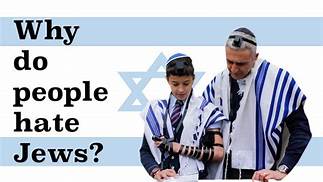



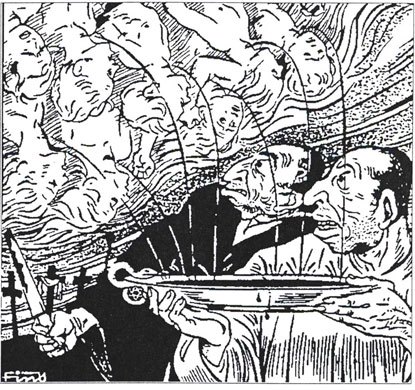



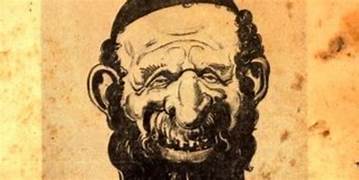

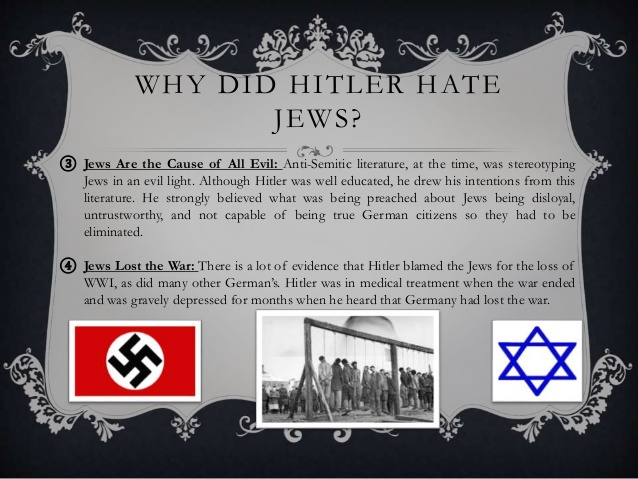








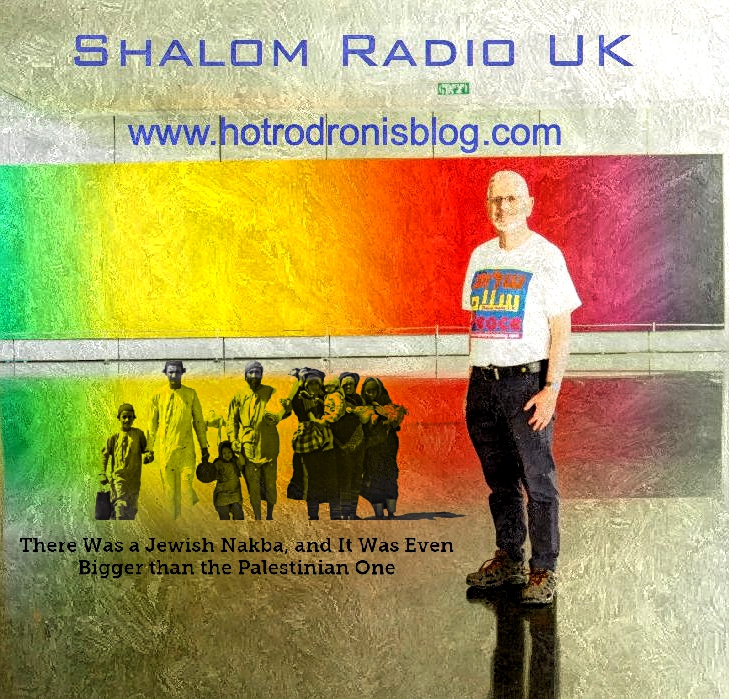 via
via 

.jpg)


.JPG)