Heritage is a very important part of our lives, and culture. Who are we? Where do we come from, and where are we going? No one ever said that this journey through life would be easy. Each one of us have had to confront huge challenges along life’s way. And the long awaited ‘son of promise, Isaac,’ born to Abraham and Sarah in their old age becomes the biggest test of their faith ever.
In Genesis 22 we have the narrative of the testing of Abraham our Father:
Abraham’s Faith is Tested
1 Some time later God tested Abraham. He said to him, “Abraham!” “Here I am,” he replied. 2 Then God said, “Take your son, your only son, whom you love—Isaac—and go to the region of Moriah. Sacrifice him there as a burnt offering on a mountain I will show you.” 3 Early the next morning Abraham got up and loaded his donkey. He took with him two of his servants and his son Isaac. When he had cut enough wood for the burnt offering, he set out for the place God had told him about. 4 On the third day Abraham looked up and saw the place in the distance. 5 He said to his servants, “Stay here with the donkey while I and the boy go over there. We will worship and then we will come back to you.” 6 Abraham took the wood for the burnt offering and placed it on his son Isaac, and he himself carried the fire and the knife. As the two of them went on together, 7 Isaac spoke up and said to his father Abraham, “Father?” “Yes, my son?” Abraham replied. “The fire and wood are here,” Isaac said, “but where is the lamb for the burnt offering?”8 Abraham answered, “God himself will provide the lamb for the burnt offering, my son.” And the two of them went on together. 9 When they reached the place God had told him about, Abraham built an altar there and arranged the wood on it. He bound his son Isaac and laid him on the altar, on top of the wood. 10 Then he reached out his hand and took the knife to slay his son. 11 But the angel of the LORD called out to him from heaven, “Abraham! Abraham!” “Here I am,” he replied. 12 “Do not lay a hand on the boy,” he said. “Do not do anything to him. Now I know that you fear God, because you have not withheld from me your son, your only son.” 13 Abraham looked up and there in a thicket he saw a ram caught by its horns. He went over and took the ram and sacrificed it as a burnt offering instead of his son. 14 So Abraham called that place The LORD Will Provide. And to this day it is said, “On the mountain of the LORD it will be provided. 15 The angel of the LORD called to Abraham from heaven a second time 16 and said, “I swear by myself, declares the LORD, that because you have done this and have not withheld your son, your only son, 17 I will surely bless you and make your descendants as numerous as the stars in the sky and as the sand on the seashore. Your descendants will take possession of the cities of their enemies,18 and through your offspring all nations on earth will be blessed, because you have obeyed me.”
So, who do you think you are?
You are a human being?
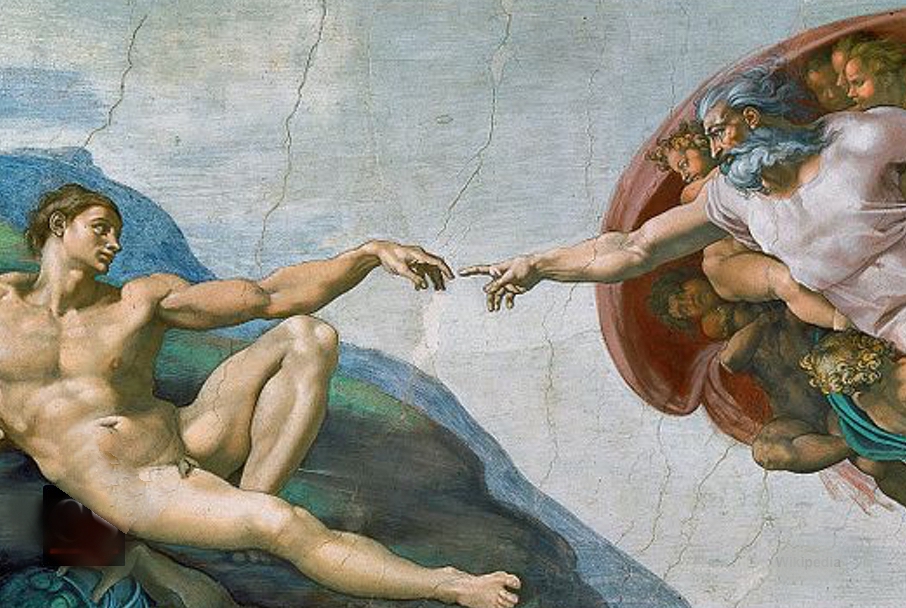
According to the Scriptures we are created in the image of G_D –– that does not mean his physical likeness, but his moral nature and being, i.e., G–D likeness. However, there is an inherent flaw to our character due to the ‘fall.’ Sin entered the world to the disobedience and rebellion of our common ancestors –– Adam, and Eve.
Please make a Donation today towards theRunning Podcast’s Costs:
Pontius Pilate asked Yeshua, “WHAT IS TRUTH?” That selfsame question echoes down through the ages. So, “What do you think?” Well can anyone still be trusted? Truth appears to be in very short supply. Paul Carrack when he was with Mike and the Mechanics wrote Silent Running and he penned these words: Don’t believe the church and state and everything they tell you…
Take the children and yourself And hide out in the cellar By now the fighting will be close at hand Don’t believe the church and state And everything they tell you Believe in me, I’m with the high command
Can you hear me, can you hear me running? Can you hear me running, can you hear me calling you? Can you hear me, can you hear me running? Can you hear me running, can you hear me calling you?
This phrase: Don’t believe the church and state And everything they tell you is a very serious accusation –– So, why can’t they be trusted?
Let’s begin with ‘church:
What Is Good About Church?
What Is Bad About Church?
Where This Leaves Us?
What Is Good About the State and Its Leadership?
What Is Bad About the State and Its Leadership?
Where This Leaves Us
What can we do, if anything when we have dictatorial church and state leadership?
Wake Up — Don’t Be Deceived
Wake up.
“Peace, Peace”—The Cry of False Prophets
Peace is Not the Absence of Conflict—It Is the Presence of Truth
What Awakening Looks Like
Awakening is not rebellion; it is responsibility.
It is not anger; it is clarity.
It is not cynicism; it is wisdom.
False Peace Never Lasts—True Peace Begins With Truth, and Real peace is often born in the very moment when false peace dies.
To the true story you will need to listen to this Podcast!
Apple of My Eye –– By Roni Mechanic –– Please Note: This Poem is Copyright 2025 and may only be briefly quoted.
For fuller use contact the author: mtmi.teaching@gmail.com
The phrase “apple of my eye” has a long and storied journey, glimmering with layers of meaning. In its earliest English use, it spoke of a person or thing cherished above all else, one held in a place of rare affection. The image often refers to the pupil—the small, dark centre of vision—though it was also employed more broadly to describe what is dearest to the heart.
William Shakespeare used it with this sense in the late 16th century. In A Midsummer Night’s Dream, the fairy king Oberon, armed with a magical flower struck by Cupid’s arrow, leans over a sleeping youth and says, “Flower of this purple dye—hit with Cupid’s archery—sink in apple of his eye,” thus sealing a love-bound fate. In Love’s Labor’s Lost, the witty courtier Biron rebukes another with the sharp question, “Do not you know my lady’s foot by the square—and laugh upon the apple of her eye?” In both, the phrase carries the intimacy of a treasured focal point—whether in love, beauty, or desire.
The Focus of the Poem –– Apple of the Eye
In the Bible, however, this phrase takes on a deeper, more tender resonance. In the stately English of the 1611 King James Bible, “apple of my eye” glows like a thread of divine intimacy woven through the Scriptures. It sings in Moses’ desert song, where God finds His people in the waste howling wilderness and guards them as one would protect the most delicate part of sight itself. It rises in the psalmist’s prayer— “Keep me as the apple of the eye”—a cry to be hidden under the shadow of God’s wings. Proverbs utter it as the voice of a father’s counsel: to hold God’s commandments as one would shield the pupil from harm. Lamentations weep it in grief, calling for tears to flow without ceasing from the apple of the eye. And Zechariah proclaims it as a fierce warning: whoever touches Israel touches the apple of God’s eye.
In Zechariah, the phrase shifts: bava ‘ayin. Scholars differ here. Some trace bava to a root meaning “to hollow out,” evoking the eye as a hollowed gateway through which light enters. Others believe it simply means “apple,” thus giving us the English rendering. Yet, whether hollowed gate or fruit, the essence remains: the eye is the most sensitive, most fiercely guarded place. To touch it is to wound the seat of perception.
And so, in Scripture, this image is not of a God who loves from afar, but of a God whose care is as personal way as the guarding of His own sight. His gaze is steady, unblinking, protective. In it, we are not lost among the masses, but reflected clearly, held at the very centre of His vision. We are the little figure in His eye—the one He will not let go.
Apple of My Eye
In most of these verses, the ancient tongue speaks ‘iyshon ayin––
אִישׁוֹן עַיִן–– the pupil of the eye.
‘Iyshon
‘Iyshon—darkness, shadow— yet more than shade, it whispers of the little man, the tiny figure mirrored in another’s gaze.
This is no idle flourish— but the portrait of nearness: to be the little man in G_D’s own eye, so close, so beloved, that His gaze holds your image, and His sight cradles your soul.
He Speaks to His Beloved Ones
The “apple of my eye” glows— a thread of divine intimacy woven through the ancient scrolls.
Tales told long past— flowing from the heart of G_D: “You are my beloved ones, now, and throughout eternity.
Sacred, not only to behold, but to tenderly nurture, and to hold.
The light of My gaze rests on you, as the pupil to the eye, guarded from harm, kept in the depth of My sight.
No shadow shall hide you, no hand shall tear you away— for you are the little figure mirrored in My vision,
The treasure of My soul— in all your struggles, past, present, and yet to come, My eyes will ever watch for you.
Foes
Though the foe would tear you away from My tender care, I will stand, shield in hand, warding them off–– with a jealous, protecting strength.
You are My beloved— the apple of My eye. No one shall pluck you from My mighty grasp, nor dim the gaze that holds you close.
Moses’ Song
It sings in Moses’ desert song, where G_D finds His people in the waste howling wilderness, and guards them as one shields the tender centre of sight.
Hunger, thirst, a scorching sun— wild beasts, and those of evil intent, though each in turn seeks to wound or destroy you, I am there with you, now, and always— shadow in the heat, water in the parched land, fortress in the storm.
Guardian
Guardian of your soul, ever watchful, ever near, committed to keep you whole— body, soul, and spirit— now, and always.
Fear not for I am with you,”
the treasure of My soul— in all your struggles, past, present, and yet to come, My eyes will ever watch for thee.
The Psalmist
It rises in the psalmist’s plea: “Keep me as the apple of the eye,” a cry for shelter— beneath the shadow of His wings, where the heat of the day cannot scorch, nor the terrors of the night draw near.
It is the voice of One who knows that the pupil is the most guarded place, the place where sight begins, and that to be there, held within God’s gaze, is to be wrapped in a love of Thee, both fierce and tender.
There, no arrow can pierce, no darkness can blot out the light, for His wings are broad, and His watch unending, and the one kept there is forever safe.
Proverbs
Proverbs speaks it as a Father’s voice, urging the keeping of His commands as one would guard the pupil from the sting of harm.
Sayings of old, spoken and spoken again, for all to hear— a still small voice, a whisper in the listener’s ear, a steady gaze meeting the eye, reassuring, confident, to uphold–– and to guide along life’s way.
Stay in My sight, remain in My regard— apples of golden delight, the apple of My eye.
Lamentations
Lamentations weep––
its tears unending,
flowing like rivers, falling from the apple of the eye. Though weeping may endure for a time, assurance is given, clearly declared:
“I am with you always— in sorrow and in suffering, even in the face of loss and death.
Did I not say, ‘I will never leave you nor forsake you’?”
“I hate you, despise you, wish to see you slain, and dispossessed!”— is this not the bitter, often-repeated cry of Israel’s foes through the long corridors of time?
5785
Five thousand, seven hundred, and eighty-five years she has endured—[she=Israel] banished from her land, exiled to the ends of the earth, hounded and hunted, slaughtered by tyrants whose names fade like dust. Yet she still stands, her heartbeat steady, her lamp still burning in the night.
What is her secret? What unseen hand has shielded her from the graveyard of nations?
The Prophet
Bava ‘ayin—הָוָה עַיִן— hollowed and formed, a vessel made to receive the light.
And the word of the Lord through Zechariah still thunders across the hills: Touch Israel, and you touch the apple of My eye.
Thus says the Lord— a warning set for all generations, a promise sealed with fire: He who keeps Israel shall neither slumber nor sleep; the gaze of the Holy One shall not turn away, but shall watch her forever.
The apple of My eye— you are Mine, My beloved, and I am yours.
As a lover whispers, with fierce and tender devotion to the one his soul adores, so does Hashem speak to all who love Him:
“I will never leave you, nor forsake you. Not in the fire, nor in the flood, not in the shadow of death itself.
[It is my intention that through this ending I want the poem to breathe more like a psalm or prophetic reading that closes a liturgical work].
Apple of the Eye:
Refrain: Guard us, O L_RD, as the apple of Your eye.
Leader: Apple of the Eye—kept as the shadow of His wings, Congregation: Hidden in the secret place of the Most High. All: Guard us, O L_RD, as the apple of Your eye.
Leader: Guarded from the arrow that flies by day, Congregation: Preserved from the terror that walks in darkness. All: Guard us, O L_RD, as the apple of Your eye.
Leader: He found thee in the waste howling wilderness, Congregation: He led thee about, He instructed thee. All: Guard us, O L_RD, as the apple of Your eye.
Leader: He kept thee as the apple of His eye, Congregation: As an eagle stirs her nest and spreads her wings, He covers thee. All: Guard us, O L_RD, as the apple of Your eye.
Leader: Under His feathers thou shalt trust, Congregation: His truth shall be thy shield and buckler. All: Guard us, O L_RD, as the apple of Your eye.
Leader: Wisdom binds His words upon thy heart, Congregation: As one would guard the pupil from harm. All: Guard us, O L_RD, as the apple of Your eye.
Leader: Lament weeps without ceasing, Congregation: Tears falling from the apple of the eye. All: Guard us, O L_RD, as the apple of Your eye.
A Clear Vision
Leader: My gaze will hold you, My hand will keep you,
as the apple of My eye.”
Let every breath bear witness, and every heart resound with the song of the One who will never let go.
Congregation: Amen— and Hallelujah!
Resources available to assist you in your desire to gain a clearer understanding of Messianic Jewish Perspectives:
This the link that leads to my PayPal account, where you can easily support my blog and the content that I create. Your contributions help me to continue producing high-quality articles, engaging stories, and insightful reflections. Every donation, no matter how small, makes a significant difference and allows me to invest in better resources, conduct more research, and share even more valuable information with all of you. I appreciate your support and dedication to my work, and together, we can create a thriving community around the topics that matter most to us. Thank you for considering a contribution to my blog!
Shalom Radio UK is sponsored by MTMI
It is an independent internet based radio programme
MAKE A CHARITABLE DONATION TOWARDS THE BLOG’S RUNNING COSTS:
https://paypal.me/hotrodronisblogcom is the link that leads to my PayPal account, where you can easily support my blog and the content that I create. Your contributions help me to continue producing high-quality articles, engaging stories, and insightful reflections. Every donation, no matter how small, makes a significant difference and allows me to invest in better resources, conduct more research, and share even more valuable information with all of you. I appreciate your support and dedication to my work, and together, we can create a thriving community around the topics that matter most to us. Thank you for considering a contribution to my blog!
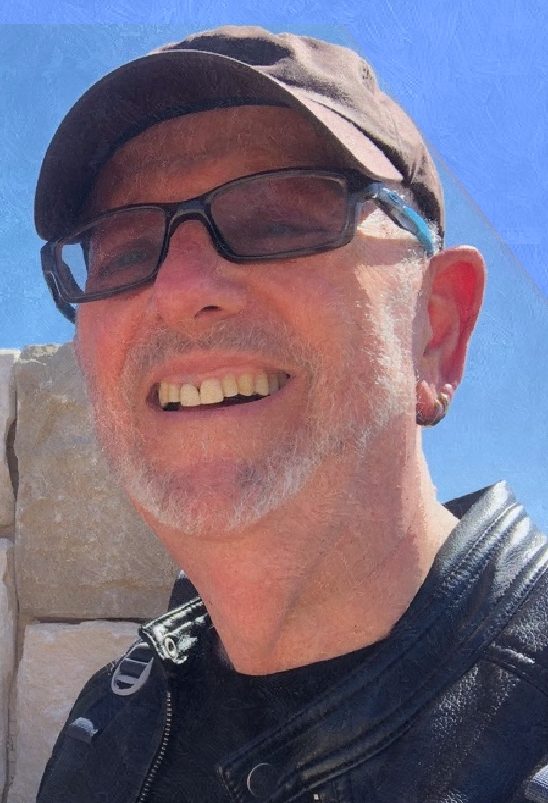
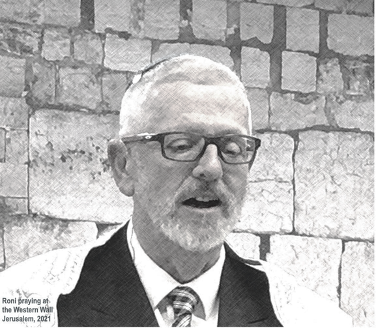
Roni at the entrance to the Israel Museum –– Jerusalem – 2023
Exploring Expressionistic Painting:WHAT LAYERS OF PAINT SAY…
CLICK ON THE LINK BELOW TO LISTEN TO THIS PODCAST:
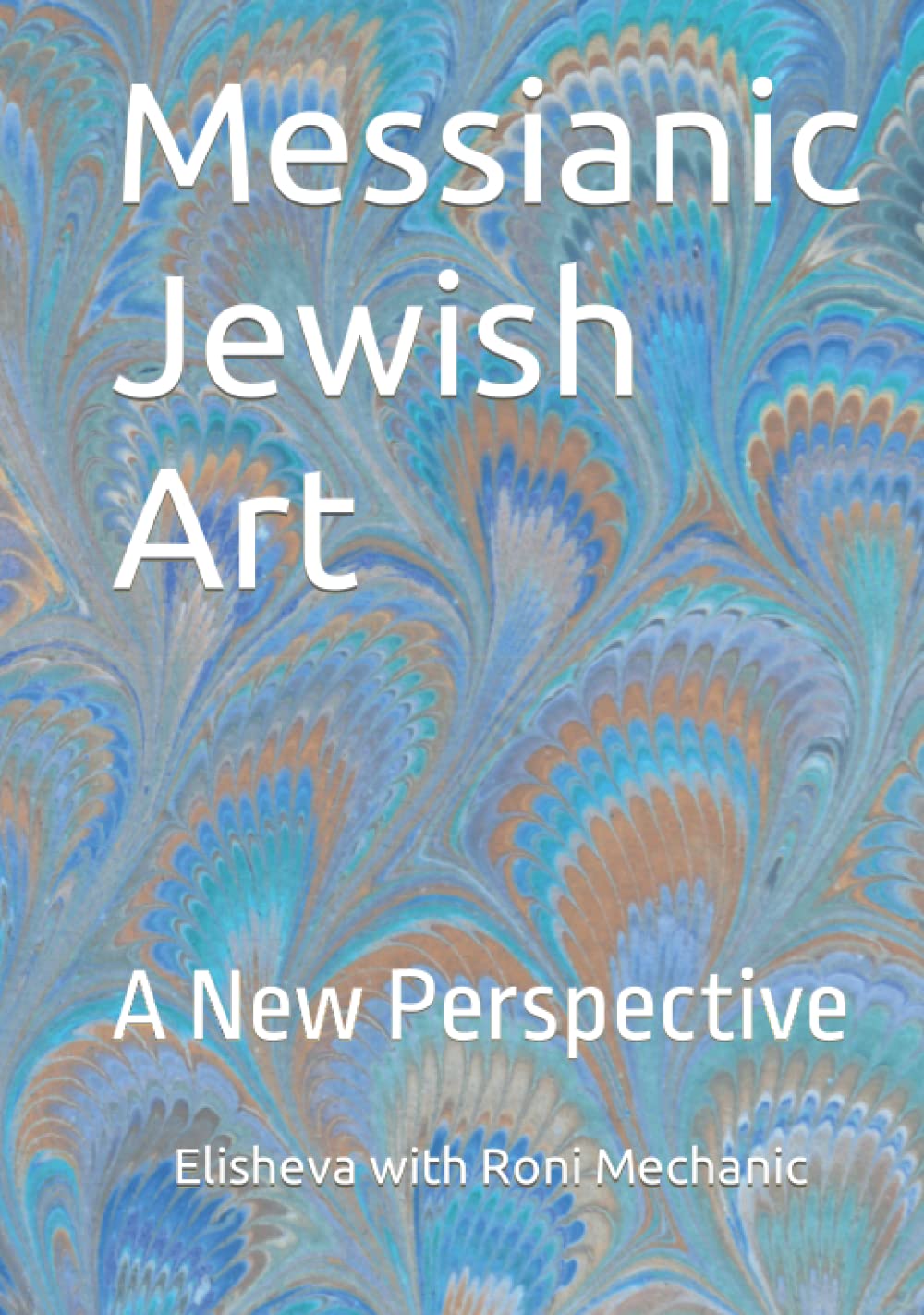
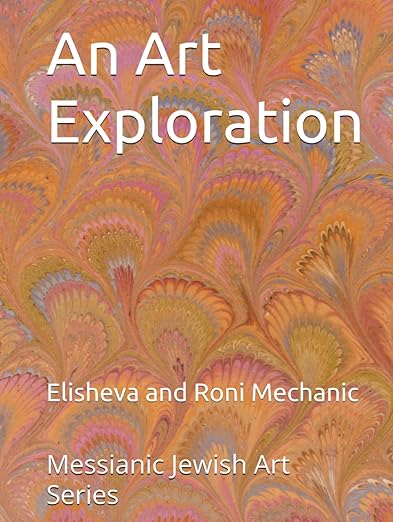
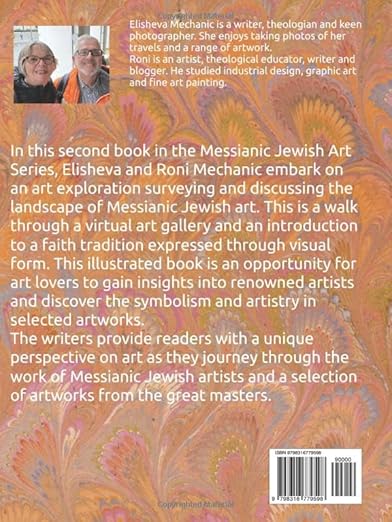
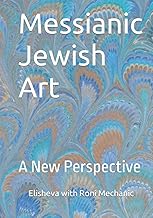
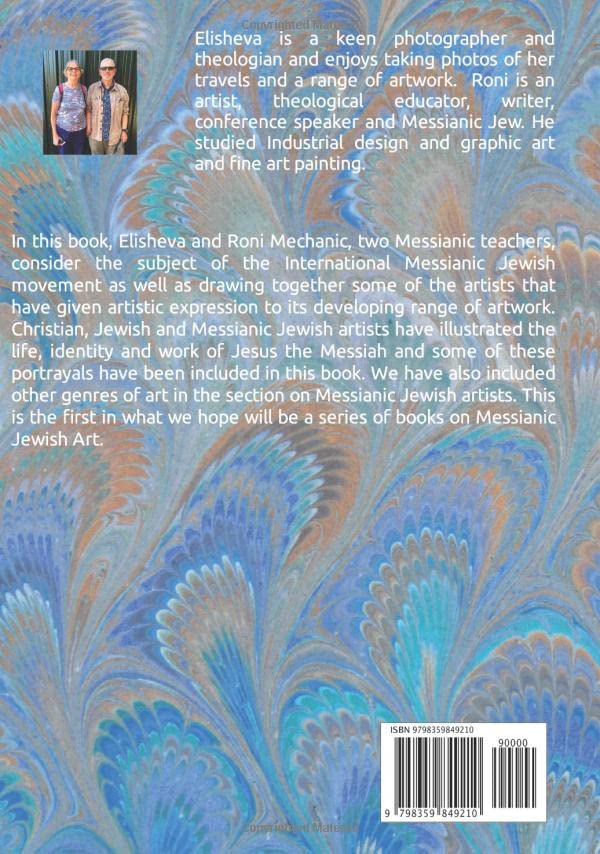
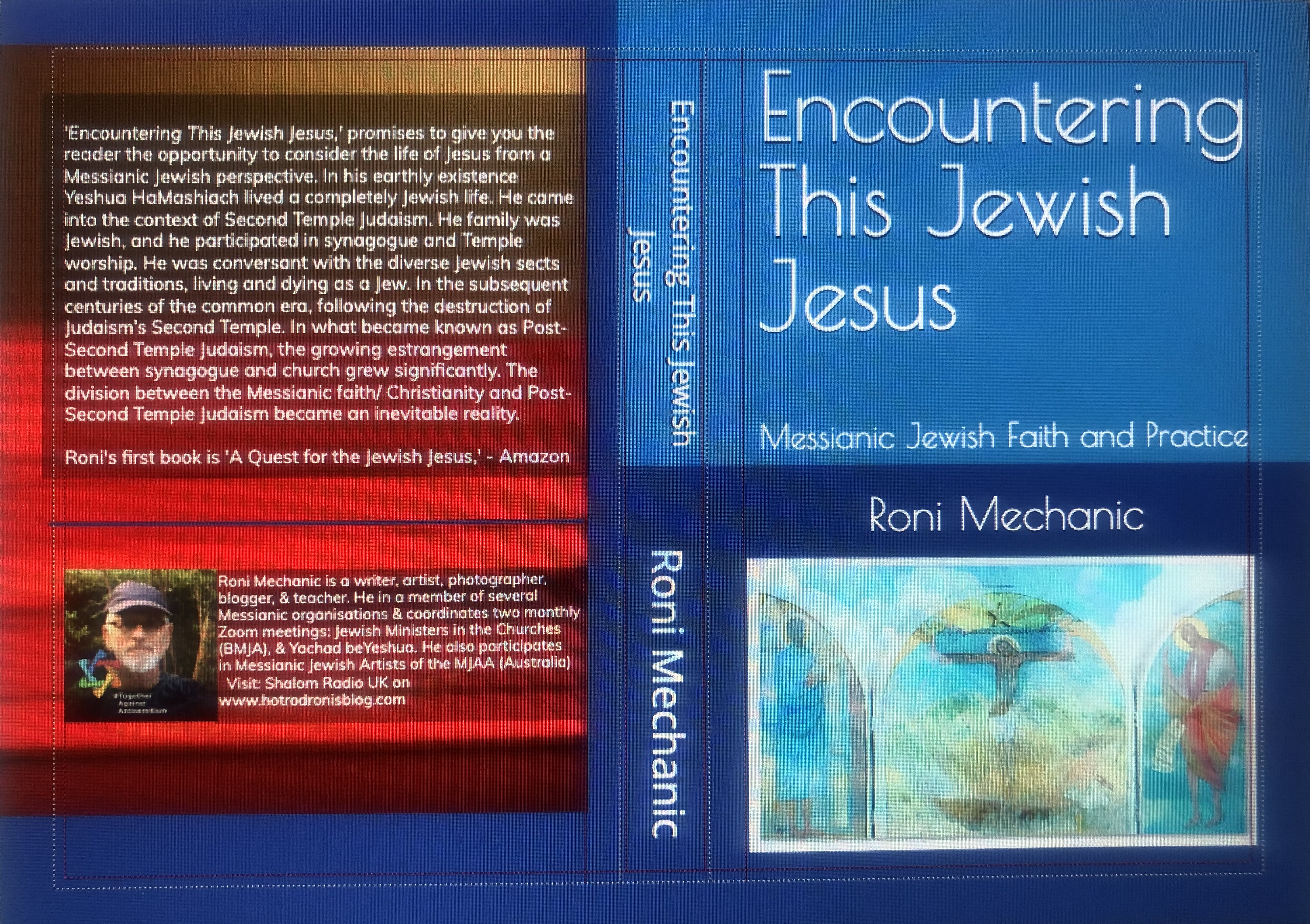
ART BOOKS PUBLISHED BY ELISHEVA AND RONI MECHANIC — Available from AMAZON
Marc Chagall –– Israeli Artist
Bring Them Home!
The Wise Seek Him –– by Roni Mechanic, 2025 –––––––––––––––––––––––––––––––––––––––––– Notice that the forth person in this painting is me. I am being inquisitive and exploring what the three wise men are endeavouring to do.
How Helen and Roni gave expression to the tragic loss of the 40 children murdered by Hamas on 7th October, 2023
Helen painted the images of children floating up into the sky. While Roni depicted grave stones as symbols of the murdered children. These stones are also seen floating heavenwards. Included are threeCyprus trees whichare often associated with burial grounds, as viewed in Roni’s painting.
Helen Burman, 2023
Roni Mechanic, 2023
What the Layers of Paint Say

By Roni Mechanic –– Inspired by recent abstract paintings.

Introduction

Colour sings,
shapes speaks,
and lines are more
than what the eye beholds—
spirit traces echoes of the unseen.
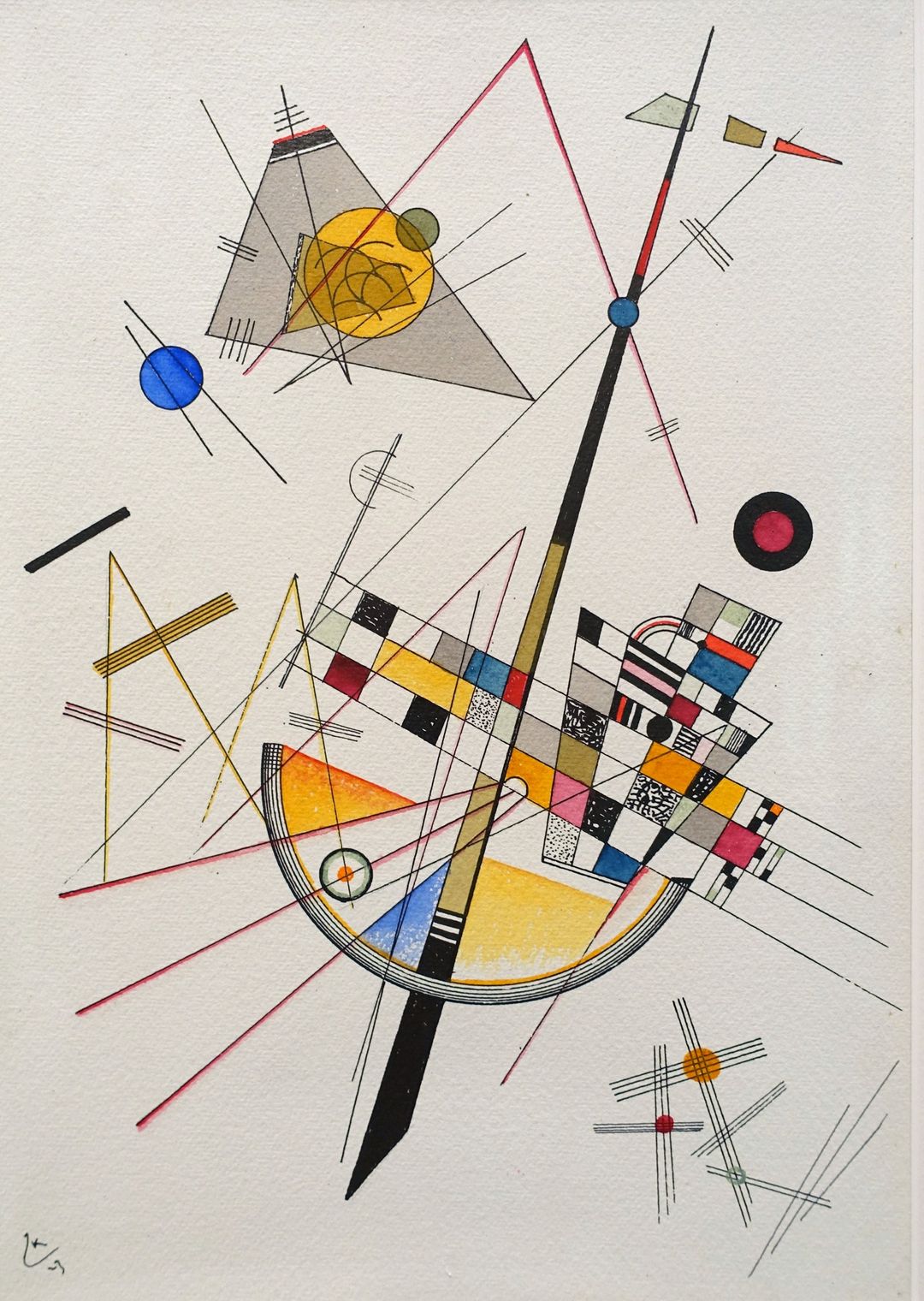
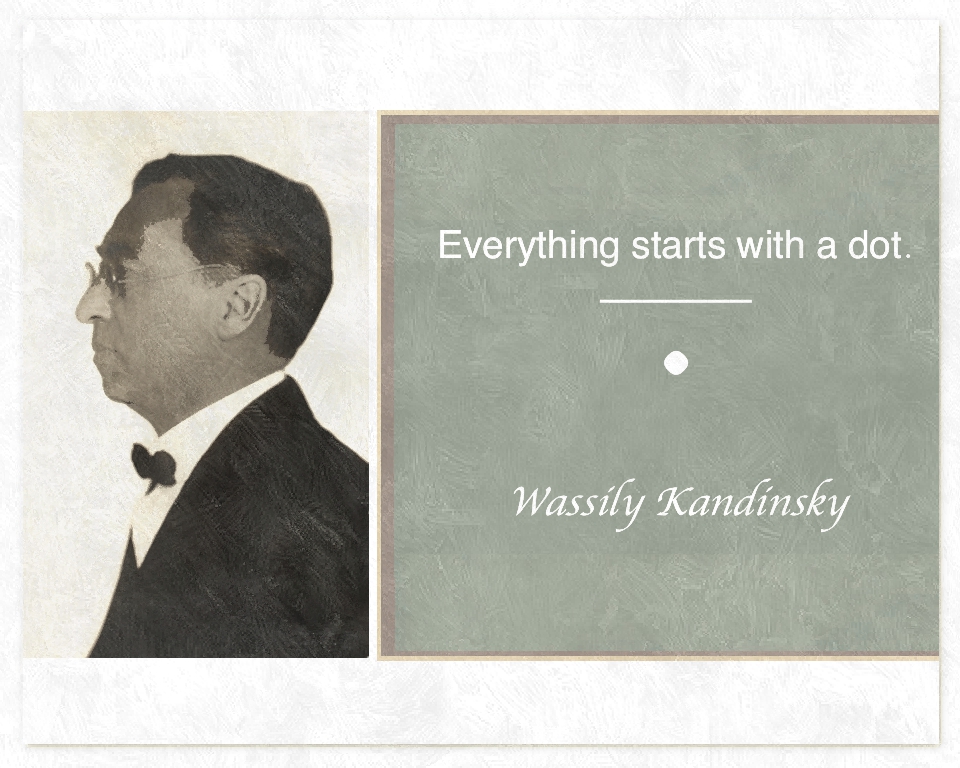
Wassily Kandinsky once glimpsed this truth.

So too the artist paints—
not merely to show,
but to sound,
to let colour pray,
to let praise breathe.

Each canvas becomes a quiet altar,
each stroke, a whispered psalm—
layered with longing,
with wonder,
with the hush of the holy.

Each gesture is a note,
each hue a chord;
the canvas a silent symphony—
layered, rhythmic,
poem and pulse,
alive with something,
just beyond the visual.

Like music felt
through the body’s skin,
the colours move.

They breathe,
they weep and dance—
an abstract language
for the soul.

Layers of Sound

There are voices beneath the surface,
beneath the brush and broken line—
not loud,
but present,
like breath caught in linen,
like Scripture sung in the dark.

A colour trembles.
Another answers.
They speak in tongues—
of saffron, umber, and indigo—
ancient arguments
resolved in silence.

From dust and spirit,
the tapestry is stretched—
threads of mystery,
tangled yet divine.

In the chambers of time,
the pulse of nations stirred.
Two heartbeats in one womb,
two paths divided by a single cry.

Love and rivalry,
covenant and exile—
entwined like roots
beneath ancestral soil.

The breath of prophecy passed
through a mother’s pain—
Rebekah, torn by the war within,
felt the future shift inside her womb:
a tremor that would echo
through the centuries.

Still today,
in city streets and silent prayers,
in borderlands and broken altars,
the ancient wrestling continues.

The Artist’s Vision

The Creative Master made a choice,
bringing forth sons and daughters—
not merely of flesh,
but of calling,
of covenant,
of light drawn from the womb of chaos.

Jacob and Esau—
an eternal struggle,
born in silence and strife.
Rebekah bore more than children that day;
she gave birth to a tension
that shaped the world.

Jew and Arab—
twin destinies entwined—
still carry the weight
of ancient blood and blessing.

Letters emerge—
ancient Chaldaic, Paleo-Hebrew,
and Aramaic,
fragments of Babel’s broken tower:

Hebrew, Arabic, Greek, and Latin.
Not merely differing tongues,
but diverging destinies
written in script.

Hebrew curves,
Roman bones,
Greek questions carved
in broken stones––
lines of faith and empires,
half-hidden, half-revealed,
as if the Word were still being written
in the dust of human longing.

Shattered pottery shards, mosaic fragments—
like lost memories echoing from the past.
Each piece a whisper
of what was spoken.
Each crack a vein of silence
holding meaning.

These remnants speak
in tongues of stone and flame,
where history bleeds into symbol,
and brokenness becomes design.

Alexander, Antiochus, Mattathias Maccabee—
we watched empires rise,
then fall to dust and sea.
Hebrew curves, Roman bones,
Greek thoughts etched into exiled stones.

O seeker, sift the grains with care—
beneath your feet, lies buried there.
Lift your eyes, the thread still shines
from ancient cloth to end of time.

Yeshua, royal, priestly strand,
God’s own binding in the land.
His wounds are knots that tie and hold
the Torah, Spirit, and the gold.

And as the layers thickly paint,
each story worn, both bold and faint,
so too his presence, hidden deep,
awaits the ones who seek and keep.

The veil peels back, the colours blend—
a sacred thread that has no end.
Within the layers, truth is spun:
Yeshua—G_D’s eternal Son.

In the artist’s hand,
they find new order—
not to erase the fracture,
but to honour it.

To make of the broken whole,
and of the scattered, song.
Not Pictures, but Places
These are not pictures.

They are places—
maps of inner terrain
where the soul remembers
what the mind has forgotten.
Icons dissolve into abstraction,
but the holy remains.

A gesture becomes a sanctuary,
a texture, a psalm.
In every layer:
a question.
In every mark:

A memory.

In the space between:
the whisper of the Spirit
hovering,
still creating.

An invisible creative Guiding Hand—
the One who spoke,
and there was light;
form emerging from the void unknown—
Tohu Vavohu,
without form and void.

Just as the artist
grasps for those creative sounds,
so do we—
with brush, palette knife,
sculptor’s clay, or chisel—
tackling blank canvas, clay and wood,
fashioning not from certainty,
but from yearning.

From silence that longs to speak,
from chaos seeking order,
from shadows aching for the light.

We echo the First Artisan—
breathing life into dust and fiber,
calling forth structure from texture,
meaning from gesture,
and hope from hue.

Each mark becomes an offering,
each stroke, a fragment of prayer,
each layer, a testament
to the mystery of being,
and the mercy of becoming.

For what is creation
if not surrender—
to the unseen voice,
to the Spirit hovering still
over waters––
deep and untamed?

To Touch the Hem

For the artist, for the worshipper:
And so, we paint, sculpt, write—
not merely to create,
but to commune.

Each gesture,
each stroke of brush or word,
is an act of reaching
toward the unseen—
to touch the hem
of the garment of glory.

Fringes tipped with sky and light,
swaying at the edge of divinity.

Tekhelet Returns

A slender blue thread,
woven with white,
has quietly returned—
gracing the corners
of prayer and cloth,
almost unnoticed,
until it is everywhere.

It crept in softly,
like memory,
like longing finding form—
a whisper of blue sky
against fields of white.

Now it swings
from the tallit’s edge—
a thread reborn.

Tekhelet once lost,
now found––
in the rhythm of fingers
tying sacred knots.

This week we read:

“Speak to the Children of Israel…”
And still the voice speaks,
calling for corners—
marked with covenant.

With the blue of heaven,
the blue of remembering.
What was hidden in time
has returned in colour—
a renaissance of dye,
a revival of meaning.

Not just a thread,
but a promise—
a whisper of redemption
twisting through generations,
binding earth
to sky,
to G_D.

And somewhere,
a woman once reached
through the crowd—
to touch the fringe,
the p’til tekhelet,
and found herself whole.

Layers of Paint Say:

Thread of Heaven––
a thread of blue, sky-breathed and deep,
is woven where the edges sleep—
on garments kissed by desert wind,
a ribbon where the laws begin.

They said, “Remember, do not stray,”
so G_D dyed sky into the clay.
But who could find that holy hue
where tides conceal and time withdrew?

The chilazon, a mystery’s shell,
its dye once sought, untraceable,
rose from depths where secrets sleep,
the sea’s own shade the prophets keep.
Its blood—once hidden, now revealed—
spoke of a covenant unsealed.

So walked he once among the grain,
where sandals stirred the dusty plain.
No one saw the thread he wore—
it lay beneath the flesh he bore.

A hidden Messiah—now unveiled.

What is his name, once long concealed?
Who dares to name the Son of G_D,
the treasure buried in the sod?
A gleam beneath the desert’s hand,
a secret woven through the sand.

Not pearl or gem held in the hand,
but breath unstirred, divinely planned—
a silence speaking through his death,
a whisper stronger still than breath.

Tekhelet lost, now found anew—
not in dye, but what is true.
A thread not sewn on outer seams,
but stitched within prophetic dreams.

Yeshua, royal, priestly strand,
G_D’s own binding in the land.
His wounds are knots that tie and hold
the Torah, Spirit, and the gold.
Lift your eyes, the thread still shines
from ancient cloth to end of time.

And as the layers thickly paint
each story worn, both faint and quaint,
so too his presence, hidden deep,
awaits the ones who seek and keep.

The veil peels back, the colours blend—
a sacred thread that has no end.
Within the layers, truth is spun:
Yeshua—G_D’s eternal Son.

Unveiled

But who will dare to listen?
To behold what once was hidden?

Then, we did not know or see—
but now, with unveiled faces,
we perceive
what was veiled
in paint, wood, and clay.

Drawing near in wonder,
a new sound awaits
those willing to listen.
Ears unstopped,
eyes opened in amazement.

For what was forgotten
is now being declared.
We, with new perception,
see colours bright
illuminating the way—
ahead and beyond.

A hope recreated—
for all to see,
to hear,
and to know.
Amen, and Amen.
Hallelujah!
A scene –– featuring candles and Star of David symbols set against a quaint street in Alghero, Italy, symbolizing remembrance and reflection.
While on vacation together with my wife Elisheva we are staying in the beautiful seaside town of Alghero in the island of Sardinia which is part of Italy.
Besides the Italian people, their food, their drink, and especially their rich culture, we made a fascinating discovery on our visit to the city museum – In the Middle Ages it had a rich history of the Jewish community on this island.
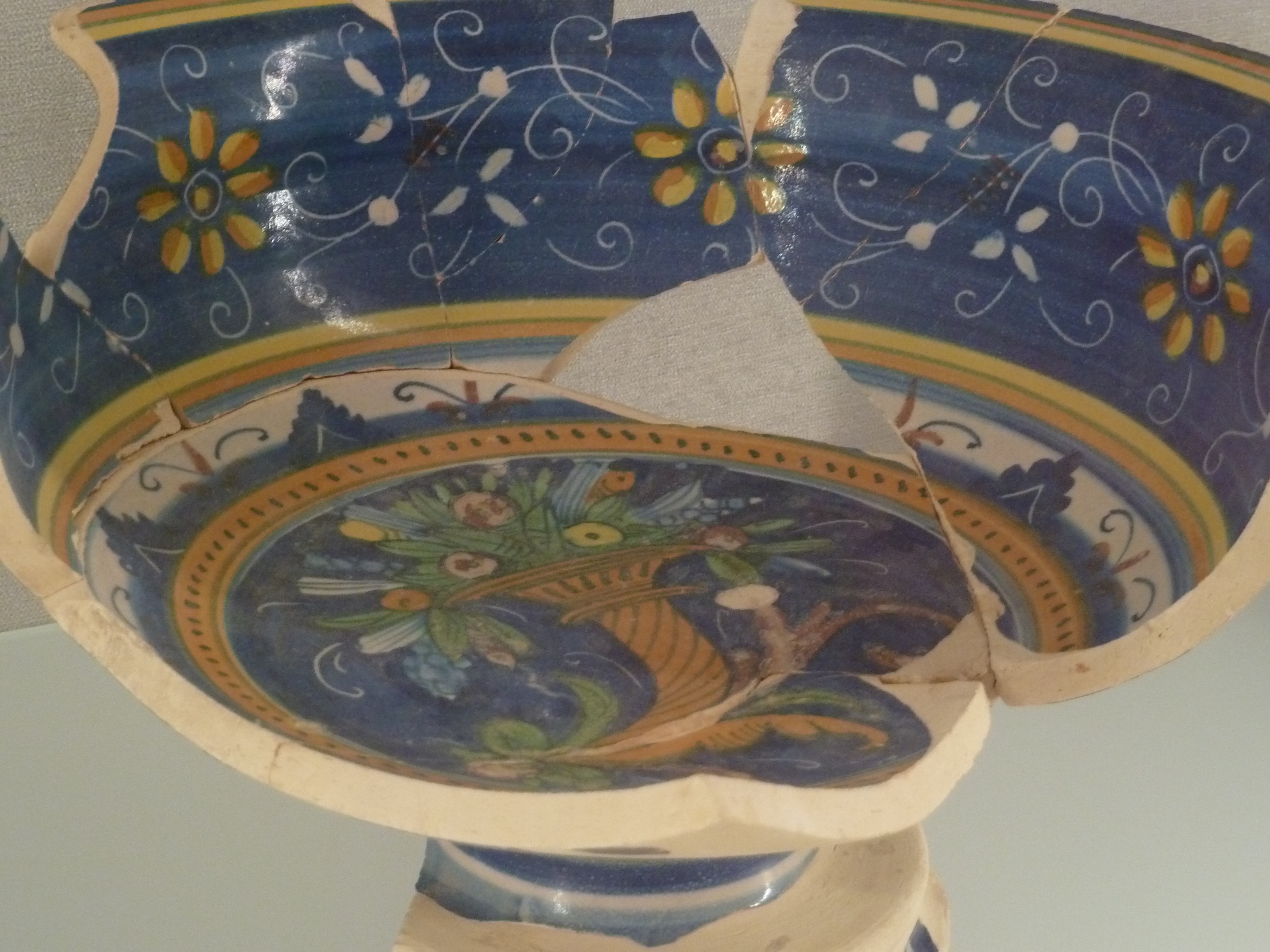
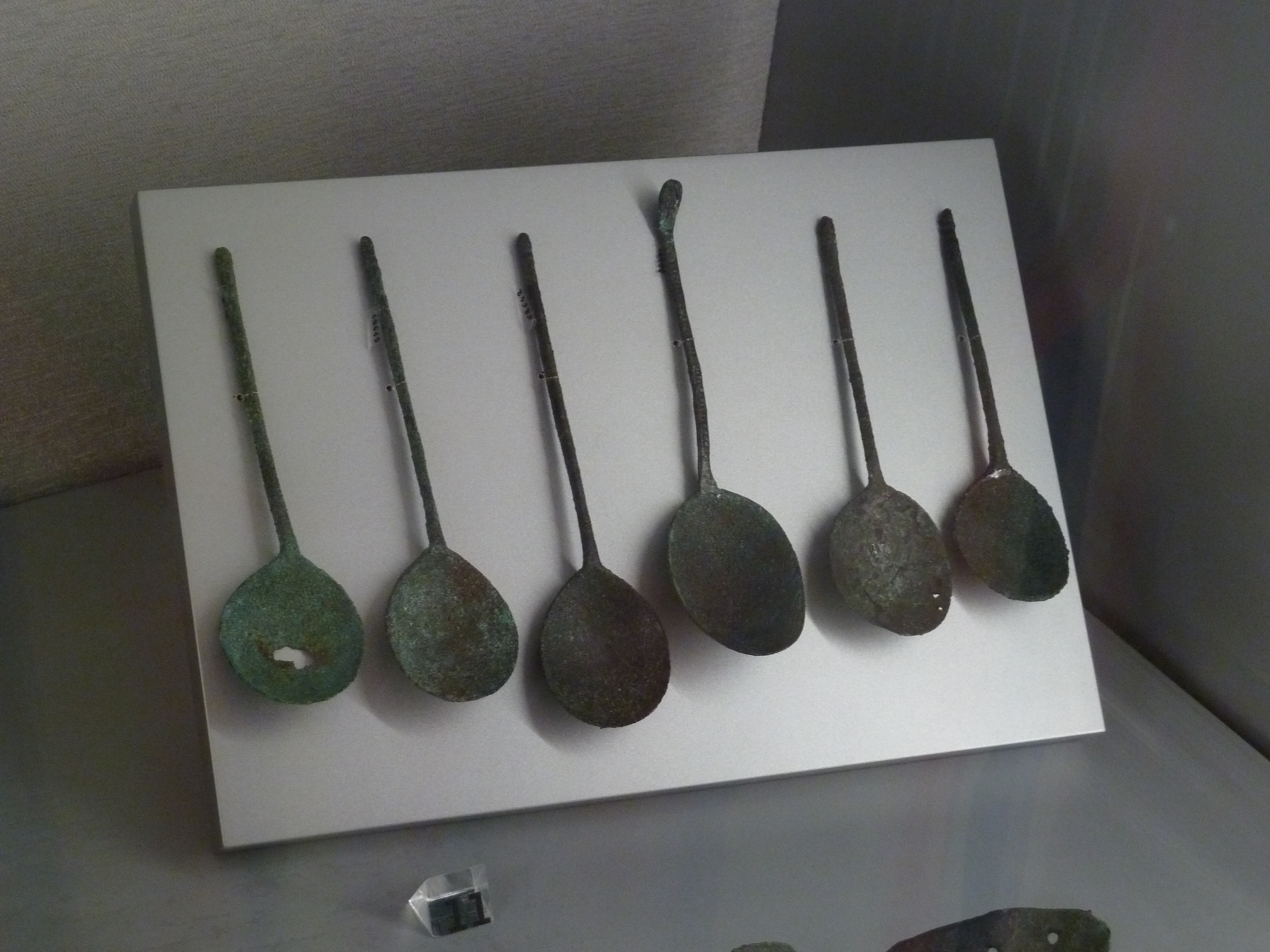
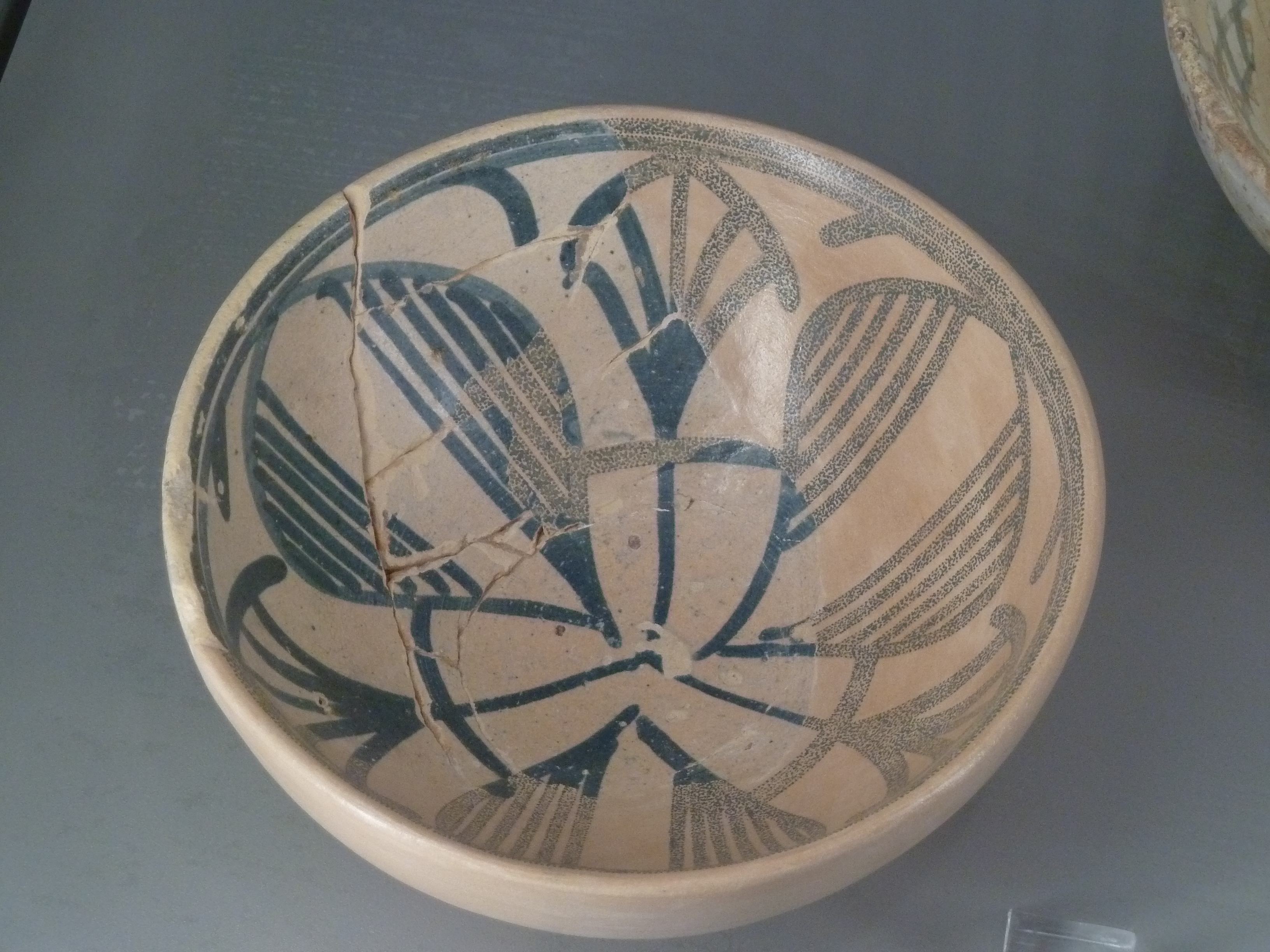
Pottery fragments, and other similar domestic have been found and reconstructed and are now being preserved for all to see.
So Where Have All the Jews Gone?
Sardinia during that period was administered by Spain. So far sogood — the truth be told not ‘so good!’ At that time there was no place in their realm for Jews.–– Exile, conversion, or death.’
Have we not been there before? At the present the Spanish Government is taking an anti-Israel stance which we can only pray will be reversed lest history repeats itself.
I firstly wrote this piece of prose from which I then created a poem following a visit to the Alghero Museum, and Catholic Cathedral and reading a description of a side chapel in remembrance of the cities lost Jews.
Alghero Echoes from the Stones
Kaddish Prayer…
English Version…
May the great Name of God be exalted and sanctified, throughout the world, which he has created according to his will. May his Kingship be established in your lifetime and in your days, and in the lifetime of the entire household of Israel, swiftly and in the near future; and say, Amen. May his great name be blessed, forever and ever. Blessed, praised, glorified, exalted, extolled, honored, elevated and lauded be the Name of the holy one, Blessed is he – above and beyond any blessings and hymns, Praises and consolations which are uttered in the world; and say Amen. May there be abundant peace from Heaven, and life, upon us and upon all Israel; and say, Amen.
He who makes peace in his high holy places, may he bring peace upon us, and upon all Israel; and say Amen.
Originally Posted on and Blogged today 1st May 2025 as the Original audio file had been lost and it has been repaired.
Ruth both discovered, and testifies of God’s love throughout her life:
RUTH NESSIM
During April 2017, while I was visiting Ruth Nessim of Nahariyah, Israel, together with her house guest, Betty (Betina) from Germany, a pastor friend Ralf also visiting from Germany called around and Ruth tells her story of how she came to faith. She relates of how she met Albert “her Jewish husband” and the amazing ministry that they shared in Israel together since the 1970’s.
Following Albert’s death nearly a decade ago, Ruth continues to share her faith, with Jews and Arabs in her beloved Israel. She actively promotes fellowship among the diverse communities in the land and this demonstrates how the dividing wall of hostility can be broken down through the sharing of the Good News. This is surely the basis of how a lasting peace may be achieved in not only Israel, but throughout the world?
Ruth’s example of how as a Jewish believer she heard the call of God, to following him, but also listen to how her life made a difference. She tells of the consequence of yielding to that call, and how many others experience God’s life-giving, life-changing power in their lives through her testimony.
LIKE RUTH AND ALBERT YOU TOO CAN DISCOVER GOD’S LOVE FOR YOU PERSONALLY WHOEVER YOU ARE!
IF YOU WOULD LIKE FURTHER HELP IN YOUR DESIRE TO DISCOVER G-D’S LOVE, PLEASE SEND ME A MESSAGE AND I WOULD LOVE TO BE OF ASSISTANCE.:
email: mtmi.teaching@gmail.com
BRING THEM HOME!
Shalom Radio UK is sponsored by MTMI
It is an independent internet based radio programme
MAKE A CHARITABLE DONATION TOWARDS THE BLOG’S RUNNING COSTS:
This Programme is about Crossing the J-Line: Answers many Questions concerning Jews Believing in Jesus -Yeshua.
CLICK ON LINK TO LISTEN:
Teaching Judaism in Manchester
Some years ago while teaching Contemporary Judaism at Manchester University, UK, I co-taught part of the module together with Rabbi Brian Fox, a Reform Rabbi from Sherston Reform Synagogue. On one of the visits that my students and I took to the synagogue Brian stood in the front of the Ark where the Torah scrolls were kept behind a curtain, he spoke about the J-line.
What you may ask is the J-line?
This question was certainly in all our minds as to what was the rabbi referring?
He went on to explain what he meant: Pointing to a join in the carpet on the floor in the front, and he then said: “Imagine a “J-Line,” or “Jesus-line.” “If you believe in Jesus you can’t be Jewish, for Jews don’t believe in Jesus as their Messiah and remain Jewish.” More particularly, he had me in mind as a Jesus-believing Jew, but more generally, my Gentile Christian theological students though sympathetic to Judaism, can’t think of themselves as being Jewish and should the want to convert they cannot hold onto a belief in Jesus.
Supersessionism
What am I getting at? Supersessionism is the belief that the majority of Christian’s have held to, and largely continue to subscribe to. It is the outlook, and belief that when Jesus came as not only the Jewish Messiah, but the Christ of the Gentiles too, then Judaism became superseded and had fulfilled its purpose and usefulness.
Supersessionism, also called replacement theology and fulfillment theology by its proponents, is the Christian doctrine that the Christian Church has superseded the Jewish people, assuming their role as God’s covenanted people, thus asserting that the New Covenant through Jesus Christ has superseded or replaced the Mosaic covenant. Supersessionists hold that the universal Church has become God’s true Israel and so Christians, whether Jew or gentile, are the people of God.
What are the implications of such a belief for both Christians and Jews? Tough questions that we not only need to confront, but navigate our way through. We can be like ostriches and bury our heads in the sand, or face up to these issues. I choose the latter.
Big problems are created for everyone due to bad theology that has produced two thousand years of misery and suffering for Jews, Jewish believers in Yeshua (Jesus), and the church in general.
Let me explain: In a recent conversation with a Messianic Jewish friend who is the daughter of a Holocaust survivor – She said that in conversation with a senior Orthodox Rabbi who knows that she is a believer, he said: “One of the biggest mistakes we made as Jews was our rejection of Jesus-believing-Jews. We should have kept them as part of the Jewish people.”
This is a profound statement and helps us to realise that when a Jewish person embraces Yeshua as Messiah and Lord, they don’t stop being Jewish. Though the majority of their fellow Jews may want to push them to the margins of Judaism, or worse even exclude the all together, this does not mean that this is the end of the matter.
Rabbi Brian Fox and his J–Line: Is this a false proposition? In other words, when a Jew becomes a Jesus-believing-Jew they don’t stop being Jewish. Neither have they become a ‘convert,’ ‘apostate,’ or ‘a Gentile.’ Yes, there are those Jews who in becoming believers have rejected their Jewish heritage, and they only want to be known as ‘a Christian,’ and repudiate their Jewish background.
Christian Supersessionism: Christian Supersessionism, also known as replacement theology, is the theological view that the Christian Church has replaced Israel in God’s plan and covenantal relationship. This perspective asserts that the promises, covenants, and blessings once given to Israel now belong solely to the Church, with Israel being either set aside or excluded due to their rejection of Jesus as the Messiah.
Key Elements of Supersessionism:
Theological Framework: Supersessionism interprets the New Testament as teaching that God’s covenant with the Jewish people has been superseded by the new covenant established through Jesus Christ.
Fulfillment of Promises: It holds that the promises made to Abraham, Isaac, Jacob, and the nation of Israel are now fulfilled in the Church.
Rejection of Israel’s Unique Role: Supersessionism generally denies or minimizes any ongoing, distinct role for ethnic Israel in God’s redemptive plan.
Variations of Supersessionism:
Punitive Supersessionism: Argues that God has rejected Israel as a punishment for their rejection of Jesus as the Messiah.
Economic Supersessionism: Suggests that Israel’s role was temporary, serving as a “stage” for God’s work until the Church emerged.
Structural Supersessionism: Implies that the structure of biblical theology itself marginalizes Israel, often interpreting the Old Testament primarily through a Christological lens.
Biblical Arguments Used for Supersessionism:
Romans 9-11: Some proponents interpret this passage to mean that the Church inherits the promises made to Israel.
Hebrews 8:13: “By calling this covenant ‘new,’ he has made the first one obsolete.”
Galatians 3:28-29: “There is neither Jew nor Gentile… If you belong to Christ, then you are Abraham’s seed, and heirs according to the promise.”
Criticisms of Supersessionism:
Biblical Critique: Opponents argue that passages like Romans 11 affirm the continued role of Israel, emphasizing that “God’s gifts and his call are irrevocable” (Romans 11:29).
Historical Critique: Supersessionism has been linked to anti-Semitic attitudes and actions throughout history, including fostering hostility toward Jews.
Theological Critique: Many theologians argue that God’s covenants with Israel are unconditional and eternal, pointing to scriptures such as Genesis 12:1-3 and Jeremiah 31:35-37.
Alternative Theologies:
Dual-Covenant Theology: Maintains that God has separate covenants with Israel and the Church, both of which remain valid.
Dispensationalism: Views Israel and the Church as distinct entities in God’s plan, with Israel playing a key role in future eschatological events.
Messianic Judaism: Emphasizes the Jewish identity of Jesus and sees belief in Him as the fulfillment—not the replacement—of God’s promises to Israel.
Relevance Today:
Christian Supersessionism remains a controversial topic in theological discussions. Its implications affect interfaith dialogue between Christians and Jews, eschatology, and the understanding of God’s covenantal faithfulness. Many modern theologians and Christian groups have rejected supersessionism, embracing a more inclusive theology that affirms God’s continued covenant with Israel alongside the Church.
Christian Supersessionism has had profound negative effects on Jews, Judaism, and Messianic Jews throughout history, impacting theology, relationships, and interfaith dynamics. Here is a breakdown of the key consequences:
1. Impact on Jews and Judaism
A. Historical Persecution
Supersessionism created a theological foundation for anti-Semitism in Christian Europe, portraying Jews as a rejected people, cursed for their rejection of Jesus. This contributed to centuries of persecution, including:
Forced Conversions: Jews were often pressured or violently coerced into converting to Christianity under the belief that Judaism was obsolete.
Expulsions and Pogroms: Events such as the Spanish Inquisition and Russian pogroms were fueled by theological hostility rooted in supersessionism.
Holocaust: While not directly caused by Christian theology, centuries of anti-Semitism justified by supersessionist ideas created fertile ground for Nazi ideology.
B. Theological Marginalization
Supersessionism invalidated Judaism as a viable spiritual path, labeling it as “blind” or “stubborn.”
Jewish religious practices, such as observing the Sabbath, dietary laws, and festivals, were dismissed as unnecessary or legalistic.
C. Cultural Stereotyping
Supersessionism perpetuated harmful stereotypes, such as the depiction of Jews as Christ-killers or as spiritually inferior.
These stereotypes alienated Jews from Christian-majority societies and contributed to their social and economic marginalization.
2. Impact on Messianic Jews
A. Identity Confusion
Supersessionism often forces Messianic Jews into an identity crisis. Messianic Jews see themselves as both Jewish and believers in Jesus (Yeshua), but supersessionist theology:
Denies the legitimacy of their Jewish identity by claiming the Church has replaced Israel.
Pressures them to abandon Jewish practices, often labeling them as unnecessary or “too Jewish.”
B. Marginalization by Both Communities
From the Jewish Community: Many Jewish communities reject Messianic Jews as “traitors” for believing in Jesus, viewing them as complicit in supersessionist theology.
From the Church: Some Christian groups pressure Messianic Jews to assimilate entirely into Christian culture, rejecting their distinct Jewish identity.
C. Suppression of Jewish Expression in Worship
Messianic congregations often face resistance from non-Messianic churches when incorporating Jewish elements into worship, such as:
Using Hebrew liturgy or symbols (e.g., tallit, menorah).
This can lead to a loss of cultural and spiritual heritage among Messianic Jews.
3. Hindrance to Jewish-Christian Reconciliation
A. Erosion of Trust
Supersessionism has damaged trust between Jews and Christians, making meaningful dialogue difficult.
Many Jews view Christianity with suspicion, associating it with centuries of persecution and theological hostility.
B. Barriers to Understanding
By dismissing the continued relevance of Israel and Judaism, supersessionism obscures the Jewish roots of Christianity.
This limits Christians’ understanding of the Bible in its original Jewish context and alienates them from the richness of Jewish theology and tradition.
C. Stifling of Mutual Respect
Supersessionism creates a hierarchical relationship where the Church is seen as spiritually superior to Israel. This hinders interfaith relationships, as Jews are often viewed as objects of conversion rather than as partners in theological dialogue.
4. Broader Effects on Theology and Practice
A. Eschatological Confusion
Supersessionism undermines the biblical promises regarding Israel’s future role (e.g., Romans 11, Jeremiah 31:35-37). It erases hope for the restoration of Israel as part of God’s redemptive plan.
B. Loss of Jewish-Christian Unity
The early Church was deeply rooted in Jewish identity and practice. Supersessionism contributed to the separation of Christianity from its Jewish foundations, leading to a loss of unity and shared mission between Jews and Gentiles.
Examples of Recovery and Hope
Despite the damage caused by supersessionism, many movements and theologians today are working to repair the harm:
Messianic Judaism emphasizes the fulfillment of Jewish identity in Yeshua, reclaiming Jewish practices as integral to faith.
Post-supersessionist Theology rejects replacement theology, affirming God’s covenant with Israel while embracing the Church’s inclusion.
Jewish-Christian Dialogue is growing, fostering understanding and healing between communities.
Please make a charitable donation towards the running cost of this blog:
When we talk about “Times an Seasons.” it can have wide implications – “Times and seasons.” It’s a phrase often spoken with reverence, a simple expression with profound implications. On the surface, it may seem to mark the natural flow of days, months, and years—the shifting from summer’s warmth to winter’s chill, the quiet rhythms of planting and harvest, or the inevitability of sunrise and sunset. But beneath this poetic veneer lies a concept that is far deeper, one that has shaped human understanding, shaped civilizations, and defined personal journeys.
“Times and seasons” speaks not only of the passage of time but of the appointed moments in our lives—those critical junctures where events align, where decisions are made, and where destinies unfold. It calls us to consider the timing of things, not merely as a function of the clock or calendar, but as a divine orchestration, a pattern we often perceive only in hindsight. In the biblical tradition, this phrase is loaded with spiritual significance. The writer of Ecclesiastes declares that “to everything there is a season, and a time to every purpose under heaven.” These words remind us that life unfolds according to a rhythm and plan that is often beyond our control or comprehension. There are times for sowing and times for reaping, moments of joy and seasons of grief, and each one has its place in the grand narrative of existence.
But “times and seasons” also invites us into reflection on the wider implications—on history, on culture, and on our own personal stories. It challenges us to consider the shifts and turning points in the world around us. What season are we living in, not just individually, but as a community, a nation, or even humanity itself? Is this a time for building or for tearing down? A season of peace or a season of upheaval?
On a personal level, it can help us frame our own experiences. We all go through seasons, times when things fall apart and times when they come together, times of clarity and times of confusion. Recognizing the season we are in helps us respond wisely—whether by waiting patiently in winter’s stillness or by acting boldly in summer’s abundance.
Roni at entrance to Israel Museum, Jerusalem
Roni cooking up a storm
Click on this Link to Listen this Programme:
Happy New Year!
The implications of these ideas ripple out even further. For those who believe in divine sovereignty, the phrase serves as a reminder. We are not the ultimate masters of time. Seasons come and go, often without our consent. Yet, even in the face of this lack of control, there is a hope. This hope is embedded in the idea of seasons. They change. The cold of winter does not last forever; the dryness of drought gives way to the rains. Just as nature cycles through its phases, so too do our lives and the world around us.
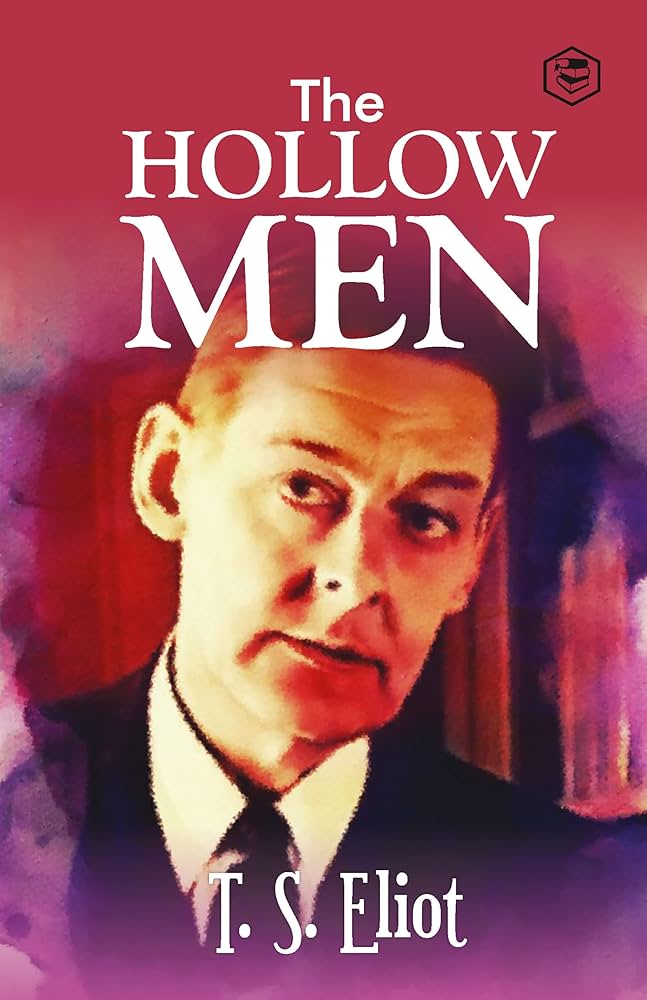
In a world that often demands instant results and constant progress, “times and seasons” urges us to embrace the process. It encourages us to trust the unfolding and find meaning in every phase. It is a recognition that the seasons we pass through—individually and collectively—are not random. They are part of a larger story, one in which every moment, every transition, has purpose. T. S. Eliot focuses on despair in poems like The Waste Land and The Hollow Men. This focus reflects his deep engagement with the cultural, spiritual, and existential crises of his time. It also showcases his own personal struggles. Here are several reasons for this focus:1.
Cultural and Historical Context
2. Philosophical Influences
3. Personal Struggles
4. Religious Quest
5. Themes in The Waste Land and The Hollow Men
6. T.S. Eliot’s Ash Wednesday (1930) is a deeply personal and spiritual poem, marking Eliot’s turn towards Christianity after his conversion to Anglicanism in 1927. It reflects his struggles with faith, doubt, and redemption, encapsulating themes of spiritual renewal and the tension between worldly attachments and divine aspirations.
The poem is structured into six sections, weaving fragmented imagery, liturgical language, and a meditative tone. It explores the journey of a soul turning away from despair and secular distractions, yearning for spiritual transformation and divine grace. The “Ash Wednesday” reference ties to the Christian observance of repentance and mortality, emphasising the soul’s need for humility and hope in the face of human frailty.
Eliot’s use of symbolism, paradox, and allusion creates a complex and layered work that invites contemplation on the challenges and rewards of faith.
6. Symbolism of Despair
Eliot’s obsession with despair is not merely a fixation but a tool to explore the human condition. He presents despair in its starkest form. This approach forces readers to confront the emptiness of modern life. It leads them to consider the possibility of renewal, whether through faith, art, or human connection.
Eliot explores despair through several angles. It results from his historical moment, philosophical influences, personal struggles, and spiritual quest. His poetry serves as both a diagnosis of and a response to the crises of his time.
This timeless truth is significant in various ways. It may be seen through a spiritual, philosophical, or practical lens. It reminds us to align ourselves with the rhythms of life and time. We should embrace them rather than resist them. Seasons will come and go, but how we engage with them defines the legacy we leave behind.
What do we make of the expression: “Now is God’s appointed time for me, and You?” The phrase is personal and universal. It invites us into a deeply meaningful narrative. It is a moment pregnant with meaning, poised between divine providence and human response. The speaker identifies God’s eternal plan converging with the present moment’s immediacy. This is a kairos — the sacred intersection where time and purpose meet.
Imagine a traveler on a journey, worn and weary, pausing at the edge of a river. The path they have walked is full of twists and turns. There are triumphs and regrets. Yet they stand now before an unseen bridge. Only faith can reveal this bridge. The traveler senses a voice, still and small yet unmistakably commanding: Now is the time. The words do not thunder from the heavens; rather, they resonate within, like a melody long forgotten but instantly remembered.
In this moment, the traveler realizes the truth. God’s appointed time is not a distant promise. It is not a future hope. It is here, now, demanding a response. It encourages the traveler to step forward. The traveler must trust that the unseen bridge will hold. They must embrace both the uncertainty and the calling.
But this declaration, “Now is God’s appointed time,” is not solitary. It includes “You.” The phrase is a reminder that divine purpose is never lived in isolation. It suggests a shared calling, a communal moment of reckoning. The “You” could be a friend, a stranger, a congregation, or even the collective human family. It acknowledges that God’s timing is relational, inviting others into the story of faith, repentance, renewal, or action.
In this narrative, the phrase becomes both a challenge and a comfort. It challenges us to recognize the urgency of the present. We need to awaken to the reality that God’s timing is not measured by human clocks. It is measured by the alignment of divine intention and earthly opportunity. It comforts us with the assurance that this moment is not random—it is purposed. God has orchestrated this time for transformation, for stepping into a destiny that is uniquely ours yet intertwined with others.
So, what do we make of this expression? We see it as a call to action and trust. It reminds us that God’s purposes unfold not in abstract futures but in the living, breathing now. It invites us to live fully present. We should be aware that this moment, though fleeting, is eternally significant—for me, and for you.
Prophet Phillip Banda
Prophet Philip Banda, founder of Impact for Christ Ministries (IFCM), focuses on faith. He emphasizes healing in his teachings. He also stresses a strong devotion to prayer. He also expresses a particular love for Israel and the Jewish people. Many of his teachings align with Pentecostal and charismatic Christian beliefs. However, several factors could raise questions about their orthodoxy. This depends on specific doctrines he promotes and practices within his ministry.
Factors to Evaluate
Emphasis on Healing and Prophecy: Pentecostal and charismatic movements often emphasize prophecy, miracles, and healing. While these are biblical, excessive focus or deviation from scriptural boundaries (e.g., elevating the prophet above Christ or Scripture) could lead to doctrinal concerns.
Public Teachings: It’s important to examine his public sermons and writings for clarity and alignment with Scripture. Are they Christ-centered, rooted in the Bible, and focused on repentance, grace, and the gospel?
If you have access to specific teachings or doctrinal statements from Prophet Philip Banda, please share them. I can help analyze them for alignment with orthodox Christian theology.
The teachings and ministry of Prophet Philip Banda at Impact for Christ Ministries (IFCM) align with several core aspects. These aspects are part of orthodox Christian doctrine. This conclusion is based on the available information.
Salvation by Grace through Faith:While specific statements on salvation are not detailed in the provided sources, the ministry’s mission to “proclaim the Kingdom of God by preaching the Gospel of the Lord Jesus Christ through the power of The Holy Spirit” implies a focus on evangelism and the message of salvation.
However, without a detailed doctrinal statement, assessing Prophet Banda’s adherence to all aspects of orthodox Christian doctrine is challenging. There are no explicit affirmations of specific creedal formulations like the Nicene Creed.
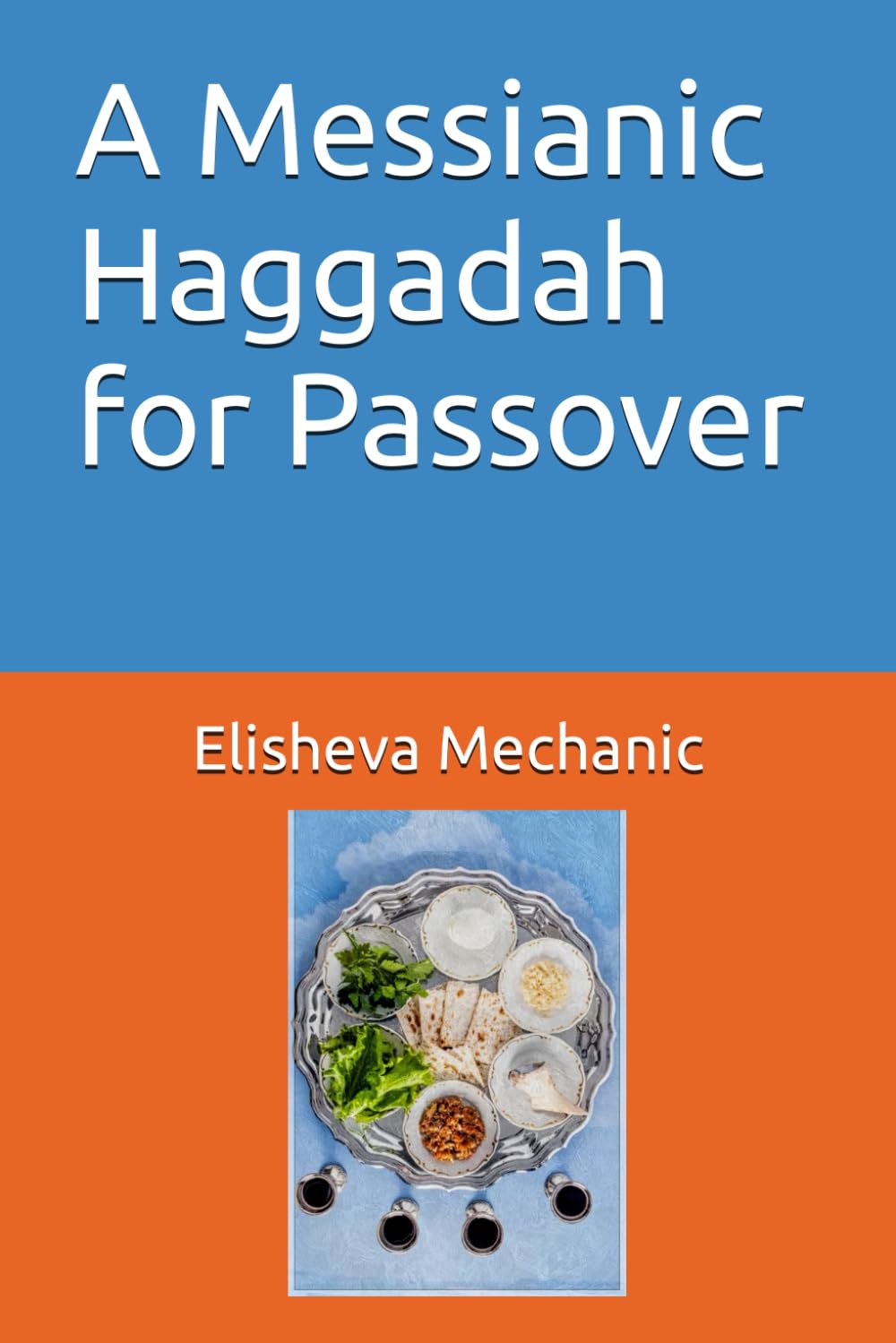
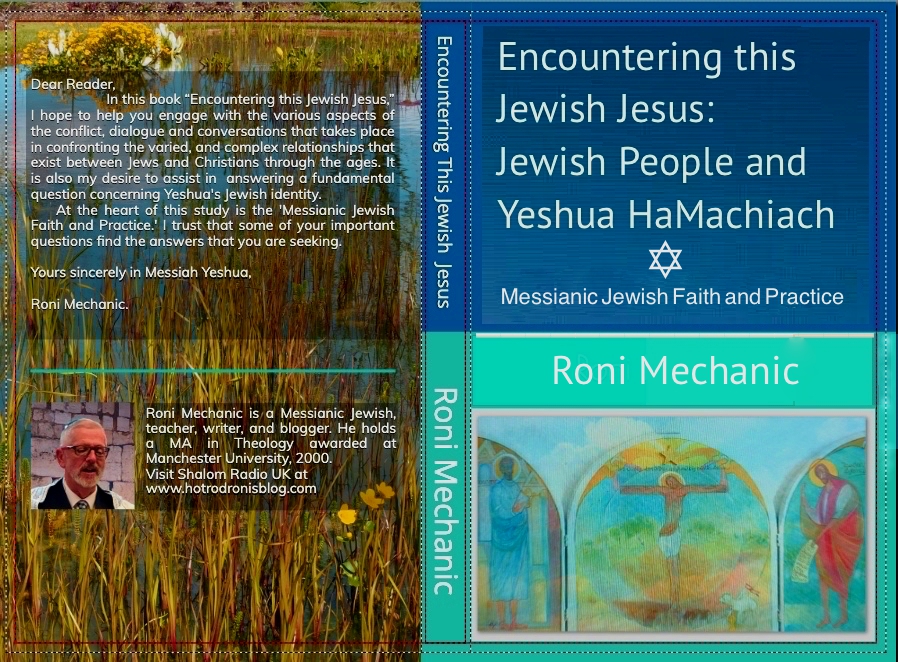
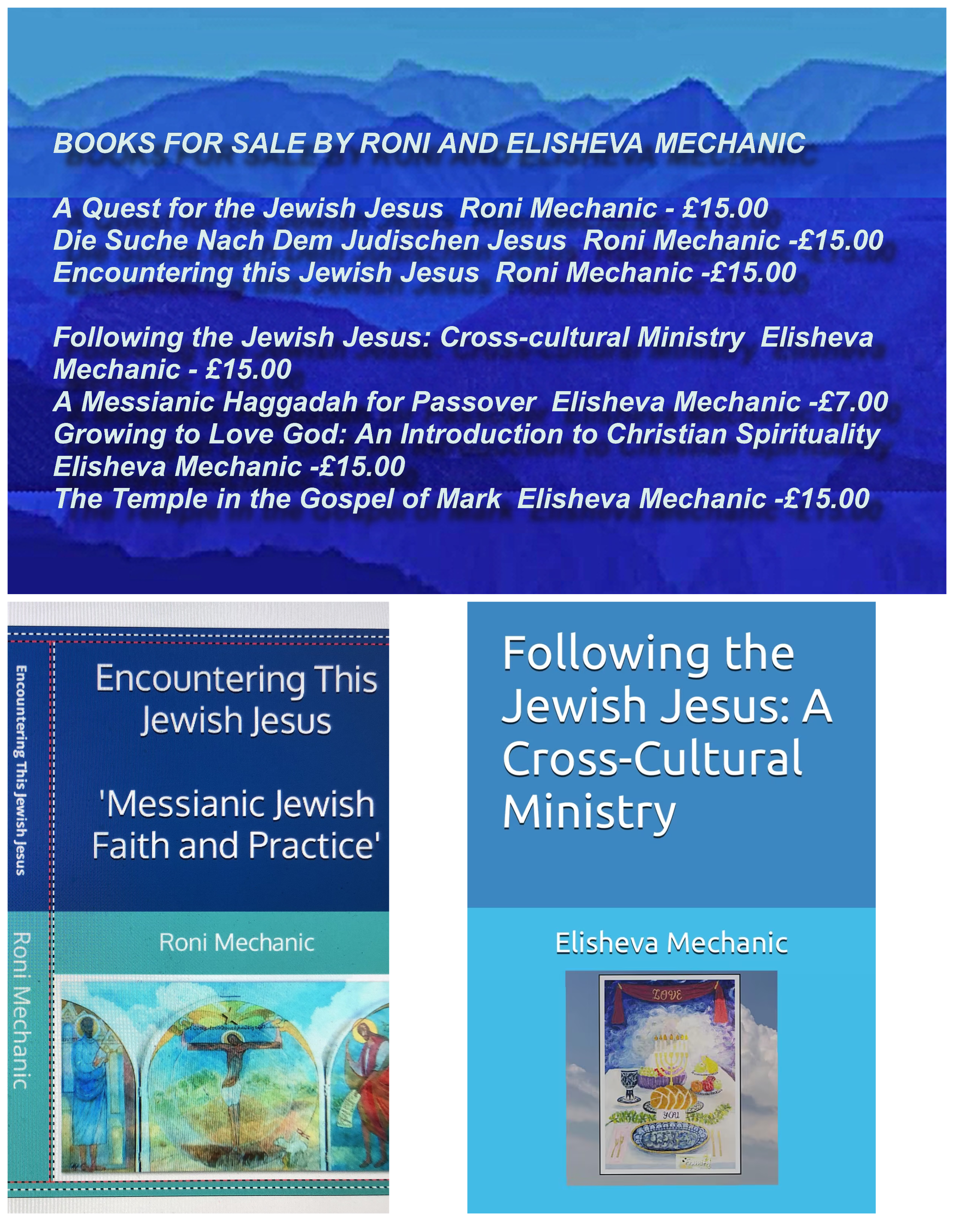
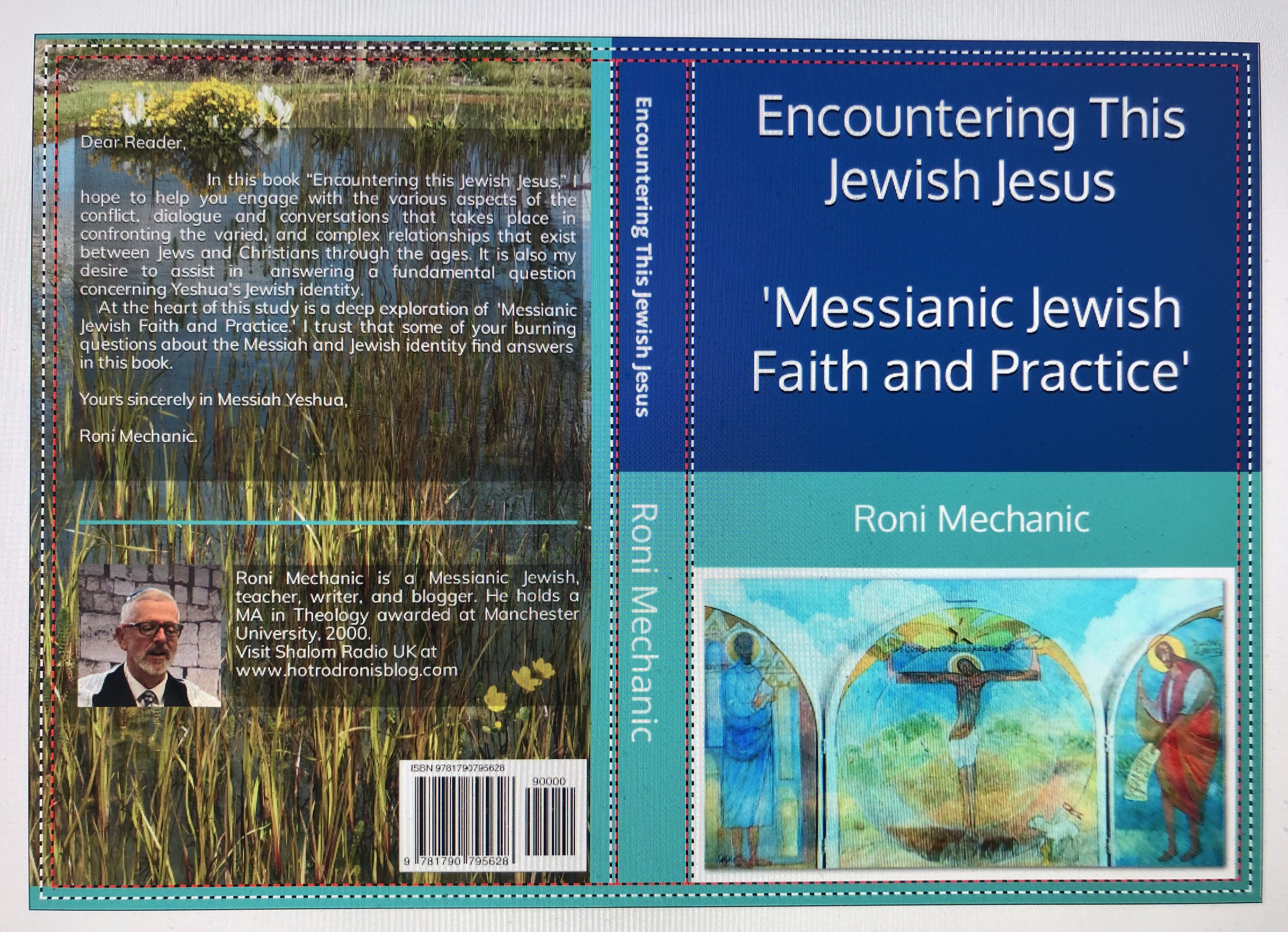
Books Published by Roni & Elisheva Mechanic:
Discover a captivating collection of literary works authored by Roni and Elisheva Mechanic, showcasing their unique storytelling talent and creative insights. These Books are available through Amazon.
Please make a charitable donation towards the running cost of this blog:
Mindlessness – ‘blow your mind,’ is a popular expression to take drugs, get high, etc.
In contrast Think about what you are contemplating – The thing that you are considering to act upon have consequences. Love, peace, and concord, verse hate, violence, and discord are two path that are set out before us as individuals.
So, what’s it to be? While others may influence you to choose their preferred path, ultimately, we are the one’s that must decide which way to go!
Deuteronomy 30:15-20 English Standard Version:
15 “See, I have set before you today life and good, death and evil. 16 If you obey the commandments of the Lord your God[a] that I command you today, by loving the Lord your God, by walking in his ways, and by keeping his commandments and his statutes and his rules,[b] then you shall live and multiply, and the Lord your God will bless you in the land that you are entering to take possession of it. 17 But if your heart turns away, and you will not hear, but are drawn away to worship other gods and serve them, 18 I declare to you today, that you shall surely perish. You shall not live long in the land that you are going over the Jordan to enter and possess. 19 I call heaven and earth to witness against you today, that I have set before you life and death, blessing and curse. Therefore choose life, that you and your offspring may live, 20 loving the Lord your God, obeying his voice and holding fast to him, for he is your life and length of days, that you may dwell in the land that the Lord swore to your fathers, to Abraham, to Isaac, and to Jacob, to give them.”
I have decided to follow Yeshua – Jesus – It is probably one of the most important decisions that you can make in your life.
I have decided to follow Jesus;
I have decided to follow Jesus; I have decided to follow Jesus; No turning back, no turning back.
2. Tho’ none go with me, I still will follow, Tho’ none go with me I still will follow, Tho’ none go with me, I still will follow; No turning back, no turning back.
3. My cross I’ll carry, till I see Jesus; My cross I’ll carry till I see Jesus, My cross I’ll carry till I see Jesus; No turning back, No turning back.
4. The world behind me, the cross before me, The world behind me, the cross before me; The world behind me, the cross before me; No turning back, no turning back.
A way back…What do I mean when I speak of a way back? If we have misgivings, doubts, second-thoughts, or regrets about a decision that you have made, then you don’t have to accept that you made a wrong choice. You can attempt to find a way back. In biblical terms, we refer to this as ‘repentance.’ Repentance is multifaceted – it has many dimensions to it, and also it potentially carries deep implication, that will not only have a personal outcome, but may well influence the live of many others.
The big one, and the smaller ones…What do I mean by saying that there is a big one, and there are small ones? The big one – is when we recognise that our relationship with our Heavenly Father is broken, and we make the decision to repent!
Repentance involves…Confession – admitting that we are wrong, and have done wrong. Turning back, or turning around are part of the vital process. Having regret is only the beginning of the process, and many get stuck at first base and never progress to make a home run to use a baseball metaphor.
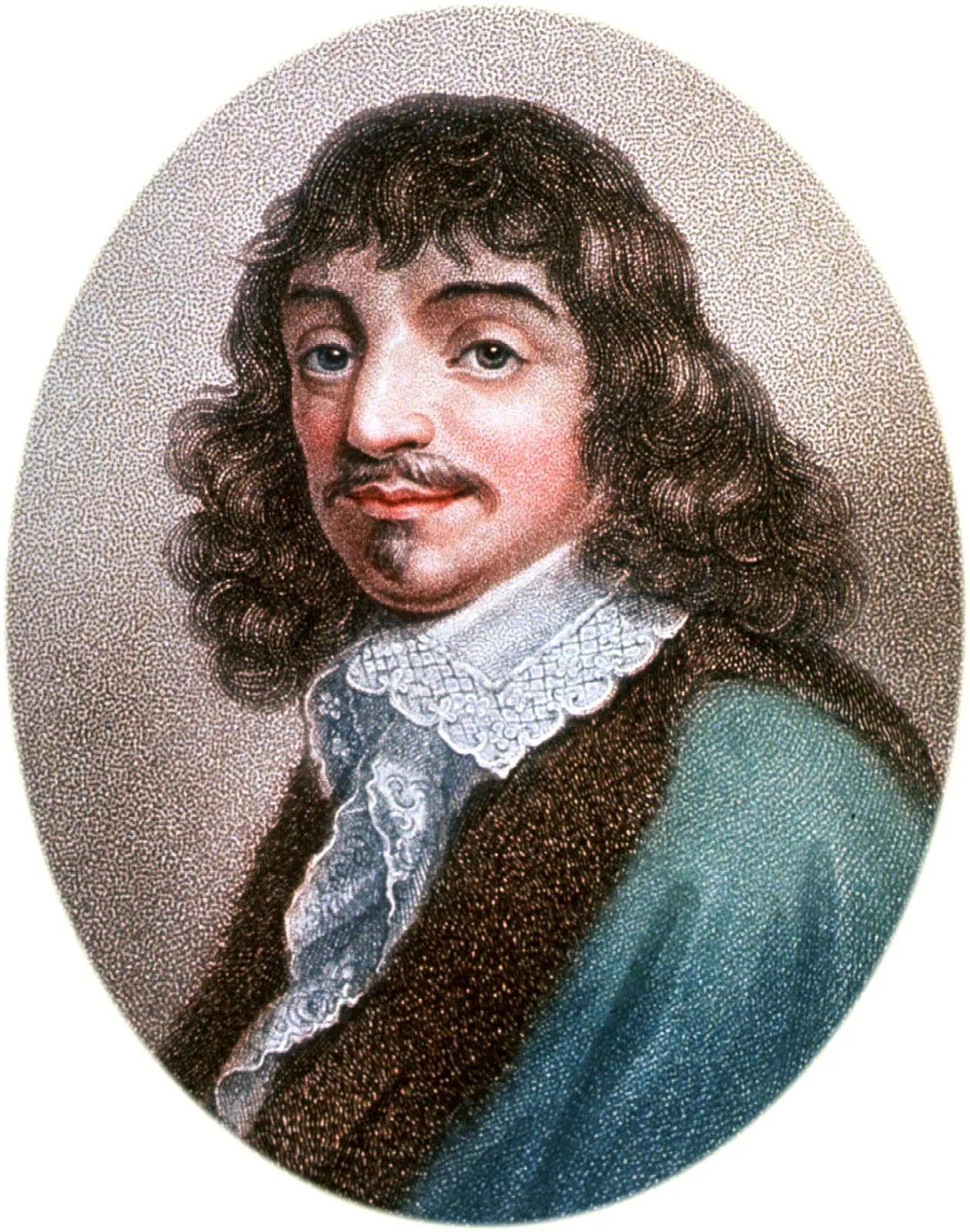
We began by saying, ‘Your mind matter!’ The philosopher Rene Descartes said, cogito ergo sum literally mean?
‘I think, therefore I am‘ – cogito ergo sum
The Latin cogito, ergo sum, usually translated into English as “I think, therefore I am“, is the “first principle” of René Descartes’s philosophy. While his viewpoint is quite profound, it does not contain the whole truth! His is a purely human response to ur being, or existence. He has missed our God’s point of view – God say something substantially different about our existence – he created us to not only be, but supremely to love him, worship, and adore him – in other words, that our live may glorify him always!
Cogito, ergo sum, dictum coined by the French mathematician and philosopher René Descartes in his Discourse on Method (1637) as a first step in demonstrating the attainability of certain knowledge. It is the only statement to survive the test of his methodic doubt. The statement is indubitable, as Descartes argued in the second of his six Meditations on First Philosophy (1641), because even if an all-powerful demon were to try to deceive him into thinking that he exists when he does not, he would have to exist in order for the demon to deceive him. Therefore, whenever he thinks, he exists. Furthermore, as he argued in his replies to critics in the second edition (1642) of the Meditations, the statement “I am” (sum) expresses an immediate intuition, not the conclusion of a piece of reasoning (regarding the steps of which he could be deceived), and is thus indubitable. However, in a later work, the Principles of Philosophy (1644), Descartes suggested that the cogito is indeed the conclusion of a syllogism whose premises include the propositions that he is thinking and that whatever thinks must exist.
Shalom Radio UK wants to thank you the listener for your support towards this ministry of promoting Messianic Jewish Perspectives – Please repost this Podcast on your network!
SHARE:
Additional Resources Available:
Elisheva’s New Books are available from Amazon Worldwide:
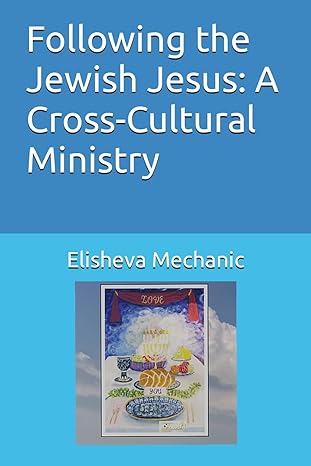
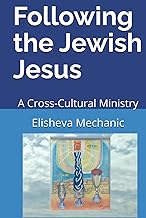
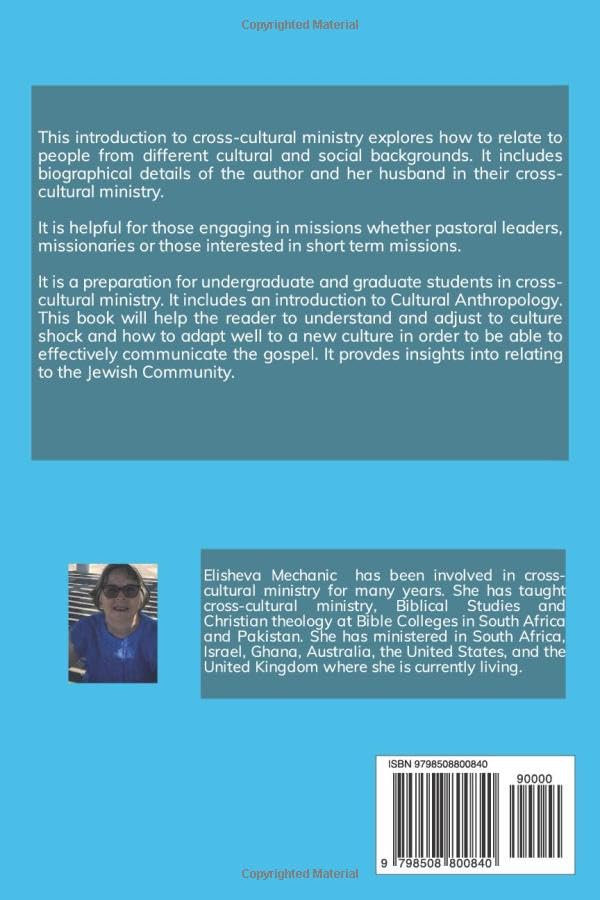
Following the Jewish Jesus: A Cross-Cultural Ministry Paperback – 30 Dec. 2023
This book is a guide for those beginning a lifetime of cross-cultural ministry and for anyone wanting to spend some time in a cross cultural situation such as a short term mission. It includes some Social Anthroplogy background as well as an understanding of cross-cultural communication and approaching ministry in a new cultual setting. It will help the reader to understand world view and how to overcome the negative effects of adjusting to a new culture and come to an understanding of the customs and outlook on life of a new community of people. Included are insights into understanding the Jewish community as well as several other cultural groups.The Biblical feasts are included as well as an order of service for a Messianic Jewish Passover. Personal anecdotes are included of the author’s experience of cross-cultural ministry and life experiences in ministry.
Version 1.0.0
Please make a charitable donation toward Shalom Radio UK – towards running costs:
What are our expectations? What are your hope & dreams?
Click on Link to Listen:
In contrast, what are your fears & dreads?
Lord’s Prayer (Modern) (New English Version – adopted by the Church of England in 1977):
“Our Father in heaven, hallowed be your name. Your Kingdom come, your will be done, on earth as in heaven Give us today our daily bread. Forgive us our sins, as we forgive those who sin against us. Lead us not into temptation, but deliver us from evil. For the kingdom, the power and the glory are yours. Now and for ever. Amen.”
So,Hopes &Dreams: Fears & Dreads – For starters, a good happy, and life in which we experience a sense of wellness, and wholeness – If we examine each word in turn we will discover a wealth of meaning:
Happy; wellness; wholeness; etc…
Happy – what do we understand from this word?
Wellness – its meaning needs further elaboration…
Wholeness...
In the Lord’s Prayer we express a number of different issues that cover aspects of human life and relationships…
Shalom Radio UK wants to thank you the listener for your support towards this ministry of promoting Messianic Jewish Perspectives – Please repost this Podcast on your network!
This book is a guide for those beginning a lifetime of cross-cultural ministry and for anyone wanting to spend some time in a cross cultural situation such as a short term mission. It includes some Social Anthroplogy background as well as an understanding of cross-cultural communication and approaching ministry in a new cultual setting. It will help the reader to understand world view and how to overcome the negative effects of adjusting to a new culture and come to an understanding of the customs and outlook on life of a new community of people. Included are insights into understanding the Jewish community as well as several other cultural groups.The Biblical feasts are included as well as an order of service for a Messianic Jewish Passover. Personal anecdotes are included of the author’s experience of cross-cultural ministry and life experiences in ministry.
Version 1.0.0
Please make a charitable donation toward Shalom Radio UK – towards running costs: